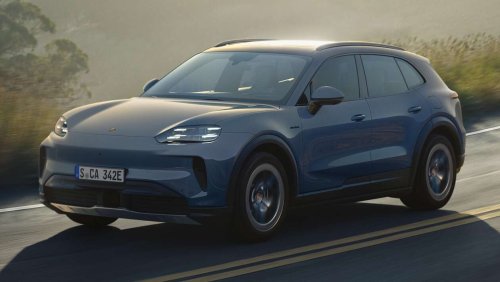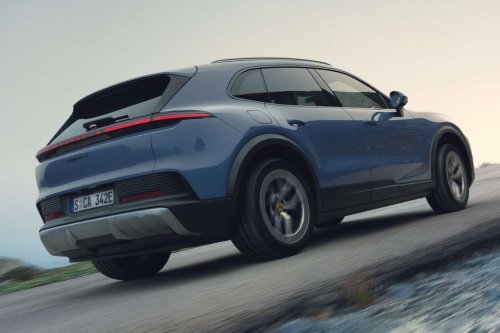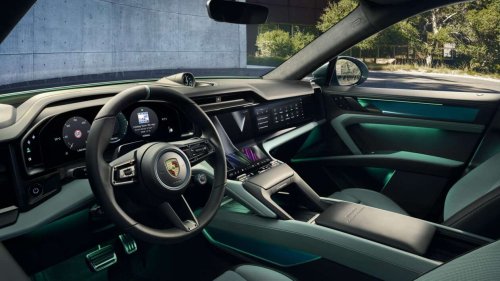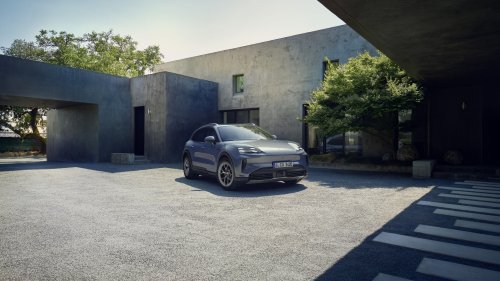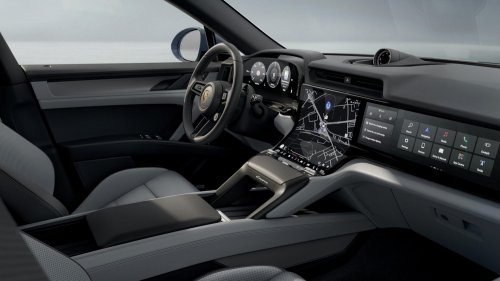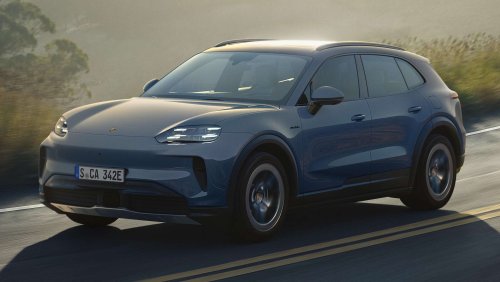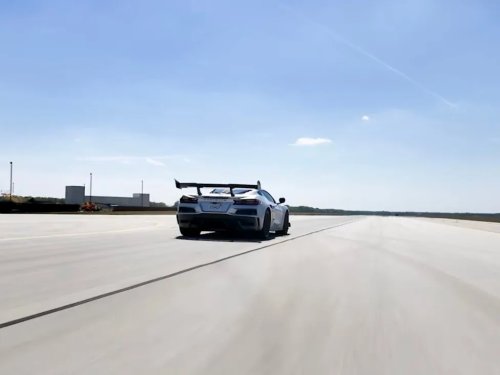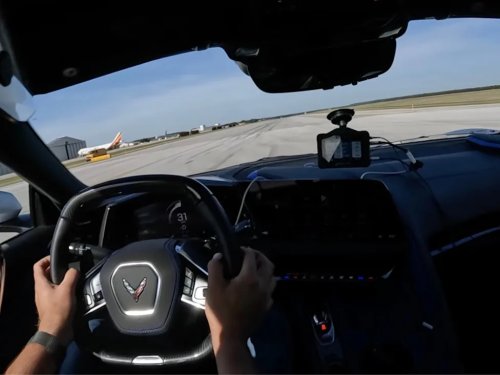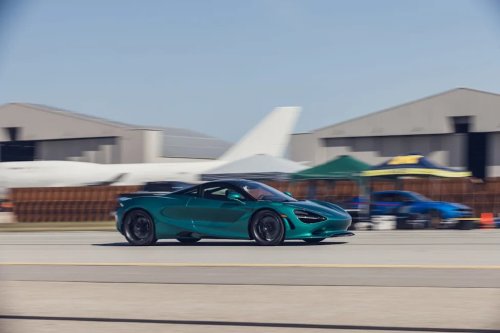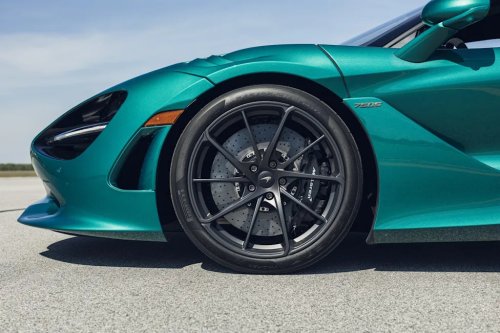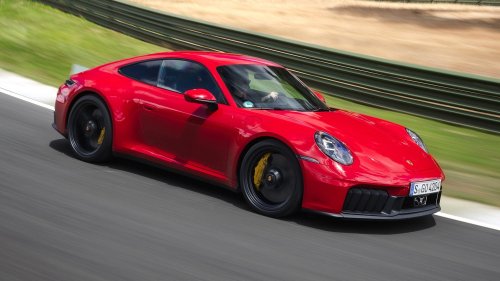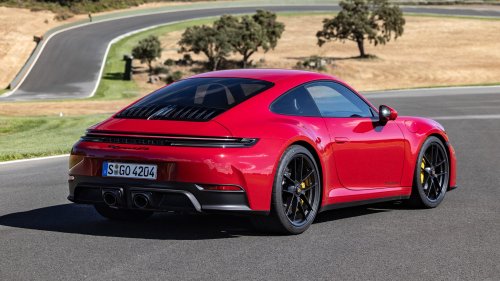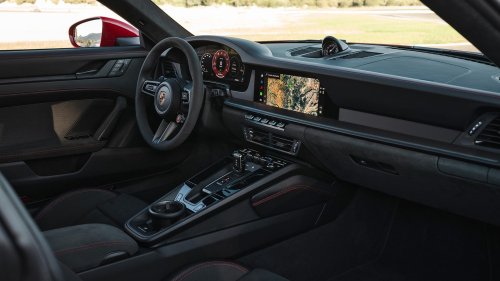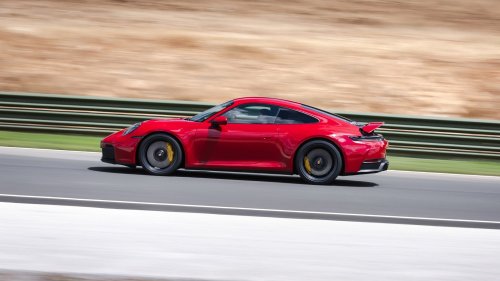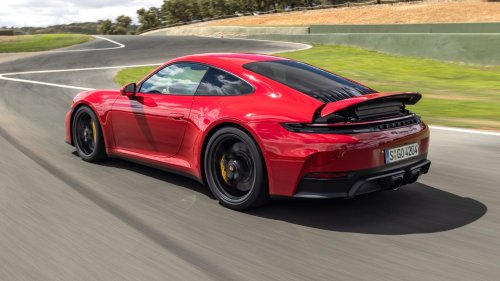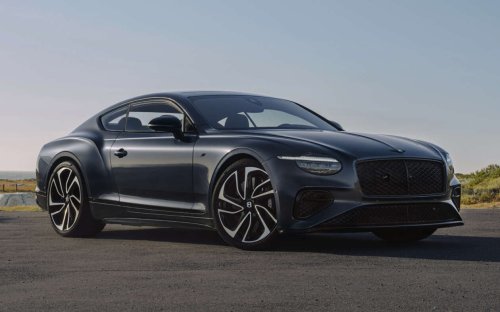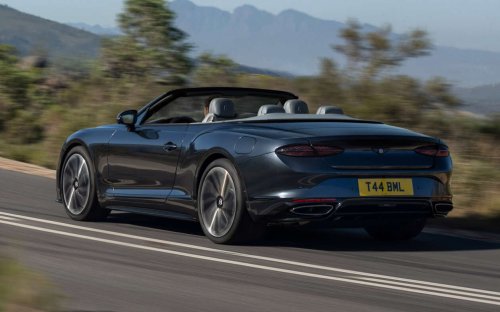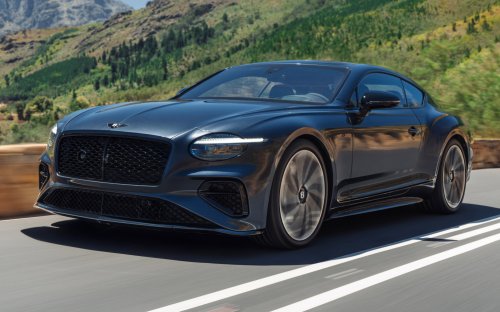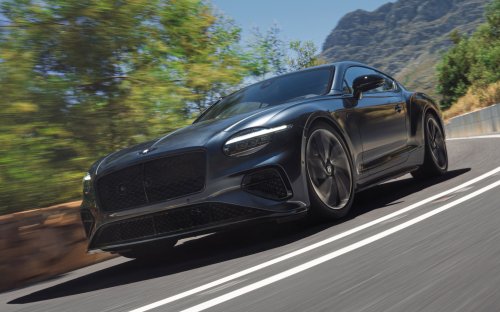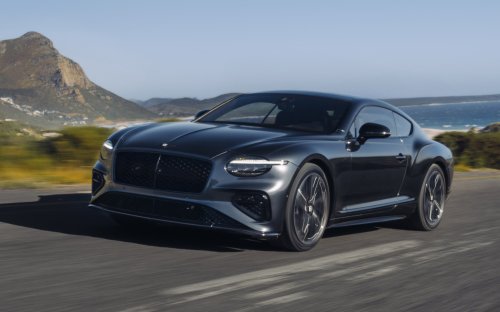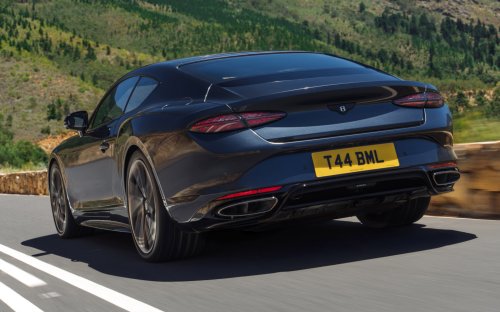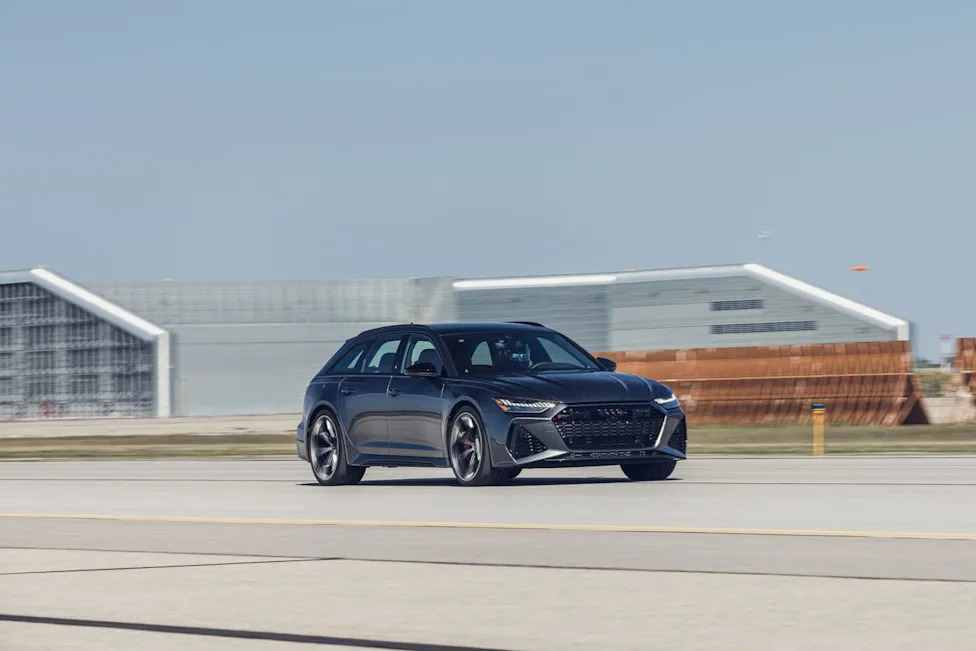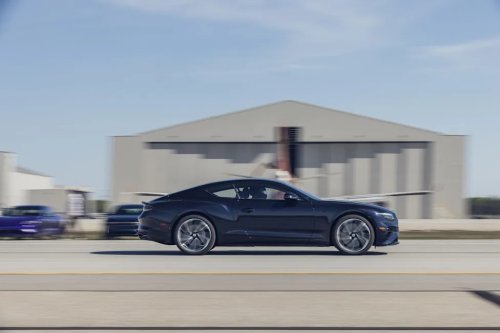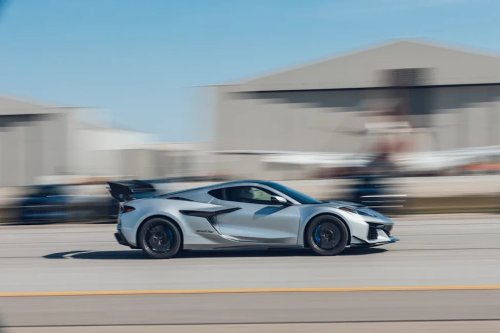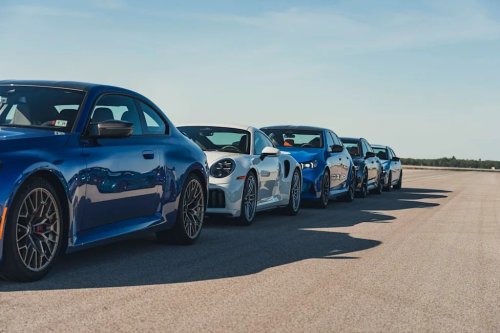
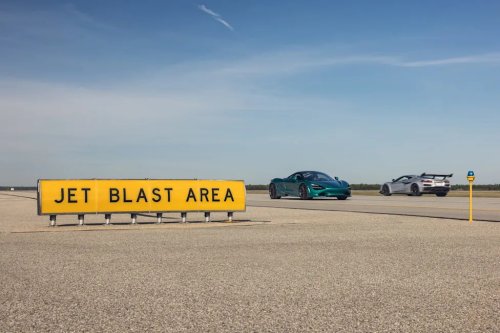
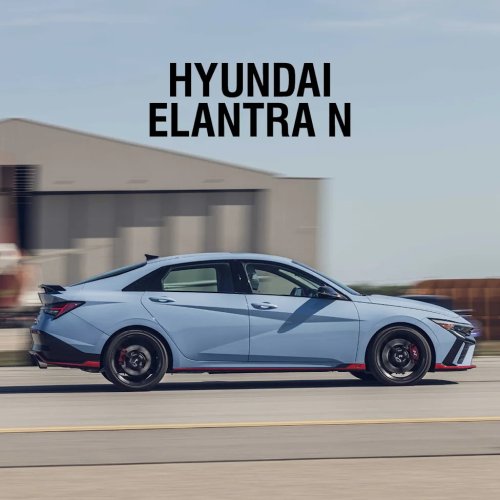
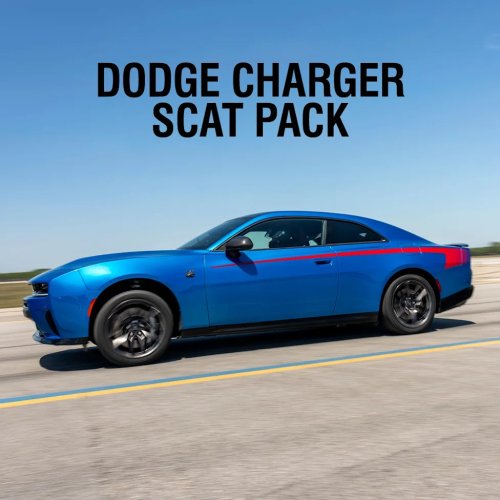
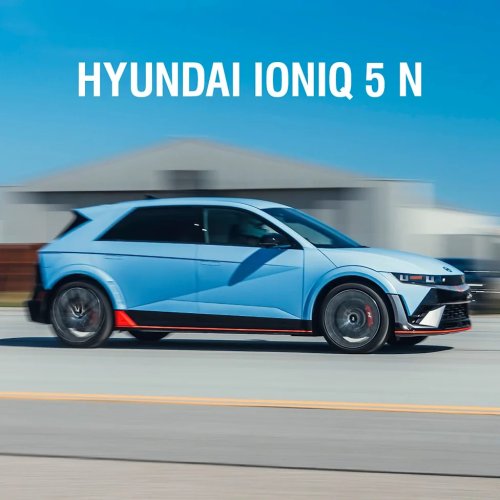
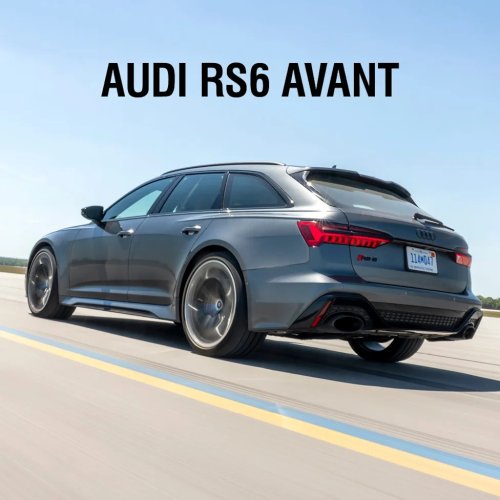
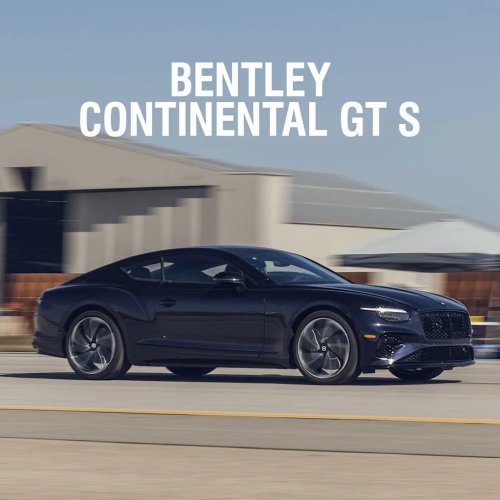
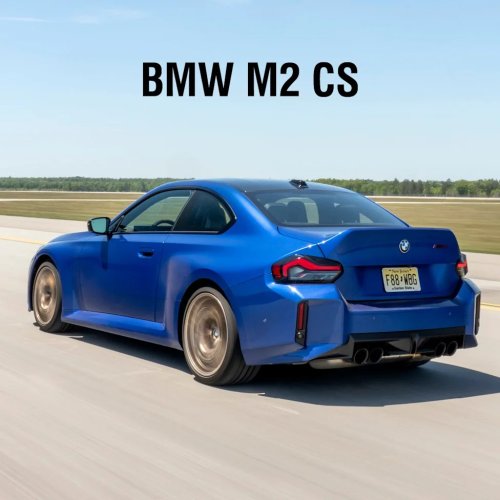
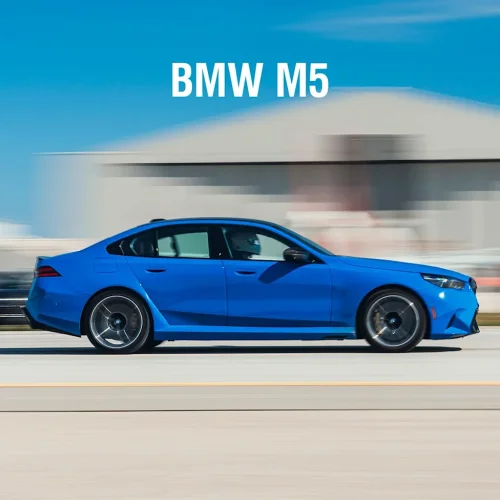
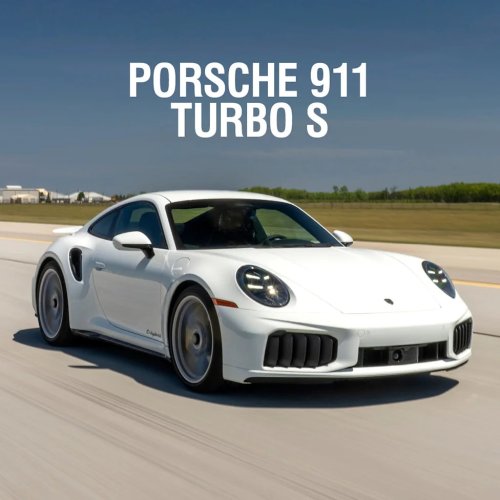
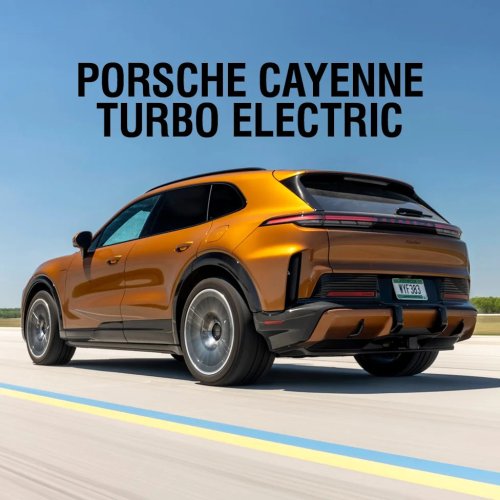
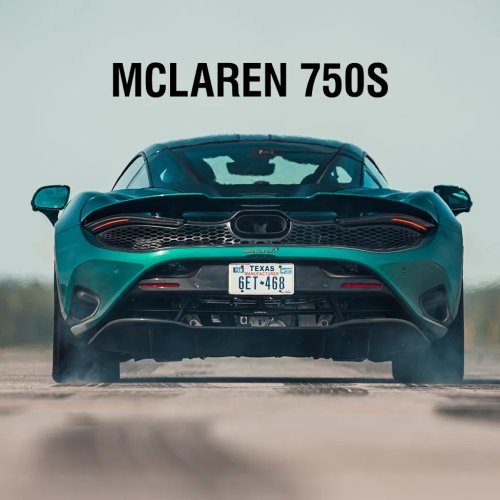
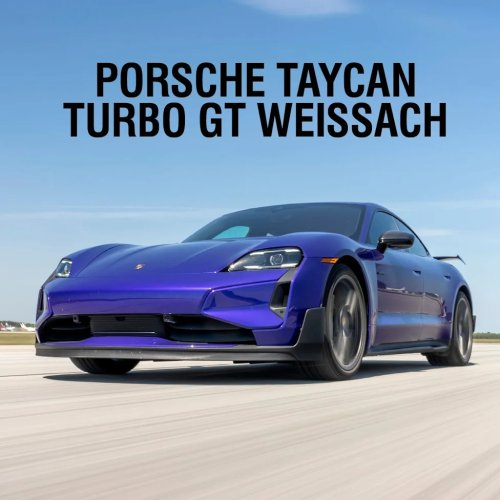
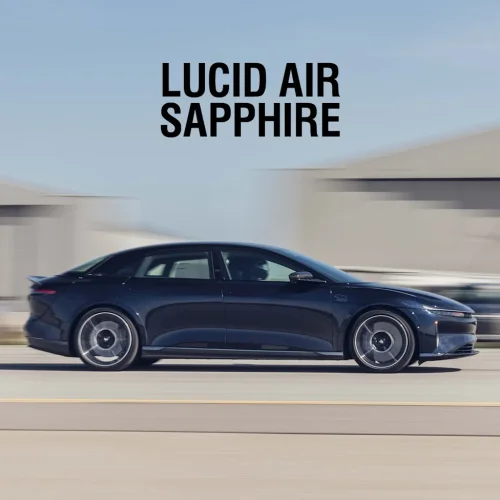
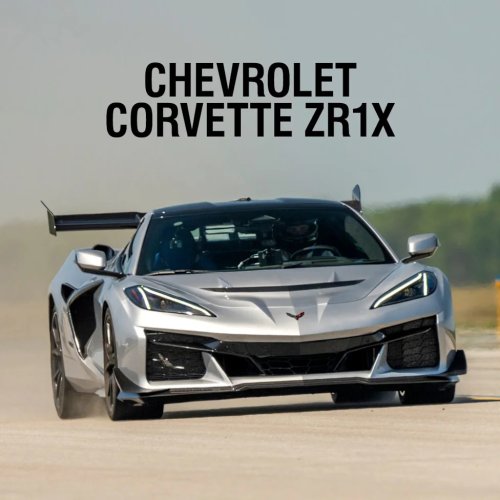
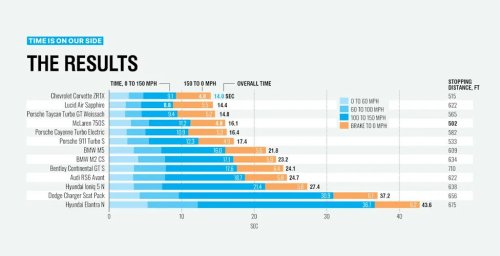

















Our first run of the day was delayed by an incoming 747. The airliner seemed to barely clear the massive wing of our Chevrolet Corvette ZR1X before landing on a nearby runway and chirping to a stop in a small puff of dust. As a demonstration of a quick whoa from over 150 mph to static, you can't ask for a much more impressive example than a jumbo jet coming in directly overhead. We could practically hear the pilot taunting us, "That's how it's done, gang. See if you can beat it."That's what we were there for. Ready to take over a 2.2-mile taxiway at Oscoda- Wurtsmith Airport with a baker's dozen of quick-start contenders, we came to see how quickly we could get from zero to 150 mph and back. Our challenge was, in some ways, pretty similar to launching and landing a cargo plane. We needed to get to the desired top speed within the space of the runway, then come to a stop as soon as possible, without any wasted motion. Unlike the 747-400 pilot, we hoped to do it without anything going airborne.We've done this before. We had two versions of 0-to-150-to-0 under our collective seatbelts as we eased our 2026 parade of fast cars through the gates at Oscoda. The first time, in 1998, testing at Chrysler's Chelsea Proving Grounds, 150 mph was still such a lofty goal that we had to pull in some modified tuner cars to bring enough firepower to hit both the target speed and the slowdown. When we revisited the test in 2023 and moved to Oscoda, there were plenty of production cars capable of 150-plus, including some models that the '98 test team would have never believed. A Honda? A Hyundai? A five-passenger SUV?AdvertisementAdvertisementWith only three years between our last test and this one, we're not as shocked by fast sedans and rocket coupes as we might have been the first time we tried this, but just because we've got standard anti-lock brakes, launch-control software, and, in some cases, all-wheel-drive traction, that doesn't mean racing up and down the ladder was easy.Extracting the best time out of each vehicle often meant experimenting with a complex menu of settings to get the quickest start while eliminating aerodynamic drag when possible. We approached this like a track-lap competition. No adjustments for rollout, no corrections made for temperature or altitude, and no averaging opposite-direction runs. Each pass was its own complete entry. Like the last time, we found that Oscoda's pavement offered less traction than our normal test track, so the 60-mph and quarter-mile results aren't comparable to our other test results—but things that moved out quick in regular testing still moved out quick at Oscoda.Marc Urbano and Michael Simari - Car and DriverMeasuring both the takeoff and the hard stop required a combination of data recording and human response. To track the speeds and record the runs, we used a GPS-based Racelogic VBox, and to catch the exact moment the driver switched from accelerating to braking, we attached a pressure-sensitive ribbon switch to the brake pedal, as we do with all our brake testing. Seems easy enough, right? Sure, on a slow car, but most of our machines spun up the numbers like an Erewhon cash register. If the driver waited until they saw 150 mph on the display, the vehicle would be well past that speed by the time they hit the brakes. Runs below 150 mph were disqualified, as managing testing editor David Beard found to his great disappointment when he came back from one session having achieved a speed of 149.99 mph."You totally had to anticipate it," says technical editor Mike Sutton. "In the quicker cars especially, we were starting the stop sequence when the speed display crested 147 mph. You've got your foot hovering over the brake pedal. In the time it takes your brain to make that connection, your foot to move and hit the pedal, and the brakes to engage meaningful deceleration, you've passed 150."AdvertisementAdvertisementSo that's how we did it. The why should be obvious: because we can. Really, it's because cars are so fast now that the long-standing metrics of accelerating to 60 or even 100 mph no longer give a full picture of a high-performance car's capability. To really understand how a supercar can warp time and a massive SUV can defy Newton, we needed to put both acceleration and braking to the test.Michael Simari - Car and DriverWhat did we do it in? Everything we could get. You'd expect a Corvette at any C/D performance test, and Chevrolet delivered with a ZR1X. To keep that snorty sportster from getting lonely, McLaren stepped up with a 750S, and Porsche sent the reigning champion from 2023, a 911 Turbo S, now with 61 more horsepower and hybrid technology.While those top-shelf coupes duked it out in the sports-car category, they found themselves scrambling to beat out some serious competition from the sedans. A big-winged Porsche Taycan Turbo GT Weissach seemed a natural electric enemy to the sedate-appearing but absolutely astonishingly fast Lucid Air Sapphire. Meanwhile, the plug-in hybrid BMW M5 and the Audi RS6 Avant, both with twin-turbo V-8s and all-wheel drive, brought more combustion grumble to the rumble.See the Behind the Scenes GalleryAdvertisementAdvertisementRepresenting the needs of lead-footed family chauffeurs was the Porsche Cayenne Turbo Electric. Grand tourers came from Bentley, in the form of a Continental GT S, and, at a much more affordable buy-in, Dodge, with a gas-powered Charger Scat Pack. Many of you may consider the Scat Pack, with its twin-turbo inline-six, more of a muscle car, in which case its closest muscley competition was the BMW M2 CS, a brawler if we've ever seen one. Rounding out the group were comparatively affordable options from Hyundai, an Ioniq 5 N and the outgunned but still game Elantra N.A random sampling? Agreed. Your favorite missing? Possibly. We invited everything you're thinking of, so if there's, say, a horse- or bull-shaped hole in this lineup, feel free to complain directly to Detroit or Italy. Cowardly no-shows aside, we had plenty to work with, and here's how they worked out.Photo credit: Marc Urbano and Michael Simari - Car and DriverBase: $37,845As-Tested: $38,345286 hp • 3364 lb • 11.8 lb/hpREAD MOREPhoto credit: Marc Urbano and Michael Simari - Car and DriverBase: $58,880As-Tested: $72,095550 hp • 4907 lb • 8.9 lb/hpREAD MOREPhoto credit: Marc Urbano and Michael Simari - Car and DriverBase: $61,500As-Tested: $62,500641 hp • 4875 lb • 7.6 lb/hpREAD MOREPhoto credit: Marc Urbano and Michael Simari - Car and DriverAdvertisementAdvertisementBase: $145,345As-Tested: $160,390621 hp • 4854 lb • 7.8 lb/hpREAD MOREPhoto credit: Marc Urbano and Michael Simari - Car and DriverBase: $296,150As-Tested: $350,630671 hp • 5530 lb • 8.2 lb/hpREAD MOREPhoto credit: Marc Urbano and Michael Simari - Car and DriverBase: $108,450As-Tested: $108,450523 hp • 3719 lb • 7.1 lb/hpREAD MOREPhoto credit: Marc Urbano and Michael Simari - Car and DriverBase: $132,050As-Tested: $146,500717 hp • 5267 lb • 7.3 lb/hpREAD MOREPhoto credit: Marc Urbano and Michael Simari - Car and DriverAdvertisementAdvertisementBase: $274,250As-Tested: $286,940701 hp • 3804 lb • 5.4 lb/hpREAD MOREPhoto credit: Marc Urbano and Michael Simari - Car and DriverBase: $187,590As-Tested: $213,5501139 hp • 6063 lb • 5.3 lb/hpREAD MOREPhoto credit: Marc Urbano and Michael Simari - Car and DriverBase: $397,850As-Tested: $441,350740 hp • 3178 lb • 4.3 lb/hpREAD MOREPhoto credit: Marc Urbano and Michael Simari - Car and DriverBase: $244,528As-Tested: $248,0281019 hp • 4954 lb • 4.9 lb/hpREAD MOREPhoto credit: Marc Urbano and Michael Simari - Car and DriverAdvertisementAdvertisementBase: $252,862As-Tested: $252,8621234 hp • 5332 lb • 4.3 lb/hpREAD MOREPhoto credit: Marc Urbano and Michael Simari - Car and DriverBase: $238,185As-Tested: $255,9601250 hp • 4152 lb • 3.3 lb/hpREAD MORECar and DriverYou Might Also LikeGift Guide: Best Ride-On Electric Cars for KidsFuture Cars Worth Waiting For: 2025–2029