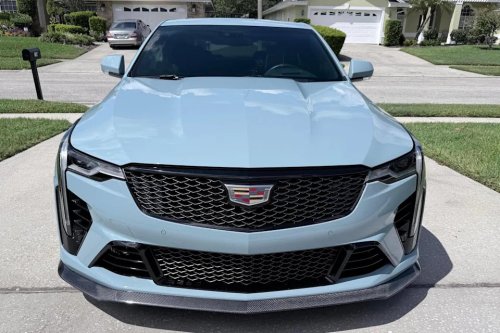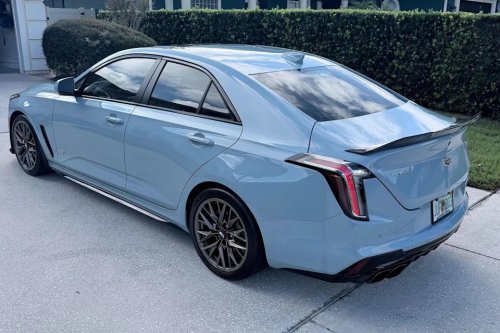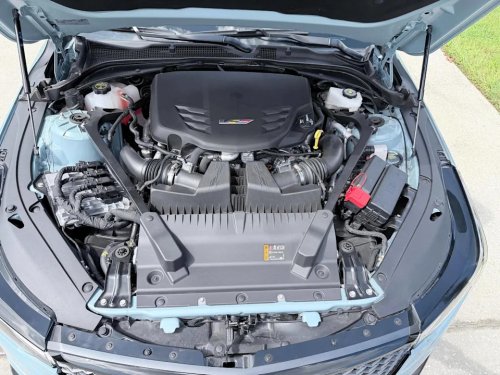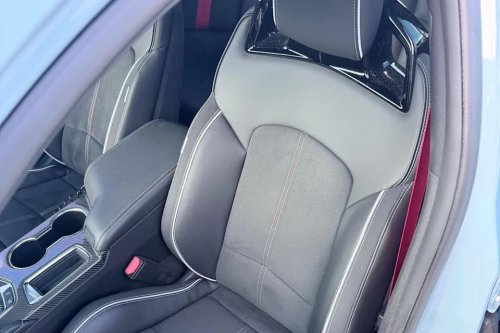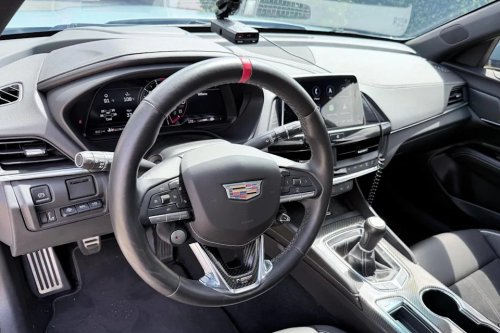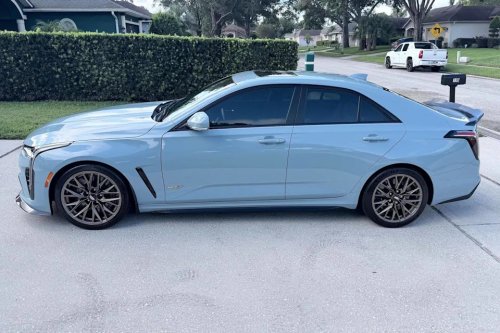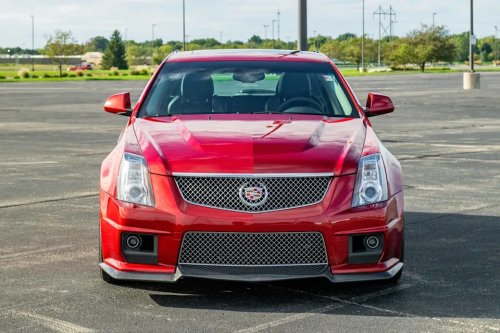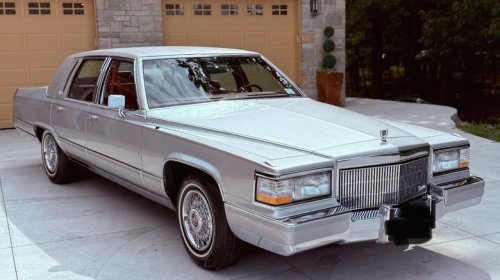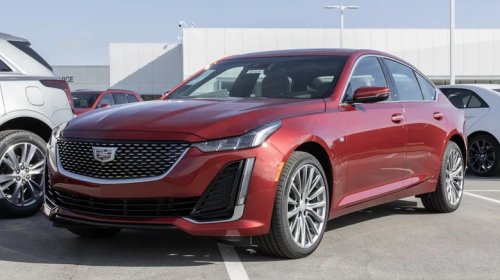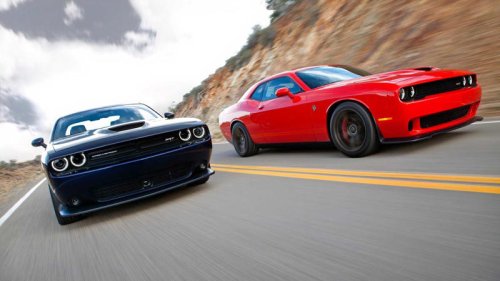
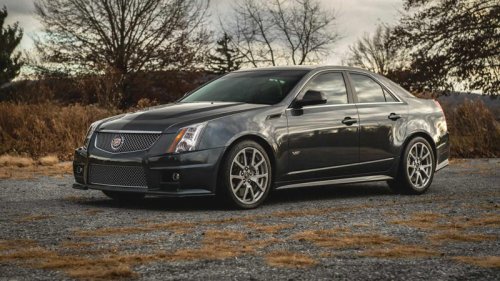
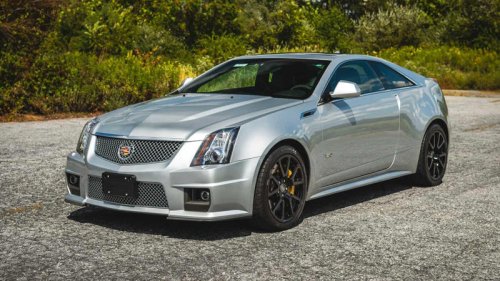
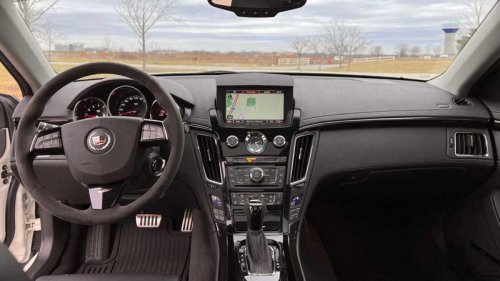
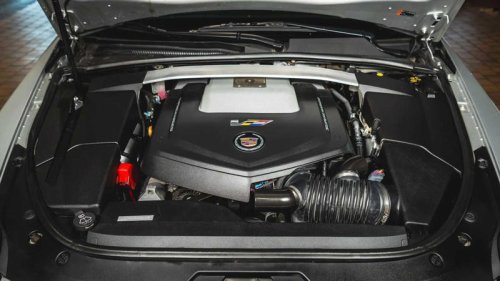
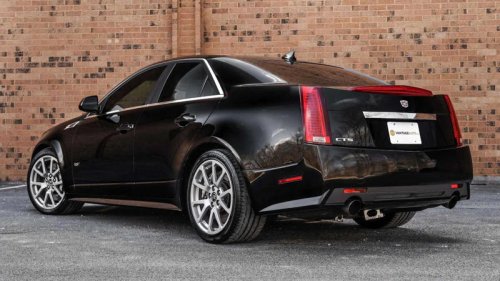
























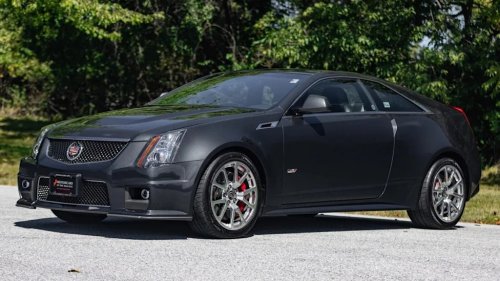

When Dodge killed the Hellcat after the 2023 model year, it closed a chapter that had defined American muscle for nearly a decade. The supercharged 6.2-liter Hemi had delivered 717 hp at a price that made European supercar owners quietly uncomfortable, and it did so in a car wide enough to fit the family and loud enough to wake the neighborhood. It was the last honest muscle car bargain. The used market has been absorbing that reality ever since, with 2022 Challenger Hellcats averaging around $50,000 and 2023 examples with low mileage still asking close to original MSRP in some cases.If the Hellcat's departure has left a gap in your garage plans, there is a supercharged American V8 option from Cadillac worth considering that the muscle car conversation tends to overlook. It makes 640 hp from a supercharged GM V8, was developed on the Nürburgring, and can be found used for similar or substantially less money depending on the year. The Hellcat has more horsepower. In almost every other measurable respect, this car is the more complete performance machine. What Made The Hellcat So Hard To Replace Dodge The Hellcat debuted in 2015 with 707 hp for $59,995, which at the time was genuinely unprecedented. By its final 2023 model year the output had grown to 717 hp in standard Hellcat trim. No production car at that price had ever offered that kind of output, and Dodge's decision to make it available in a daily-drivable coupe with a back seat and a usable trunk was a statement of intent about what American muscle could still be. The supercharged V8 became the Challenger's defining feature, and over eight model years the Hellcat grew into Redeye and Jailbreak variants pushing 807 hp.A genuine alternative needs to deliver on the same terms: forced induction, rear-wheel drive, substantial output, and a character that justifies the choice over something more sensible. A turbocharged four-cylinder sedan, however quick its numbers, does not fill the same role. An EV most definitely doesn't, regardless of how fast it gets to sixty. What the Hellcat buyer wants is a supercharged V8 with mechanical drama and a soundtrack. There is one domestic option that has always offered exactly that, in a package that most Hellcat conversations forget to mention. The Cadillac CTS-V Is More For Less Via: Bring a TrailerThe Cadillac CTS-V is the answer. Across two generations it offered a supercharged GM V8, rear-wheel drive, and performance credentials that the Hellcat could not match on a technical road. The third-generation car, produced from 2016 to 2019, is the more relevant comparison: 640 hp and 630 lb-ft from a supercharged 6.2-liter LT4 V8, a 0-60 time of 3.7 seconds, and a top speed of 200 mph. That is 77 hp fewer than the Hellcat's 717, but from a car that currently averages around $48,000 on the used market, below the average used Hellcat Challenger price, and built on a chassis the Hellcat cannot compete with once the road bends.The second-generation CTS-V, running from 2009 to 2015, tells a similar story at a lower price. The LSA supercharged V8 in those cars produced 556 hp and 551 lb-ft, both figures sitting above the standard Hellcat's torque rating. Used second-gen examples can be found from around $22,000 to $35,000 depending on condition and specification, which puts Nürburgring-developed supercharged V8 performance well below what a used Hellcat costs in most configurations. Second Gen vs Third Gen: Which CTS-V to Buy Via: Bring a Trailer The second generation has one distinct advantage over its successor: manual gearbox availability. The six-speed Tremec TR-6060 was offered alongside the six-speed automatic, and manual examples, particularly wagons, are among the most sought-after CTS-V variants on the market today. The wagon body style combined 556 hp with genuine cargo practicality, and examples with a stick shift represent a category of one in the performance car world. The LSA engine in the second gen is the same basic architecture as the LS9 from the Corvette ZR1, detuned for longevity and drivability in a daily car. The second-gen CTS-V can reach 60 mph in 3.9 seconds with a top speed of 191 mph.The third generation is faster, more powerful, and better engineered, but it is automatic-only and available only as a sedan. Its 640 hp figure and 3.7-second sprint place it in BMW M5 and Mercedes-Benz E63 AMG territory, and Cadillac priced it accordingly new. Used, it offers those credentials at a significant discount, though the lower floor of the used market is beginning to firm as supply tightens. Buyers who want maximum performance for minimum outlay should target a clean third-gen example in the $40,000 to $50,000 range. Buyers who want three pedals should search specifically for a second-gen manual, budget $30,000 to $38,000, and expect some patience required. What the Cadillac CTS-V Does That the Hellcat Cannot Via: Bring a Trailer The Hellcat was engineered primarily as a straight-line machine. Its suspension tuning, steering geometry, and weight distribution reflect the priorities of a car built for the drag strip first. The Challenger tips the scales at over 4,400 lb. The CTS-V was engineered with Nürburgring lap times as a target metric. Cadillac's MagneRide suspension system adjusts damping rates in real time, the Brembo six-piston front calipers provide stopping power that the Hellcat's standard brakes cannot approach, and the available Recaro seat package holds the driver in place through corners at a level the Challenger's standard seats do not attempt.On a technical road or a track day, the CTS-V is the more complete machine by a meaningful margin. The Hellcat's 77 hp power advantage at standard specification is real, but it is irrelevant in any situation that involves a corner. The third-gen CTS-V makes 640 hp against the Hellcat's 717, and the gap in chassis capability more than compensates for that deficit anywhere other than a straight line. For buyers who treat the occasional track day as a realistic use case, the CTS-V is a significantly more sophisticated performance platform than the Challenger at any trim level. Supercharged V8 Performance: CTS-V Vs. Hellcat By The Numbers Via: Bring a TrailerThe Hellcat's straight-line advantage is real, and the horsepower gap is substantial at 77 hp in the Dodge's favor. Real-world testing put the standard Hellcat Challenger at 3.7 seconds to sixty, which matches the CTS-V's result exactly. In practice, the two cars are closer off the line than the spec sheet implies, because the CTS-V's Magnetic Ride Control and launch control extract its 640 hp more efficiently than the Hellcat's heavier, less sophisticated chassis can manage at equivalent speeds. On any road with a corner in it, the CTS-V's advantage reasserts itself immediately.The top speed comparison favours the Hellcat by one mile per hour over the third-gen CTS-V, which is a figure that has no practical relevance outside a closed course. What matters in the real world is the combination of power, handling, and braking, and on that basis the CTS-V's Brembo-and-MagneRide setup produces a more complete car than the Challenger, which was never designed to win arguments involving corners. Buying A Used Cadillac CTS-V In 2026 Bring A Trailer The CTS-V's reliability record is broadly positive for a high-output supercharged V8. The LSA and LT4 engines are well-understood in the enthusiast community, and both have demonstrated long-term durability under regular use. Common inspection points on the second-gen include supercharger belt and pulley condition, differential fluid condition, and brake rotor thickness on high-mileage examples. The third-gen adds an eight-speed automatic that is generally robust but benefits from fluid changes at shorter intervals than the factory schedule suggests.The aftermarket support for both generations is substantial. The LT4 in the third-gen CTS-V responds well to supporting modifications, and tuned examples routinely exceed 700 hp on the same drivetrain without major reliability concerns. This gives the CTS-V a tuning path that closes and then passes the Hellcat's factory output relatively quickly, moving the straight-line argument entirely out of the Hellcat's reach with modest investment.Cadillac replaced the CTS-V for 2022 with the CT5-V Blackwing, which carries a 668 hp version of the LT4 and is now the flagship of Cadillac's performance range. The CTS-V's production ending in 2019 makes it a finite commodity in the same way the Hellcat has become one. Values for clean, low-mileage third-gen examples are beginning to firm as the enthusiast market catches up with what the car represents. At current prices, the window to acquire one at a meaningful discount to its performance capability is still open. It will not stay open indefinitely.Sources: Hagerty, Classic.com, Kelley Blue Book, HotCars, Mecum, Dodge, Cadillac.