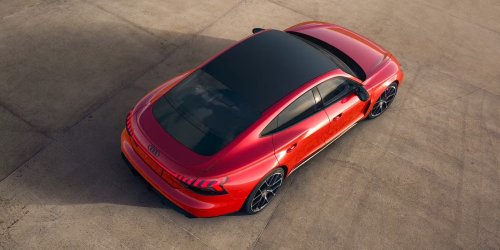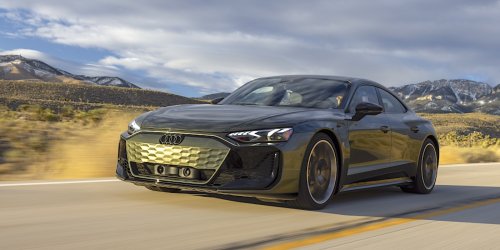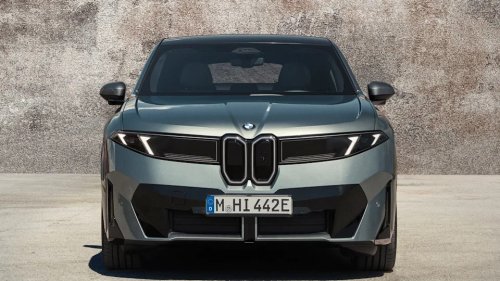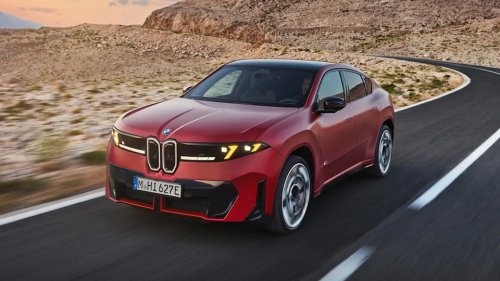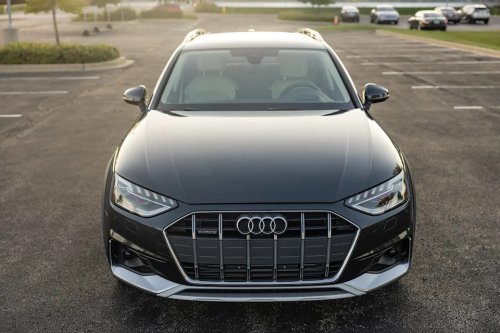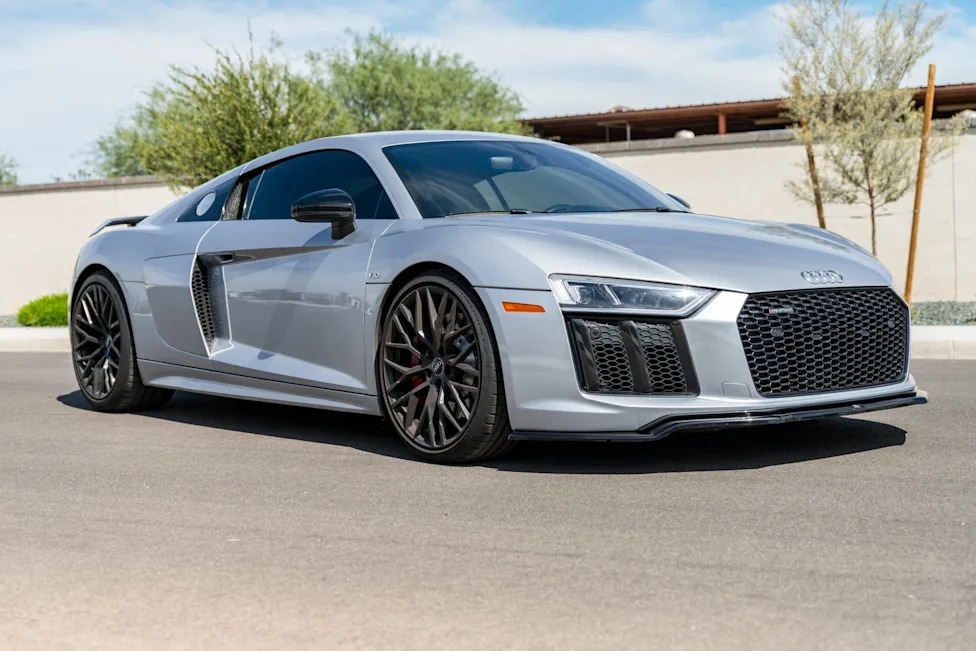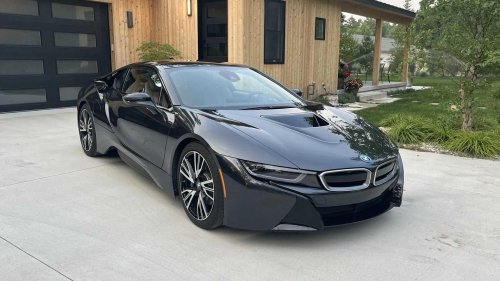
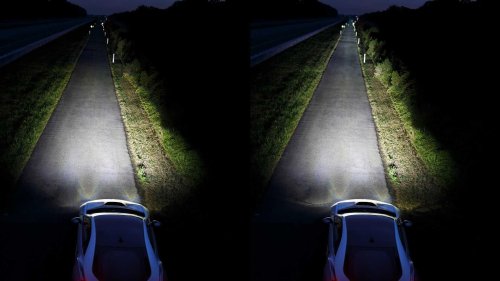
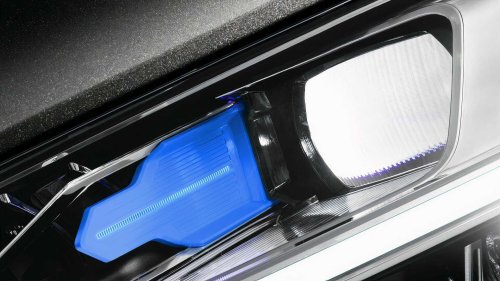
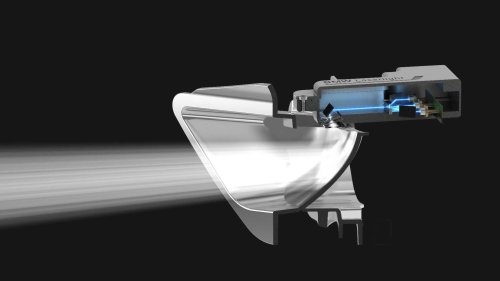
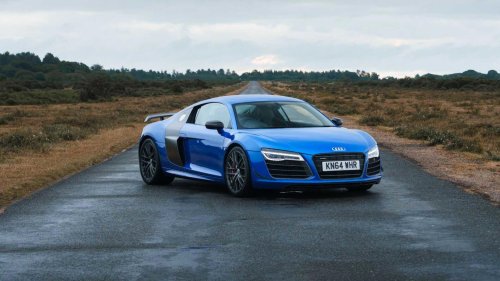
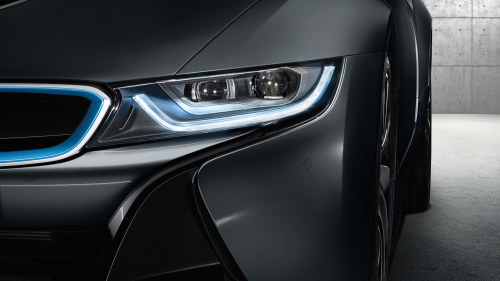


















BMW and Audi sometimes play a game of cat and mouse in the rarefied air of their markets, with one trying to beat the other and capture more market share. Occasionally, they may engage in wonderfully nerdy brand battles, aiming to be first to the market with something that’s relatively uninspiring but that seems to matter to someone in the C-Suite. And such was the case in the mid-2010s when BMW and Audi raced each other to see who could be the first to give their customers laser headlights.BMW and its i8 seemed to win the test before Audi landed a clever counter, as these two German luxury brands continued to chase prestige and the kind of bragging rights that seemed important. Together, they didn't seem to notice that this battle felt quite irrelevant to most buyers in the ordinary world. The Laser Light Battle Bring a TrailerBMW claimed victory in the battle to offer customers laser-powered headlights as it began first deliveries of its so-equipped i8 on June 5th, 2014. It proudly announced that its new laser-powered headlights would give new buyers up to 600 meters of range (roughly 660 yards) and be 30% better at energy efficiency than standard LED alternatives.However, Audi wasn't sleeping and announced, in May 2014, that its R8 LMX would be the first road-going car with laser headlights. Audi said that its limited edition would launch in the summer of 2014, and this earlier press release might have made some of the bigwigs at Audi HQ believe that they had won the race.But while Audi may have had the headline-grabbing reveal, technically, BMW made those customer deliveries first. And if the answer comes down to who actually put the tech into the owner's hands first, then you'd have to give the laurels to BMW. The timing gap was quite small, as BMW's i8 delivery started on June 5 while Audi's R8 LMX deliveries came later that summer, but in car history, tiny gaps like that matter. What Laser Lights Were For BMW Laser headlights may sound like something from science fiction, but their intent was pretty simple. They would allow the headlights to shine further so that the drivers could see more clearly without needing to turn the front end of the car into a giant lamp factory. BMW said that its laser light system could project illumination roughly twice as far as standard LED high beams at the time. Audi felt that its R8 LMX system could do much the same and double the range of regular LED high beams.In everyday terms, this could be particularly impactful for those who might spend a lot of their time on dark, empty roads but hated having to deal with unnecessary glare. This type of light didn't tend to illuminate the entire area ahead of the driver but would instead cast a narrow and very long throw to let drivers see any distant target much more clearly.However, these laser lights would only activate as part of the high beam system on the BMW or when you drove above 37 mph with the main beam enabled on the Audi. Any lower-speed lighting would still come down to the regular LED setup and so the laser feature would be more of a specialist tool to be used in a controlled situation rather than a replacement for normal headlights. Audi And Its Clever Counter Punch AudiAudi may have felt a little smug by beating its rival to the punch line on paper, but it did do so with a very limited edition special. And it positioned its R8 LMX as a story-making vehicle anyway, while using those laser lights as part of that narrative. This car went on sale at £160,000 in the UK (about $280,500 back then), shortly after its launch at Goodwood in late June 2014. And Audi could perhaps make more of its laser story because it was tying it to a car with some additional emotional punch and drama. In doing so, it may have made the idea feel a lot cooler and more desirable. Why The Hype Cooled BMW Laser headlights may have seemed as if they were the technology of the future when they first appeared in the BMW versus Audi race, but as is often the case in the automotive world, the future changed its mind. Now, manufacturers seem to be moving more towards matrix LED systems as they tend to offer better light distribution, meaning that the laser approach seems to be disappearing from the line-up.Some regulators are not particularly happy with all-out laser headlamps anyway, as they can be particularly distracting for some oncoming motorists, leading to increasing regulation in some markets.The business case for any tech feature can also become much weaker if rules in a major market keep it from operating at its full potential. And so, BMW quietly decided to move away from this type of lighting system to focus on LED matrix lights for upcoming models from 2024 onward. Product managers felt that these matrix LEDs had now improved sufficiently to cover much of the same ground as the original lasers but without some of the downfalls.Laser lights were also expensive and complex and while they were impressive, they were not always practical. They became much harder to justify once smarter LED systems got very close to them in performance terms. It was probably inevitable that the flashiest laser tool would start to be phased out, once the accountants (and especially) the regulators got involved in the conversation. The Laser Battle's Meaning in the Wider World Audi While there may have been bragging rights attached to that original BMW versus Audi outcome, only a relatively small number of people got to enjoy that technology following its launch. The Audi R8 LMX was a limited-edition supercar with only 99 examples to talk about and the BMW i8 was already a bit of a niche plug-in hybrid sports car as well. Both of these laser launch vehicles were halo cars first and practical transportation methods second, which made the entire story less relevant to most.Nevertheless, these new lights would give that small set of drivers a real-life edge, especially if they were using the capabilities of their cars to the full extent. They'd be able to see the outline of an exit ramp more clearly before they reached it, or spot a deer on a back road in enough time to do something about it. But still, those drivers wouldn't really notice any huge difference in ordinary commuting scenarios in town, in traffic, or during wet weather. If there were oncoming cars everywhere, the system would be mostly mute and behave like a smart high beam operation rather than a dramatic spotlight. Defining The Real Winner BMW In the strict sense of the argument, BMW won the race to offer laser lights to its customers. But whichever way you look at it, both brands were landing punches in their broader culture war. You could see that Audi landed the first punch in this fight as it made its striking limited-edition supercar statement, but BMW undoubtedly got there first in terms of delivery, scoring on precision while the other majored on presentation.At the end of the day, this particular race had little impact as – regardless of who brought it to market first – the tech still didn't survive. Neither brand kept laser headlights at the forefront of its lighting technology and the laser idea itself faded into a niche feature rather than becoming a mainstream one. Those lasers may have been able to illuminate a clear winner on the day, but they switched themselves off when it came to defining a clear winner over time.In plain terms, you could say that BMW clearly won the laser headlight war as Audi made the idea more stylish. And laser headlights did seem to be a brilliant piece of automotive theater at the time, which certainly helped to develop this entertaining tech rivalry. However, smarter LEDs would eventually arrive with a lot less fanfare, and this turned out to be the more useful everyday answer to the problem.