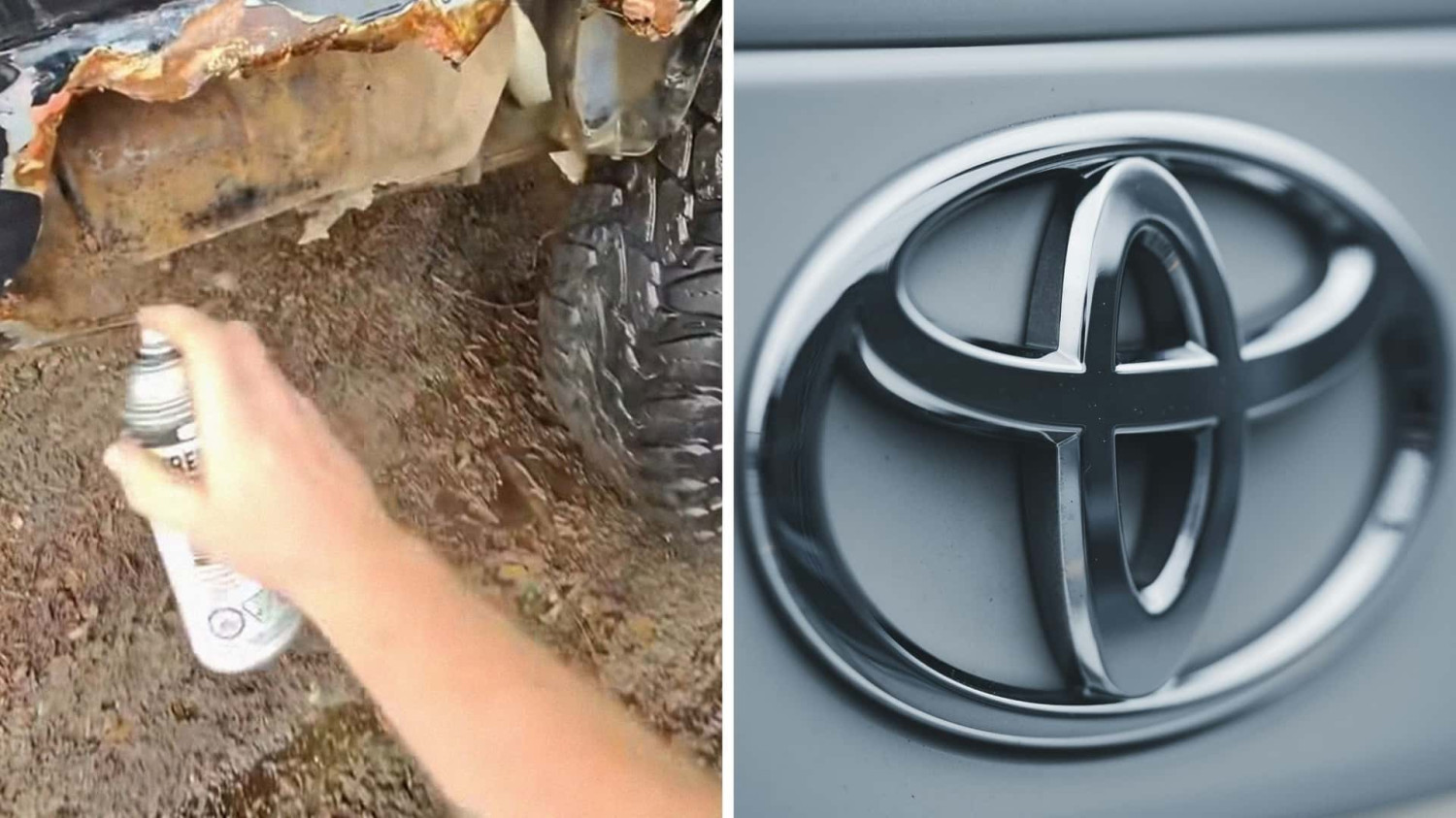
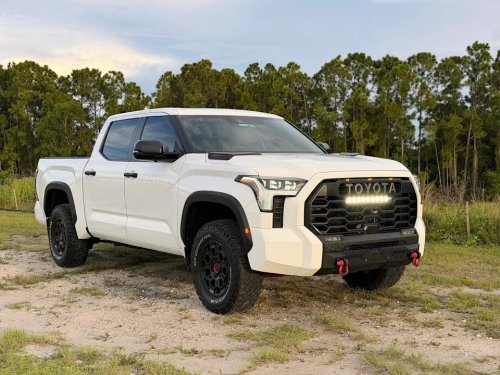
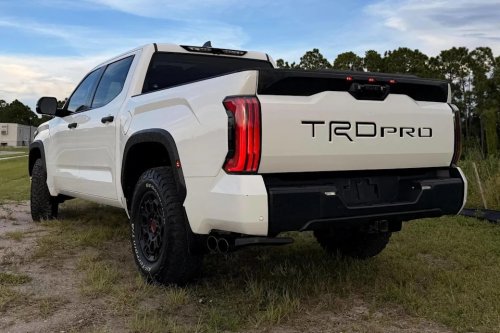
Who says body filler is the only way to combat rust and substantial corrosion? In a Facebook Reel that's been making the rounds, one truck owner takes a more immediate approach to cosmetically enhancing their Toyota truck. Faced with the visibly corroded section of a side panel, he skips the sanding and prep work and reaches straight for a can of black spray paint, applying it directly over the damage in a few quick passes. “Perfect!” user 22retrd exclaims at the end of the video, which has received more than 22,000 likes. He's clearly happy with the fact that, from a distance, the panel blends back in as mostly normal in appearance. Viewers Voice Their Approval It didn't take long for viewers in the comments section to quickly pile on with their own thoughts and opinions on what they were watching. A kind of agreed-upon rule materialized almost immediately: if you don't look too closely, then it works. “If you squint it’s mint,” one commenter wrote, while another added, “Looks good from my house.” Throughout the hundreds of comments, there was a kind of sneaky appreciation for a “fix” that looked good enough from a distance but depended on favorable angles and perspective to maintain the ruse. Others leaned into the resale angle. “$25,000 obo no rust no lowballers I know what I got,” joked one user, while another said the quick spray job probably just added a few thousand dollars to the truck's Marketplace price. Even though the video only shows one damaged panel, the humor quickly escalates into a familiar online trope: the “fully restored” vehicle that's anything but. Tell us what you think! View Comments At the same time, plenty of viewers admitted it wasn't entirely a joke. Several said they've done the same thing to older trucks and work vehicles, performing quick, cheap fixes to make something look a little better without committing to a full repair. There were also plenty of observers ready to administer a reality check. “Then the rust comes back through a week later,” one party pooper noted. Another pointed out that even minimal prep work, like sanding the area first, would make the fix last longer. What the tongue-in-cheek video really shows is less a repair than a visual reset. The fresh coat evens out the color of the panel and softens the jagged edges where corrosion has started to take hold. From a few steps back, especially if you squint, the truck looks whole again. The Real Rust Fix To state the obvious, what we see in the video does nothing to remedy the deeper issue, including the bubbling and flaking that's broken through the truck's paint and is eating away at the exterior. What may actually be happening after the paint gets applied is almost worse: There's a possibility that the paint could act as a kind of sealant, trapping in moisture and debris and giving the rust a better environment to keep spreading underneath the new coating. Still, there's a reason this kind of “fix” shows up so often. For older trucks, especially those that still run reliably, long-term restoration isn't necessarily an owner's primary goal. What's more important is keeping the vehicle usable without investing time and money into body work that may not feel justified. As one commenter put it, a running truck still has value, and cosmetic flaws don't really change that equation. Viewed in that light, a $6 can of paint can feel like a reasonable short-term fix. When it comes to actually addressing and repairing a set-in rust problem, the process is a lot more involved. The first step is removing the corrosion itself, which usually means sanding or grinding down the affected area until you're back to solid metal. If the rust has progressed far enough to eat through the panel, one possible solution could be patching or replacing sections entirely. From there, the exposed surface is treated with a rust converter or primer designed to stop any oxidation from spreading. It's at that point that you've actually arrested the damage, and it can't spread any further. After that, it's time for paint that gets applied in layers to match the surrounding finish and protect the metal underneath. In the reel, the “transformation” takes seconds, which is about how long it would hold up as a cover-up for the damage. It may work from a distance, but up close it's still obvious that there's a whole lot missing. Motor1 reached out to the creator via direct message and commented on the clip. We’ll update this if they respond. We want your opinion! What would you like to see on Motor1.com? Take our 3 minute survey. - The Motor1.com Team



















 +47 others



























































![Toyota's $15,000 Chinese EV spotted overseas in RHD [Images]](https://cdn.topcarnews.net/thumb/id/aHR0cHM6Ly9pMC53cC5jb20vZWxlY3Ry-ZWsuY28vd3AtY29udGVudC91cGxvYWRz-L3NpdGVzLzMvMjAyNi8wOS9Ub3lvdGEt-YlozWC1FVi1SSEQuanBlZz93PTE1MDAm-YW1wO3F1YWxpdHk9ODImYW1wO3N0cmlw-PWFsbCZhbXA7c3NsPTE/3fdd3b5d03bdc27308f0c99caa99667e.jpeg?t=20260922&post_id=64756)