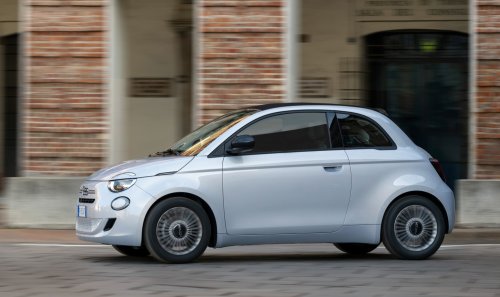
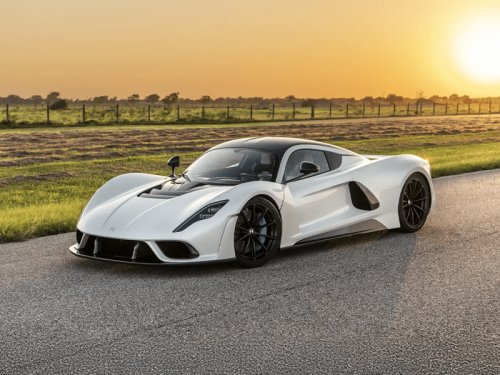
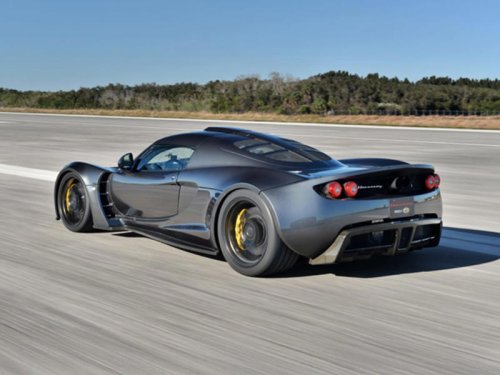
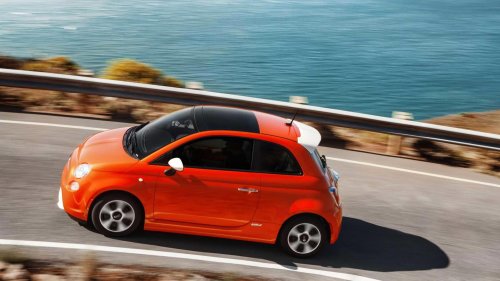
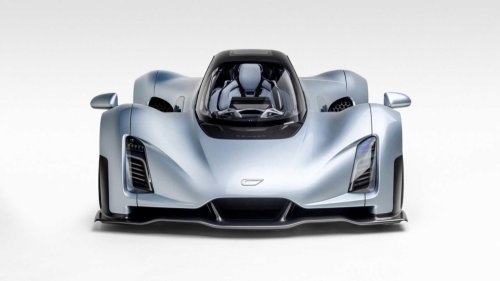
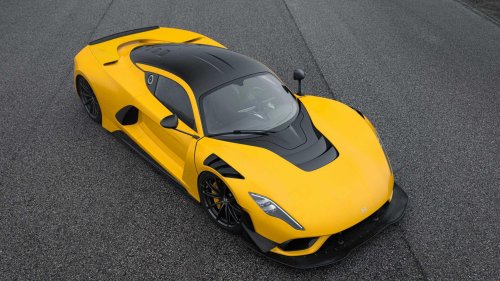
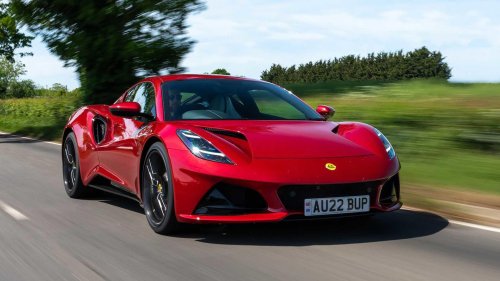
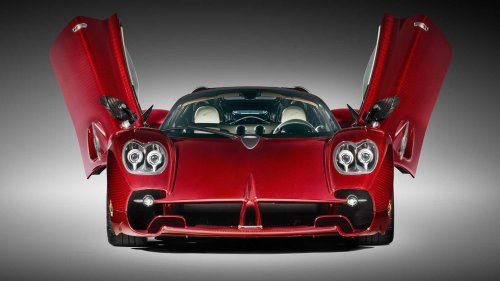
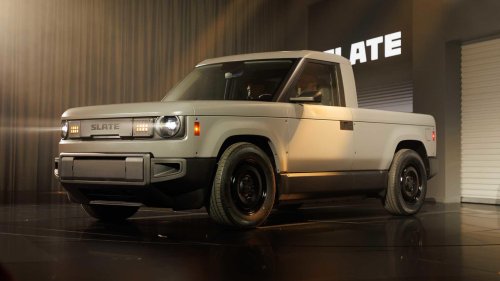
Most automakers, luxury or mass market, offer a wide range of models with different body styles. This business model enables brands to profit from various market segments and compete against multiple automakers.This approach can be made profitable through parts sharing across the model lineup, offering the same engines, transmissions, infotainment systems, and a variety of interior parts in multiple models to streamline production.This model has been widely adopted in the automotive industry. Even supercar brands like Ferrari offer multiple models to appeal to different buyers. Selling a single model is a rarity and often limits the potential profits of an automaker, limiting them to a single market segment.This typically happens with high-end or more niche sports carmakers that don’t have the production capacity to have a multi-model lineup, but there are odd exceptions to the rule.In the US today, only seven automakers sell an individual model. Fiat 2013 Fiat 500e Fiat was never the biggest seller in the US. Historically, the brand sold a few models here and there, notably the 124 Spider from the 1960s to the 1980s. This is very different from Fiat’s market position in Europe, where the brand has been a prominent volume seller, equivalent to Italy’s Ford or General Motors. In Europe, the brand sold a variety of compact models such as the Panda, Punto, and, of course, the 500.The 500 is the model that would be most familiar to Americans; the brand made a re-entry into the US market in 2011, with this model, a cute retro-designed little economy car. It was decently popular, selling over 100,000 units by 2015.Fiat even introduced other models to its lineup, like the compact crossover, the Fiat 500X, and the Fiat 500L, a small people carrier. However, sales slowly tapered off towards the end of the decade, and by 2019, Fiat once again disappeared from North America.However, Fiat would return again in 2024, with the 500e, an electric version of the 500. The 500e is one of the cheapest and worst EVs on sale, with a single 117 hp engine and a range of just 149 miles. Chrysler 2021 - 2026 Chrysler Pacifica Chrysler was once one of the American Big Three, right alongside Ford and Chevrolet. In the past, Chrysler held multiple positions in the market, being a luxury brand in the 1960s and 1970s, then offering more entry-level models with the introduction of its K-platform in the 1980s.In the 1990s and 2000s, the brand had a full model lineup, consisting of minivans, SUVs, compact and luxury sedans, and even a sports car. Despite the complete lineup, Chrysler didn't have the greatest reputation, with poor reliability ratings and build quality. The 2008 financial crisis heavily impacted the brand, with the company firing thousands of employees and shutting multiple facilities, declaring bankruptcy in 2009.In 2012, the brand merged with Fiat to create the FCA automotive group. In the 2010s, Chrysler’s model lineup was heavily cut down to just three models: the 200, 300, and the Voyager minivan. In 2021, FCA merged with European PSA to form the mega-automotive group Stellantis.Chrysler’s model lineup was reduced further, axing the 200 and 300, with only the Pacifica minivan soldiering on. This is still the brand’s only model, released in 2017 it's now approaching its 10th year in a very small market segment. Czinger 2025 Czinger C21 front stanceCzinger is one of the newest names in the supercar world and is gaining plenty of attention with its 21C, the only model the company makes and sells in the US. The 21C is a monster, using a twin-turbocharged 2.9-liter V8 in tandem with two electric motors powering the front wheels, resulting in a combined power output of 1,250 hp, which is achieved at 11,500 rpm.Despite the complex powertrain, the 21C remains relatively lightweight at a 3,570-lb curb weight, allowing the 21C to accelerate from 0–60 mph in about two seconds, and reach a top speed of 253 mph. This is due to how the car itself is designed, using 3D printed alloys and AI technology to develop its body and chassis.The result is one of the fastest and craziest supercars on sale today, with a single-seat configuration making the Czinger 21 look truly futuristic. All of this tech comes at a hefty starting price of around $2.35 million. Hennessey Hennessey Prototype Venom F5 EVOlution Hennessey Special Vehicles is a company that mostly focuses on tuning, rather than being a fully fledged automaker. The brand focuses on modifying cars from the big three American brands, Ford, GM, and Chrysler, with a particular focus on big V8 SUVs and muscle cars.The brand is capable of achieving some exceptional performance figures from these V8s, with power figures often exceeding 1,000 hp. The brand has used its expertise to make some of its own models in the past, notably the Hennessey Venom GT, which rode on a heavily modified Lotus Exige platform, and the brand’s current car, the Venom F5.The F5 gets its name from the Fujita scale used to measure the severity of tornadoes, with F5 being the most severe type with winds reaching between 261 mph and 318 mph. This is fully intentional as the F5 can achieve these speeds, with a recorded top speed of 311 mph. The F5 features an insane engine, a twin-turbo 6.6-liter Chevy small block V8 producing 1,817 hp and 1,193 lb-ft, equally matched by its insane $3-million price tag. Lotus 2023 Lotus Emira front, three-quarterLotus has always been a small-volume, niche brand with a focus on making lightweight performance cars. Despite having a US dealer network, the brand never had more than two different models occupying its showrooms. Today, that number is down to one, with the Emira being the only Lotus on sale in the US.The brand does sell other cars internationally, notably the Eletre SUV and Emeya super sedan. However, both these models are made in China, adding a massive 100 percent tariff to their price tag, bringing the price tag well into the $200,000 range, resulting in those models temporarily taking a hiatus from the US market. The only remaining Lotus model is the Emira, with the option of either a supercharged Toyota V6 engine or turbocharged Mercedes-AMG four-cylinder, both making 400 hp.The Emira is equipped with a manual transmission with the engine mounted in the middle, a true rarity in 2026. Pagani 2024 Pagani Utopia RoadsterPagani is a hypercar brand that's all about exclusivity. Each model has immense levels of craftsmanship devoted to producing the car. The interiors are immaculately finished, and each Pagani model can be ordered up to the owner’s desired specification.Despite being around for over 25 years, the brand has only ever produced three models: the Zonda, Huayra, and Utopia. Pgani has always used Mercedes-derived V12 engines, with each model easily rivaling supercars from mainstream brands like Ferrari and Lamborghini.The brand’s latest model, the Utopia, is no different, as its twin-turbo 6.0-liter V12 engine produces an immense 852 hp. Unlike its rivals, Pagani hasn’t forgotten what makes a supercar engaging, as it is still very light, weighing in at just 2,822 lbs, and is only available with a seven-speed manual transmission.Pagani models are always made in very limited quantities, with only 99 coupes and 130 roadsters planned. The price for this exclusivity starts at $3.4 million. Slate 2026 Slate Truck Slate Auto is one of the latest attempts at making an entry-level EV. The brand’s approach to its products is completely different from any mainstream automaker, allowing the consumer to select and customize all the options available on the truck. The brand’s only model is the Slate Truck, a base platform that allows customers to select between different body styles, accessories, and paint options.The Slate Truck was originally advertised as a $20,000 EV; that price has risen to around $27,000 for the entry-level Truck equipped only with the bare essentials, a Truck intended to truly meet the customers' needs. The Slate Truck has not been fully released to customers, with deliveries expected closer to 2027.




















 +72 others