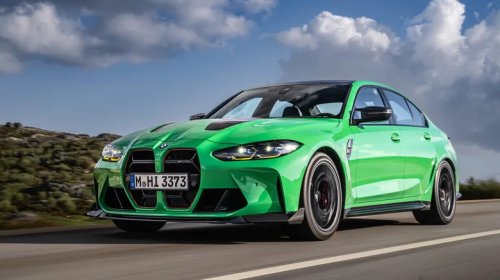
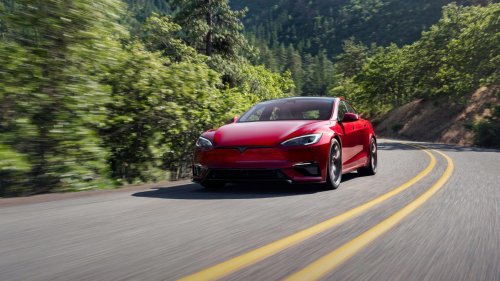
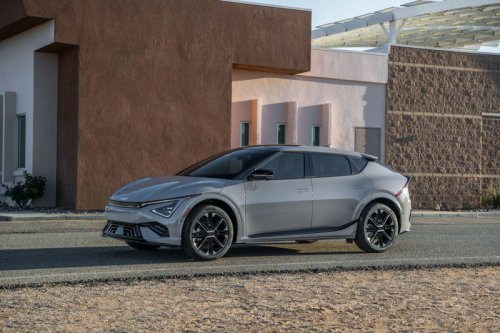
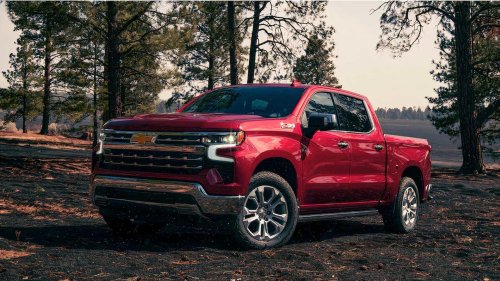
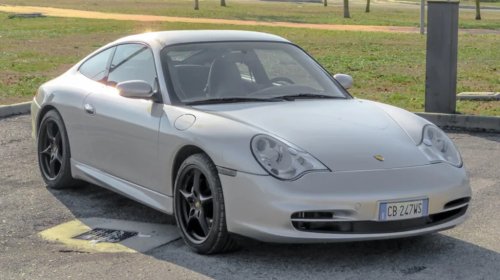
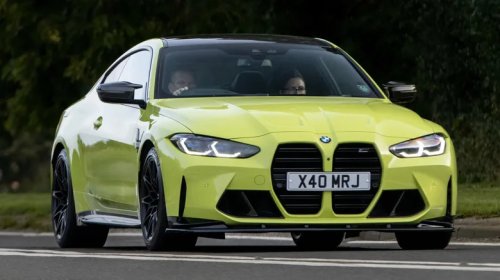
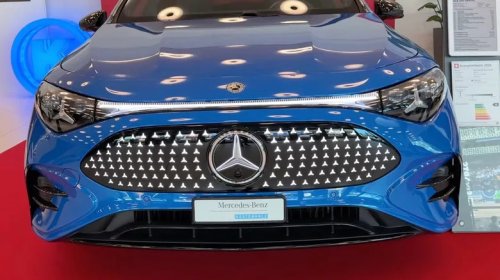
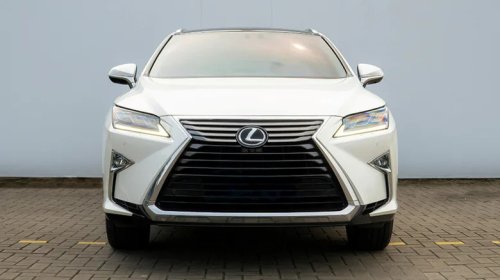
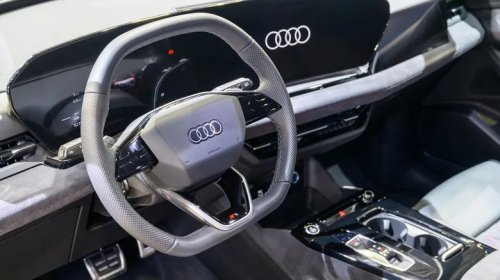
Bennymarty/Getty ImagesAutomotive design legacy is one of the biggest trump cards legacy brands hold over the newcomers. Some, like Renault with the Renault 5 or Ford with the Bronco, look back at their own history for inspiration, building modern iterations on top of what made those originals great in the first place. Other brands, though, spent decades earning that same trust from their customers and threw it away chasing something new.Take the Porsche 911 996. It rewrote what a 911 was supposed to be, and enthusiasts turned on it the moment it hit showrooms. Chris Bangle's E65 7-Series told a similar story, landing to one of the coldest design receptions of the era. Looking back, it's easy to pinpoint exactly what people couldn't forgive. For the 996, it was the egg-shaped headlights that replaced the rounded units that had defined the 911's face for decades.For the Bangle-era BMWs, it was the blobby Bangle-butt rear end — a notoriously bad design from an automaker that knew better. Both cars are proof of the same lesson to me: Reimagine something that's stood the test of time, and you'd better get it right. And yet, decades later, some automakers still haven't gotten the memo. Here are five signature design elements I think they need to leave in the past.AdvertisementAdvertisementRead more: 4 Common Problems With Inline-6 EnginesBMW Bugs Bunny grilleSue Thatcher/Getty ImagesPromise, I'm not out to purposely bash BMW's designers from two different eras, but if modern BMW design had a severe signature design problem, it was, and still is, the Bugs Bunny kidney grille. First fully introduced on the G-Series BMW 4-Series, BMW got rid of its reasonably-proportioned grille in favor of a more vertical design that never really gelled with its customer base.The 4-Series wasn't the only BMW to end up with oversized grilles. The 7-Series arguably even preceded it with the 2019 7-Series LCI redesign, a facelift that pushed the kidney grille to a size and shape it had never worn before on that model. That grille design later evolved into the Cyberpunk-esque G70 seventh-gen 7-Series, whose front end grew so large it dominates the car's entire face rather than sitting as one element within it.The BMW iX also adopted it, and so did many other BMW models. Thankfully, the enthusiasts' favorite, the BMW 3-Series, avoided it. Some people believe the big grille has found its own mojo in recent years — growing on people over time. I don't agree; to me, it was a step in the wrong direction, and I'm clearly not the only one. Some people hate these grilles so much that tuning brands now offer aftermarket front ends to hide them.AdvertisementAdvertisementThe reason these were so controversial ties back to what I talked about in the intro: Brands like these spent decades perfecting what their customer base loves, only to throw it away. I'm all for trying something new and rewriting the narrative — but as I said before, you'd better get it right.Mercedes star overloadcrospotter13/YouTubeThe new Mercedes CLA has a ridiculous 142 Mercedes stars that also light up, in case you were somehow going to miss them, and the overload doesn't stop at the grille. Both the front and rear lights get their own star-shaped detailing too. The overall look is bulkier than it needed to be, and lighting up the grille wasn't enough to save it — the same conclusion SlashGear's team reached when reviewing the new Mercedes CLA.The star theme keeps spreading from there; the optional multibeam headlights work a star motif into the running lights, and the rear lights carry the same shape, which feels like overkill when 142 bright badges on the grille were already making the point. Even the cabin isn't safe from the star obsession. Skip the optional screen on the passenger side, and instead of getting a cheaper, simpler setup, you're left staring at a dense cluster of star-shaped LEDs – which is a strange way to make the base option feel less premium by incorporating design choices that are intended as premium add-ons elsewhere.I'm split myself on how the lit-up grille actually looks in person, but the nighttime effect is hard to ignore either way. Even Mercedes' ambient lighting hasn't escaped the star treatment. The GLB takes it a step further, fitting a whole cluster of illuminated stars into the moonroof itself, which to me is a strange choice for a panel whose entire job is to show you the real night sky. The CLA also isn't the only one, as many newer Mercedes models have gone all out on the star pattern.Lexus spindle Darth Vader grillur_daily_fotografi/ShutterstockLexus's massive hourglass (or spindle) grille has defined the brand's face since the LF-Gh concept debuted the look in 2011, and it's remained one of the most argued-over design choices in the industry ever since. Longtime owners weren't shy about voicing their displeasure directly to the company. Lexus group vice president Jeff Bracken told TheDrive he'd personally fielded calls from disappointed customers that stretched "45 minutes to an hour," yet he insisted at the time that the design was staying put regardless.AdvertisementAdvertisementYears later, I think the backlash had merit — the spindle grille was turning buyers away, and it became a running joke that Lexus models that had it looked like Darth Vader. Not necessarily something you want when you're designing a premium car. It looks like an electric razor, and there's a bit of the toothy alien from the Predator films in there too. Nowadays, the 2023 Lexus RX's reworked mesh grille trades the hourglass spindle shape for something that looks a lot more like a pepper shaker to me — the same comparison our team reached at the time. The final nail was Lexus quietly shifting the design direction — folding the spindle shape into the entire car's body rather than isolating it at the nose. Whether that softer approach saves Lexus from another decade of Darth Vader jokes, I honestly don't know.Audi's questionable interiorSjoerd Van Der Wal/Getty ImagesAudi used to be known for restrained, button-heavy interiors that prioritized function over flash. That's changed with the "MMI panoramic display," a single curved screen merging the instrument cluster and main touchscreen into one glossy black slab, first seen on the Q6 e-tron and now spreading across the lineup.Like every other person with a set of two eyes, I called it early myself, noting that not everyone would appreciate Audi's decision to ditch physical controls in favor of screens and voice commands — a warning our team also raised when covering the Q6's interior. The interior itself feels a bit too plasticky for the price point, with acres of piano black replacing what used to be aluminum trim and hard, tactile buttons — a real departure from the clean, purposeful Bauhaus-inspired style Audi built its reputation on. Build quality hasn't escaped criticism either.AdvertisementAdvertisementOwners haven't just complained about the look of the new cabin – squeaks, rattles, and an overall drop in build quality have shown up in complaints too, even on nearly new cars. The glossy black trim around the new display has drawn its own complaints. To me, that much piano black tends to look good in press shots, and it looks sharp on the showroom floor, but it scratches and dulls fast with any real-world use, leaving the cabin looking cheap within months of ownership.Even Audi seems to agree the backlash has a point. Newer Audis are already moving away from the worst of it — the new Q9 noticeably scales back the piano black in favor of matte and textured finishes instead, and I'd expect the rest of the lineup to follow. I'll believe the full course-correction when I see it everywhere, but it's a start.Tesla's steering yokeSjoerd Van Der Wal/Getty ImagesPretty much every car built since the early 20th century has used some version of a round steering wheel, for good reason; it's simple, predictable, and every driver already knows how to use one. Tesla broke away from that in 2021, replacing the wheel on the refreshed Model S and Model X with a flat-topped, flat-bottomed "yoke," styled after the control column found in an airplane cockpit.To me, the yoke is a mess to actually live with. It slips out of your hands mid-turn, leaves your arms sore after normal driving, and makes it hard to tell which button controls which turn signal since the buttons rotate along with the wheel itself. Sometimes you really shouldn't reinvent the wheel, and this was one of those times.AdvertisementAdvertisementTesla CEO Elon Musk never pretended the change was about function. He put it bluntly on his very own X — a normal round wheel is "boring & blocks the screen." I'd rather have the boring wheel — a steering wheel's entire job is to be predictable in your hands at speed, not to look good on a spec sheet or a video for social media.Tesla did start offering a normal round wheel as a no-cost option in January 2023, and owners who'd already bought a yoke-equipped car could pay to have it swapped out for a traditional wheel instead. That would read as a real concession — except Tesla also quietly raised the yoke's price fourfold that same year. That's not a company backing away from a bad idea. It's a company charging a premium for the privilege of opting out of it.Want the latest in tech and auto trends? Subscribe to our free newsletter for the latest headlines, expert guides, and how-to tips, one email at a time. You can also add us as a preferred search source on Google.Read the original article on SlashGear.




















 +65 others