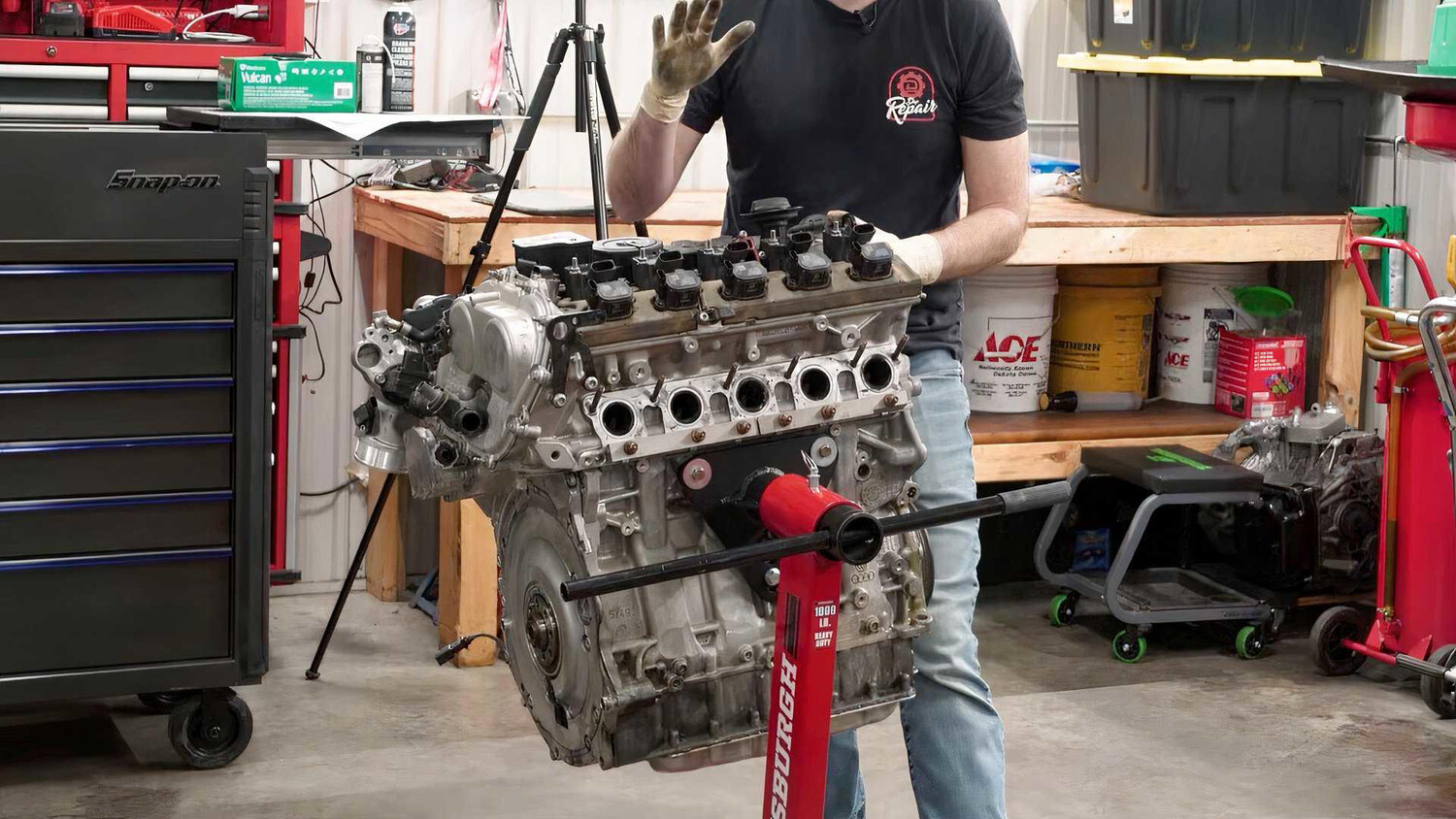
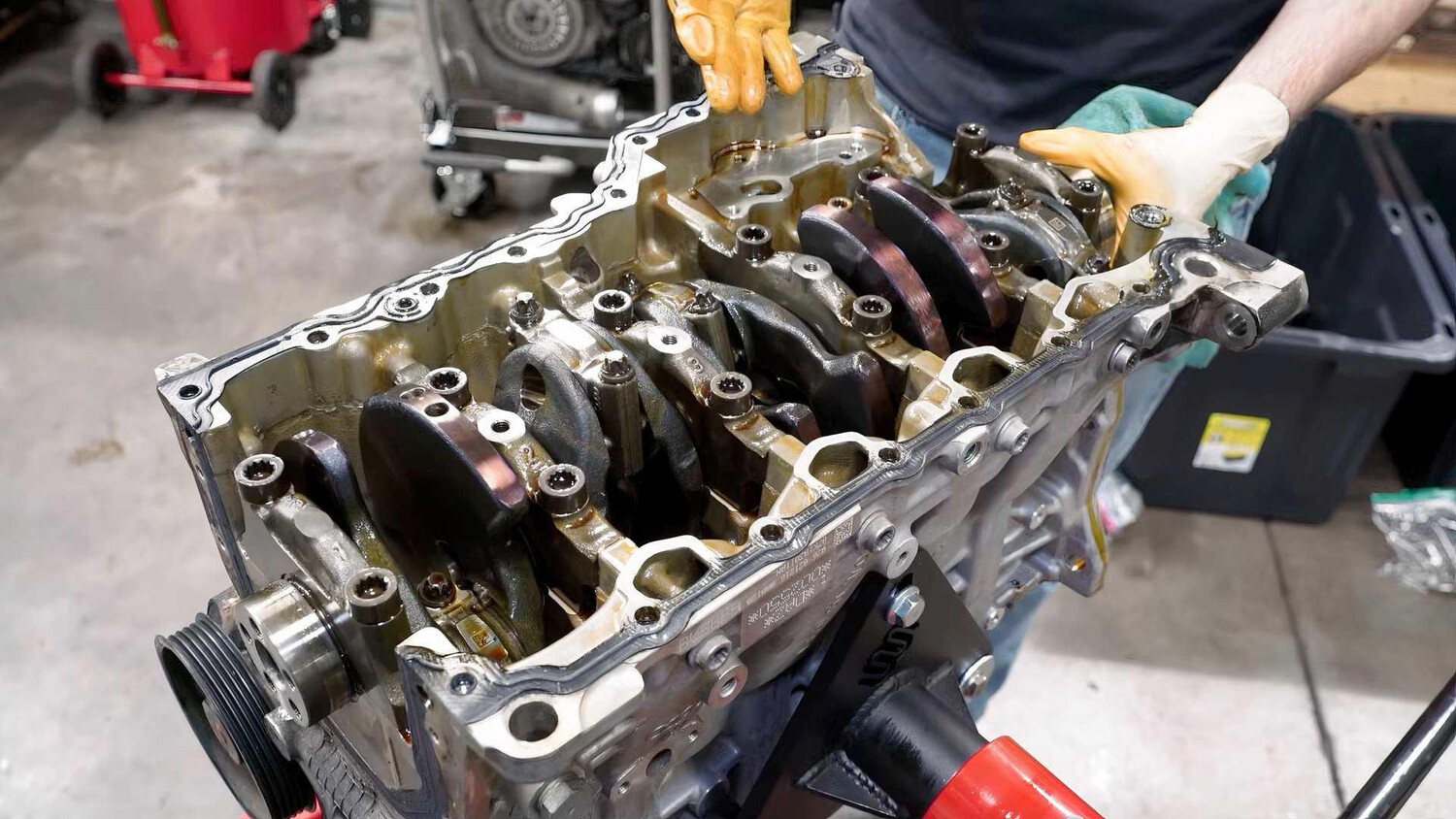
Morgan Moreau · 6 months ago@morganmoreau59Audi 2.5T engine teardown reveals secrets of a high(er) mileage 5-cylinder legend Liked by+43 othersPost commentRelated PostsAudi Could Save Its Five-Cylinder The Same Way Lamborghini Saved Its V12 52 · Connor Leblanc · 2 months agoThe US May Rewrite Some Rules Of The Road To Fight Annoying, Overbright HeadlightsAbigail Rogers · 14 days agoAudi Is Still Fighting to Save the RS3’s Iconic 5-Cylinder Engine from Extinction 55 · Audrey Roy · 2 months agoAudi Wants Its Future EVs To Shoot Sparks, Make Noise, And Even Emit SmellsDaniel King · 15 days agoAudi Doesn’t Want to Let the RS3's Iconic Inline-5 Engine Die 60 · Caleb Girard · 2 months agoJaguar Type 01 Is Still Divisive, but Early Reactions Are Less BrutalAnnabelle Bouchard · 15 days agoHere's How Much A 2020 Audi RS3 Has Depreciated In Six Years 84 · Morgan Young · 2 months agoThey Found a Rare Fast & Furious Prop Car in Montana—Then Sliced It Onto an Off-Road BuggyAudrey Fortin · 15 days ago2027 Audi RS3 85 · Hannah Moreau · 2 months ago2012 Audi A4 Avant for Sale With 124,000 Miles ShownNicole Mitchell · 15 days agoVW Built A 1,000-HP Golf With An Exhaust That Exits The Front Bumper 53 · Zoë Mitchell · 3 months agoNext Porsche Panamera, Audi A8 Will Reportedly Share Both a Factory and a PlatformAmélie Campbell · 16 days agoThis $570,000 Audi Sport Quattro Tribute Isn’t Built From A Real Quattro 66 · Gabriel Anderson · 3 months agoNext Audi A8 Porsche Panamera Will Reportedly Share Platform, FactoryLucas Wilson · 16 days agoAudi Sport Quattro Returns in Restomod Form with Carbon Panels and More than 500 Horsepower 92 · Charlotte Roy · 3 months agoNHTSA to Look Straight at Headlight Regs Without BlinkingSamuel Turner · 16 days agoThe Audi RS5’s Electro-Mechanical Diff Powers an Impressive New Age For Quattro Driving Control 10 · Charlotte Lee · 4 months agoOne Third Of The Car Brands At The 2026 Paris Auto Show Are ChineseAmélie Nelson · 16 days agoBuh-Bye Buttons! The 2027 Audi A3's Updated Cabin Trades Physical Controls for More Screen Acreage 73 · Mason Green · 4 months agoThe Best Cars Doug DeMuro Ever Drove Cost Between $20K and $9M — Find YoursEmily Carter · 16 days ago


 +43 others