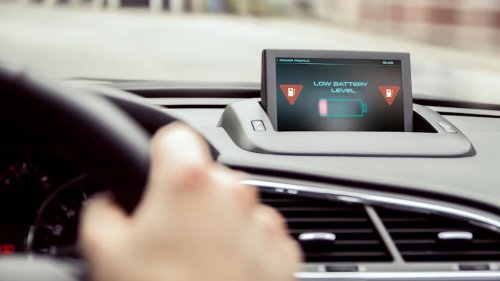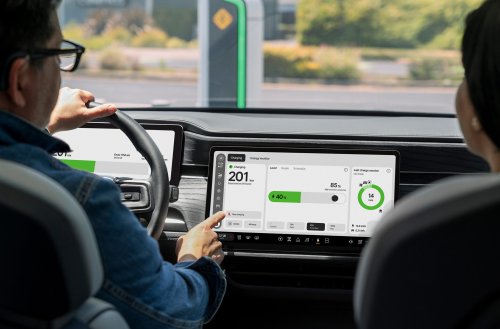


















Electric, shmetric. A car is a car, right? You get in, start it up, and go where you need to go. What’s the big deal? That sort of thinking is what nearly killed Hertz after its owners — a couple of B School whiz kids with more money than brains — decided to buy 100,000 Teslas and rent them out like they were Kia Souls and Toyota Corollas without telling their customers about how and where to charge them. Their idiocy nearly put the company back into bankruptcy. The truth is, an EV is different than a conventional car, and yet automakers and dealers do a miserable job of informing their customers about those differences. This summer, my wife and I met someone driving a Volkswagen ID.4. Her three year lease was nearly up and she was leaning toward getting a conventional car instead. Her primary concern was that her condo association refused to allow her to install an EV charger. When we told her our Chevy Bolt was plugged into a standard wall outlet about 90 percent of the time, she was shocked! No one ever told her she could charge her car using just a wall outlet. Living in New Hampshire where it gets chilly in the winter, she was also disappointed by how long it took to charge her car when the temperatures outside dropped below freezing. When we told her about preconditioning the battery in cold weather, her eyes glazed over. Three years with an EV and the word “preconditioning” had never been mentioned to her. Shame on Volkswagen for letting a customer out the door without a proper orientation and double brickbats to the dealer who allowed that to happen. There are a few areas that distinguish an EV from a conventional car, and since no one wants to talk about them, we feel it is our duty to take up the slack. The two primary areas that need to be addressed are range and charging. Let’s get to it, shall we? Range A conventional car wastes an incredible amount of the energy contained in a gallon of gasoline. A typical new car or truck today only converts 20 percent or less of that energy into forward motion. The rest is mostly wasted as heat. Let’s put this into perspective. An EV with a 65 kWh battery has about the same energy potential as two gallons of gasoline. Maybe in the future, batteries will exist that have an energy density similar to gasoline, but for the time being, such batteries are just a gleam in some physicist’s eye. That difference means we need to think differently about electric cars. The first thing anyone asks about an EV is, “What is its range?” The EPA calculates range based on information provided by manufacturers, but how accurate are its predictions? Range is basically how far can a car go starting with a 100 percent state of charge until it runs out of battery power and coasts to a stop. But nobody in their right mind would do such a foolish thing, would they? Assume you start with 90 percent state of charge and stop to recharge with 10 percent remaining — a much more likely scenario. Now you begin every journey with 20 percent less range. What used to be 300 miles becomes 260 miles. Then there are all the things that also affect your range — things like speed, hills, temperature, and whether you plan to user the heater or the air conditioner while you drive. Even having the windows open can affect how far you can go, and yet nobody seems to consider those factors. They just want to know the EPA range estimate and assume it will apply to them. The fact of the matter is that conventional cars waste so much energy, driving 85 instead of 70 makes little difference in how far you can go. In an EV, that difference could be 20 percent or more. And while some will see that as a justification for sticking with a conventional car, are you comfortable knowing you are paying almost five bucks a gallon for gas and pissing away 80 percent of the energy you paid for? Charging When it does come time to charge your EV, there is whole host of other unknowns to deal with. How do you pay for the electricity you use? Do you need to have a preset amount available with a charging company? How many charging apps do you need? If your car is eligible to use the Tesla Supercharger network, your charging session is billed directly to the credit card you have on file with the company. Otherwise, payment can be an issue. How do you find an available charger when you need one? Google Maps does a decent job of identifying them in your area. A Better Route Planner and MapQuest do so as well. If you have an account with Tesla, its app will show you detailed information about nearby chargers, including how many there are in total and how many are in use at the moment. What’s A Charging Curve? Now let’s consider something most people have never heard of — the charging curve. Lots of manufacturers brag that their cars can charge at 250 kW of power or more, but for how long? The company that makes the car writes the algorithm that controls the charging process. It is designed to keep the battery from overheating and to prolong its service life. That usually means charging speeds begins to taper as soon as the state of charge reaches 40 percent. Above 80 percent, the process may slow down so much that it is actually faster to do two charging sessions from 20 to 70 percent that one from 10 to 100 percent. Recently, one of our readers reported he routinely has shorter charging sessions than the Teslas he is sharing a Supercharger location with because the Tesla algorithm slows down charging much more than the algorithm in his Volkswagen ID. Buzz. Your car’s charging curve will be a major factor in your charging experience and yet almost no one talks about it — certainly not the manufacturers and dealers who should be educating their customers but refuse to do so. EVKX is an excellent website that supplies accurate information about the charging curves of various EVs. Recurrent is another reliable resource. Another thing we told the person with the ID.4 was about preconditioning. For fastest charging, the battery needs to be at the proper temperature — not too hot and not too cold. Teslas do this automatically once you select your preferred charging location. For other brands, look in the owner’s manual. It’s in there somewhere, even though you dealer forgot to tell you about it. The Takeaway The point is this. An EV is NOT a conventional car and if you buy or lease one without understanding the differences, you risk being seriously disappointed. Driving an EV requires thinking differently about your transportation experience. There is a bit more planning needed, for instance. But the reward is a much lower cost of operation, a quieter ride, and the joy of knowing you are not crapping up the atmosphere with the crud that pours out of the tailpipes of conventional cars. There is also the trill of instantaneous acceleration, and learning to use the precise control regenerative braking makes possible. Some EVs can help you power your home during a blackout. Can your Belchfire 5000 do that? If you are on the fence about driving an EV, try asking your friends who drive one about their experiences. There are many advantages to electric motoring but also a few quirks that can be unsettling if you don’t know about them in advance. CleanTechnica has many tools available to help educate people about the EV experience. We invite everyone to make use of those resources. Also, please share your own EV experiences in the comments. The more we know, the less anxiety we will have about making the switch to battery power.