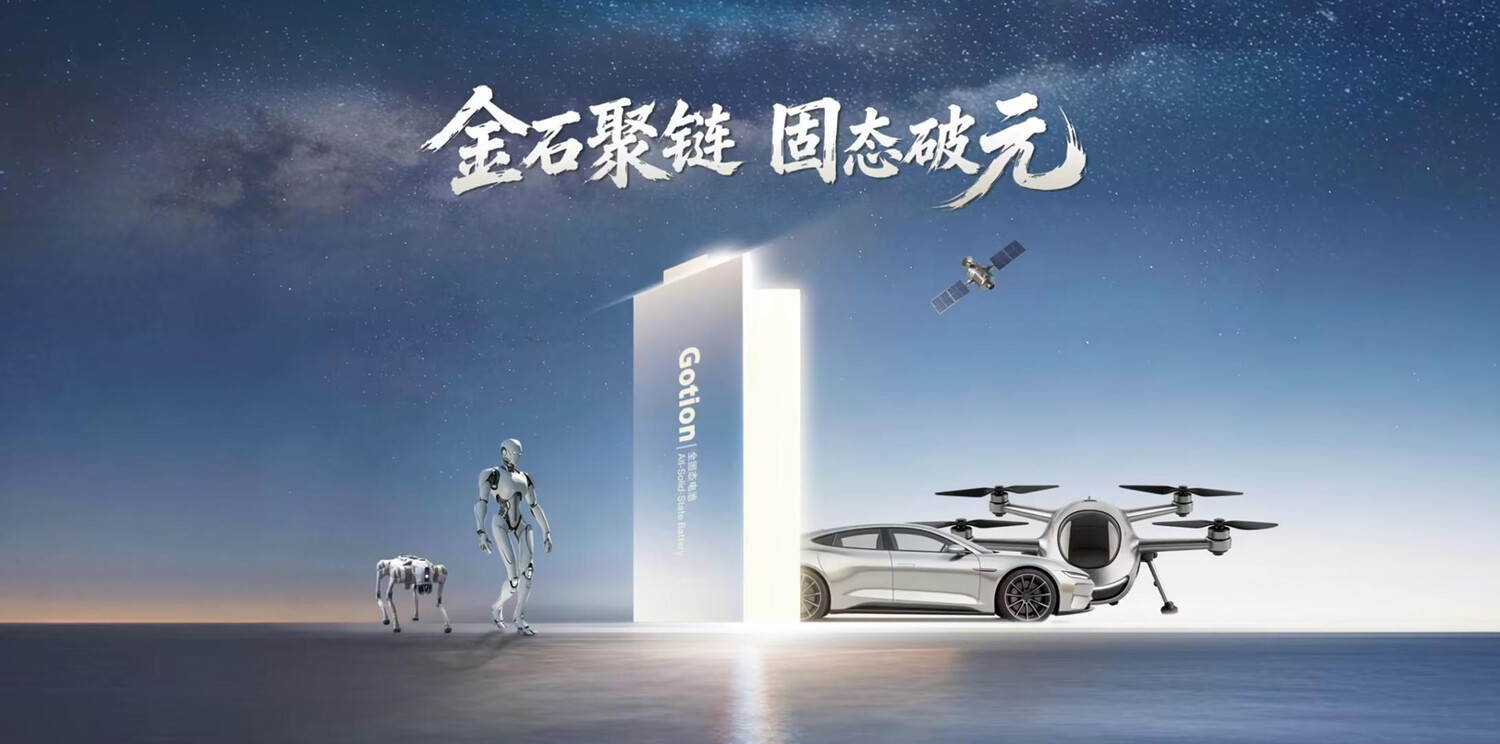
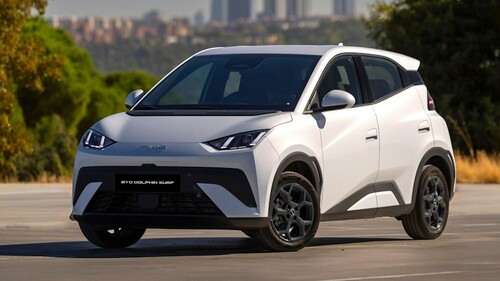
Gasgoo Munich- "I'll wait a bit longer. Once all-solid-state batteries hit the road, I'll switch cars."I first met Da He in late 2015. He was driving an Audi Q3 he'd bought less than a year earlier and spoke with authority about cars. Over the next eleven years, changing cars became a recurring topic between us—yet it always stalled on excuses like "the design is too ugly," "the rear seats don't fold flat," or "better wait for the next generation," before fading away.As a traditional internal combustion engine owner, Da He wasn't uncurious about pure electric vehicles—he just lacked a "sufficient" reason to take the plunge. That is, until the last two years, when he found a new anchor point: waiting for all-solid-state batteries. In his view, this technology offers both safety and long range, perhaps the perfect catalyst to say goodbye to fossil fuels.But recently, Wang Deping, chief scientist at FAW Group, made a sobering statement at the 2026 China Automotive Forum: all-solid-state batteries may not be as safe as we imagine. "Once thermal runaway occurs, the damage is extreme," he warned. Ouyang Minggao, an academician at the Chinese Academy of Engineering, was even more blunt in public, telling consumers there's no need to wait for all-solid-state batteries.Da He is starting to waver.And he's not alone. Consumers are growing confused. Is this battery technology, touted as the "ultimate solution," a genuine industrial revolution or a collective misconception fueled by marketing?Automakers Sell "Futures," Consumers Get "Misled"All-solid-state batteries have ignited consumer fervor because they target the three biggest "anxieties" of EV owners: fear of fire, limited range, and slow charging."Solid-state batteries never self-ignite," "range exceeding 1,500 kilometers," "500 kilometers of range in 5 minutes"—these soundbites from product launches are devastatingly effective for average consumers. More than once, ride-hailing drivers have chatted enthusiastically about it: "Once solid-state batteries are out, we won't be wasting time charging anymore."But have you considered this problem: Not a single car claiming to be equipped with "solid-state batteries" in 2026 is truly "all-solid."Image Source: SAIC MGThe so-called "solid-state mass production" of 2026 is fundamentally the large-scale rollout of semi-solid batteries. These still retain 5% to 15% liquid electrolyte, are compatible with most existing production lines, and achieve energy densities of 350 to 400 Wh/kg. Meanwhile, truly all-solid-state batteries with zero liquid electrolyte are still stuck in laboratories and pilot lines.The national standard GB/T "Solid-state Batteries for Electric Vehicles Part 1: Terms and Classification" officially took effect on July 1, 2026, clearly drawing a line between "all-solid" and "semi-solid." Yet in the overwhelming marketing bombardment, these two terms are being intentionally or unintentionally conflated. When a salesperson at a dealership wins you over with the pitch "solid-state battery range breaks 1,000," you likely don't realize: the money you're spending buys a liquid battery "supplemented with a small amount of solid electrolyte."Even more surreal is the attitude toward the "timeline" across the supply chain—it's practically a public case of contradictory accounts.Automakers are competing to announce louder than one another. Chery says all-solid-state will debut in mass production on Exeed in 2026; GAC says it will start small-batch installation in 2026; Geely says it will launch its first prototype vehicle in 2026.Each more radical, each more certain than the last.Battery makers, however, present a completely different face. CATL rates its all-solid-state technology maturity at only Level 4 (out of 9), and Chairman Robin Zeng stated bluntly: the possibility of achieving installations of one million units before 2030 is slim. BYD has similarly set its timeline for "small-batch installation" in 2027.Automakers are selling "futures," while battery makers are dealing in "spot goods." The disparity between them isn't a year or two—it's the fundamental chasm between the laboratory and the production line, between samples and commodities.Academician Ouyang Minggao couldn't stand by and addressed consumers directly: "Don't wait." He put it plainly: current electric vehicles are already excellent. Lithium iron phosphate batteries need charging once a week, handle long distances without worry, and are cheap. The theoretical advantages of all-solid-state batteries at this stage are merely "marginal improvements" for daily commuting—far from being an indispensable necessity.But did consumers believe him? No. Because human nature is constant: when someone tells you "wait two years for the perfect thing," it's hard to willingly accept the "good enough" choice right now. Even if that "perfect thing" might not have a confirmed arrival date, even among experts.The Charge on the Marketing Battlefield vs. The Brake in the LaboratoryThe logic behind the automakers' "charge" isn't hard to understand. With electrification competition reaching a boiling point, the six words "I have solid-state batteries" are the most effective tag for boosting a brand's tech image right now. Announcing it first lifts stock prices, grabs attention, and drives orders. It's a classic marketing game where "the first mover gains the advantage."And so you see a series of promises: Chery building pilot lines, GAC building high-capacity production lines, Geely releasing prototypes... more aggressively than the next.But the battery makers' decision to "hit the brakes" is equally rooted in profound industrial logic.As the suppliers ultimately responsible for product safety, lifespan, and cost, battery makers know better than anyone: between generating data in a lab and stably producing 100,000 qualified automotive cells on a production line lies a chasm called "engineering."On June 24, 2026, at the Summer Davos Forum in Dalian, Robin Zeng broke this issue down in detail. He offered a very clear "triple jump" framework—technology roadmap, product roadmap, commercial roadmap. These are three completely different stages."If the solid-state battery technology roadmap is levels 1 to 9, we are currently only at level 4; level 9 is mass production ready," Zeng stated bluntly. But clearing the technology roadmap is just the first step. "Then there's the product roadmap—do we have enough supply? Is the reliability and safety of the produced product up to requirements?" Even if product and supply are cleared, there's a third hurdle—the commercial roadmap. "Is what we made actually accepted by the market? Can it sell in volume?"Put simply: making it in the lab, manufacturing it on a line, and getting consumers to buy it are three completely different things. And all-solid-state batteries haven't even finished the first one yet.A representative from the Ministry of Industry and Information Technology's Equipment Industry Development Center has also explicitly pointed out that "solid-state batteries are still in a critical period of transition from laboratory to pilot testing; they are at least 3 to 5 years away from mass production, making large-scale commercial application difficult in the short term."The key here is that the term "mass production" doesn't mean the same thing to automakers and battery makers.Image Source: GasgooWhen automakers say "installation in 2026," they mean "building a few prototype cars to drive around and verify technical feasibility." This is completely different from "you can buy one at the local dealership."When battery makers say "small-batch mass production in 2027," they mean "the production line is connected and can stably output products in the thousands." But where do these products go? Most likely to automakers for targeted operational testing, or installed in limited-edition luxury cars costing millions as "tech totems." They still have nothing to do with ordinary consumers.An even harsher reality is hidden in the technology roadmap. The industrialization of all-solid-state batteries is divided into three generations: the first (2025-2027) uses graphite/low-silicon anodes, with the core task of clearing the full technical chain; the second (2027-2030) uses high-silicon anodes, aiming for 400 Wh/kg; the third (2030-2035) uses lithium anodes, targeting 500 Wh/kg.Each generational leap isn't a patch on the existing foundation, but a complete reconstruction of the material system and core processes. Those marketing pitches that currently treat "solid-state" as a core selling point are essentially promoting a concept whose roadmap hasn't even been finished.Who wins in this game?Automakers win the attention. Battery makers hold the bottom line. Consumers, amidst the intense noise of "solid-state is coming," hesitate, wait, and repeatedly miss out on the mobility experience they could have right now—the person standing at the bottom of the information gap is always the one paying.Spend an Extra 80,000 for "Peace of Mind"?If the dispute over timelines can be dismissed with "just wait a bit longer," then cost and engineering issues are two solid concrete walls standing before all-solid-state batteries—no matter how much you insist, they won't budge.Consider the stark calculation first. Current all-solid-state battery cell costs are as high as 1.6 to 2.2 yuan per Wh, while mainstream lithium iron phosphate batteries are just 0.39 to 0.5 yuan. Spread across a 70 kWh vehicle, the all-solid version costs more than a BYD Seagull—about 70,000 to 80,000 yuan. At Davos, Robin Zeng pointed to the core issue: "To reach the million-vehicle level, cars must be affordable enough. This presents difficulties in both performance and cost."So where exactly is the money going? Gotion High-Tech provided the answer at its 2026 Global Technology Conference: 70% to 80% of the cost of sulfide solid-state batteries comes from the electrolyte, and 70% to 80% of that electrolyte cost comes from lithium sulfide. A simple multiplication shows that lithium sulfide alone accounts for about 50% to 64% of the total cost of an all-solid-state battery. Gotion Senior Director Pan Ruijun put it bluntly: to achieve cost reduction, conquering lithium sulfide is the first step.The industry has set a clear target: when lithium sulfide drops to 500,000 yuan per ton and electrolyte to 300,000 yuan, solid-state batteries will enter the "one-yuan era"—cell costs falling to 1 yuan per Wh. Currently, lithium sulfide is around 2 million yuan per ton, over seven times the cost of liquid battery materials. The drop from 2 million to 500,000 isn't a gentle price reduction; it's a systemic revolution from synthesis processes to production capacity.Gotion is already making moves. They pioneered a "gas-liquid-solid three-phase synthesis method," with a 1,000-tonne production line commissioned in 2026, aiming to build 50,000 tonnes of annual capacity by 2030.But material cost reduction is only half the story. Even if lithium sulfide prices come down, there's another cost to bear on the manufacturing floor. Sulfide electrolytes are extremely sensitive to air, requiring a dew point below -60°C, meaning existing liquid production lines cannot be reused at all. The rigid solid-solid interface requires high-pressure pressing and other extra steps, increasing complexity and energy consumption. Cycle life is generally lower than liquid batteries, offering no total lifecycle cost advantage. Plus, with technical routes not yet converged, equipment suppliers cannot produce generic machines at scale, keeping investment per line high.Yang Rukun, a researcher at the Institute of Physics, Chinese Academy of Sciences, notes that true cost reduction can't rely solely on material price drops; it requires a revolution in manufacturing technology. Developing continuous production processes and promoting equipment localization and standardization. It is reported that equipment companies like Liyuanheng have already started laying out specialized solid-state battery equipment. On the scenario side, the industry agrees on a "niche first, mass market later" path: landing first in high-premium scenarios like low-altitude economy and humanoid robots to accumulate volume and spread costs, then gradually permeating into high-end and mainstream passenger vehicles.Image Source: Gotion High-TechIndustry estimates suggest bringing all-solid-state batteries from the current 2 yuan/Wh down to 1 yuan/Wh will, optimistically, take until 2028 to 2030. Yet liquid lithium batteries took nearly 30 years to drop from tens of yuan/Wh to 1 yuan/Wh. Robin Zeng's "triple jump" framework forms a complete echo here—the technology roadmap (currently TRL 4) is only halfway done, while product and commercial roadmaps are even further away. Each hurdle requires massive amounts of capital.Mass Adoption May Arrive Much Later Than You ThinkSo the question remains—when will all-solid-state batteries truly enter the lives of ordinary consumers?If you ask an automaker's product launch, you'll get a pile of optimistic promises like "coming next year." But if you synthesize the collective judgment of battery makers, experts, and frontline engineers, a more realistic, calmer timeline emerges.Short term (2026-2027): Testing and validation, irrelevant to ordinary consumers. 2026 is the "year of testing" for all-solid-state batteries. From the end of this year to next, prototype cars equipped with all-solid-state cells will hit the road one after another. But what are these cars doing on the road? Collecting data, finding problems, testing limits—this has nothing to do with what you can buy in a store. Ouyang Minggao was conservative but clear: mass production likely still needs 3 to 5 years.Mid term (2028-2030): Costs begin to fall, serving the "wealthy" first. By 2028 to 2029, all-solid-state costs are expected to drop to 1.2 to 1.5 yuan/Wh, beginning to meet preliminary conditions for permeating mid-to-high-end passenger vehicles. But note, this "permeation" has a clear route—2026 to 2027 on million-yuan luxury cars as tech totems; 2028 to 2029 dropping to 300,000-yuan-plus flagship models from new automakers; only after 2030 is it possible to enter the 150,000 to 250,000 yuan mainstream family car market.Image Source: CATLRobin Zeng's judgment that installations of one million units before 2030 is "unlikely" is essentially calibrating this timeline. What does a million vehicles mean? It means costs must drop low enough for 150,000 to 250,000 yuan mainstream models to afford them. And that road is longer than anyone imagines.CITIC Securities predicts global all-solid-state battery shipments will exceed 200 GWh by 2030. While this sounds impressive, placed against the year's total global power battery demand, the share will still be in the single digits.Long term (Post-2030): Only then can we talk about scale. Leading enterprises have a tacit, unified plan: small-batch installation in 2027, entering mass production stage by 2030. But Changan Automobile Vice President Deng Chenghao told the truth: 2030 is already a very optimistic expectation; the real point of large-scale application might be 2035.Ouyang Minggao extended the timeline even further: it may take another 5 to 10 years for all-solid-state batteries to truly form a scale and capture 1% of the market.What does 1% mean? In any mature industry, a 1% market share isn't called "ubiquity"—it's called "just getting started."Moreover, even if all-solid-state batteries truly reach mass production, they won't completely replace existing technologies. This isn't a zero-sum game of "winner takes all." Lithium iron phosphate, with its ultimate cost-performance ratio, will long dominate the mainstream market; semi-solid batteries, as a transitional solution, will see a critical window for scale penetration from 2026 to 2028; all-solid-state batteries will primarily anchor the high-end market, playing the role of the "crown jewel"—rather than a "universal standard."Policy support is indeed increasing. All-solid-state batteries have been written into the "15th Five-Year Plan" guidelines, and a 6 billion yuan national special fund pool is in place. The new national battery safety standard implemented on July 1, 2026, requiring batteries to "not catch fire or explode within 2 hours," is also indirectly pushing the application of solid-state technology.But policy can accelerate R&D, yet it cannot skip the laws of physics themselves. Material synthesis takes time, interface optimization requires trial and error, production line debugging burns money, and road verification needs mileage. These things cannot be conjured by throwing money, holding meetings, or shouting slogans.Ouyang Minggao's words are worth reading again: "New technologies often start as 'the Ugly Duckling.' Technology cannot be achieved overnight; it must be the result of accumulated strength."ConclusionReturning to the opening question: are all-solid-state batteries really worth such high expectations?The answer is worth the anticipation, but shouldn't be over-hyped.All-solid-state batteries are indeed an important direction in the evolution of power battery technology—higher safety limits, higher theoretical energy density ceilings—these are objective facts. China's patent share in this field has reached 44% of the global total, surpassing Japan, which is also a source of pride for the industry.But we must clearly see the other side: from the laboratory to mass-produced cars, from samples to commodities, lie three chasms of cost, engineering, and scaling. Crossing each requires time measured in years, capital measured in hundreds of millions, and countless trials and errors where "failure and retry" is the norm.Even if the technology route is cleared, there are still product and commercial hurdles. Can supply keep up? Can reliability and safety meet standards? Will the market accept it? Can it sell? Every hurdle is a make-or-break situation. It requires time, patience, and real money in R&D—not being forced under the marketing spotlight to hand in an exam paper it isn't ready to complete.Maintain respect for ultimate technology, but don't sacrifice your current satisfaction on a gamble where even the finish line is unknown.