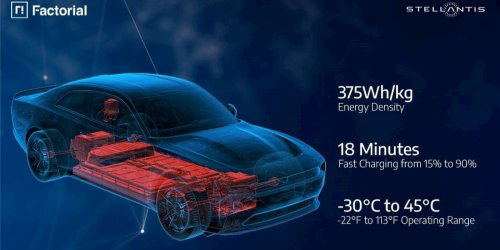
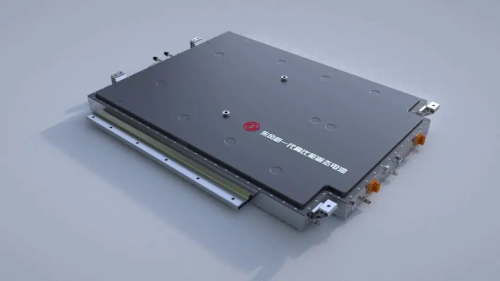
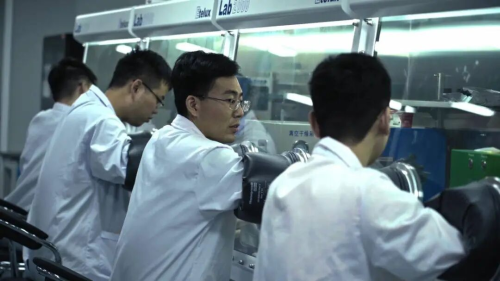
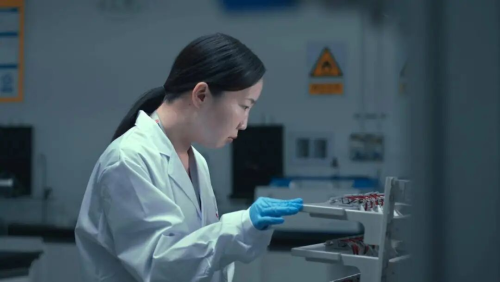
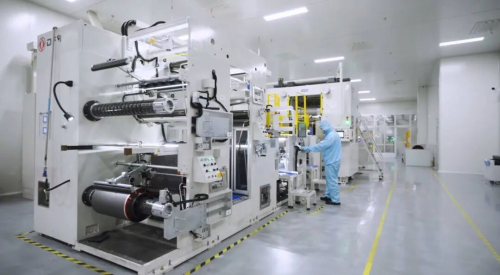
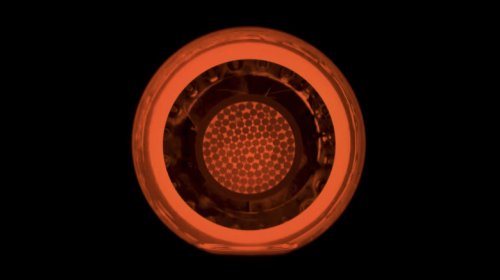
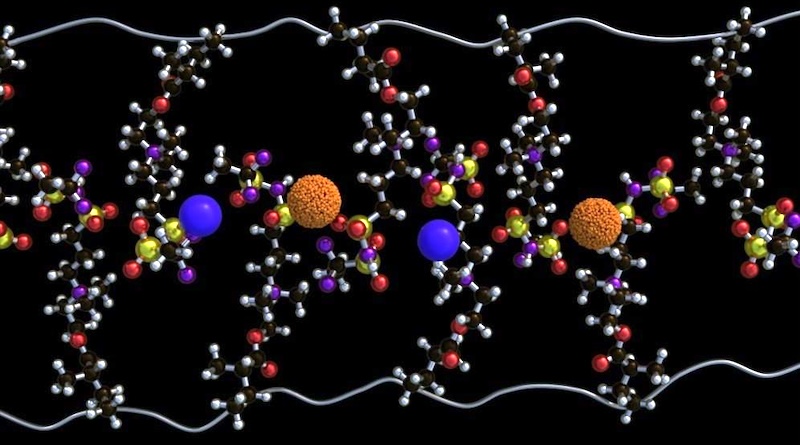
They sound like something straight out of Star Trek fan fiction, but they’re not. Zwitterions are the building blocks of a new electrolyte created by a team of scientists at Oak Ridge National Laboratory, a branch of the US Department of Energy located in Tennessee. The new electrolyte is earmarked for use in solid-state batteries and other decarbonization technologies, too. Solid-State Batteries Made With High Tech Plastics Liquid electrolytes have been the go-to platform for EV batteries and other modern electrification tools, with the lithium-ion formula playing a leading role. Alternative electrolyte formulas that remove toxic inputs from the supply chain, reduce weight, eliminate fire hazards, and/or cut costs have also begun to emerge. Combining all those improvements with a bump-up in performance is the ultimate goal, and replacing the liquid electrolyte with a solid material is one way to accomplish that. It is also very difficult to engineer a solid material that enables ions to swim about efficiently. Gel-type electrolyte and hybrid architectures are beginning to appear, but truly solid-state batteries are still in the testing and validation stage (see lots more solid state background here). High tech plastics have emerged as one area of focus, one attraction being their compatibility with low-cost, high-volume thin film manufacturing systems. However, there’s a catch. “A significant enhancement of ion conductivity in polymers may be achieved through an increase in the polarity of side chains and their self-organization into specific morphologies,” the ORNL team explains. “However, higher polarity increases attractive interactions within a polymer matrix and slows down its segmental dynamics.” The Role Of The Zwitterions Untangling this knot of unintended consequences is the subject of the research team’s new study, published in the journal Materials Today under the title, “Unraveling the pathway towards superionic transport in polymer electrolytes.” A plain-language description of the study is also available from the lab under the somewhat less complicated title, “New ORNL electrolyte lets the ions flow,” including a rather colorful description of the role played by zwitterions. “The key development was the careful tuning of the structure of the polymer by the addition of precise amounts of molecular groups known as zwitterions,” Oak Ridge explains. The result of all that tuning is a polymer “backbone” supporting pockets of activity. “In these pockets, ions interact much like conversationalists at a dinner party,” Oak Ridge adds. “At first, small pockets of diffuse conversations form, isolated throughout the material. Add more pockets, though, and the discussions eventually lose individuality and evolve into a pleasant and cohesive hum. That’s when the ions start to flow like good conversation,” the lab elaborates. The challenge was to identify the point at which a pleasant hum devolves into fisticuffs as too many zwitterionic groups pile into the conversation. The team concluded that the optimal formula was 80%. At that mix the pockets can self-assemble into efficient channels without crossing each other up. “The ORNL researchers demonstrated how a polymeric material can achieve a similar superionic state, in which ions can move up to 10 billion times faster than their surroundings, without the shortcomings of liquids and ceramics,” the lab emphasizes. Next Steps For The Solid-State Batteries Of The Future ORNL also points out that solid-state batteries are the most obvious application for the new electrolyte, but it could also be deployed in flow batteries, fuel cells, and other decarbonization systems. Don’t get too excited about those zwitterions just yet. The first phase of the project is still under way. “The research team plans to build on this promising early-stage research with additional investigations into the fundamental mechanisms that enable the superionic nature of the polymer,” Oak Ridge advises. Meanwhile, the march of solid-state batteries continues apace among private sector innovators, one standout example being the Finnish startup Donut Lab. The company unveiled its new production-ready solid-state EV battery in January, which it described as “the world’s first solid-state battery that is ready for use in OEM vehicle manufacturing.” Skepticism poured forth, but Donut Lab began posting a weekly series of supporting videos and data to affirm the new battery can fully charge in five minutes at a price competitive with lithium-ion batteries. “Under the specified testing conditions, the cell was successfully charged at 5C for over nine minutes. At this charging power, the battery cell reached an 80% state of charge in about 9.5 minutes and a full 100% state of charge in just over 12 minutes. When discharged after charging, 100% of the charged capacity was available from the cell,” Donut Lab reported on February 23, when it released the first results. Last month, CleanTechnica’s Christopher Arcus explained the strategy behind Donut Lab’s decision to release the supporting materials gradually instead of all at once: “In essence, Donut Labs planned to set a trap, letting the biggest doubters go on record first, then showing the proof. By some measures, it succeeded in drawing the doubters into confident complacency. The plan is to counter this by showing how the rumor mill becomes ‘fact’ once the experts have spoken. Once the facts come out, the fallacy of expert opinion becomes exposed.” Meanwhile, Back In The USA Despite the sharp U-turn in federal energy policy, the cat is already out of the bag, and private sector innovators in the US are among those moving the needle towards solid-state batteries for electric vehicles. One example is the California startup Quantumscape, which has been hammering away at the solid-state challenge since 2010. In 2022 Quantumscape formed a partnership with the PowerCo branch of Volkswagen. Last year it attracted the leading manufacturer Corning to its table, with the aim of engineering a high-volume manufacturing system for ceramic solid-state batteries. On the other coast is the Massachusetts startup Factorial. Back in 2021 the company attracted the interest of Mercedes-Benz and Stellantis to its “FEST” semi-solid EV battery, and last year it indicated a move into all-solid state territory in a new collaboration with the POSCO Future M branch of the Korean firm POSCO Group. Somewhere in the middle is Colorado-based Solid Power, where BMW aims to stake its solid-state claim. In a report to investors in February, Solid Power took note of a BMW i7 test vehicle featuring its sulfide-based solid state solution. The installation of a pilot manufacturing line with another partner, SK On, is also in the works. Image (enhanced for visibility): “This illustration depicts comb-like aggregations of zwitterionic groups forming high-mobility pathways for ions in a newly developed polymer electrolyte that could have huge implications for solid-state batteries and other energy technologies. Credit: Andy Sproles/ORNL, U.S. Dept. of Energy.”



















 +30 others