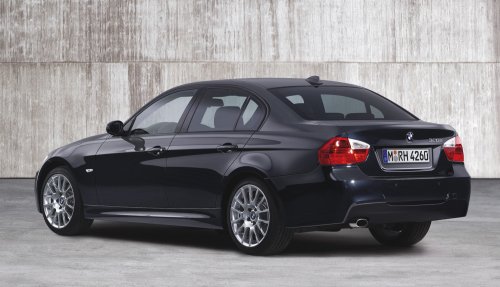
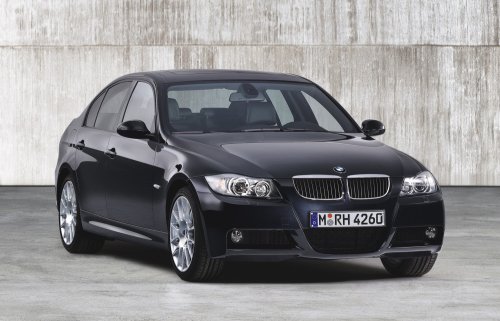
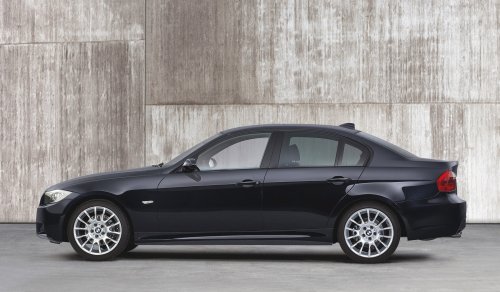
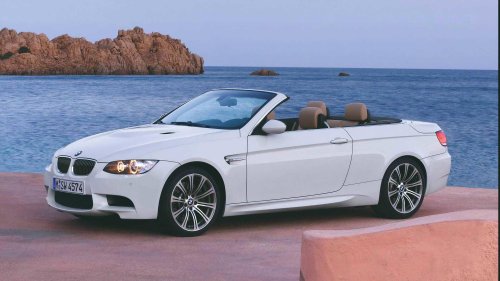
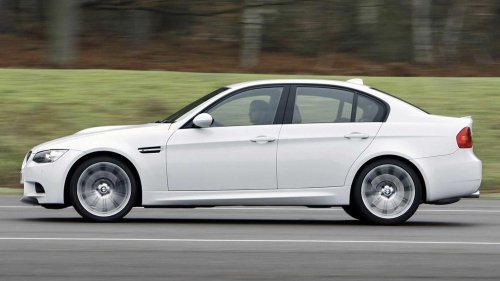
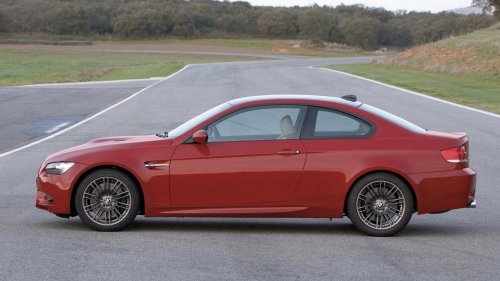
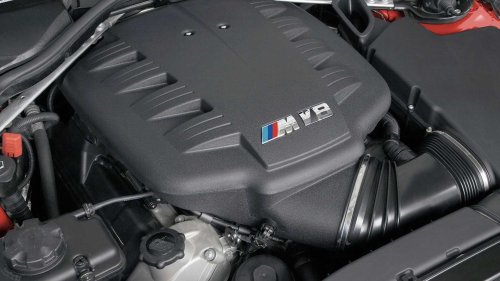
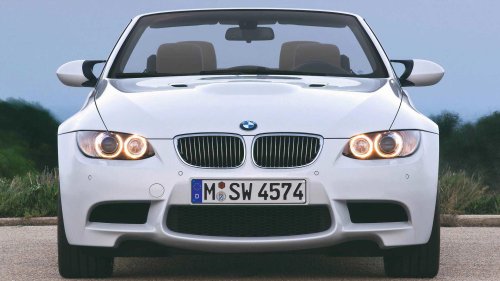
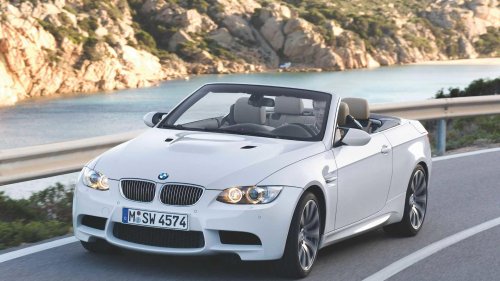
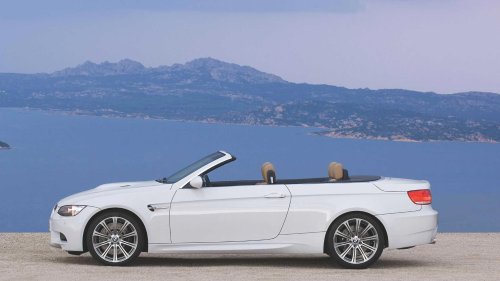
Finding a good deal on a used car can be tricky. When you start looking for desirable sports cars, it becomes that much harder. BMW'sonly V8-powered M3 has received so much attention in the past few years that most people are asking way too much for even leggy examples that are far from the "pristine one-owner" example that the ads often claim.But while the coupe and sedan V8 M3s have both shot up in value, the convertible is still lurking in the affordable category, with some examples selling for less than half the price of a new Miata. Does this make them a rare bargain, or is there a reason why the drop-top V8 M3 is less popular overall?All vehicle data is from reputable sources. Pricing excludes destination charges and tax unless otherwise specified. The BMW E93 M3 Convertible BMWThe fourth-generation BMW M3 arrived in 2007 to replace the E46 M3, a car that had dominated its segment for years. But as rivals moved to larger capacity V8s to outdo the overachieving S54 inline-six, BMW decided it was time to follow suit, and this was the first (and last) M3 to be fitted with a naturally aspirated V8.BMW Critics complained that the new M car was heavier, bigger, and less raw than the old car, but this was true of every new generation of M car. The V8 M3 was certainly more comfortable and spacious inside, and that screaming V8 motor proved to be the star of the show, delivering the kind of spine-tingling sounds and performance that M fans expected.BMW The fourth-generation M3 was available as a coupe (E92) first, and soon after, the sedan (E90), and convertible (E93) joined the range. A seven-speed dual-clutch automatic transmission became an option from 2008 on. All regular production M3s retained the same 420-hp V8 for the entire production run, and power was sent to the rear wheels through an M-spec limited-slip differential.The convertible was fitted with an all-new folding hardtop that effectively turned it into a weather-tight coupe when up, and disappeared discreetly behind the rear seats when down. The downside to this fancy design was weight, not helped by the chassis reinforcing required to keep the car as stiff as its hardtop stablemates.BMW Whereas a base manual M3 Coupe was already a portly 3,500 lbs+, the convertible weighed around 400 lbs more, and most cars were heavily optioned and had the heavier DCT transmission, adding another 100 lbs on top of that figure. Combine that 4,000 lbs with an engine that thrives on revs and isn't known for its strong low-rev torque delivery, and the M3 Convertible was less of a sports car and more of a rapid grand tourer.It was still a fast car; the 0–60 mph time was down by only around 0.4 seconds, but the responsiveness and that edgy sporty flavor most people expected from an M3 were in short supply. The argument that a turbocharged E92 335i was the better overall package used to get M3 fans furious back in the day, and while the sedan and coupe were leagues ahead in terms of handling and driving excitement, the convertible was harder to defend.BMW This is the primary reason that they are less desirable than the sportier coupe and sedan variants today, but just how much of a pricing difference is there between them? What Are They Worth Today? BMWTo keep the comparison fair, we have looked at the selling prices of all 2008–2012 V8 M3s over the past year. While manual transmission cars tend to command a premium over DCT models, we have combined both to equalize the pricing discrepancy. Sedans were sold until 2012, and Coupes were the only 2007 MY, so we focused on the 2008–2012 cars to remove any price differences due to model year.Judging by the sales performance of all three V8 M3 body styles over the past year, it is clear that while poor condition examples are all around the $15,000–$17,000 price point, the values of well-kept cars and those with very low mileages differ significantly. Despite the fact that the coupes are the most numerous, they hold their value very well.The added practicality of the four-door M3 was less of a drawcard when this generation was on sale, but its relative rarity has seen values rise steadily, and the best ones are now worth more than the coupes.BMW The convertible is a veritable bargain by comparison. Prices tend to be similar at the lower end of the market, but buyers aren't all that interested in paying up for low-mileage garage queens. Some great concourse condition cars have sold for half what a similar coupe or sedan would go for, so if a convertible V8 M3 is what you're after, now is a great time to buy. A Bargain Or A Hard Pass? BMW When it comes to used cars, low prices don't always signal a great deal. Sometimes they are exactly the opposite of a great deal. In the case of the fourth-generation V8 M3 Convertible, the depressed values are more indicative of a target market that's looking for a different experience, rather than a car that is inherently a bad buy.Yes, the convertible body style adds a lot of weight that dampens the M3's overall abilities, but in most daily driving conditions, it is a joyful car with a great soundtrack, plenty of comfort, and more than enough speed when you want it. It may not be the definitive V8 M3, but it still has that stellar engine and a chassis that surpasses any other drop-top car from its era.BMWThere has always been a convertible M3, and in most cases, they have trailed the values of their more hardcore stablemates, but they appeal to a different sort of M enthusiast, one who is more interested in a top-down blast through a mountain road than a flat-out lap at their nearest racetrack.As these M3s start to reach an age where they become part of collections or are used as second or even third cars, the enjoyment won't be solely in the bare performance figures, but rather in the sensory experience that each drive provides. And in that area, the E93 M3 convertible is ahead of the game.





















 +10 others