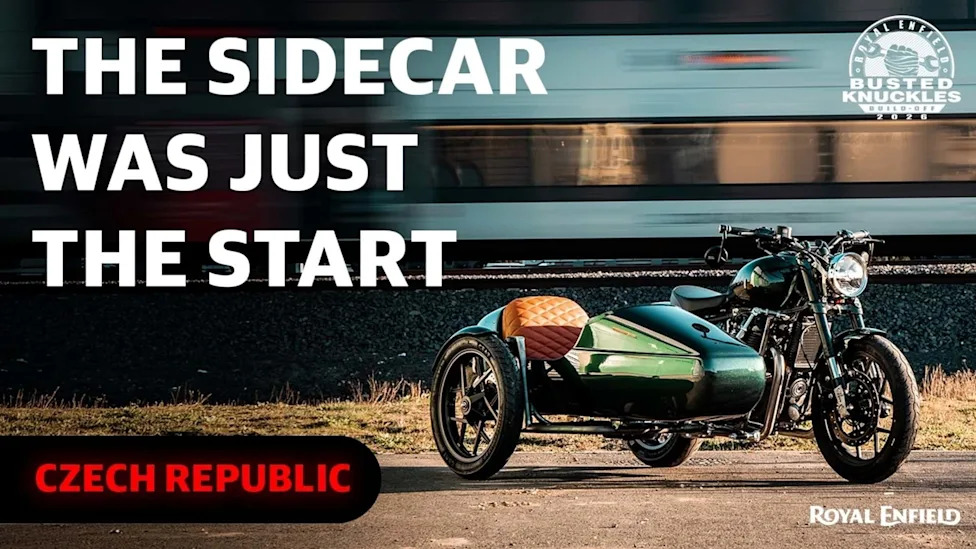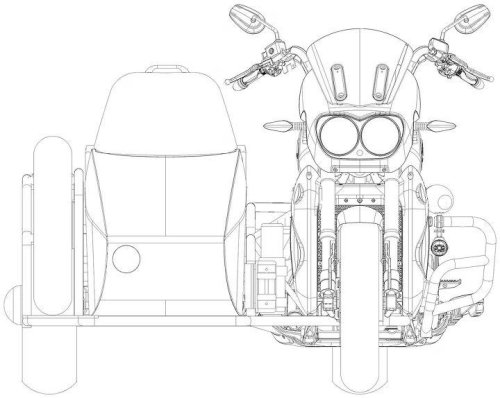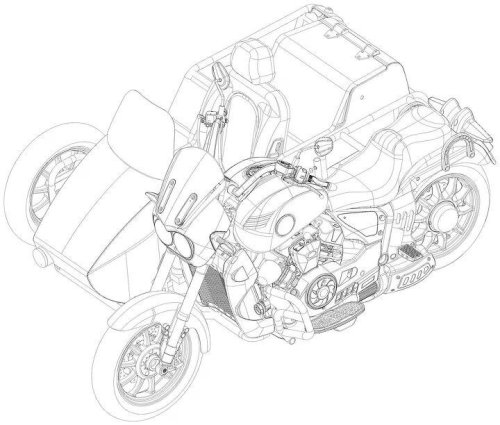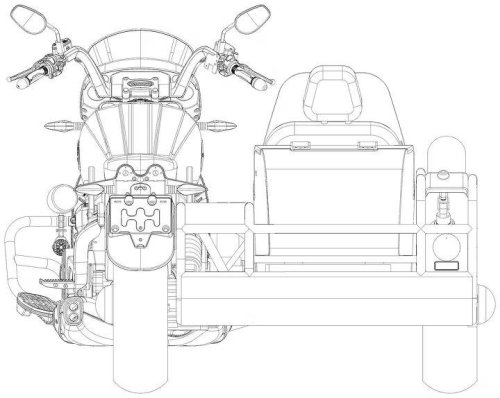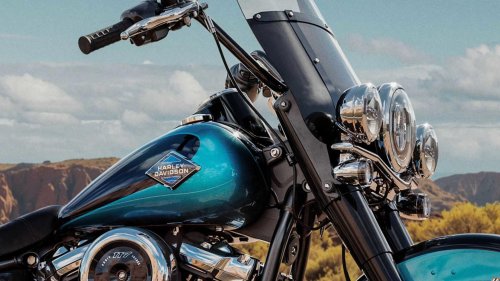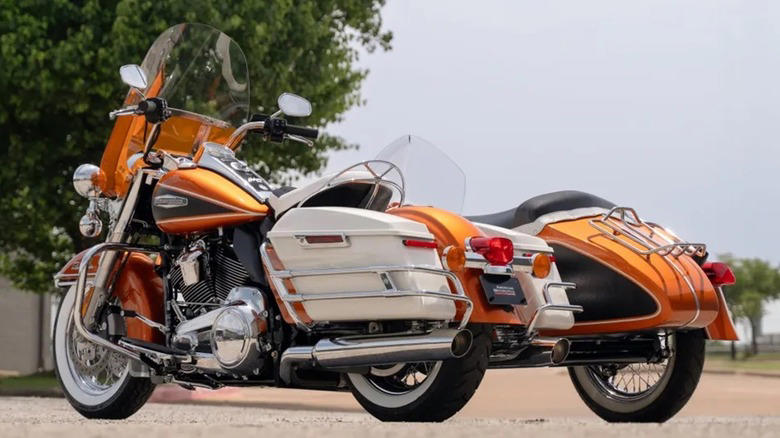
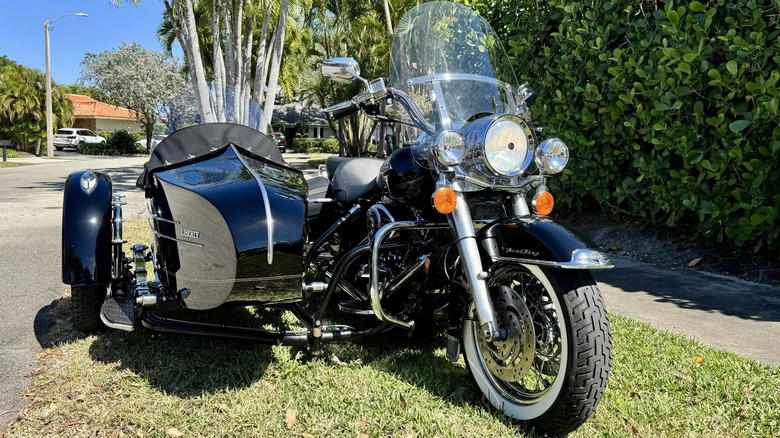
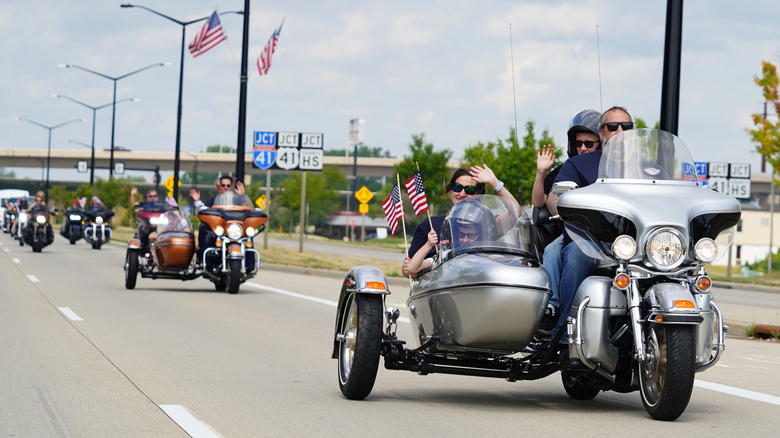





















A 2023 Harley-Davidson Electra Glide Highway King with a Champion sidecar parked in a gravel lot."How hard could it be?" Ah, the famous last words before optimistically tackling a project. That, or "this should only take a couple of hours." It's a wrench-turning tale as old as time and perhaps the approach a confident Harley-Davidson owner would take when planning to attach a sidecar to their beloved hog. And by hog, we of course mean hog in terms of motorcycles, not a literal giant pig. The truth of attaching a little one-wheeled car to your Harley, on the other hand, isn't quite so straightforward. The Milwaukee motorcycle marque doesn't make it easy, either. H-D started offering factory motorcycle-sidecar combinations back in 1914. However, the Motor Company killed off sidecars by 2011 due to the popularity of the brand's trikes.That leaves sidecar-seeking Harley fans with two options: buy a used model with a sidecar already attached, or build a combination with a rig and mounting hardware. But before you pull out your wallet, it's important to determine whether your Harley is up to the task of supporting a sidecar. While a torquey V-Twin should have enough gusto to contend with the added weight of a sidecar and passenger, your Harley's suspension must be healthy enough to support the added stresses of an attached sidecar.If your motorcycle is up for the task, (safely) attaching a sidecar to your favorite Harley isn't as simple as just bolting an aftermarket model to the side of the bike and calling it a day. To do the job right, you've got to get things positioned just right, including determining proper lean-out and toe-in. Then there's the matter of attaching the thing safely and securely. If that wasn't enough, riding a sidecar-equipped motorcycle is completely different from a standard, factory setup. Not As Easy As Bolting On A Third WheelA 2005 Harley-Davidson Road King Classic with a Liberty sidecar parked on the grass on a sunny day.Let's start with the basics. To properly attach a sidecar to a H-D, including one of most most affordable Harley-Davidsons, you have to select how and where to attach your car frame mounts. Since H-D hasn't produced factory sidecar motorcycle combinations since 2011, mounting a "hack," named for the hackney carriage of yesteryear, isn't quite as simple as bolting up a rolling chair. You could go with a universal kit and do the job yourself, which typically involves using four or five points of contact and clamps. The two upper mounting arms should be as high and widely spaced on the frame as possible. As for the lower mounts, they need to be as low as they can be and spaced apart as far apart as you can place them.Then there's alignment. If you use clamps like you'd find in a universal sidecar mounting kit, lining up the toe-in and lean-out of the frame and car is essential. Toe-in refers to angling the sidecar's nose (and by extension, the third tire) in, creating a slight acute angle and a narrower front track width than at the rear. Lean-out, on the other hand, refers to the amount the bike is leaning away from the sidecar when attached. Sounds odd, but the bike must have an angle of lean away from the sidecar to prevent the bike from fighting the rider when turning away from the sidecar.If all of that seems daunting, contact an aftermarket manufacturer and have them set up your rig. DIY or not, doing it right is expensive. Expect to spend up to half the value of your bike installing a sidecar. A Completely Different RideA row of Harley-Davidson touring motorcycles with sidecars in a parade.So, let's assume you manage to get that sidecar bolted up to your Harley-Davidson. You're not done; it's time to take it for a shakedown ride. As a rule of thumb, if you feel the motorcycle pulling toward the sidecar, or it's difficult to turn left, it's time to increase the toe-in or lean-out. If you feel like the motorcycle is pulling away from the sidecar, or it's tiresome to turn right, a decrease in lean-out and toe-in could be the ticket.Speaking of riding, keep in mind that riding a sidecar-equipped Harley is a completely different animal. It won't take long for you to discover that you're going to point the handlebars where you want to go instead of countersteering, and that your rig prefers direct steering and weight in the sidecar. Consider adding 50 to 100 pounds of distributed weight to the hack if you don't have a passenger. Considering the expense and work involved, at the end of the day, a trike with a large rear seat may provide a better-balanced ride than a sidecar. That, and a factory trike setup won't require the unconventional mounting and alignment procedures. Plus, there are some comfort and possibly safety considerations that may favor three wheels vs. two. Want more like this? Join the Jalopnik newsletter to get the latest auto news sent straight to your inbox, and add us as a preferred search source on Google.