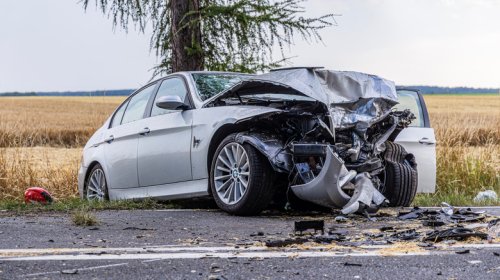
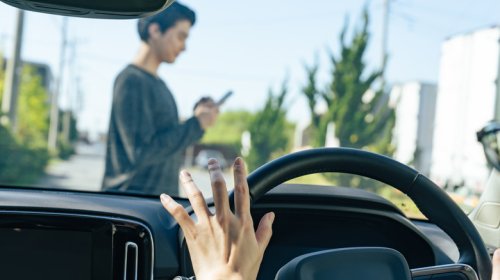
A Sneeze Caused a Fatal Crash With an Amish Buggy in Wisconsin. The Real Question Is Whether Modern Safety Tech Would Have Even Seen It ComingThe Auto WireShawn HenryThu, September 10, 2026 at 11:30 PM UTCAdd us on GoogleA Sneeze Caused a Fatal Crash With an Amish Buggy in Wisconsin. The Real Question Is Whether Modern Safety Tech Would Have Even Seen It ComingOn a hill outside Tomah, Wisconsin, last Friday afternoon, an ordinary human reflex collided with a form of transportation that predates the automobile by more than a century, and one person did not survive it. A driver's sneeze is the headline. It is not the real story.According to the Monroe County Sheriff's Office, a 38-year-old Tomah woman driving a 2025 Volkswagen Atlas struck an Amish buggy from behind on State Highway 131 as it climbed a hill between County Highway A and Irondale Avenue. Investigators say she suffered a sneezing fit and never saw the buggy ahead of her. The buggy's occupants, ranging in age from 18 months to 37 years old, suffered severe injuries, and a 37-year-old Wilton woman later died at the hospital. The others remain hospitalized. The Volkswagen driver was briefly trapped in her own vehicle before freeing herself; she was treated and released. The Auto Wire extends its condolences to the families and community affected.It would be easy to file this away as a freak accident, a cautionary tale about pulling over before you sneeze. But sneezing fits happen constantly behind the wheel without anyone dying. What actually makes this crash worth examining isn't the sneeze. It's what modern automotive safety technology is, and isn't, actually built to see.AdvertisementAdvertisementStart with the sneeze itself, because it's a stranger physiological event than most drivers realize. A sneeze is an involuntary reflex arc, and part of that reflex forces the eyes shut, sometimes for a fraction of a second and sometimes for close to two full seconds, whether the person sneezing wants it or not. At highway speed, that's not a trivial gap. A vehicle traveling 55 mph covers roughly 80 feet every second. On a hill where a horse-drawn buggy might be climbing at 8 or 9 mph, even a brief involuntary blackout of vision closes that gap fast. She wasn't scrolling a phone or reaching for coffee. For a moment, she was involuntarily blind.That is precisely the scenario an entire category of driver-assist technology exists to catch. Forward collision warning and automatic emergency braking are designed to notice a slow or stopped object ahead and intervene when a driver doesn't, or can't. According to the Insurance Institute for Highway Safety, vehicles equipped with both features cut rear-end crashes roughly in half; forward collision warning alone, without automatic braking, still reduces them by about 27 percent.Here's the detail almost nobody is asking about. These systems don't detect "objects in the road" in some general sense. They detect specific categories of objects that engineers have spent more than a decade training them to recognize. IIHS's own front-crash-prevention test protocol, the benchmark most automakers build toward, has expanded over the years to add passenger cars, pedestrians, cyclists, motorcycles, and tractor-trailers as test targets. A horse pulling a wood-and-canvas buggy is not on that list. Radar-based systems are tuned to bounce cleanly off sheet metal; a buggy's mix of wood, fabric, and a live animal returns a far messier signal. Camera-based systems rely on being trained against a library of familiar shapes, and nobody has spent years feeding them thousands of images of Amish buggies the way they have cars, cyclists, and pedestrians.The Auto Wire has already documented a smaller version of this exact gap. When IIHS rolled out a tougher front-crash-prevention test built around a motorcycle target, the outgoing Mazda CX-5 drove straight through it, while the redesigned model passed. If a comparatively large, all-metal motorcycle can expose a hole in a system's target recognition, it's a fair question whether a horse and buggy, with a far less standardized shape and radar signature, would fare any better.AdvertisementAdvertisementTo be fair, nobody has said whether the Atlas involved in this crash even had forward collision warning active, engaged, or standard at its trim level, and Monroe County's investigation is focused on the sneeze, not the sensors. That's a reasonable scope for a police report. It's a far less complete picture for an industry that has spent years selling driver-assist technology as the fix for exactly this kind of rear-end crash.NHTSA finalized a rule in 2024 requiring automatic emergency braking on nearly all new vehicles by September 2029, a mandate automakers fought to soften before it survived largely intact. That rule requires systems to detect and brake for a vehicle ahead at speeds up to 90 mph and a pedestrian at up to 45 mph. It says nothing about livestock or buggies, and nothing about the mixed, wildly different-speed traffic that defines rural highways running through Wisconsin, Ohio, Pennsylvania, and Indiana's Amish settlements, where 19th-century vehicles and 75 mph SUVs have shared pavement for generations. NHTSA's own rear automatic braking push is still just a recommendation, not a requirement, a sign of how slowly regulation catches up to specific, real-world scenarios even after the underlying technology already exists.That's worth remembering next time a headline celebrates falling road deaths. America's traffic deaths recently hit an 11-year low, but that trend is driven largely by fleet turnover, newer vehicles slowly replacing older ones without any of this technology at all, rather than drivers developing sharper reflexes. A 2025 Atlas is about as new and well-equipped as SUVs get, for what that's worth. It's also been a rough year for the Atlas's reputation on the sensor and software side specifically: Volkswagen recalled nearly 58,000 Atlas SUVs this summer over backup cameras that could simply go dark, and separately settled a lawsuit over a water pump defect rather than issue a recall. Neither problem is connected to this crash. Both are reminders that a modern SUV's safety case rests as much on sensors and software behaving as promised as it does on crumple zones and airbags, and insurers and repair shops are still working out how to price that risk.There's a bigger, uncomfortable footnote here too. As robotaxi companies expand driverless service, their vehicles operate almost entirely inside mapped, geofenced city cores like Phoenix, San Francisco, Los Angeles, and Austin. None of that testing happens on two-lane rural highways where buggies are simply part of the traffic pattern. The perception systems being marketed as the future of road safety have, by design, never had to prove they can recognize a horse.AdvertisementAdvertisementNone of this excuses or explains away what happened on Highway 131. A woman is dead, a toddler and her family are hospitalized, and an involuntary reflex is the immediate, documented cause. Full stop. But the auto industry has spent a decade telling drivers and regulators that sensors and software are quietly making rear-end crashes rare. That promise was engineered and tested against cars, cyclists, motorcycles, and pedestrians. Nobody built it, or tested it, against a horse and buggy. That gap deserves more attention than a sneeze ever will.Join our Newsletter, follow our Instagram page, and connect with us on Facebook.


















 +1 others