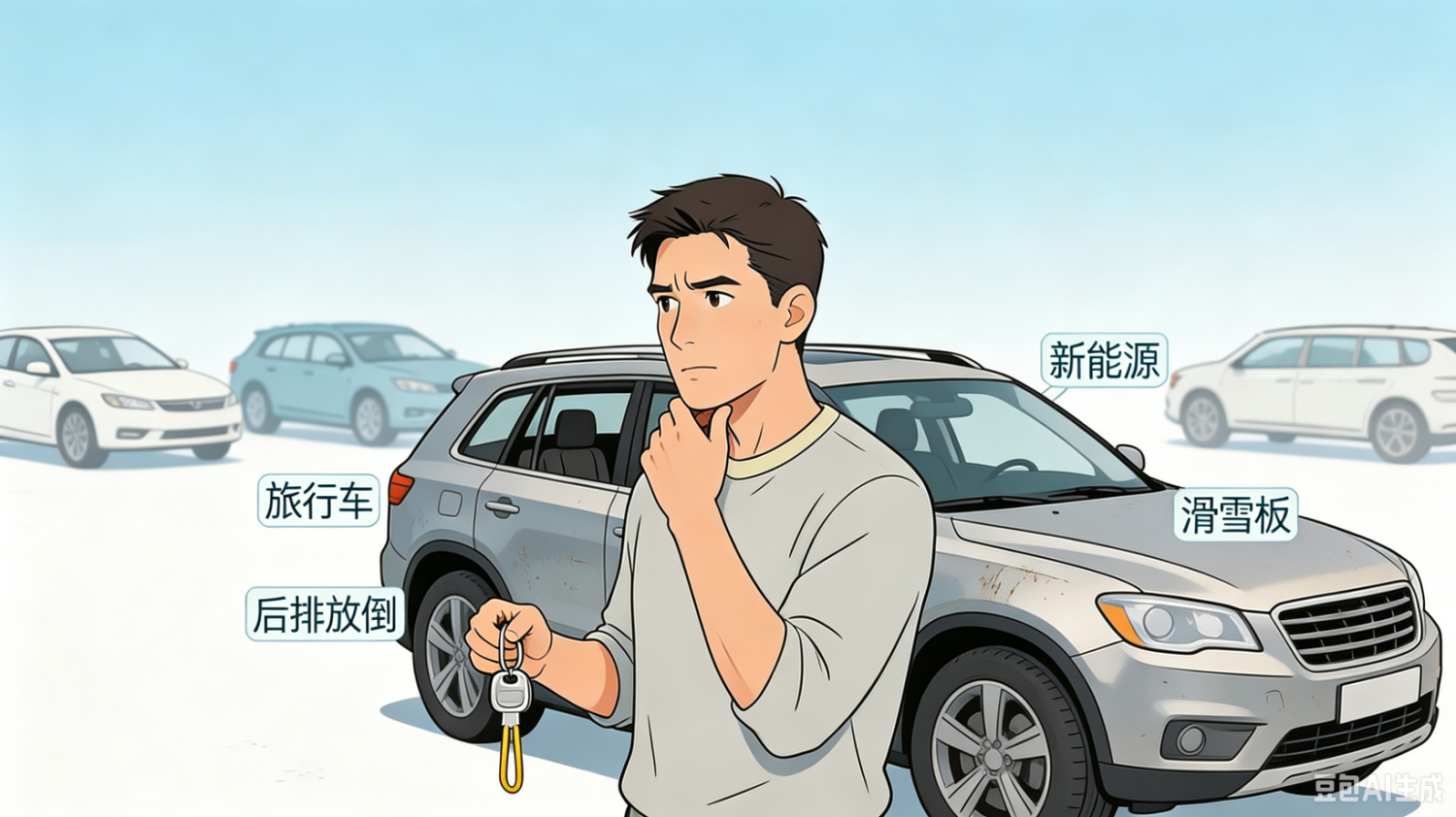
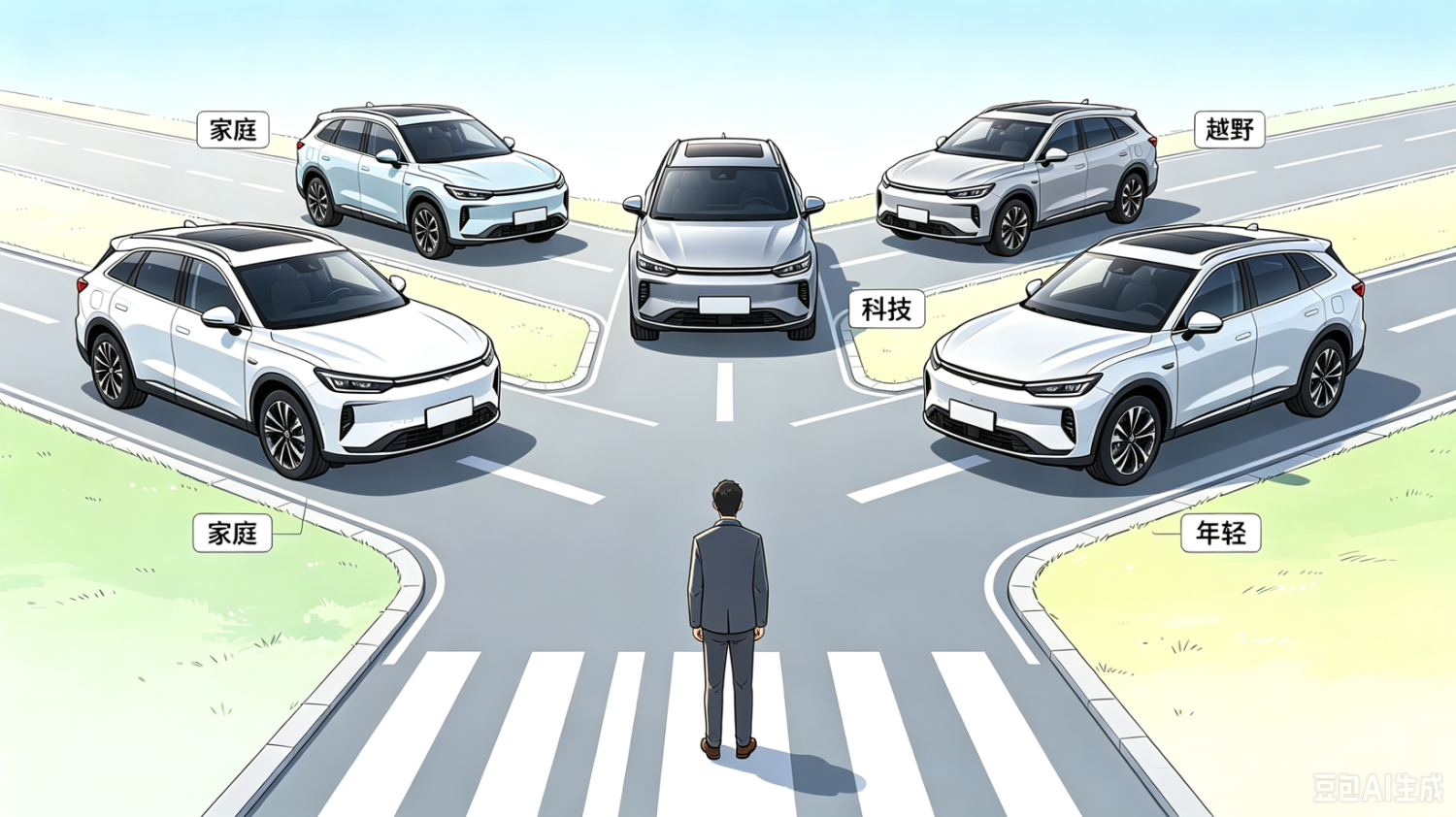
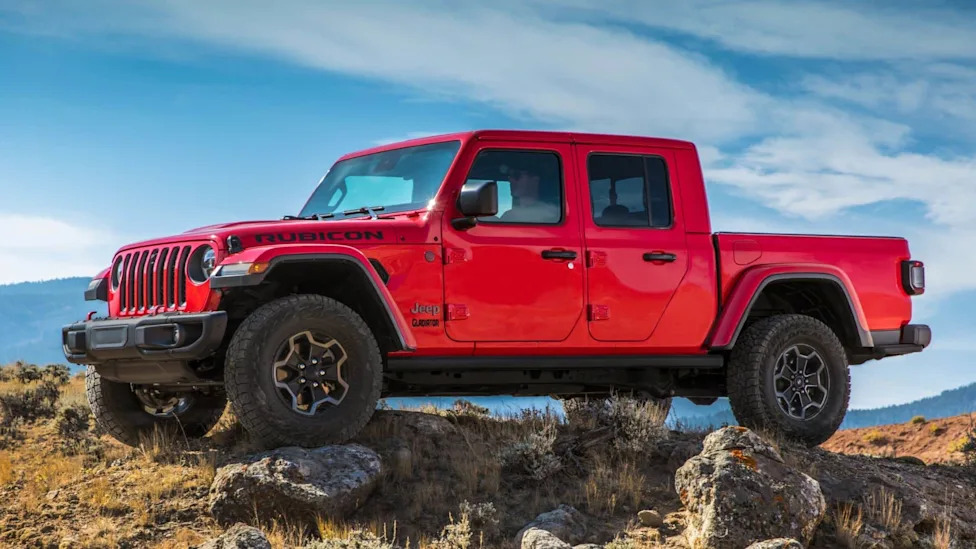
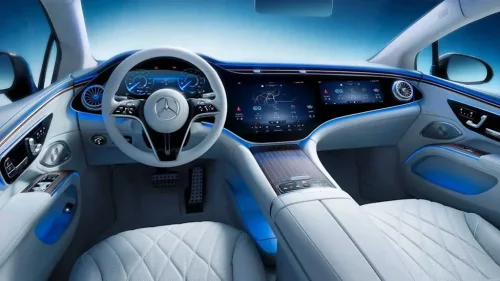
Gasgoo Munich- Dahe (a pseudonym) has been driving his Audi Q3 for at least 11 years.It sounds like a story about German build quality or brand loyalty, but the reality is quite the opposite. For years, he has been constantly browsing the market. Whenever a new model launches, he studies the powertrain, chassis, and specs; if something catches his eye, he goes to the dealership to experience it firsthand.Yet today, that Q3—now showing its age—remains parked in his spot.AI-generated image; Source: DoubaoIt’s not a lack of budget, nor an attachment to his old car. He wants a German sedan, favoring the styling and practicality of a wagon with rear seats that fold flat to fit his snowboard. The affordable options don’t satisfy him, while the wagons he truly loves are too expensive. His favorite models dropped the folding rear seat feature after a generational update, just as new energy vehicles began their rapid ascent. An engineer by trade, he hasn't embraced new technologies with the enthusiasm automakers might expect; instead, he remains concerned about battery life, charging infrastructure, resale values, and technical maturity.Strangely, the 11 years he’s spent car shopping coincide with the most product-saturated period in the Chinese automotive market.According to incomplete statistics from Gasgoo, roughly 700 passenger vehicle nameplates launched in the domestic market during the first seven months of this year—averaging more than 3.3 per day. The Beijing Auto Show alone featured 181 global debuts. By comparison, the German luxury trio—BBA—have cultivated just 236 model lines over a century of industrial history.Zhang Liang, vice general manager of SAIC Passenger Vehicles, once lamented that today’s new cars each push a specific angle: value for money, innovation, or "tech equity." The sheer variety of "formulas" has left consumers overwhelmed.Yet against this backdrop, a man who has spent 11 years actively looking still hasn't found an answer.Is his demand truly that niche? Or is it that as automakers become better at defining user segments, they are losing sight of the actual human being standing in front of them?In the first two installments of this series, we discussed why traditional demographics—age, gender, and income—are failing, and questioned whether brands can rebuild identity through spokespeople and values. But when "identity" becomes the standard answer every brand copies, does it risk becoming just another form of user profiling?Automakers build for every category, yet often miss the individualToday, a new car model is rarely conceived without a complete user persona attached: age, city, occupation, income, family structure, hobbies, preferred platforms, and even the specific emotional values they are willing to pay for.The "Automotive Eight Consumer Groups Mindset Reconstruction White Paper" from Dongchedi notes that industry understanding is shifting from "demographic profiling" to "need recognition." Traditional consumer groups are being split into 25 "mindset tracks." Even within the same bracket—say, "young white-collar" or "new middle class"—individuals may prioritize completely different factors when buying.User personas aren't useless. Without a clear target, a product easily becomes an "all-rounder"—trying to do everything and succeeding at nothing.The problem is that personas were originally meant to help automakers ask questions; now, they increasingly answer them for the consumer.Automakers see "dad" and assume he needs six seats, a massive sofa, a fridge, and a TV. They see a young person and assume they want gaming, music, frameless doors, and zero-to-sixty acceleration. They see an engineer and think they naturally support pure electrics, autonomous driving, and new tech. And when they see a female consumer, they often lead with the passenger seat, vanity mirror, and "pamper mode."Around 2022, the "Queen’s Co-Pilot" became a concept the NEV industry chased en masse.At the time, Xiaolin (a pseudonym), a woman in her 30s, was test-driving a smart EV alone at a mall. The salesperson didn’t ask about her usage scenarios or mention driving dynamics, range, or driver assistance. Instead, they guided her directly to the front passenger seat: "This is the Queen’s Co-Pilot, with a zero-gravity seat."She was there to buy a car for herself, yet before she could speak, she was cast in the role of passenger. The salesperson saw her gender first; her identity as a driver came second, if at all.Automakers believe they are "pampering women," but what female consumers often feel is being pigeonholed yet again.Similar misreadings occur with labels like "budget-conscious male," "dad car," or "young person’s first car." "Budget male" shifted from describing value to imagining the owner’s income and personality. "Dad car" ossified from a description of space and comfort into a fixed script where dad drives while mom and the kids sit in the back. And "young person’s first car" is often reduced to low budget, entertainment-focused, and speed-obsessed—as if young people don’t care about safety, insurance, repair costs, or long-term residuals.The biggest flaw in labeling isn't that it’s entirely wrong. It may capture a trait common to a group, but it easily mistakes that one part for the whole person.Dahe likes skiing, but that doesn’t mean he wants a boxy SUV. He’s an engineer, but that doesn’t mean he’ll unhesitatingly choose a pure EV. He’s in the replacement phase, but that doesn’t mean he needs to upgrade from a compact SUV to a large six-seater family hauler.What he needs is simply a car at a reasonable price, with driving dynamics that meet his expectations, that can fit his snowboard, and where the technological risks are within his tolerance level.None of these needs are unusual on their own, but the moment they all need to be met simultaneously, the market’s options shrink rapidly.Automakers are good at studying crowds, but not necessarily at understanding an individual.Tank’s success proves labels aren’t the enemyIt would be easy to conclude here that car brands should stop labeling consumers.But it’s not that simple.If every car abandoned distinct positioning to claim it’s "for everyone," the market would only become more boring. In an environment where several new models launch daily, a car with no attitude, no memorable hook, and no core competency won’t even get rejected by consumers—it will simply be drowned out by the next new thing before anyone notices.Tank is a typical counterexample. From its inception, it actively leaned into perceptions of ruggedness, off-roading, and outdoor exploration. The boxy body, wide fenders, four-wheel drive, modification ecosystem, and "Tanker" culture combined to form a distinct set of product symbols.Consumers who choose Tank don’t necessarily traverse mountains every day; most of these vehicles spend the majority of their time on city streets. But off-road capability, a sense of power, and the imagination of being "ready to go at any time" are inherently part of the product’s value.Tank didn’t lose market share because of its distinct label; instead, it expanded its niche segment. Today, more and more owners outfit their vehicles with "eyes," "ears," tails, and cartoon accessories, setting personalized light sequences. When owners with similar tastes meet on the road, they flash their lights and wave, using specific decorations to identify one of "their own."These consumers aren’t resisting labels; they are actively creating them.So, the problem is not whether a car has an identity, but how that identity is generated.Tank offers off-road capability and boxy design first; consumers, approving of the product, choose to join that lifestyle. It tells the consumer: "Here is where I can take you."Conversely, telling women they "should experience the Queen’s Co-Pilot" or dads they "should buy a six-seat SUV" is saying: "This is who I think you are."The former defines the product; the latter prescribes the user.MINI has maintained its distinct recognition for so long not because it prescribes a specific type of owner, but because it offers unique design and rich personalization options. A MINI can be a fashion statement or a driving toy; it can be bought by a young woman or a middle-aged man.Likewise, Volvo’s association with safety, rationality, and restraint stems first from long-term product consistency. Consumers can choose it for safety without first having to be a doctor, a teacher, or some intellectual elite imagined by the brand.Good identity is when a consumer recognizes themselves in the product.Bad identity marketing is when a brand writes a consumer’s bio before ever meeting them.More dangerously, when a car enters public roads, the identity designed by the brand can be rewritten by the internet. A viral video of a single Li Auto owner driving recklessly or parking illegally can be generalized to "all owners of this brand are like this"—to the point where a specific background music cue triggers a habit of checking the badge. Cadillac, which originally emphasized American luxury and sport, was long associated with certain entertainment venues due to map data and online memes.These claims may lack statistical backing, but they reinforce themselves endlessly in short videos and comment sections. A car is supposed to be a product, but it ends up as proof of the owner’s personality and morals.Good distinctiveness makes people remember what makes this car different. Bad labeling makes people assume everyone who drives it is the same.More models, fewer real choices"The market is so big, there must be one for me." That sounds reasonable enough.Off-road enthusiasts can buy Tank; individualists can buy MINI; those who reject labels can choose a generic, understated family car. Different products serve different crowds. It seems fair.But Dahe’s 11-year-old Audi Q3 serves as a reminder: a high volume of models does not equal a high volume of effective choices.Among those hundreds of new models, a vast majority are simply variations stacked on top of a few popular trends.AI-generated image; Source: DoubaoAfter Li Auto found success with its large six-seat family SUV, fridges, TVs, and massive sofas quickly became standard equipment. After Tank proved the boxy market, "light off-road," trendy play SUVs, and urban boxes flooded in. Once zero-gravity seats grabbed attention, more models emphasized reclining, resting, and comfort. And as smart driving became a competitive focal point, every brand started talking about chips, computing power, and end-to-end architecture.Fu Bingfeng, vice president and secretary-general of the China Association of Automobile Manufacturers, noted that automakers are currently pursuing "big and comprehensive" layouts with aggressive strategic targets. The problem of model homogeneity is worsening, triggering industry-wide anxiety. He urged companies to return to rationality, cultivate differentiated niches, and abandon short-term opportunism.Identity labels fatigue consumers not because people don’t want to express themselves, but because brands keep offering personas that appear varied but are fundamentally repetitive.The sophisticated woman, the doting dad, the tech geek, the outdoor adventurer, the young upstart, the new middle class... almost every brand is just shuffling permutations of these identities.Consumers may seem to have hundreds of cars to choose from, but in reality, they only have a few lifestyles to choose from.This is also why holding onto a car for a long time doesn’t necessarily mean high satisfaction or brand loyalty. Sometimes, it’s simply because the market has never offered a better alternative.In a replacement market, the true competitor for a new car is never just the other new model in the next showroom—it is the old car in the consumer’s garage that has been driven for years and still has no obvious problems.A slightly larger screen, quicker acceleration, or an extra zero-gravity seat isn’t enough to trigger a trade-in. A new car must understand the specific needs the current vehicle failed to meet, without sacrificing the values the owner has already grown accustomed to.That is far more difficult than inventing a label like "sophisticated skiing middle-class male."The end of identity fatigue isn’t label-freeThe rapid iteration of new energy vehicles complicates this further.In the past, a combustion car could accompany a consumer for over a decade, and brands aimed to establish a relatively stable identity for the user. Today, a smart EV may be mechanically sound after just three or five years, but the owner might already feel the urge to upgrade due to advancements in range, charging, cockpit chips, and assisted driving.Cars are increasingly becoming a phased choice.Today you commute alone; in a few years, you may have a family. Today you crave performance; later, you may value comfort. Today you want to broadcast your interests through your car; tomorrow, you may prefer to keep a low profile.Human identity is inherently fluid, and the consumption cycle for cars is shortening. Yet brands still hope to summarize consumers’ long, changing lives with fixed roles like "Queen," "Dad," or "Youth."What consumers truly resent is not identity itself, but being forced to accept a singular, fixed, public, and uneditable identity.A label chosen voluntarily brings a sense of belonging; a label imposed passively becomes a burden. A sticker that can be peeled off is personal expression; an inescapable group judgment is identity pressure.Therefore, a truly rich automotive market shouldn’t require all brands to become characterless.It should allow Tank to remain bold and MINI to remain unique, and allow consumers to plaster their cars with decorations. At the same time, it must preserve ordinary products that don’t demand a statement from the user, providing answers for specific rather than trendy needs.Those who want to express themselves can find their tribe. Those who don’t want to be defined can stay silent. And those who like skiing, prefer wagons, and remain cautious about EVs shouldn’t be forced to buy a car they don’t actually like just to fit a popular persona.When every brand sells identity, consumers will inevitably experience identity fatigue.But this fatigue isn’t caused by too many identities in the market; it’s caused by the fact that hundreds of ostensibly different products ultimately offer only a handful of standard answers.Consumers aren’t unwilling to be represented by a car. They are just increasingly tired of brands deciding who they should be before they’ve even seen the product.The end of identity fatigue isn’t a world without labels, but one where brands redefine products and return the power of interpretation to the consumer.ORA is gradually downplaying its "women’s car" label to expand into the broader market. M-Hero and Li Auto have hired Guli Nazha and Yi Yangqianxi respectively, attempting to shed their singular brand images. This may be a signal: when all brands are peddling homogenous identities, the first to break free from the fixed script may be the first to find a new path.Brand misinterpretation of users doesn’t just happen within one market. When a product defined in China as a "car for the young," "female cockpit," or "family vehicle" goes overseas, its age, gender, class, and usage scenarios can all be reinterpreted.In the next installment, we turn our gaze to the global market: Why does the same car encounter completely different people when sold in different countries?