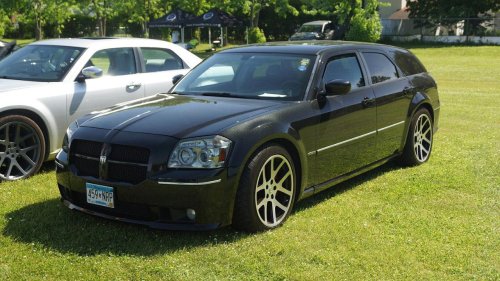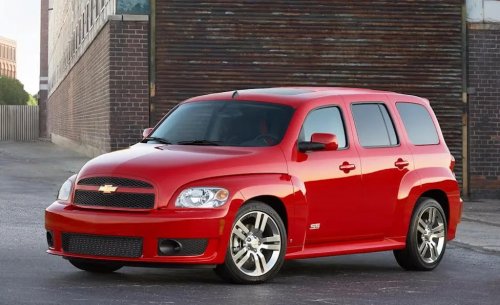
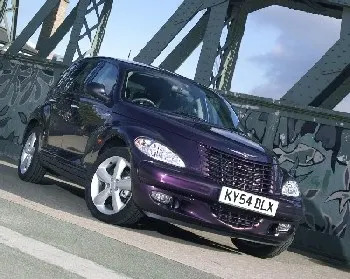
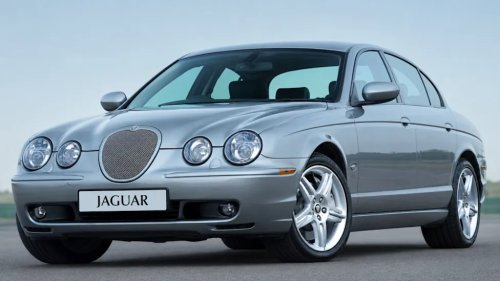
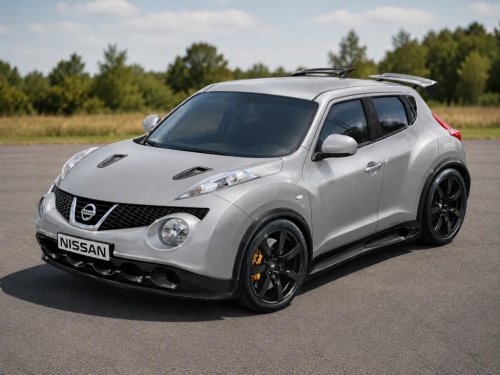
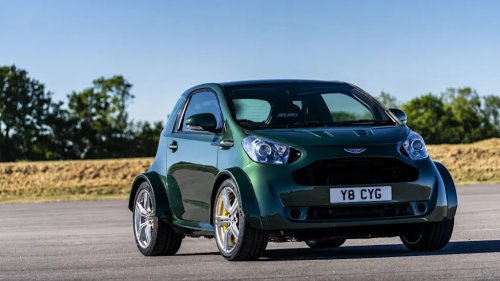



















There's a particular category of car that enthusiasts love to dismiss: the rental-fleet filler, the badge-engineered cynicism exercise, the retro-styled grocery getter that nobody asked for. Engineers, apparently, find these irresistible. At least five times in recent memory, someone at a major automaker looked at a universally mocked vehicle and decided the correct response was to drop in a serious powertrain.1. Chevrolet HHR SS (2008)5 Ugly Duckling Cars That Got Shockingly Fast Performance VersionsThe HHR arrived in 2006 wearing its PT Cruiser envy on its sleeve – a retro-styled compact designed by Bryan Nesbitt, the same man who drew the PT Cruiser at Chrysler. First-year sales cracked 93,000 units, which suggests plenty of people bought one, but nobody was calling it exciting.GM's Performance Division disagreed. For 2008, they fitted the HHR SS with the LNF-series 2.0-liter turbocharged four-cylinder – the same engine doing duty in the Pontiac Solstice GXP and Saturn Sky Red Line – rated at 260 horsepower with the five-speed manual. The suspension was tuned at the Nürburgring, which is either impressive or hilarious depending on your perspective, and the car came with a no-lift-shift function borrowed from GM's proper performance catalog. Chevy quoted 0-60 in 6.3 seconds.AdvertisementAdvertisementFor 2009, a panel van version appeared for exactly one model year before the entire SS line was killed when GM shuttered its High Performance Vehicle Operations group in 2010. That panel van is about as pure a sleeper as the market ever produced.2. PT Cruiser GT (2003)The standard PT Cruiser became shorthand for everything wrong with early-2000s nostalgia design. Chrysler's answer was to fit the GT with a 2.4-liter turbocharged four-cylinder shared with the Dodge Neon SRT-4, pushing around 230 horsepower through a manual gearbox.It didn't fix the styling. It fixed the part that mattered more.3. Jaguar S-Type R (2002)The S-Type spent most of its life fielding criticism for borrowing the DEW98 platform from the Lincoln LS and the Ford Thunderbird, and for a front end that polarized even devoted Jaguar buyers.AdvertisementAdvertisementThe 2002 S-Type R was Jaguar's pointed response: a mechanically driven Eaton supercharger with twin intercoolers bolted to the 4.2-liter V8, producing 400 horsepower and 408 lb-ft of torque – a 32 percent torque increase over the naturally aspirated version. Brembo brakes, Jaguar's Computer Active Technology Suspension, and a stiffened independent rear setup completed the package. Zero to 60 dropped to 5.3 seconds, with an electronically limited top end of 155 mph. The M5 and E55 AMG had a genuine fight on their hands, even if nobody outside enthusiast circles noticed.4. Nissan Juke-R (2012)The Juke gets credit – or blame, depending on your aesthetic tolerances – for popularizing the subcompact crossover segment. The standard car's styling remains deeply divisive.Nissan's answer was to pull the twin-turbocharged V6 and all-wheel-drive system from the GT-R and stuff it into a limited production run of Jukes, producing 545 horsepower in a vehicle that weighs considerably less than the donor supercar. The Juke-R was, by any rational measure, too fast for what it was. That's precisely the point.5. Aston Martin Cygnet V8 (2018)The Cygnet is the most cynical car Aston Martin ever built, and that's a defensible statement. Former CEO Ulrich Bez needed a way to lower Aston's fleet emissions figures under European regulations, so the company purchased Toyota iQ city cars, fitted them with leather interiors, and sold them for roughly £31,000 – about three times the price of the Toyota underneath. Production wound down at approximately 150 units, reflecting genuine market indifference rather than intentional scarcity.AdvertisementAdvertisementIn 2018, a single customer approached Aston's Q division with a commission that must have given engineers pause before they started grinning: put a Vantage S powertrain in one. What followed required fabricating a new front bulkhead and transmission tunnel from sheet metal, welding a roll cage directly into the body as a structural element, relocating the firewall, and adding carbon composite flared arches to cover significantly wider front and rear tracks.The 1.3-liter four-cylinder producing 97 horsepower was replaced with the 4.7-liter naturally aspirated V8 from the Vantage S, good for 430 horsepower, routed through a seven-speed Sportshift automated transmission. The subframes and suspension came from the previous-generation Vantage as well. The finished car weighs around 1,375 kg, hits 62 mph in 4.2 seconds, and tops out at 170 mph. Someone inside Aston estimated the build cost between £250,000 and £500,000.For a car based on a £31,000 Toyota iQ that sold fewer than 150 copies, that feels about right.What ties all five together isn't irony, exactly. It's that engineers, given sufficient motivation and budget, can make almost anything fast. Whether the resulting car makes sense is a separate question entirely.