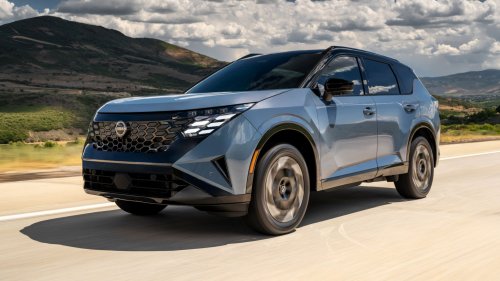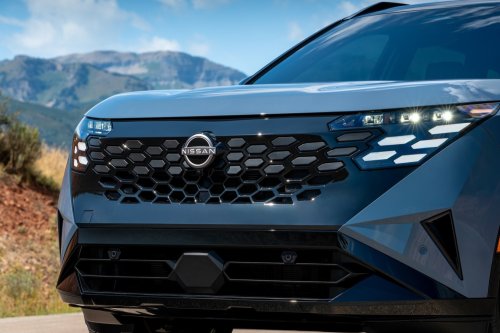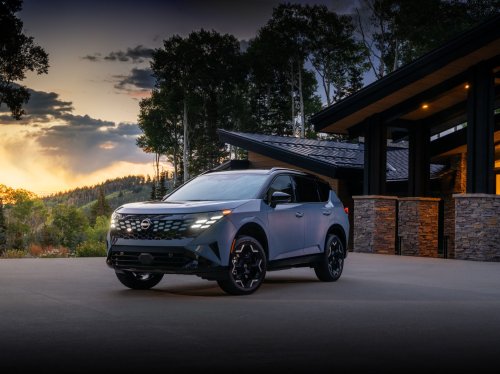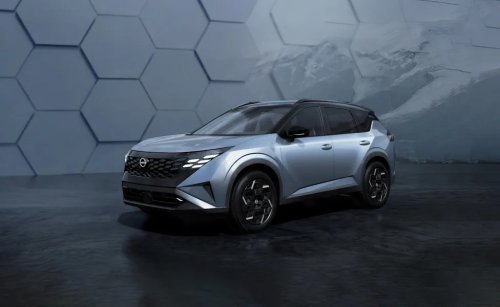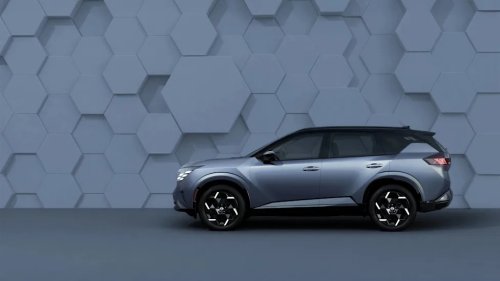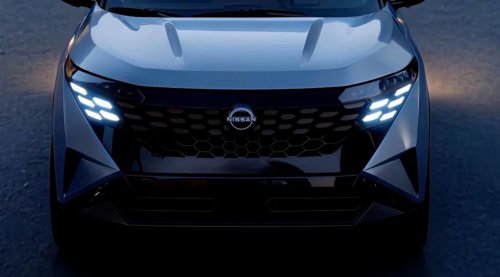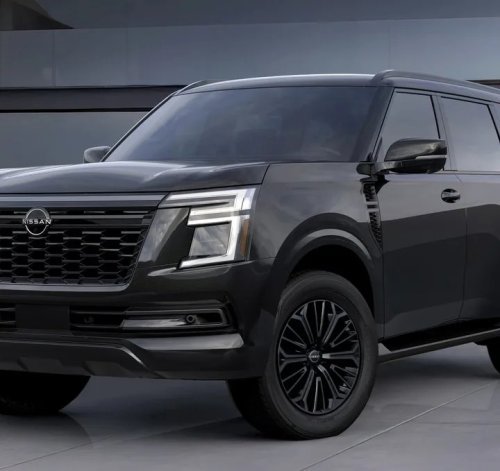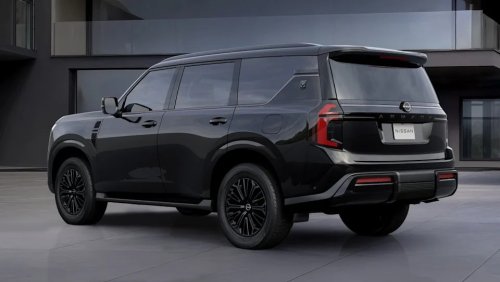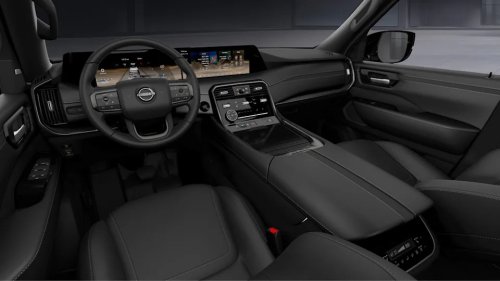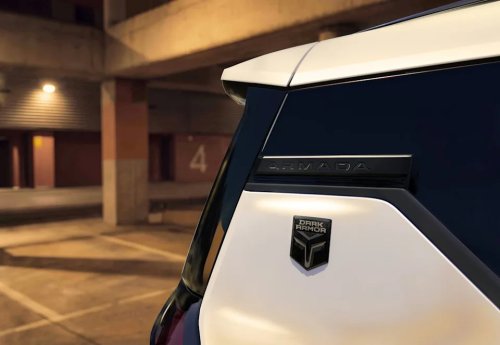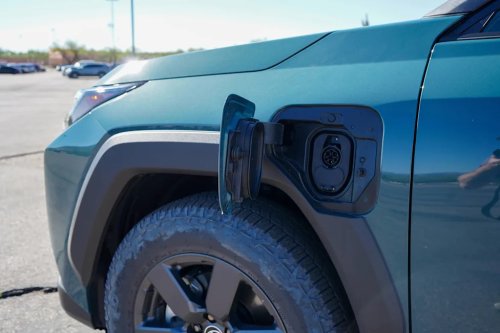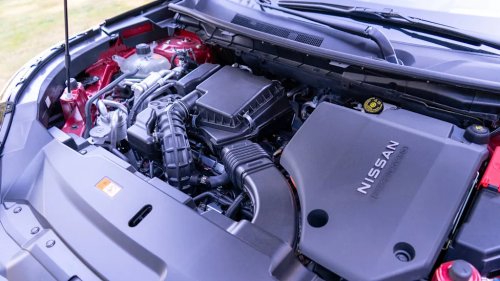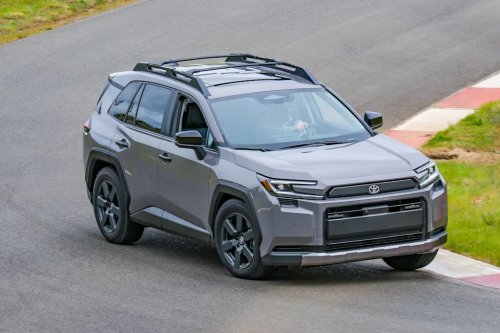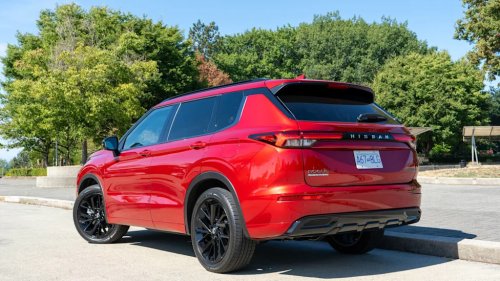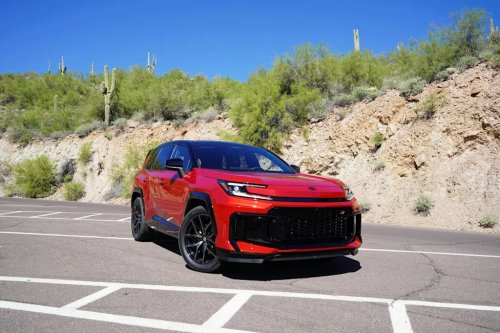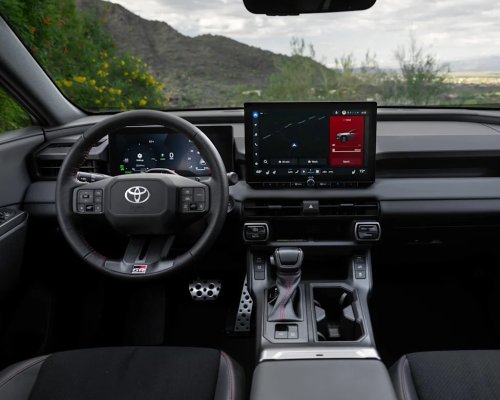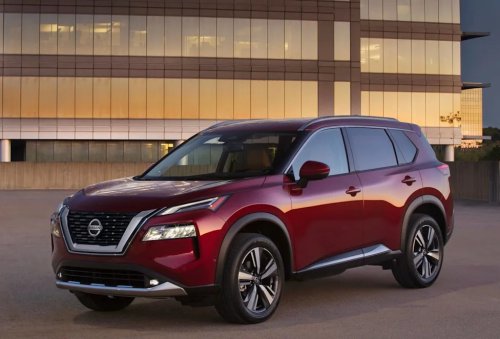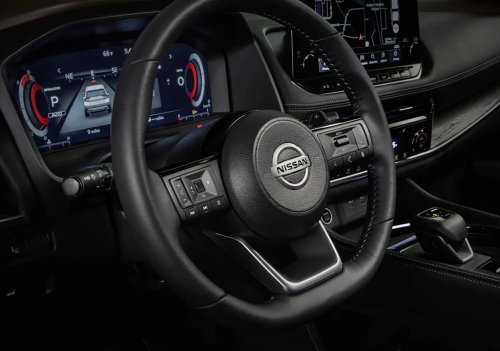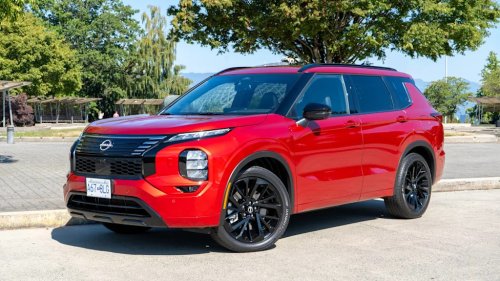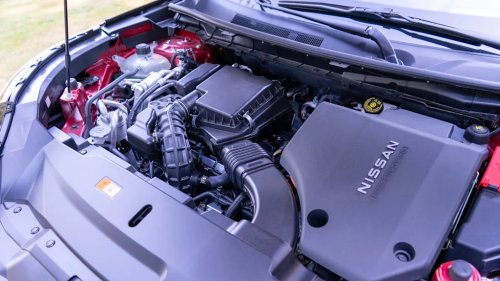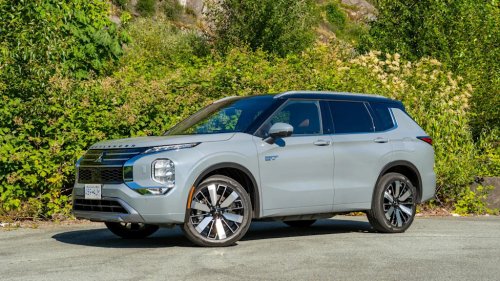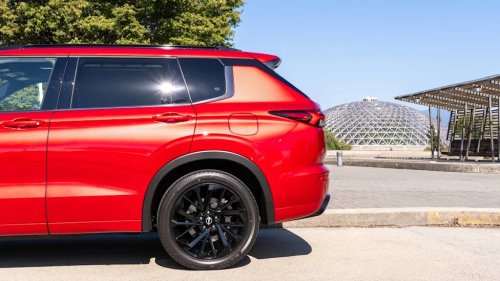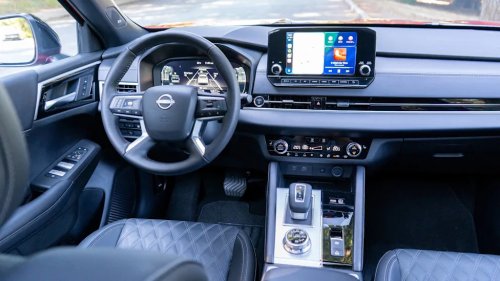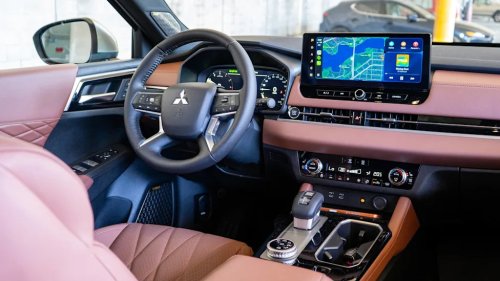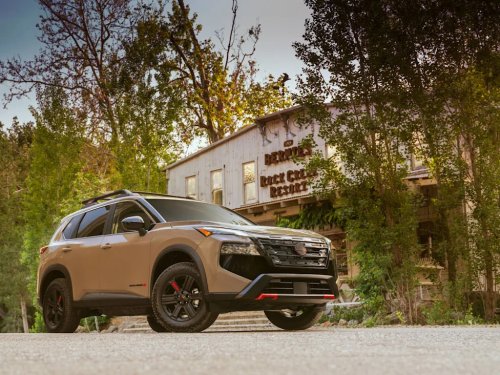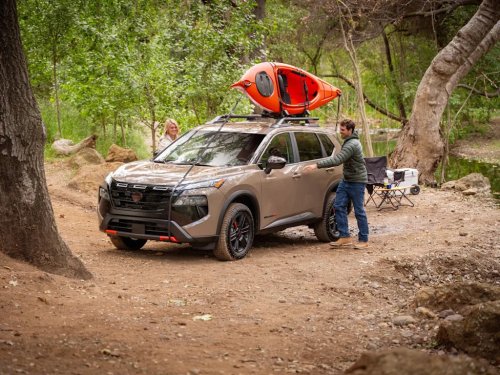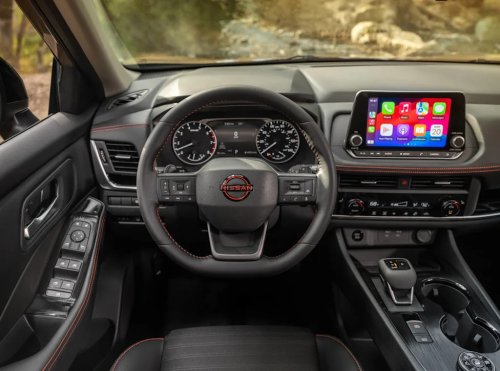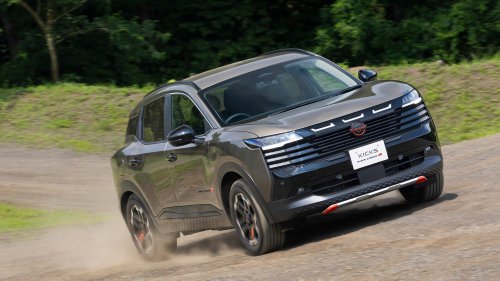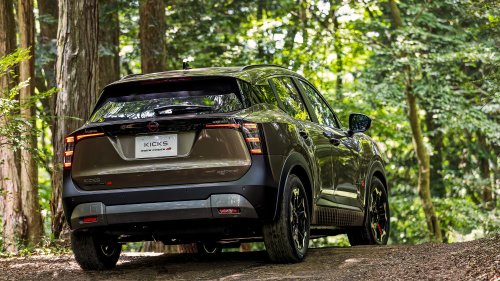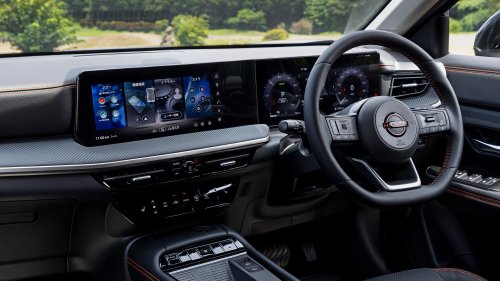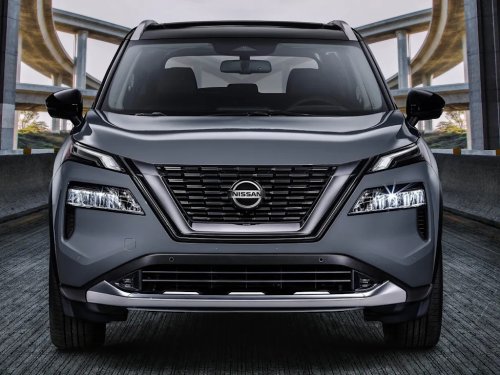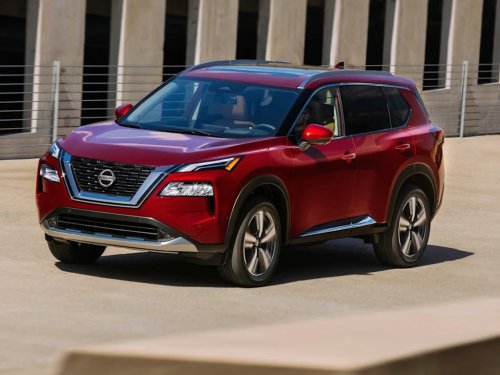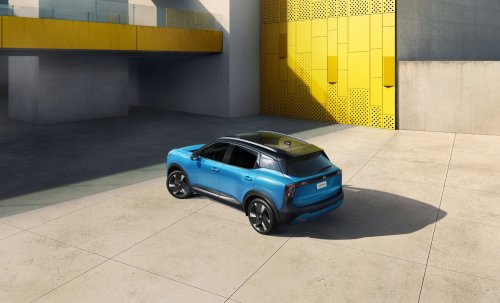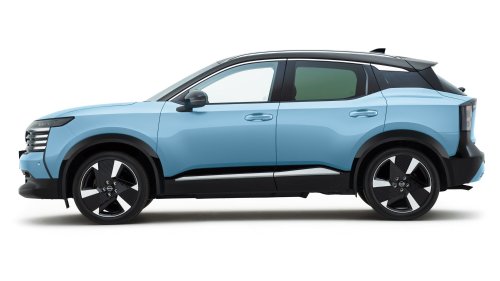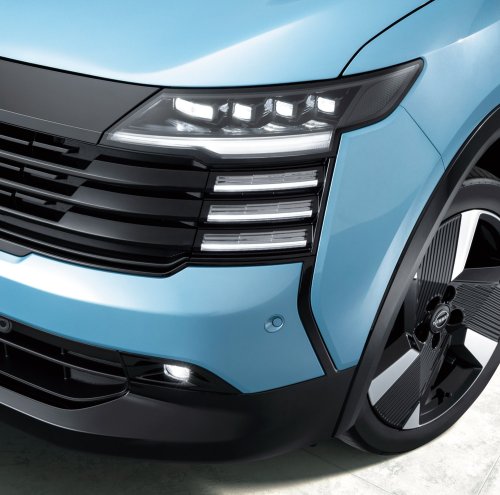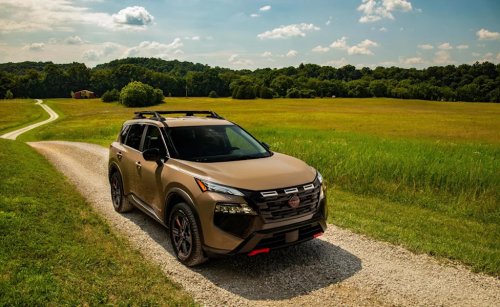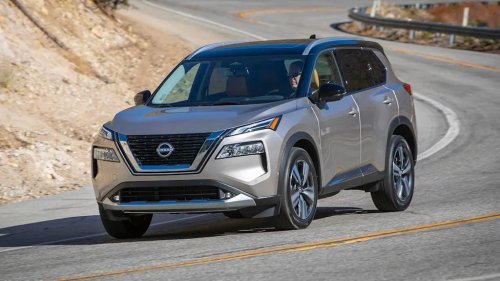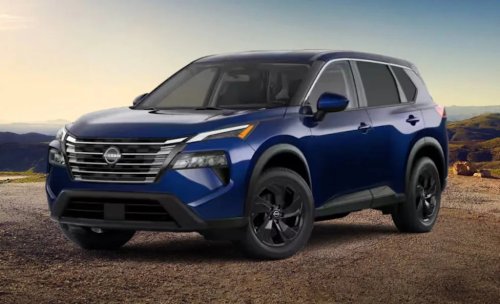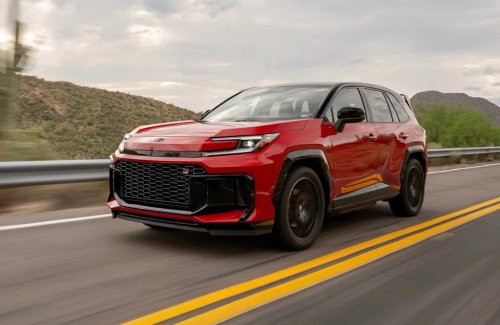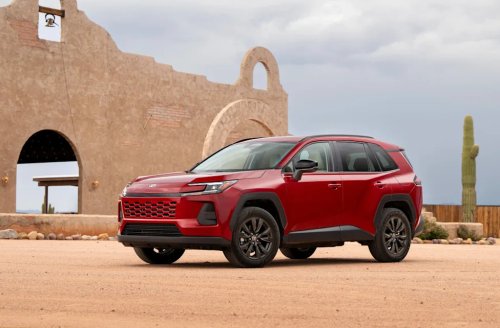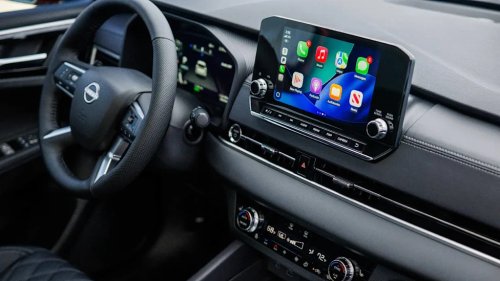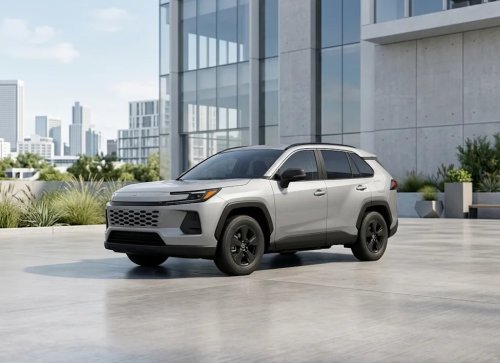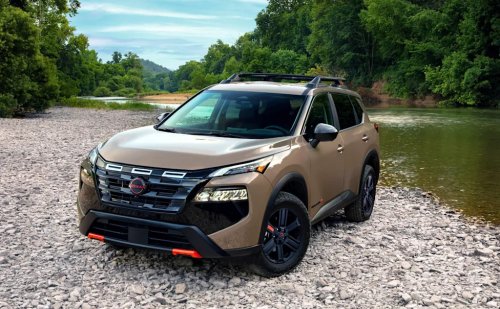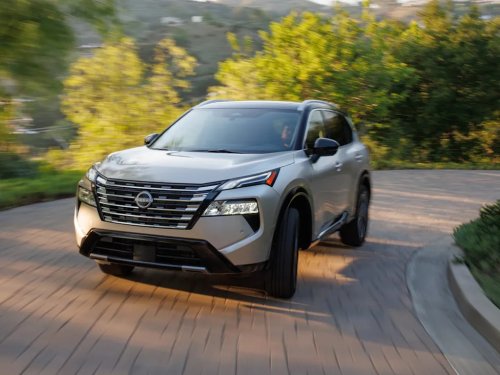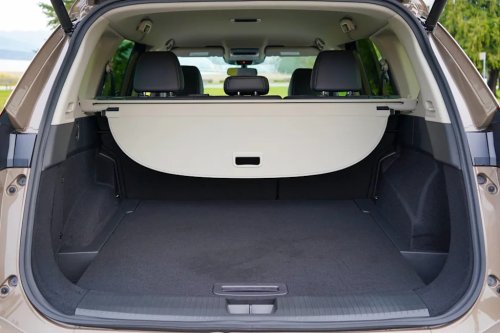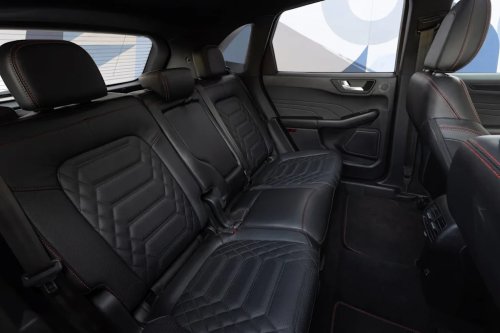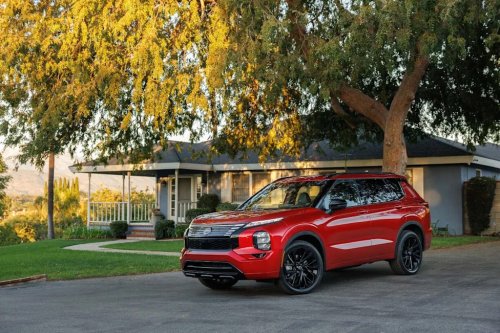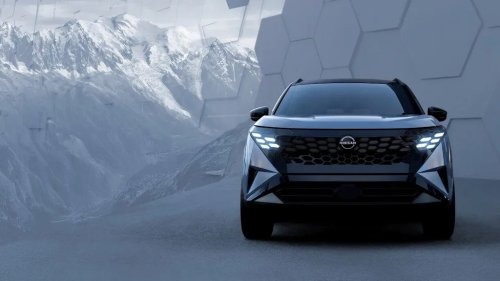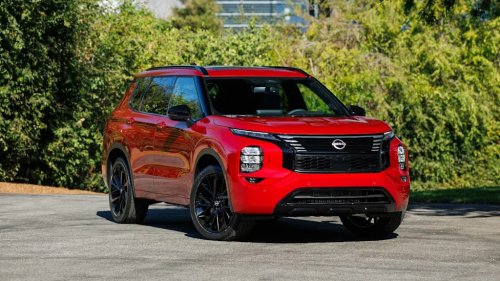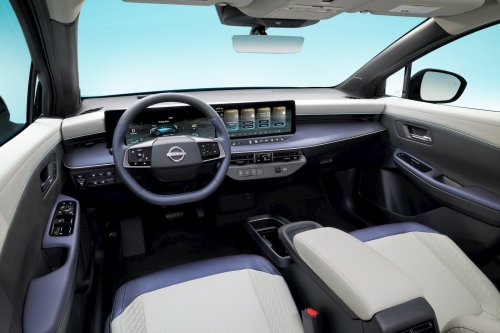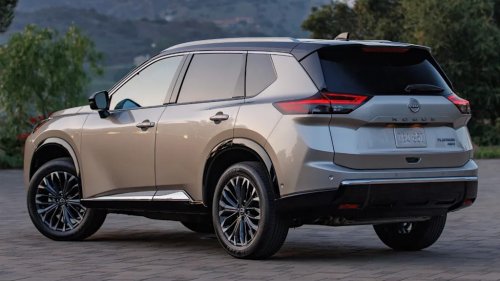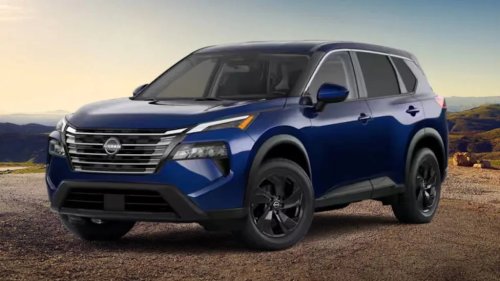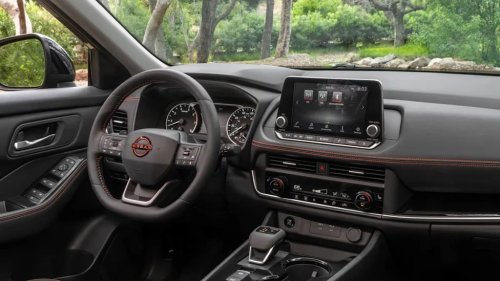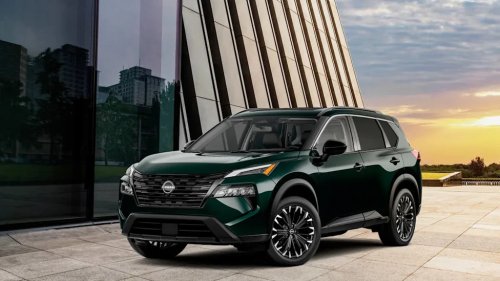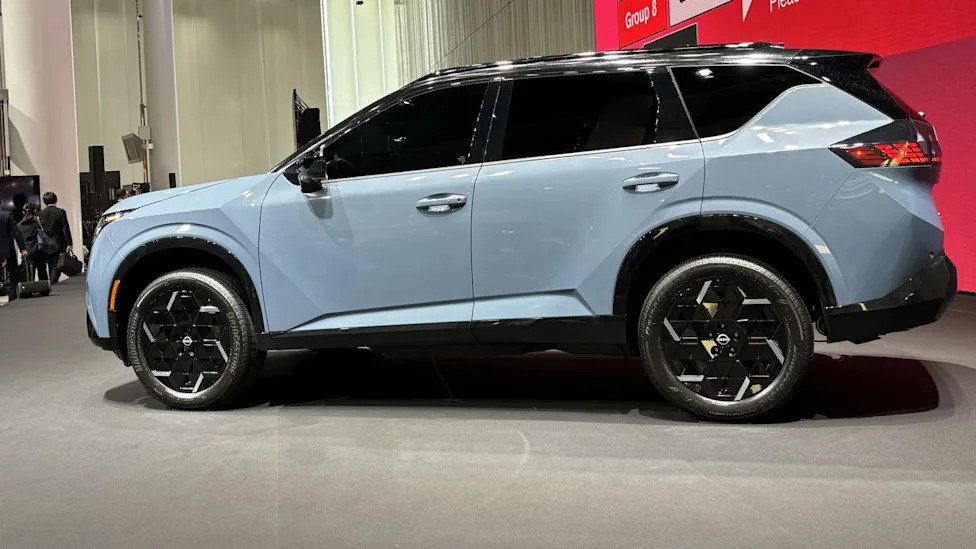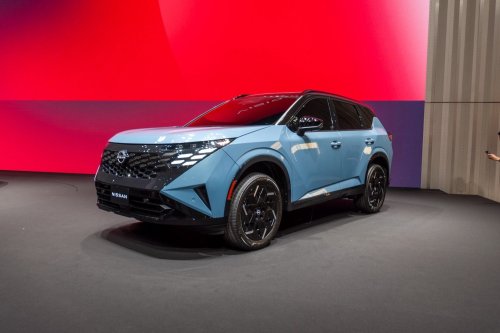
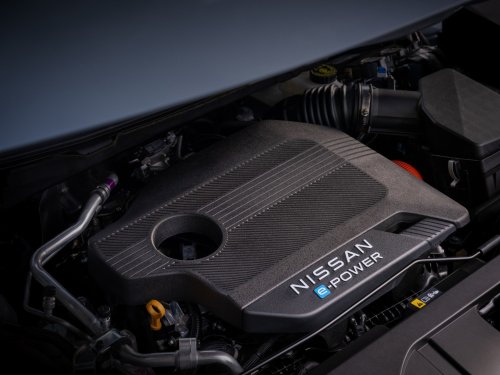
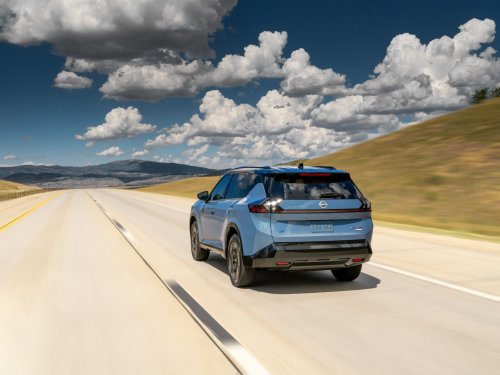
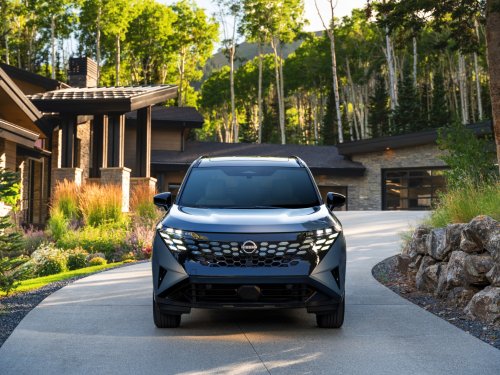
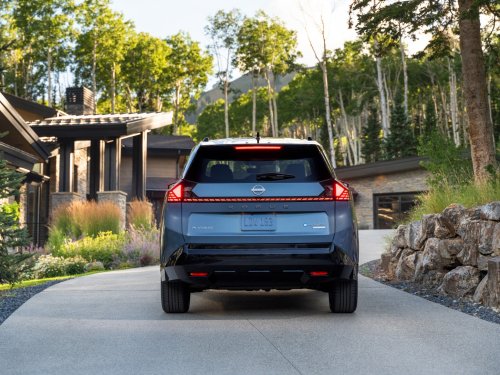
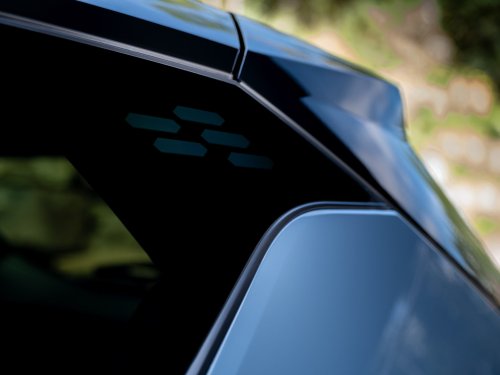
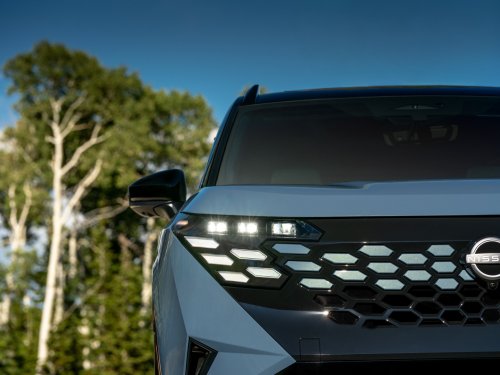
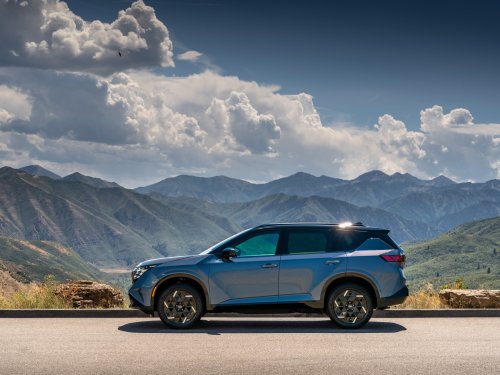
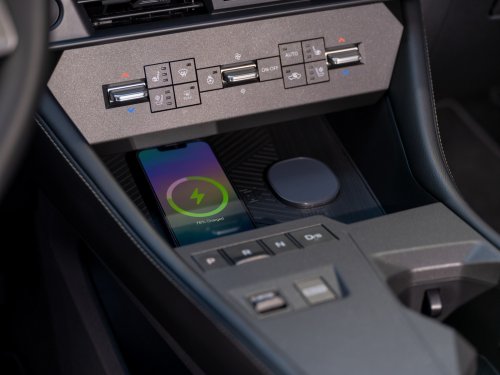
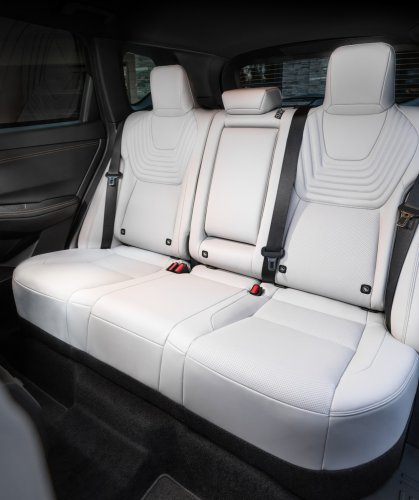
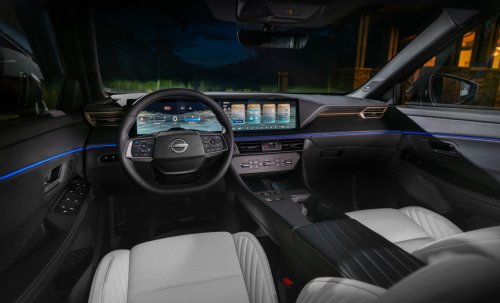



















Joel Feder The first major play in Nissan’s turnaround plan is about to take place as the automaker chops its product portfolio from 56 models to 45, brings back the Xterra, and refocuses on trying to be exciting again. But first, the bread and butter. On Monday, the 2027 Nissan Rogue Hybrid formally debuted with a standard hybrid powertrain and all-wheel drive along with an estimated 40 mpg fuel economy rating for $37,065 including a $1,575 destination fee. Notably, the new Rogue Hybrid costs more and is less efficient on paper than the base Toyota RAV4. But Nissan’s betting more standard equipment and refinement will rule the day. By early 2027 the new Rogue Hybrid lineup will consist of five trims including SV AWD, SV AWD with SV Premium Package, SR AWD, SR AWD with SR Technology Package, and Platinum AWD. The almost top-spec SR AWD with SR Technology Package will launch first, arrive this fall, and cost $43,065. Nissan The 2027 Rogue Hybrid takes direct aim at the Toyota RAV4, which also comes with a standard hybrid powertrain, but utilizes a series hybrid powertrain instead of a parallel hybrid system like every competitor. The Rogue’s powertrain uses a 1.67-kWh lithium-ion battery to power a 202-horsepower front motor and 134-hp rear motor for a combined system output of 225 hp. A 148-hp gas-powered three-cylinder engine acts only as a generator to feed the battery and never powers the wheels. The goal is a more refined powertrain, which is what I experienced when I briefly drove a prototype of the 2027 Rogue Hybrid in April. Senior Vice President and Chief Planning Officer for Nissan North America, Ponz Pandikuthira, exclusively told The Drive, “Number one complaint of people with hybrid vehicles today, they almost always have a CVT mated to them, and they hate that whiny response, that you just step on the gas, and the car just revs up, and it doesn’t take you anywhere. You will have instant torque response of an electric motor and the drive feel is very akin to driving an electric vehicle. So you get the upsides of an electric driving, but not the downsides of worrying about charging it and range anxiety.” Nissan The Rogue Hybrid aims to be smoother and more refined than the competition thanks to its series hybrid powertrain. A large factor will be how much quieter it is than the competition. Pandikuthira said, “On a DB scale, it’s the difference between a quiet conversation in a library versus a loud living room, because it’s just orders of magnitude quieter, and you do a back-to-back drive with a DB meter in a RAV4 or CRV and our car, and we have premium vehicle level quietness inside the car. Now, is there a rogue customer in that segment demanding quietness? Is that the number one thing they’re asking for? No. But it’s a bonus that tells them that the product is premium. So you combine that with the touch and feel of the materials, the design layout. You go back into any of those other key competitors. And I think we’ll redefine our space.” With Nissan-estimated fuel economy ratings of 40 mpg city, 36 highway, and 38 combined, the Rogue Hybrid will be competitive. But those figures fall short of the Toyota RAV4’s 47/40/43 ratings in front-wheel-drive form and 46/39/42 when all-wheel-drive is optioned. Pandikuthira told The Drive, “When you pick the series hybrid execution style, just the physics of that solution will not let you get the highest fuel economy. But it will be the highest urban usable fuel economy.” He continued with, “But people who drive in dense metropolitan areas with a lot of stop start, they’re going to do a heck of a lot better with the E-power [Nissan’s marketing name for its series hybrid powertrain] than any sort of parallel hybrid system. So we think observed fuel economy and measured in terms of the number of times you go to a fuel station will be far better for the customer. We’re very confident in our fuel economy value proposition.” One differentiator between the Rogue Hybrid and the competition will be a true one-pedal driving mode thanks to the series hybrid system. Nissan The new Rogue Hybrid takes an evolutionary approach to its design. The front end ditches all chrome bits, blends the new grille seamlessly into the fascia and blends the available inset LED daytime running lights with the headlights. Those LED daytime running lights feature a subtle two-three pattern, which Nissan noted is a nod to the brand. In Japanese two is ni and three is san. The C-pillar’s triangular shape is supposed to reference Mount Fuji as a nod to Japan. Nissan Inside the Rogue Hybrid will have a 12.3-inch digital gauge cluster alongside a 12.3-inch touchscreen under a single pane of glass. Twin 14.3-inch screens will be available as will a head-up display and 10-speaker Bose sound system. Notably, the Rogue skips the piano black trim that inevitably gets scratched and retains physical buttons and toggles for critical controls. There’s a radio volume knob, toggles for the climate control system temperature along with buttons for the defrost functions, fan speed, and heated and ventilated seats. The second-row bench seat should be easy to access thanks to long rear doors that open almost 90 degrees. Nissan notes the Rogue Hybrid features five LATCH points for car seats. As the 2027 Nissan Rogue Hybrid arrives in dealers later this year we’ll find out if Nissan’s bet on refinement and equipment pays off in the marketplace.