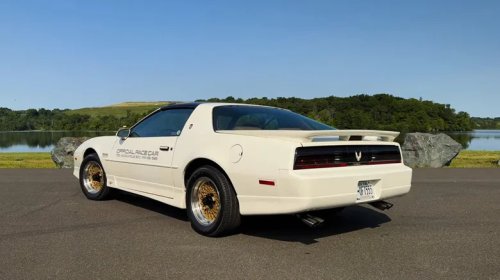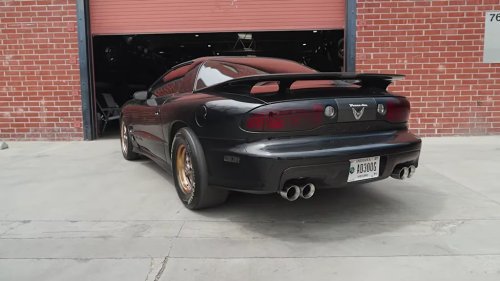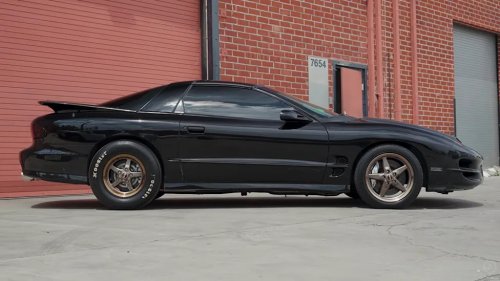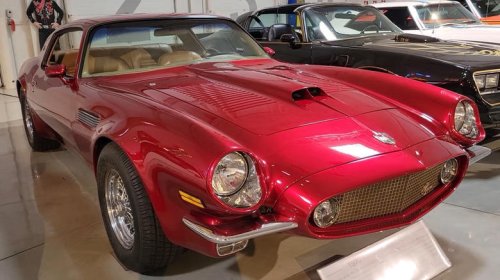
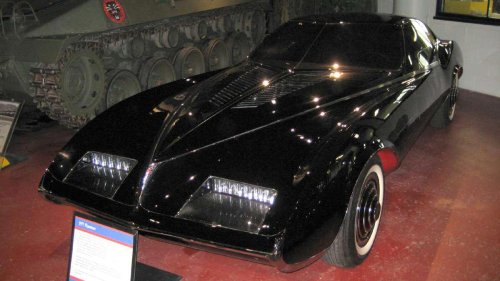
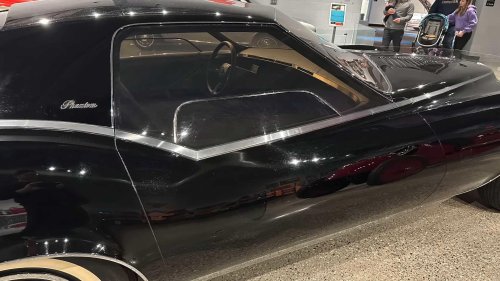
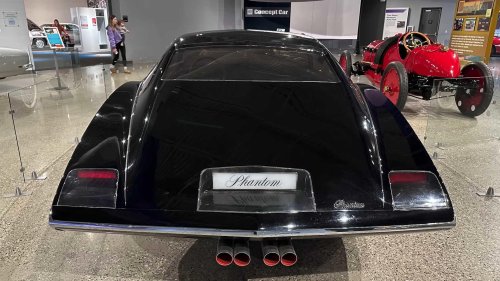
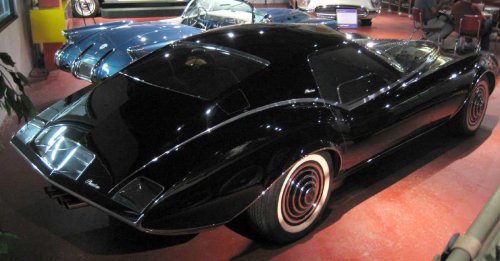



















Most enthusiasts can spot a Pontiac GTO or Trans Am from a mile away, but Pontiac's most fascinating performance story may be the one that never reached a showroom. Created in 1977 as a personal project of legendary GM design chief Bill Mitchell, the Pontiac Phantom was long, low, dramatic, and completely out of step with an industry suddenly obsessed with downsizing and fuel economy. It was never meant to become another practical late-1970s compromise. Instead, it was Mitchell’s final love letter to style, performance, and emotion—a hidden Pontiac concept that most Gen-Z enthusiasts probably don’t even know exists. The Muscle Car Pontiac Built After The Golden Age Ended MECUM The Pontiac Phantom arrived at a particularly unusual moment in automotive history. By 1977, the golden era of American muscle cars had largely come to an end. The high-horsepower battles that defined the late 1960s and early 1970s were fading into memory as automakers adapted to stricter emissions standards, fuel-economy concerns, and changing consumer expectations.Cars were becoming smaller, more efficient, and increasingly practical. Performance was no longer the industry's primary focus. For Bill Mitchell, however, that shift represented the end of an era he had helped create. During his remarkable career at General Motors, Mitchell played a role in shaping some of the company's most celebrated vehicles. His influence could be seen in everything from the Corvette Sting Ray and Camaro to various Cadillac and Buick models. By the time the Phantom was conceived, he was preparing to retire after more than four decades with GM.Rather than quietly stepping away, Mitchell decided to create one final automotive statement. The Phantom was designed as a reflection of everything Mitchell loved about automobiles. It wasn't developed in response to market research or future product plans. Instead, it served as a highly personal expression of the styling themes and performance-oriented character that had defined his career. The result was a sleek two-seat concept with classic grand-touring proportions. It featured a long hood, sweeping roofline, muscular rear haunches, and an unmistakable sense of drama. Even among the wild concept cars of the era, the Phantom stood apart.At a time when many manufacturers were embracing conservative designs, Mitchell produced a car that looked bold, emotional, and unapologetically American. In many respects, the Phantom felt less like a vehicle from 1977 and more like a vision of what performance cars could have become if style had remained the industry's top priority. Why The Phantom Was More Than Just A Concept Car Via: YouTube Many concept cars are little more than styling exercises designed to attract attention at auto shows. The Phantom was different. The project represented the culmination of decades of design experience. It was developed within GM's famous Studio X, the advanced design facility where Mitchell had nurtured some of his most ambitious ideas throughout his career.Internally, the car became known as "Madame X," a nickname that reflected both its exclusivity and its importance within Mitchell's inner circle. While the Phantom never reached production, its design language revealed a great deal about Mitchell's vision for American automobiles.The car was built on a Pontiac Grand Prix platform but wore a completely unique body. Its proportions immediately distinguished it from virtually every production Pontiac of the period. The exaggerated hood, sharply sculpted bodywork, and dramatic fastback profile created an appearance that blended elements of luxury coupe, grand tourer, and muscle car into a single package. Perhaps the most striking aspect of the Phantom was its refusal to follow trends.Many late-1970s vehicles emphasized practicality and efficiency. The Phantom instead celebrated visual excitement. Every line appeared designed to evoke motion, even when the car was standing still. Its styling also reflected Mitchell's lifelong appreciation for classic American and European grand tourers. Observers have often noted that the Phantom carried influences from luxury performance cars of earlier decades while simultaneously looking futuristic for its time. That combination helped transform the concept into something greater than a simple design study.The Phantom effectively became a rolling summary of Mitchell's automotive philosophy. In many ways, it represented the final chapter in a design career that had helped define the look of General Motors during some of its most successful years. Production Problems Killed Pontiac's Hidden Gem Via: YouTube Technically speaking, the Phantom never reached the point where traditional production problems could emerge. Yet the concept still fell victim to forces that prevented it from progressing any further. The biggest obstacle wasn't engineering or manufacturing. It was timing.By the late 1970s, General Motors was confronting a vastly different marketplace than the one that had existed during the peak of the muscle-car era. Rising fuel prices and evolving regulations forced automakers to prioritize efficiency, emissions compliance, and practicality.Against that backdrop, the Phantom represented a throwback to a different philosophy. Mitchell hoped the concept would demonstrate the continued appeal of emotionally driven automotive design. However, many within GM viewed the vehicle as disconnected from the company's future priorities.The Phantom wasn't conceived as a realistic production proposal, but even if there had been interest in pursuing the project further, the business case would have been difficult to justify. The market was moving away from large private luxury-performance coupes and toward smaller, more economical vehicles. As a result, the concept remained exactly what Mitchell intended it to be: a design statement rather than a production preview.Soon after the Phantom's completion, Mitchell retired from General Motors, effectively ending any possibility that the project could evolve further. Without its creator championing the idea, the concept became a fascinating footnote in Pontiac history rather than the foundation for a future model. Ironically, that outcome is part of what makes the Phantom so memorable today. Since it never had to conform to production realities, it remained a pure expression of one designer's vision. Why Gen-Z Enthusiasts Rarely Hear About It Today Via: YouTube Despite its fascinating backstory, the Pontiac Phantom remains largely unknown to younger enthusiasts. One reason is obvious: it never entered production.Cars become legends through years of public exposure. The GTO, Firebird, and Trans Am all benefited from showroom success, magazine coverage, motorsports involvement, and appearances in popular culture. The Phantom never had those opportunities. Instead, it spent most of its existence known only to automotive historians, designers, and dedicated Pontiac enthusiasts. The timing of the concept also contributed to its obscurity.The late 1970s are rarely celebrated as a golden age of American automotive design. When enthusiasts look back at Pontiac's history, they naturally gravitate toward the muscle-car boom of the 1960s and early 1970s. As a result, unique projects from the latter part of the decade often receive less attention.Via: YouTube The Phantom's connection to Bill Mitchell may also explain why it remains underappreciated today. While enthusiasts recognize many of the cars he influenced, far fewer know the story of the man himself. Yet Mitchell's impact on the automotive industry is difficult to overstate. The Phantom was his final masterpiece: a concept that distilled decades of design thinking into a single vehicle.For younger enthusiasts discovering the car today, that context makes it far more than an attractive concept. It becomes a snapshot of an important moment in automotive history, when one of the industry's most influential figures decided to create a car purely for passion rather than profit.Nearly 50 years after its debut, the Pontiac Phantom continues to fascinate those who stumble across it. It may never have reached production, but it achieved something arguably more significant: it preserved the vision of a designer who helped shape the American automobile for generations. And in an era when many concepts are quickly forgotten, that's a legacy worth remembering.