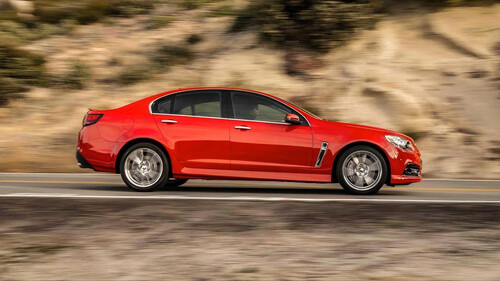
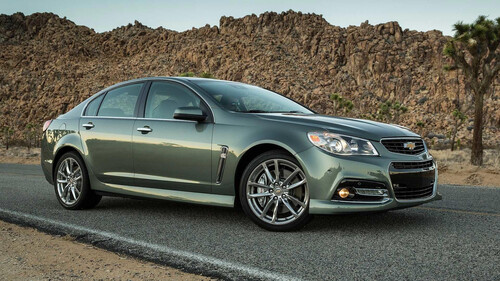
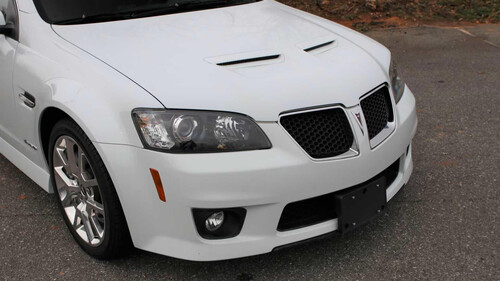
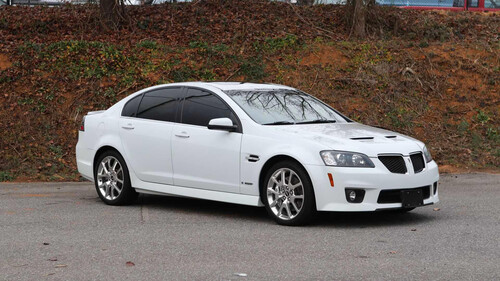
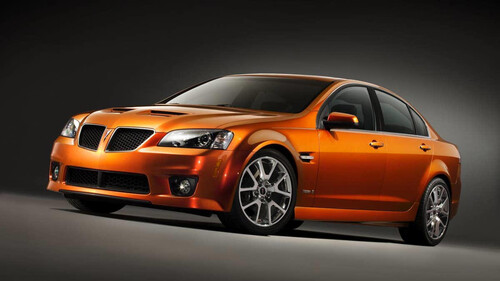
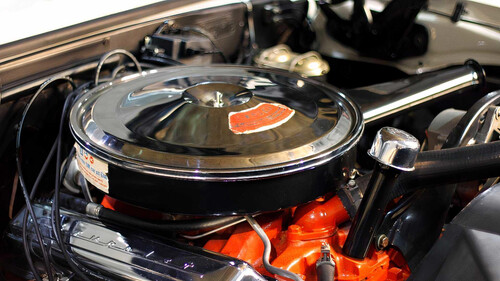
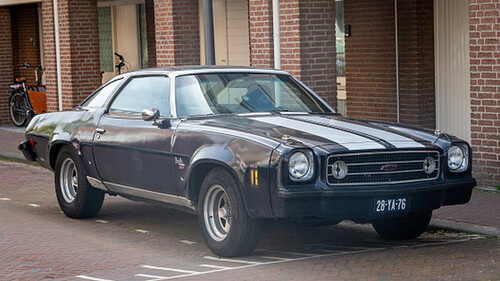
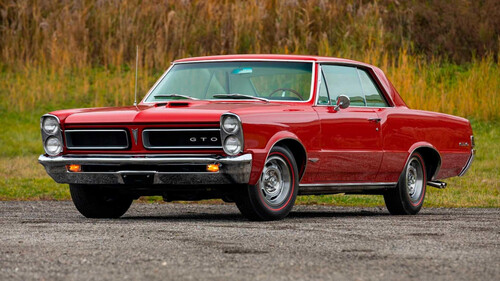
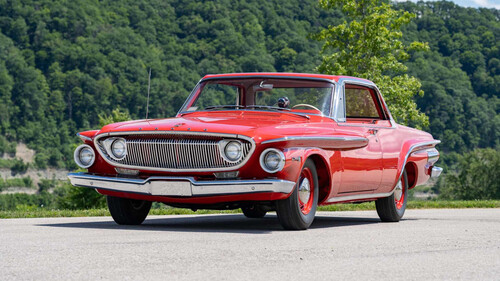
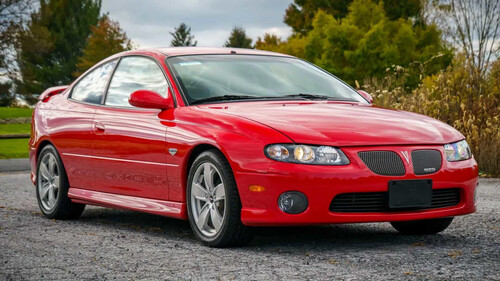
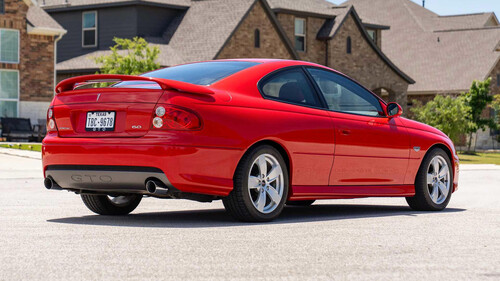
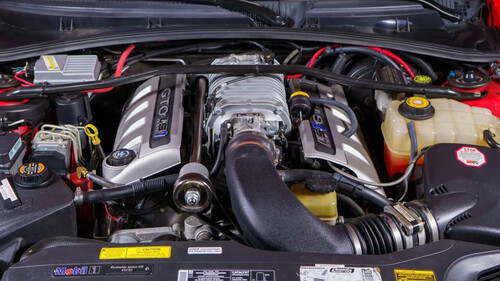
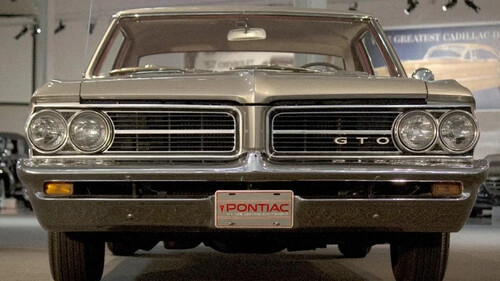
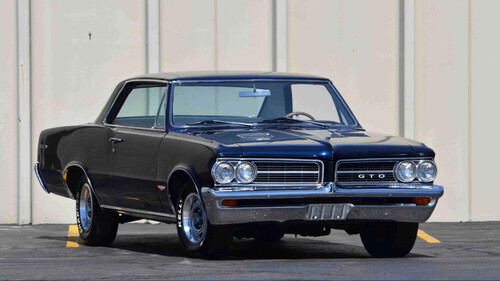
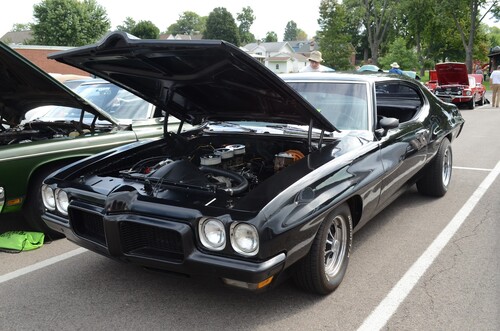
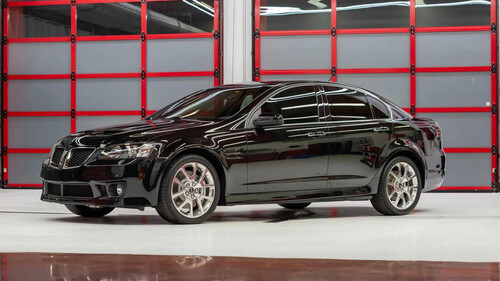
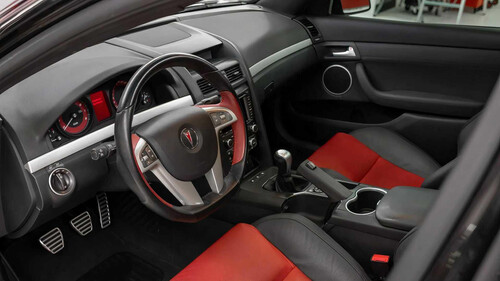
Kenmo/Getty Images In some circles, "GTO" is synonymous with big V8 power. When that GTO badge first landed, it wasn't to designate a model, but rather an option package. And even so, one of the non-negotiable performance-focused upgrades that came with the GTO package was the 389 V8 we're going to cover in a moment. This is a car that has been in and out of the mix for much of muscle-car history, and the story of the GTO's powerplants often mirrors the story of the American auto industry through those many years. You got the mid-'60s excitement with the name's debut, Malaise Era frustration with the comparatively tepid 350, and the LS1 and LS2's return to form, which would turn out to be among the last gasps of Pontiac itself. All told, you start with four Pontiac-built V8s. Then, after a 30-year hiatus, the GTO returned in the form of an Australian-built coupe with an LS under the hood. So you've got the early ones, the missing ones, the late ones, and even one that got away — a Super Duty 455 that didn't quite make it to showrooms but did land in magazines. With such a roller-coaster history, it's no wonder that what started as faux racing branding became one of the most enduring combinations of three letters in car history. 389 V8: The one that started it all Marvin's Motor City Garage/YouTube For 1964, Pontiac's Tempest LeMans was available with an option package that had never been offered before. It marked the very beginning of the GTO name and arguably the beginning of muscle cars themselves. This wasn't the first implementation of the 389 V8, but it was the first time Pontiac had dropped it into one of its smaller, lighter cars, delivering what might be described as a proof of concept for the muscle-car formula itself. The existing 389 had a four-barrel carburetor that helped deliver the motor's factory-rated 325 horsepower. It was quite a starting point, especially by 1960s power standards. There was also a 348-horsepower Tri-Power version with a different carb setup: three Rochester two-barrels. Buyers were into it, and the formula was established. But Pontiac didn't stop there. For the second model year, both versions got more power, with the Tri-Power reaching 360 horsepower. In-period testing put its 0-to-60 time at 5.8 seconds with a quarter mile of 14.5. Things were evolving quickly. For 1966, the GTO joined the ranks of cars that weren't meant to be full models by becoming exactly that. The GTO proper was born. That final year for the 389 also brought the first factory-installed "Ram Air" package. 400 V8: The mainstay Lou Costabile/YouTube The segment-defining 389 ran until 1967, when the 400 replaced it. This time, buyers could choose from a few variations on the theme, with the full lineup including a 255-horsepower two-barrel, a 335-horsepower four-barrel, and two options at 360 horsepower apiece. The difference between the two revolved around whether you wanted Pontiac's "Ram Air" intake setup. This forced buyers to choose between two different ways to get to the same horsepower number, with the powerband and the driving experience varying depending on which was chosen. Pontiac's Ram Air program became the centerpiece of the 400's continued evolution. The 400's more serious performance variants eventually received round-port heads. The first was 1968's Ram Air II, while the Ram Air IV carried a revised version of the design into 1969 and 1970. By 1970, the standard 400 made 350 horsepower, while the Ram Air III and Ram Air IV carried ratings of 366 and 370 horsepower, respectively. The Ram Air IV also produced 445 pound-feet of torque, making it the highest-rated production 400 offered in the GTO. "Mainstay" fits because the 400 wasn't merely one step between the 389 and the 455. It remained the GTO's standard engine after the larger 455 arrived, and the Ram Air 400s actually carried higher advertised horsepower ratings than that original 455. The 400 lasted through 1973, when the base version was rated at 230 net horsepower and 325 lb-ft of torque. Its seven-year tenure covered both the peak of Pontiac's horsepower war and much of the retreat that followed. 455 V8: More torque, not always more power High Octane Classics/YouTube Trouble was brewing for car enthusiasts in America, even if they hadn't yet realized the impact. The regulatory shifts that would usher in the Malaise Era had started to coalesce, but not before Pontiac snuck in under the wire with the 1970 GTO, together with an available 455 that was taking the car in precisely the opposite direction from where it, and the industry, would eventually be pulled. With 360 horsepower and 500 lb-ft of torque, the new motor delivered 10 fewer horsepower than the Ram Air IV 400, but with an additional 55 lb-ft of torque. That proved to be the 455's high-water mark, at least on paper. As emissions standards went up and lead in gasoline went down, output suffered. The "High Output" 455 in the GTO now sat at 335 gross horsepower and 480 lb-ft of torque. Those were still serious numbers, but this new trajectory was certainly a bitter pill to swallow. Under a new power rating system in 1972, the final 455 H.O. delivered 300 horsepower and 415 lb-ft of torque. Those unfazed by malaise could lean into the vibe even harder with the less aggressive D-port 455, which produced 250 horsepower and 370 lb-ft of torque. Regulations had arrived, the worst era of car design was afoot, and you'll notice that the next entry on this list begins with a three. 350 V8: The end of an era Kinion Classic's/YouTube For 1974, displacement wasn't the only area where it felt like Pontiac was moving backward through time. The GTO name had once again become an option package, and now Pontiac moved it from the midsize LeMans to the smaller Ventura, a Pontiac model listed among the cars that most shocked Jalopnik readers with their horrible drive quality. There was one engine available this time: a 350-cubic-inch V8 that served up all of 200 horsepower. It felt like the writing was on the wall for the end of the GTO, and it was. To be fair, though, the performance was less anemic than the specs suggested. A Cars magazine comparison pitted the '74 GTO against the debut '64 and produced surprisingly similar results. The older car reached 60 mph in 7.4 seconds, while the newer one got there in 7.7. It's not exactly the result you want after a decade of progress and innovation, of course, but not completely embarrassing, either. In any case, this was the end, at least for a while. Pontiac built just over 7,000 cars with "GTO" written on them in 1974 and then shelved the name for 30 years. 5.7-liter LS1 V8: The Australian revival J&J Auto Wrecking (jandjautowrecking)/YouTube Three decades after the original GTO disappeared, Pontiac headed to the other side of the planet to find a way to bring it back. The Holden Monaro was an Australian-built, rear-wheel-drive coupe with four seats, an independent rear suspension, and enough room under the hood for GM's LS1 V8. The resulting 2004 GTO didn't really resemble its predecessors and, just to be clear, by that we mean it didn't look great. But thanks to the 5.7-liter from Chevy, Pontiac was back in business as far as performance went, with the LS1 producing 350 horsepower and 365 lb-ft of torque, and an optional six-speed Tremec manual. Buyers got a Corvette motor for Pontiac money and performance that might not have been on par with the 'Vette, but worthy of the GTO badge nonetheless. The six-speed went from 0 to 60 in 5.3 seconds and did the quarter-mile in 14 seconds flat. It was a shockingly credible package dynamically, made all the stranger by being wrapped up as a very normal-looking coupe. 6.0-liter LS2 V8: The 400-horsepower send-off Jakeman21642/YouTube Proving the upside of cross-brand parts-bin sharing up to and including whole-ass engines, GM's upgrade from the LS1 to the LS2 benefited the GTO almost immediately. In 2005, thanks to the new 6.0-liter V8 from Chevy, output climbed to 400 horsepower and 400 lb-ft of torque. This amounted to an extra 50 horses and 35 lb-ft after one model year back in the game as the car was just beginning to shed its Australian accent. As a result, the 2005 Pontiac GTO was the ultimate sleeper in the mid-2000s, with the six-speed manual capable of getting to 60 mph in 4.8 seconds and achieving a quarter-mile time of 13.3 seconds. It was not only faster than the LS1 version but also traded blows with the then-all-new Mustang GT and came out ahead in most performance categories, at least by the assessment of Car and Driver at the time. Pontiac kept the song going into 2006 with the same engine, but that became the GTO's final model year (again) as the Holden Monaro ended its own production run. Soon enough, the defunct nameplate would be followed by Pontiac itself, perhaps saving the GTO the indignity of being resurrected as some sort of hybrid crossover 20 years later. Super Duty 455 V8: The one that got away By Ch0fu/Getty Images The promising-sounding Super Duty 455 was taken from this world before it had a chance to make it into a production GTO, which is how a Pontiac muscle car that didn't get made became Performance Car of the Year. The Super Duty was announced ahead of the 1973 model year, with Pontiac promising a proper race motor dialed back just enough to make it suitable for road use. The Super Duty got a reinforced four-bolt main block, forged rods and pistons, improved oiling, reworked round-port heads, and a higher-capacity intake and exhaust. The preproduction GTO was rated at 310 horsepower, while the emissions-certified one that would eventually land in production Firebirds had 290 net horsepower and 395 lb-ft of torque. Car journalists who drove the GTO lost their minds over it. Which is good. Because they're the only ones who ever got their hands on it. As Hemmings remembers for us, Hi-Performance Cars magazine put the '73-GTO-that-wasn't through its paces and went so far as to declare it "Car of the Year." Between the time the article was written and the time it went to print, the tide turned at General Motors. The company pivoted to focus on safety and fuel economy and left some of its performance priorities, including the car of the year, in the dust. The Super Duty 455 GTO was done. It was clearly a great car, but the car-buying public never got to find out.