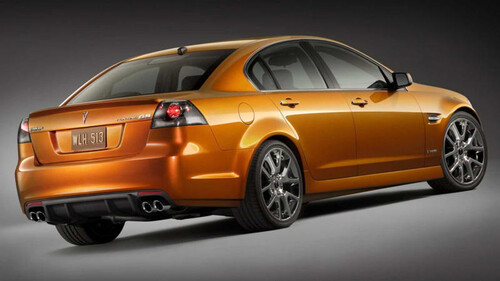
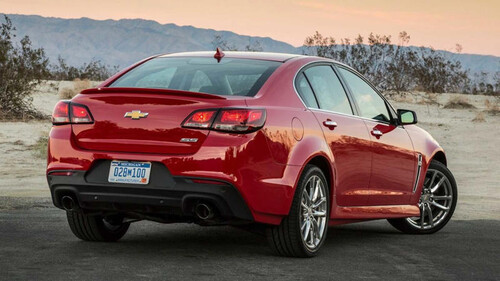
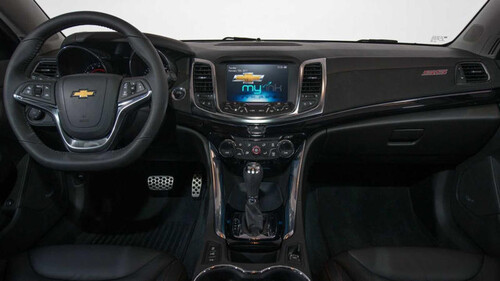
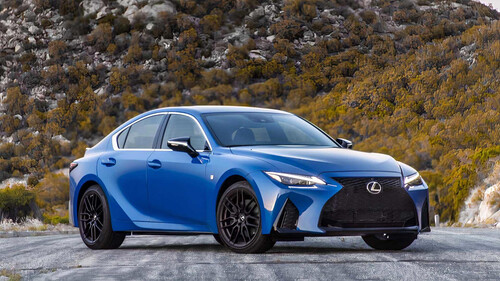
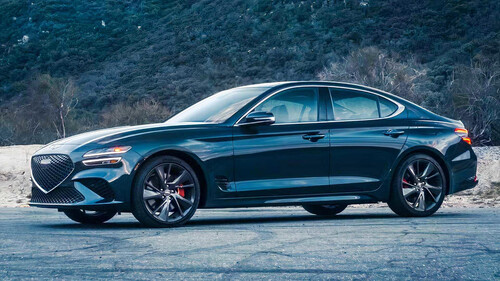
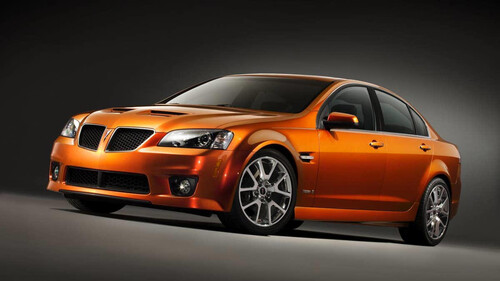
Autoblog and Yahoo may earn commission from links in this article.Good Cars Don't Always SellWhen it comes to sport sedans, people tend to default to the usual Germans or any of the premium and luxury brands. Nothing wrong with that, as cars such as the BMW 3 Series, Lexus IS, and Genesis G70 are fine examples of those.But then there are sport sedans that deserved far more success than their sales figures suggest. It's not like those cars were panned, either. If anything, a lot of praise was said about these, but ultimately they failed to bring in sales.2011 Lexus IS F rear 3/4 viewChevrolet SS (2014-2017)Name a rear-wheel drive American sedan that's available with a V8 from the 2010s, and chances are the first answer you'll get is either the Dodge Charger or Chrysler 300. Sure, there was the Crown Victoria, but it was for fleet sales by then and axed by 2011. What you won't hear very often is the Chevrolet SS.AdvertisementAdvertisementIt's effectively a rebadged Holden Commodore VF, and we're not complaining about that at all. If anything, it was a traditional midsize/large sedan with rear-wheel drive that followed the same formula since the '60s. The American version exclusively came with a 6.2-liter LS3 V8 that made 415 hp and 415 lb-ft. It was basically Australia and America's take on the E39 BMW M5. It had the right stuff, the right price, and was even available with a manual. Unfortunately, sales were just in the thousands per year, and just 12,860 were sold.We do wonder if it would've sold better if the North American market took the whole VF Commodore range and renamed it the Impala instead of building the front-drive model. We think even the V6 models would've fared well against the lower trims of the Charger and 300, and the Impala SS could've been reborn. Oh, what might have been.Jeremy KorzeniewskiKia Stinger (2018-2023)By the 2010s, Kia had pretty much transformed itself from a purveyor of cheap runabouts to a marque that could be taken seriously. But the South Korean automaker wanted to be taken more seriously, and the solution to that was to build a sport sedan. The result was the Stinger, and it was nothing like Kias before it - or since.It followed the German sport sedan playbook to a T by offering a 2.0-liter turbo with 255 hp for the base model, as well as a 3.3-liter V6 twin-turbo putting out 365 hp. It was available with either rear-wheel drive or all-wheel drive, and when equipped with the boosted six-cylinder, could get to 60 mph well under five seconds. It even benefitted from former BMW M division head Albert Biermann's input, so it drove well, too.AdvertisementAdvertisementOkay, it didn't sell as low as the Chevrolet SS, and sales even peaked at 16,806 units in 2018. But it never really made the volume, and it wasn't outselling its posher counterpart, the Genesis G70, by much either. Even after six model years, Kia could only sell 70,845 in the U.S and 138,392 units worldwide. Fair for a relatively niche model, but it deserved more success.KiaLexus IS-F (2008-2014)Speaking of cars that deserved greater success, that brings us to the Lexus IS-F. It was the car that launched the entire F Performance brand for Lexus, and was the first true hot sedan from the company. The IS-F aimed its sights squarely at the Audi RS 4, BMW M3, and Mercedes-Benz C63, and it had the hardware and firepower to go up against those cars.Specs? It came with a 5.0 V8 with 417 hp and 371 lb-ft, so it was on par with two of the German trio. Developed on the Fuji Speedway (hence the F) and the Nürburgring, Lexus was determined to leave a strong impression on the sport sedan market the same way it crashed the luxury establishment back in 1989, but it wasn't meant to be.The IS-F was far from a bad car, but its abilities and reception didn't resonate in sales. Lexus had planned to sell about 5,000 of these in the U.S. per year; by the time production ended in 2014, only 5,118 ever made it stateside after seven model years. Worldwide, Lexus shifted about 11,500 IS-Fs from 2008 to 2014, compared to 14,368 units for the RS 4 that ran from just 2006 to 2008 - and that was the 'slowest-selling' of the German compact V8 trifecta. If you want rarity and reliability though, there's only one place to look.LexusMazda Mazdaspeed6 (2006-2007)Sticking to the Japanese theme, there's one performance sedan from Mazda that's been largely forgotten, but those with elite ball knowledge (as kids say) will remember the Mazdaspeed6. Also known as the Mazda6 MPS outside the U.S or the Mazdaspeed Atenza in Japan, it was Hiroshima's take on the Subaru Legacy GT and the limited-run Spec B.AdvertisementAdvertisementIt was a good match for the Subaru, with its 2.3-liter turbo punching out 270 hp and 280 lb-ft of torque. The Mazdaspeed6 also came with all-wheel drive, and it was exclusively manual-only, so it was clear that Mazda aimed it at the enthusiast crowd. There was praise for it everywhere, and as far as sleepers went, it was highly effective.A technical masterpiece, yes, but it was a commercial failure. Despite having a lot of things enthusiasts like, sales were dismal, with around 7,500 making it to the U.S. Estimated worldwide production wasn't that great, either, with roughly 13,000 made. It wasn't meant to be a limited-run model, either.MazdaPontiac G8 (2008-2009)We started the list with a Holden, and we're ending it with yet another one. The Pontiac G8 was the American version of the VE Commodore, the predecessor of the model that would eventually become the Chevrolet SS.Unlike the SS, the G8 had three engine options: a 3.6-liter V6 with 256 hp, the G8 GT with a 6.0-liter V8 putting out 361 hp, and the G8 GXP packing a 6.2-liter making 415 hp. The GXP was even available with a six-speed manual, perfect for those who want to row their own. It should've been a good match against the Charger and 300, but the G8 came too little too late for the Pontiac brand.AdvertisementAdvertisementAdmittedly, sales were slow, but who would buy from a brand with an axe swinging over its head? Couple that with the global economic crisis, and no one was in the mood to buy thirsty V8 bruisers. Still, it managed to find 38,159 owners before GM pulled the plug on Pontiac. The G8 alone wasn't going to save the brand. We do wonder if the company's fate would be a little different if Pontiac sold Commodores in America as far back as the '90s to truly establish it as GM's sporty division.Instant Cult StatusThese cars might have failed market expectations, but they succeeded in creating loyal fan bases. And while it unfortunately proves that not all cars get the sales they deserve, the cult following that these models have helped establish means these won't be totally forgotten in the future.All of the cars we've listed are largely regarded as future classics, some of which are already commanding a premium in the second-hand market. If you get any of these today, there's a good chance it'll grab a fair bit of attention in a car meet, too.PontiacThis story was originally published by Autoblog on Jul 26, 2026, where it first appeared in the Features section. Add Autoblog as a Preferred Source by clicking here.