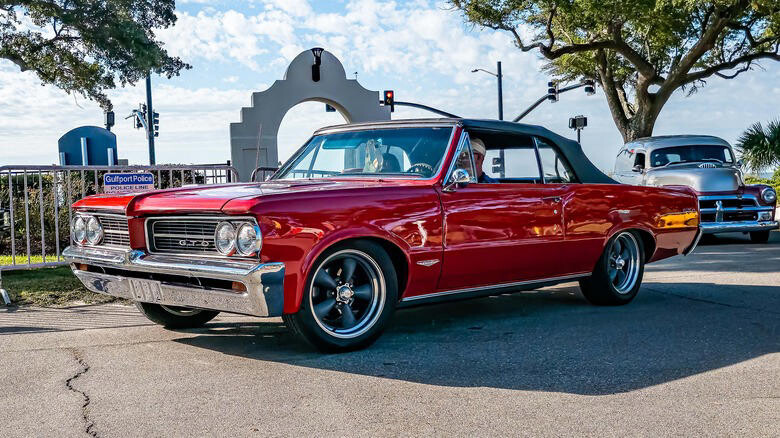
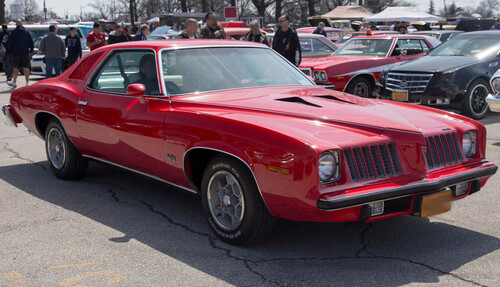
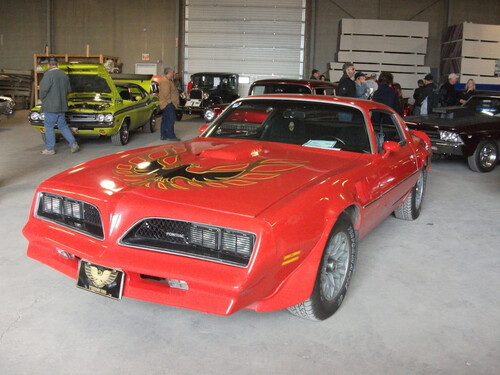
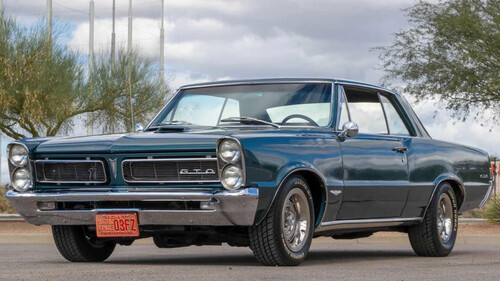
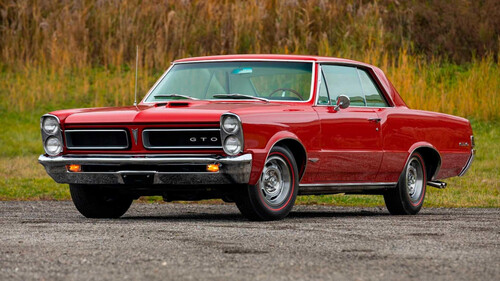
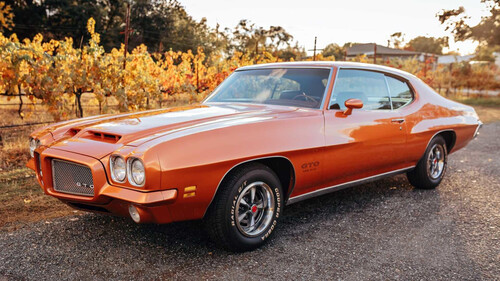
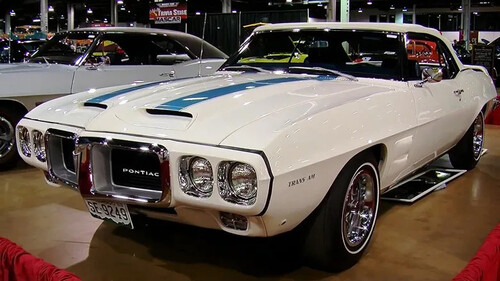
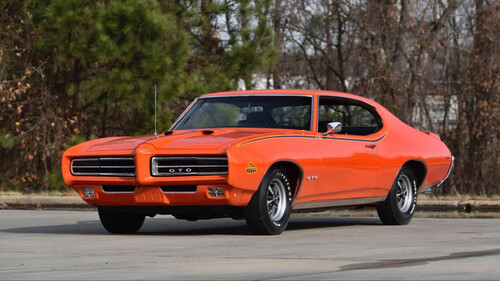
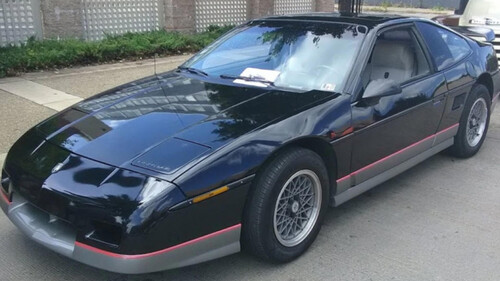
5 Of The Most Iconic Pontiac Sports Cars Ever MadeIn the 1980s, Pontiac adopted the tagline "We Build Excitement." By that point, the auto brand had been around for over 50 years and produced a number of cars that certainly lived up to the advertisement. Many of Pontiac's models were not only exciting, but also truly instrumental in shaping the culture of the American sports car.The Pontiac GTO is widely cited as the model that introduced the masses to the American muscle car, popularizing a new kind of sports car that made serious performance affordable. The third-generation Pontiac Trans Am represented a revival of the pony car in the 1980s after a decade of underpowered and emissions-choked disappointments, becoming a widely recognized model after its starring appearance in "Knight Rider." The Pontiac Fiero rewrote what an American car could be, placing an engine behind the driver in a mid-mounted layout — a formula typically reserved for Europeans at the time. While Pontiac might have closed its doors for good in 2010, some of the company's sports cars will be remembered for generations to come. Instead of "We Build Excitement," a more apt slogan might have been "We Build Icons."The 1964 Pontiac GTO is legendaryWhile the origins of the American muscle car can be traced back to the late 1940s with the big-engined, lightweight Oldsmobile Rocket 88, most people consider the beginning of America's golden era of muscle cars to be 20 years after the Rocket hit the streets. That golden era was unknowingly kicked off in 1963 when Pontiac's chief engineer John DeLorean (yes, that one) decided to ignore parent company GM's ban on racing-capable cars. During a brainstorming session, Bill Collins, another Pontiac engineer, suggested to DeLorean that they put a high-performance four-barrel 389-cid V8 under the hood of the new-for-the-time intermediate-size Pontiac Tempest. Exploiting a loophole in GM's racing ban by making the 389 V8 an optional engine instead of the base one, America's first golden-era muscle car was born.Almost immediately, the 1964 Pontiac GTO was a major success. In the first year, it sold over six times its predicted sales volume with 32,450 units built. By 1967, Pontiac had sold over 286,000 GTOs to eager Americans of all backgrounds. The car's massive sales success couldn't be ignored by the rest of the United States' top manufacturers, spurring Ford, Plymouth, and Dodge to try to capture some of the GTO's magic for themselves. In the years to come, cars like the Dodge Charger and Plymouth Barracuda Hemi competed with the GTO for muscle car supremacy. Thanks in large part to the GTO, the muscle car became America's major contribution to the wider sports car market.The 1969 Pontiac GTO Judge was an even bigger beastFive years after the introduction of the first-generation Pontiac GTO, the model's sales began to dip as a result of the market being flooded with new competition. The GTO received a full-body makeover for the 1968 model year, introducing the second generation's iconic split grille Endura front end, more aerodynamic body styling, and new high-displacement engine options. While the standard GTO was a well-equipped car already, the second generation's most iconic model arrived on the scene a year after the facelift. The special edition model was known as "The Judge" and represented the highest-performance GTO model that Pontiac had made up to that point.The Judge was built to compete with the stiffest competition available in the late 1960s, targeting the Plymouth Road Runner specifically. The Judge's name came from a comedy sketch from Rowan and Martin's then-popular television show "Laugh-In," which spoke to how Pontiac marketed the model. It was meant to be almost comically attention-seeking and a somewhat cartoonish commentary on the American muscle car scene of the 1960s, featuring a flamboyant paint job, psychedelic badging, and a big rear wing. The Judge certainly accomplished that goal, not only through its looks but also through its performance. It came equipped with two of Pontiac's most ludicrous high-output engine options, the 366-horsepower Ram Air III and 370-horsepower Ram Air IV V8s, making The Judge one of the best-performing muscle cars for the money. While GTO sales began declining in 1969, The Judge's vibrant personality and dominant performance made a lasting impression on the American sports car scene.