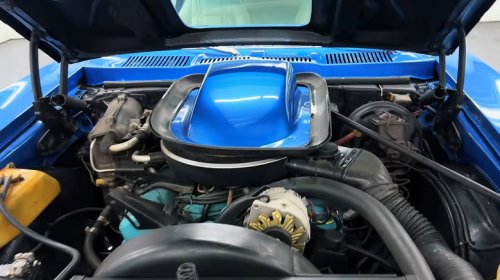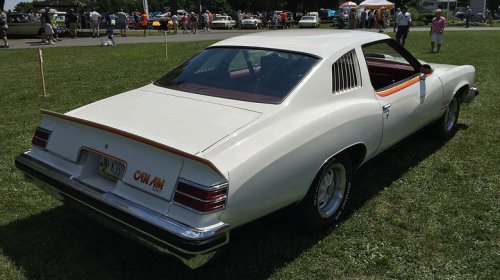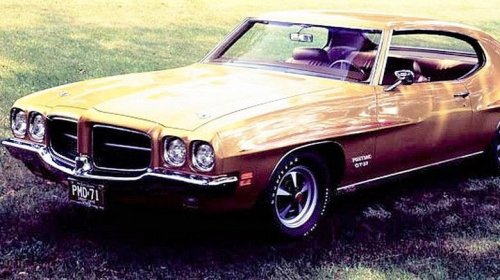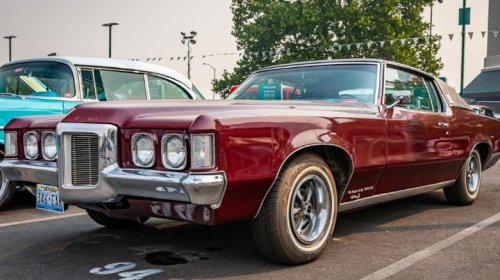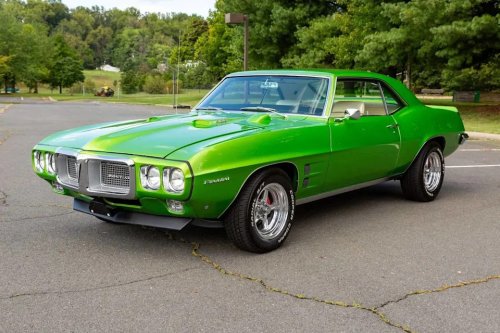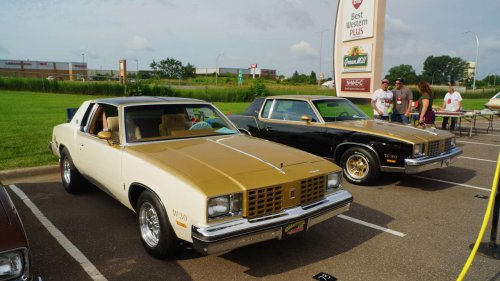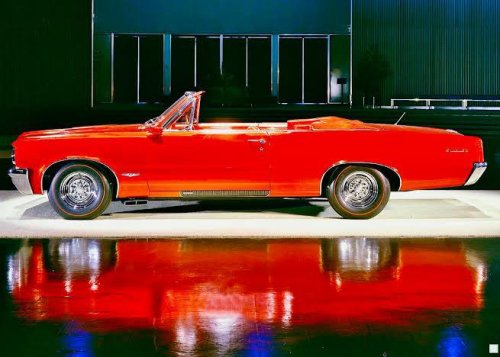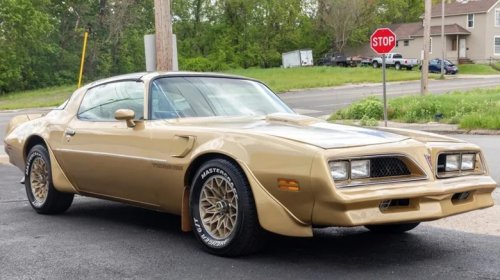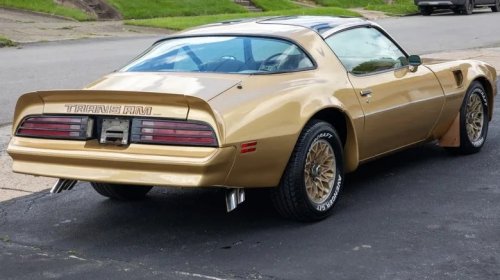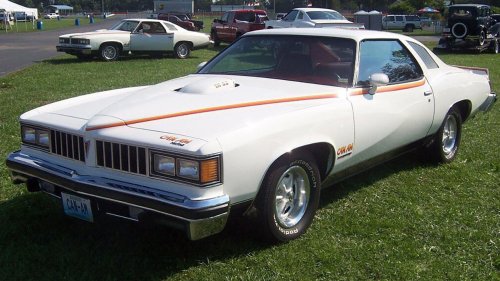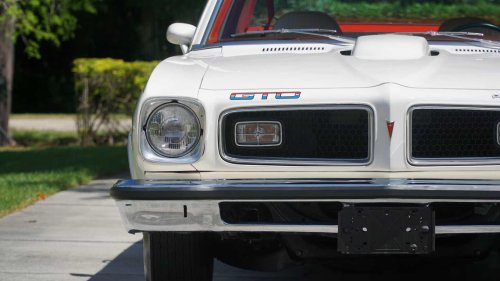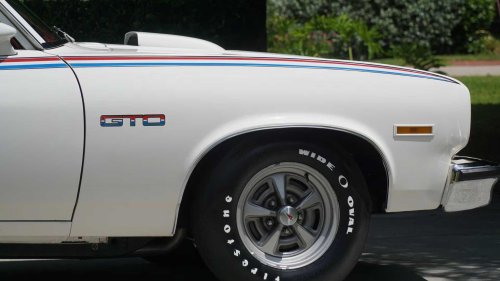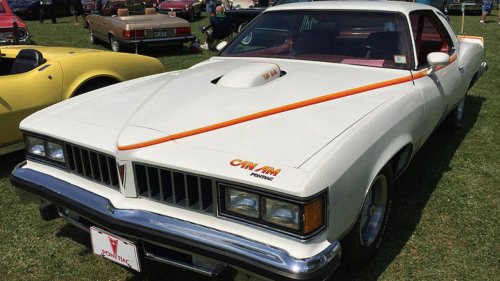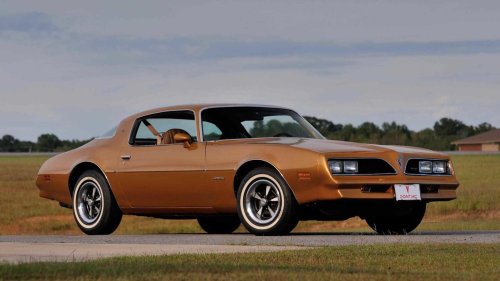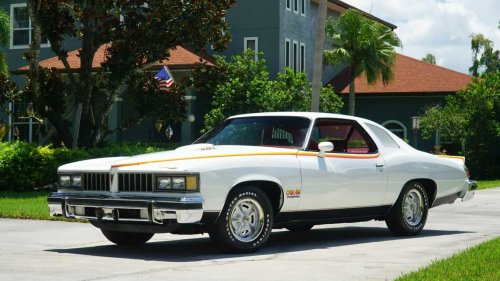
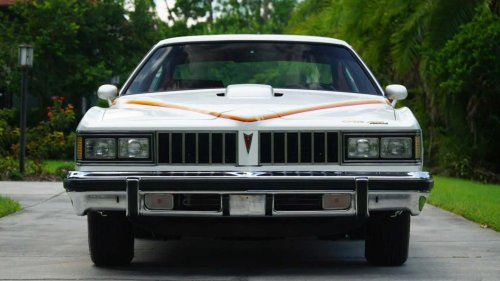
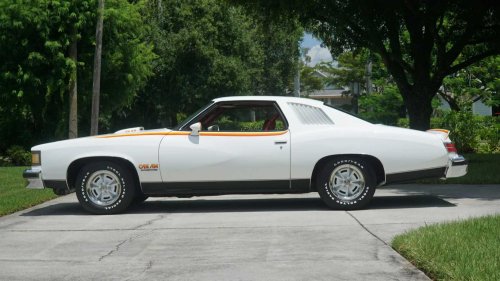
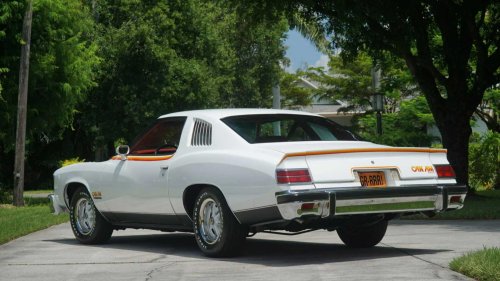























By the early 1970s, the good old days of the American classic muscle car were quickly coming to a close. New, federal emissions regulations were coming into effect, which included the use of unleaded fuel, along with measures being undertaken to reduce tailpipe emissions. Because of these new regulations, American automakers were forced to modify their engines by reducing compression ratios and installing smog pumps, both of which robbed horsepower.As a result, many domestic brands began cutting back on producing nameplates that were formerly associated with muscle. For example, Plymouth axed the Barracuda in 1971. Some nameplates remained, but were repurposed as personal luxury coupes, such as the AMC Hornet.In addition, some brands changed their definition of muscle entirely, such is the case with our model of interest today: the 1977 Pontiac LeMans Can Am. It boasted all the trappings of a muscle car, but was short-lived. Not due to bad sales or poor performance, but because of a crucial factory mishap. A Short-Lived Malaise-Era Muscle Car Bring A Trailer Pontiac Le Mans Can Am Key Points Produced in 1977 Featured a 400 CID V8 Based on both the Pontiac LeMans and Grand Am Approximately 1,300 were built Situated on GM's A-Body vehicle platform Followers of the Pontiac faith will know of the LeMans and the effect the model had on the domestic automotive market. It was introduced in 1961 as the top-spec trim package for the Pontiac Tempest, a model boasting unique features for its time, such as a flat cabin floor and an inline-four-cylinder engine called the Trophy 4 which, in essence, was half of a Pontiac 389 CID V8 bearing the name "Trophy 8". At first, the LeMans, along with the Tempest as a whole, was not successful regarding sales.However, the LeMans' luck would shift upon its debut as a standalone model in 1963. The introduction of the now-famous GTO package to the LeMan's order sheet in 1964 catapulted the model to stardom. For context, General Motors predicted that roughly 5,000 GTO package-equipped Pontiac LeMans' would be sold during its first model year. However, when the real numbers came through the pipeline, the model actually sold 32,450.Mecum Once the Pontiac GTO itself became a standalone model in 1966, the LeMans continued to boast a sporting prowess, albeit to a much lesser extent. While V8s were still on the offering list, one of the LeMans' "performance packages" was coined "the Sprint", although it only boasted a hopped-up straight-six. By 1970, you could fit a LeMans with engines as large as Pontiac's 455 CID Large-Journal big-block V8. However, by the model's fourth-generation debut in 1973, the 455 was lost, as the largest engine now on offer was a Pontiac 400 CID V8. Enter The Ill-Fated Can Am Bring A TrailerNear the end of the fourth-gen LeMans' life, Pontiac decided to spice things up a little bit with the injection of some well-placed Malaise-Era muscle. The name for the upcoming model would be the Can Am, taking its name from the Canadian-American Challenge Cup (Can-Am) racing series, despite Pontiac never being involved in the series. Being that this new model was going to be produced squarely within the worst of the Malaise Era, it certainly wouldn't be setting any circuits on fire.Bring A Trailer However, Pontiac wanted to keep its racing-inspired nomenclature in full force, so the Can Am was introduced. The model was decked out in very 1970s-appropriate yellow, orange, and red decals strewn about a white-painted body. It also received a set of black lower body panels and other miscellaneous trim pieces to further convey a sense of muscularity. A special set of wheels was also included, along with a unique "shaker" hood scoop air intake.Bring A Trailer One of the Can Am's largest undertakings was to replace the slow-selling Pontiac Grand Am, which had been taken off the market following the 1975 model year. Upon its Detroit Auto Show debut midway through 1977, public reception was, reportedly, positive.A short time later, General Motors had received roughly 5,000 orders for the model, following an initial order estimation totaling 2,500. It seemed that, at the time, Pontiac was standing at the threshold of a successful new model. Specs And Features Bring A TrailerNearly all Pontiac Can Ams came standard with a 400 CID Pontiac V8 and boasted a choice between a standard tune and a W72 tune, which upped horsepower by 20 ponies. The engine, which dated back to 1967 when it replaced the famous Pontiac 389, had been extensively updated and modernized to move with the ever-changing scope of American emissions regulations present at the time. A Rochester four-barrel carburetor was the sole option regarding fuel delivery, and its actual block casting was nearly devoid of any nickel, making for a weaker block. California-bound Can Ams received a 403 CID Oldsmobile V8 in order to comply with the state's emissions regulations.Bring A Trailer As for the rest of the Can Am, performance – however small during the Malaise Era – was prioritized. Its sole transmission option was a three-speed Turbo-Hydramatic TH400 automatic, with no option for a manual transmission offered. Rear-end gearing for most Can Ams was rated at 3.23:1, whereas California-spec Can Ams received 2.41:1. Its suspension consisted of Pontiac's Radial Tuned Suspension (RTS) package, which included beefed-up springs and larger front and rear sway bars.Bring A Trailer*Specs courtesy of Pontiac, Hagerty, and Car and Driver Current Pricing Bring A TrailerSeeing as there were only about 1,300 produced, the Pontiac Can Am is an especially rare find these days. As of this writing, no word on the official count of how many still exist is known. However, it is speculated that only 42 Califonia-spec versions still exist as of 2007. Regardless, despite its small numbers, Can Ams aren't all that expensive. Should you want one for yourself, check out the table we've cooked up below that shows its average pricing based on listing condition:*Pricing courtesy of Hagerty A Big Mistake: Why The Can Am Was Axed Bring A TrailerAs we just learned, orders for the Can Am began pouring in nearly as soon as it was introduced publicly. With the GTO a thing of the past, the Can Am was shaping up to, perhaps, be the next best thing since the GOAT's departure. Production was going along swimmingly, until a disaster on the assembly line caused the mold used to form the Can Am's trunk spoiler to break. While this may seem like small potatoes – surely a little bit of glue or a replacement part could fix the issue, right? – it ended up spelling the early end of the Can Am.Bring A Trailer The reported reason was due to Pontiac fearing the model would interfere with sales of its other nameplates. However, certain so-called insiders anecdotally report that some higher-ups at General Motors fought against the Can Am from the start, and took the destruction of one of its key assembly components as their way to claim that the model was not viable, and should be canceled.Whatever the reason was, we'll never know what sort of dent the Can Am could have made in the Malaise Era muscle car market, and maybe even beyond.