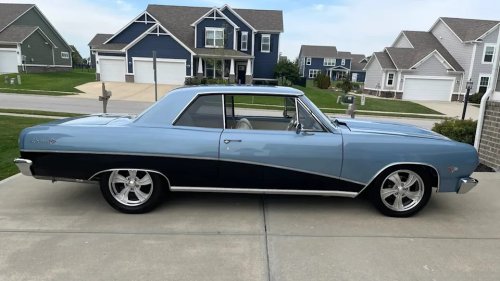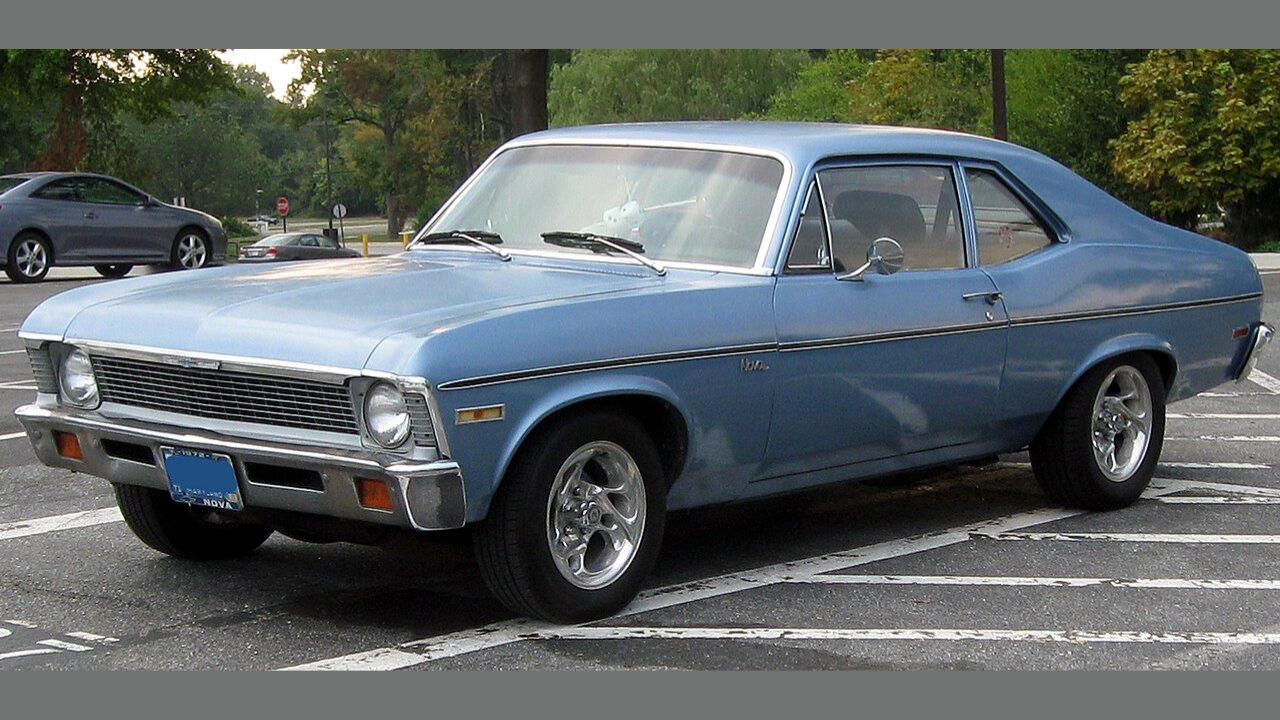



















1972 Chevrolet Nova vs 1972 Ford Maverick one still carries more value The 1972 Chevrolet Nova and the 1972 Ford Maverick were born into the same compact-car arms race, aimed at buyers who wanted basic transportation with a hint of muscle. Half a century later, both have loyal followings, but the market has made a clear judgment on which one usually brings more money. Values, auction results, and enthusiast chatter all point to the Nova as the car that generally carries the stronger price tag, even as the Maverick quietly builds a reputation as the budget-friendly alternative. Two compact rivals built for the same job The Ford Maverick arrived at the start of the 1970s as a compact meant to replace the Falcon and keep buyers from drifting to imports. References to The Ford Maverick describe it as the company’s compact model that superseded the Falcon and competed directly with the Chevy Nova and Dodge offerings. The Maverick line ran through the 1977 model year, and over that span the Maverick carved out a niche as a simple, economical car that could be dressed up with sportier trims. Chevrolet’s answer was the Nova, which had already been on the scene before 1972 but evolved into a clean, straightforward compact that could be ordered as anything from an economy commuter to a serious street machine. Later commentary about 73 and 74 Novas in enthusiast videos, where a host singles out the 73 and 74 Chevy Nova as affordable classics, underlines how the Nova nameplate became shorthand for accessible muscle. Those 73 and 74 Novas are not identical to the 1972 version, yet they sit in the same value conversation and help define the car’s reputation as a small Chevy with big potential. By 1972 both cars were firmly positioned in the same space. The Maverick was Ford’s compact alternative to imports and rival domestic compacts, and the Nova was Chevrolet’s compact that could be optioned all the way up to serious performance. That shared mission is exactly what makes their diverging values so revealing today. What the market says about the 1972 Nova Current price data for the 1972 Chevrolet Nova shows a broad but clearly defined range. Listings for Chevrolet Nova Classic present 1972 Chevrolet Nova Pricing with a Low of $9,495, an Average of $48,689, and a High of $113,998. Those three figures, Low, Average, and High, capture the spread from driver-quality cars to high-end builds and restorations. The same marketplace language refers to Filters so buyers can sort by body style, condition, and modifications, but the headline is that an average 1972 Nova now sits near the $48,689 mark, with the best examples clearing six figures. Another slice of the market focuses on the Nova’s performance identity. Listings for Chevrolet Nova Muscle show 1972 Chevrolet Nova Muscle & Pony Car Pricing with a Low of $9,495 and an Average of $48. That truncated Average figure reflects a summary that still pairs a similar low entry price with a mid-range number that hovers in the same territory as the broader Classic Cars for Sale data. The repeated Low of $9,495 confirms that even base or project cars have crossed a psychological threshold that used to belong to more traditional muscle. Valuation tools that track individual cars and auction results reinforce that story. A dedicated entry for the 1972 Chevrolet Nova Base lists Past sales at $15,900, tied to a 1973 Chevrolet Nova Base transaction. That record notes $15,900 alongside 67 M, North America, Mar, Bring, and Trailer, capturing a Bring a Trailer sale in North America. While that specific figure applies to a 1973 example, it anchors the Nova’s baseline in the mid-teens even for a relatively standard car, and it sits far below the $48,689 Average that more heavily optioned or restored 1972 cars can command in retail listings. The Chevrolet Nova Base reference supports the idea that a plain Nova already has a solid floor, with room to climb as options and condition improve. Enthusiast media also treat the Nova as a go-to choice when discussing accessible performance. A video that ranks six affordable classics singles out the 73 and 74 Chevy Nova as the first pick, emphasizing that those 73 and 74 Novas still deliver old-school muscle without the sky-high prices of marquee nameplates. Coverage like that feeds demand for the earlier 1972 cars, which share much of the styling and mechanical character that fans associate with the Nova’s golden years. How the Maverick compares on price and perception The Ford Maverick entered the same market with a different mission. The Ford Maverick was introduced for the 1970 model year as a compact car, and references to Ford Maverick models from 1970 to 1977 describe it as a series of compact cars that prioritized economy. The Maverick competed directly with the Chevy Nova, and the Maverick offered basic transportation with the option of sportier trims like the Grabber. That positioning has carried into the collector market, where the Maverick often appears as the cheaper route to a similar look. Market data for the specific 1972 model year confirms that pattern, although it also reveals how exceptional builds can bend the curve. A dedicated page for the 1972 Ford Maverick shows a standout Custom example with 8 mi TMU in Kissimmee, Florida, USA that sold for $65,000 at a Mecum auction. The record lists $65,000, notes the Custom configuration, and flags the mileage as TMU. That single sale, highlighted on a 1972 Ford Maverick tracker, proves that a heavily customized or historically significant Maverick can reach serious money. Yet the broader narrative around the Maverick still leans toward affordability. A feature that compares popular muscle cars with cheaper alternatives describes Mavericks as a great option for buyers who want Nova looks for half the cost. The piece explicitly states that Mavericks are a great option if a buyer wants the Nova appearance for roughly half the money, and it adds that With the Nova losing its great lines after 72, Ford was able to keep the car look all the way to 1977. That phrase, With the Nova, and the reference to Ford holding onto the styling advantage through 1977, encapsulate how the Maverick is framed as the budget-conscious choice that retained its proportions even after the Nova’s design shifted. Another video about the Maverick’s history notes that over 125,000 Americans now own Ford’s Maverick, emphasizing that Americans embraced the car when they could have bought economy imports but did not. The narration, which opens with Jan and then moves into a comparison of price and value, positions Ford’s Maverick as a volume success built on cost-conscious appeal rather than premium positioning. That mass-market identity still influences collector pricing, keeping most Maverick examples below the levels achieved by comparable Novas. Valuation tools focused on the model speak to the same dynamic. A page titled Ford Maverick Valuation, accessible through a Ford Maverick Valuation entry that includes Ford Maverick Navigation, an Article, Image gallery, Valuation, and Specifications, organizes auction results and price trends for the car. The structure of that data shows the Maverick in a lower bracket than the Nova on average, even though standout Custom builds can spike to $65,000. The gap reflects the Maverick’s starting point as a cheaper, more basic car and the way collectors still perceive it. Performance, character, and the Maverick Grabber factor Price is not the only reason the Nova tends to outrun the Maverick in the market. Enthusiasts consistently frame the Chevrolet as the stronger performer and the Ford as the lighter, more agile alternative. A discussion thread titled Basic Transportation, Maverick or Nova captures that split. One contributor argues that the Maverick Grabber was lighter and more agile but could not match the Nova’s raw speed and performance. The same post touches on Styling and refers to The Ma when describing how each car looks. The reference to the Maverick Grabber shows that even fans who appreciate the Grabber’s nimbleness still concede that the Nova has the edge in straight-line pace. The Grabber trim does add charisma to the Maverick story. A separate enthusiast poll that pits a Ford Maverick Grabber “1971” against a Chevrolet Nova SS “1971” has participants debating which car they would choose. The post, introduced with Apr and featuring Jackie Roberson, includes the line Being usually all Chevy, which signals that even die-hard Chevrolet fans see the Grabber as an appealing wildcard. The mention of Ford Maverick Grabber and Chevrolet Nova SS in the same breath highlights how the sportiest Maverick variants do compete for attention with performance Novas, even if the market still values the Chevy more highly on average. Other fan commentary compares the Nova to different Ford models entirely. In a discussion labeled 1972 Chevy vs Ford, one participant notes a preference for the Torino over the Nova, partly because They came with a 351 Cleveland engine. The comment, posted under the handle Primary-Signature-17 and tagged with Mar, shows how some enthusiasts gravitate toward larger Fords like the Torino when they want serious performance. That comparison indirectly boosts the Nova’s status within the compact segment, since the car is being weighed against a bigger, 351-powered Torino rather than against the Maverick. Visual presence also shapes value. A detailed comparison of a 1971 Chevrolet Nova SS and a 1971 Ford Maverick Grabber describes the Nova’s wider stance, chrome accents, and SS badging. The post, tagged with Dec and using the pronoun Its to describe the Nova’s stance, argues that those details set it apart as a performance car and that the interior offered more options and comfort. That kind of design and trim differentiation carries into 1972 cars, where the Nova’s proportions and available packages still project more muscle than a standard Maverick, even a Grabber. Taken together, these perspectives explain why the Nova commands stronger prices. The car is seen as quicker, more visually aggressive, and more configurable as a performance build. The Maverick Grabber narrows the gap, but the base Maverick remains tied to its economy roots, which caps its typical value even as enthusiasts praise its agility. Collector demand, nostalgia, and the “cheaper alternative” label Collector demand is shaped as much by stories and nostalgia as by specification sheets. Comments on how much a Ford Maverick is worth often begin with context about how the Maverick superseded the Falcon and competed directly with the Chevy Nova. The same Quora thread that references the Falcon and Chevy Nova points out that the Maverick went head-to-head with Dodge compacts as well, positioning it as one of several options for buyers who wanted a small domestic car. That crowded field keeps the Maverick from standing alone in the way that some other nameplates do. By contrast, the Nova has become a shorthand reference for a certain kind of no-frills muscle. The video that ranks six affordable classics places the 73 and 74 Chevy Nova at the top of its list, and the host repeatedly refers to those Novas as smart buys before prices climb further. Even though the segment focuses on 73 and 74 cars, the halo effect extends backward to 1972 models, which share much of the same appeal. When buyers hear that Novas are one of the six affordable muscle cars to grab before it is too late, they often broaden their search to include earlier years. Another feature that compares expensive muscle cars to cheaper stand-ins cements the Maverick’s role as the budget companion. It states that Mavericks are a great option if a buyer wants Nova looks for half the cost, and it specifically mentions that With the Nova losing its great lines after 72, Ford managed to keep the car look all the way to 1977. That framing does two things at once. It acknowledges that the Nova set the visual benchmark, and it casts the Maverick as the thrifty way to get a similar silhouette. Enthusiast polls and social media debates keep the rivalry alive. In the Basic Transportation, Maverick or Nova thread, owners trade stories about how each car behaves in daily use and at the drag strip. Some praise the Maverick Grabber for feeling lighter on its feet, while others insist that the Nova’s extra power and presence make it the better all-around classic. Those conversations rarely mention specific dollar amounts, but they reinforce a hierarchy where the Nova is the aspirational choice and the Maverick is the clever alternative. Even the way people talk about ownership plays a role. The video that notes over 125,000 Americans now own Ford’s Maverick emphasizes how many people chose the car when they could have bought imports. That mass ownership story helps explain why clean Mavericks are still relatively easy to find compared with some rarer muscle cars. The Nova, while also produced in significant numbers, has seen more of its best examples turned into high-dollar builds, which concentrates demand at the top end of the market. Why the Nova still carries more value When all of these threads are pulled together, the value gap between the 1972 Chevrolet Nova and the 1972 Ford Maverick becomes clear. On the Nova side, formal price guides show an Average around $48,689, with a High of $113,998 for the best 1972 examples and a Low of $9,495 that still represents a meaningful entry ticket. Muscle and pony car listings repeat that Low of $9,495 and align on an Average that points toward the mid-five-figure range. Valuation tools that document Past sales at $15,900 for a similar 1973 Chevrolet Nova Base confirm that even relatively plain cars have a solid foundation. The Maverick, by contrast, usually trades below that level. The standout Custom example that reached $65,000 in Kissimmee, Florida, USA shows what is possible when a 1972 Ford Maverick is heavily modified or preserved in exceptional condition. Yet the broader narrative, from valuation summaries to enthusiast commentary, frames the Maverick as the car that delivers Nova-like style for roughly half the cost. The statement that Mavericks are a great option for buyers who want Nova looks for half the cost is not just a throwaway line. It reflects a market consensus that has held even as prices for both cars have climbed. Performance perception adds another layer. Enthusiasts who compare the Maverick Grabber to the Nova repeatedly describe the Grabber as lighter and more agile but concede that it cannot match the Nova’s raw speed and performance. That perception feeds into the idea that the Nova is the more serious muscle car, which in turn supports higher prices for SS and other performance-oriented trims. The Maverick Grabber earns respect and a dedicated following, but it still carries the weight of the base Maverick’s economy-car image. Design history also favors the Nova, at least up to 1972. The comment that With the Nova losing its great lines after 72, Ford managed to keep the car look through 1977 suggests that 1972 is a high-water mark for Nova styling. Collectors who agree with that assessment are likely to prioritize pre-73 cars, which pushes demand toward 1972 models. The Maverick benefits from having consistent styling through 1977, but that consistency also means no single year stands out as sharply as 1972 does for the Nova. Finally, the way each car appears in enthusiast media shapes expectations. The Nova is frequently highlighted in lists of affordable muscle to buy before prices jump, while the Maverick is often presented as the clever workaround for buyers priced out of the Nova and similar Chevrolets. That repeated framing signals to new collectors that a Nova is the prize and a Maverick is the compromise, even if some owners happily reverse that logic in their own garages. None of this diminishes the appeal of the 1972 Ford Maverick. For buyers who want a compact Ford with character, especially in Grabber form, the car offers a blend of agility, simplicity, and style that has kept over 125,000 Americans loyal. The Maverick’s lower typical price, documented by valuation summaries and the “half the cost” comparisons, can be a feature rather than a flaw for enthusiasts who care more about driving than about auction headlines. Yet when the question is which 1972 compact still carries more value in the market, the evidence points firmly toward the Chevrolet. Price guides that list a $48,689 Average and a $113,998 High for 1972 Novas, combined with Past sales at $15,900 for a base car and a reputation as a true muscle contender, give the Nova a financial edge. The Maverick can occasionally match or exceed those numbers in Custom form, as the $65,000 Kissimmee sale shows, but those are exceptions that prove the rule. For now, the 1972 Chevrolet Nova remains the compact from that era that collectors are most willing to pay up for, while the 1972 Ford Maverick continues to thrive as the enthusiast’s bargain. More from Fast Lane Only Unboxing the WWII Jeep in a Crate 15 rare Chevys collectors are quietly buying 10 underrated V8s still worth hunting down Police notice this before you even roll window down