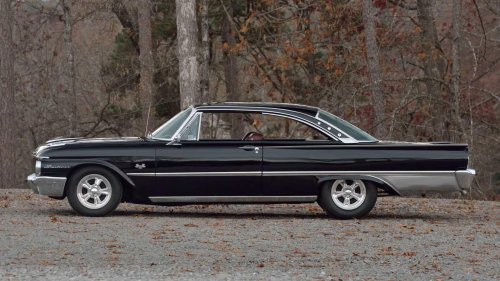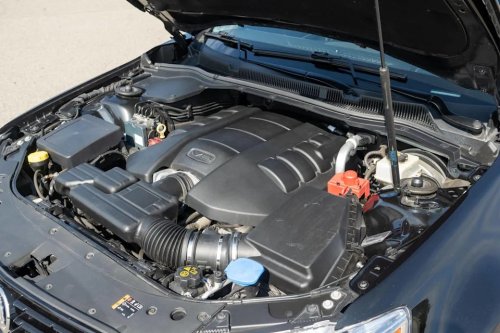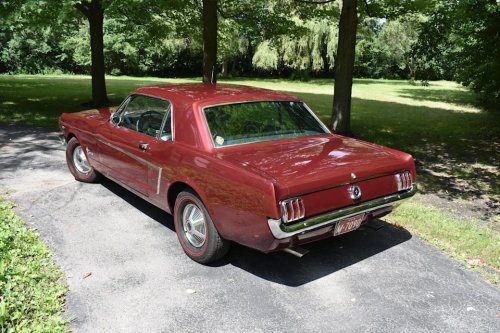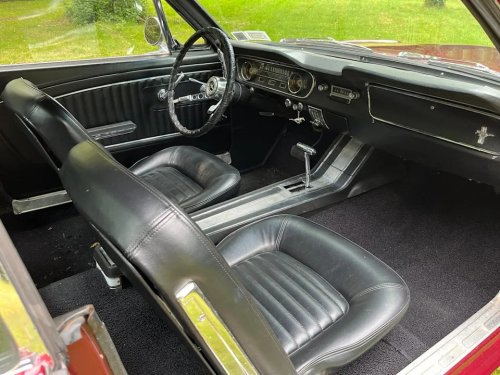



















1971 Ford Pinto vs 1971 Chevrolet Vega one mistake changed everythingIn the early 1970s, Detroit finally took compact cars seriously. The 1971 Ford Pinto and 1971 Chevrolet Vega arrived within months of each other, aimed at the same buyers and the same foreign rivals, yet history remembers them very differently. Both were deeply flawed, but one engineering decision on safety turned a forgettable small-car rivalry into a landmark case in corporate responsibility. Set side by side, the Pinto and Vega show how two companies tried to solve the same problem with opposite priorities. General Motors chased technical innovation and styling glory with the Chevrolet Vega, while Ford focused on hitting a price and weight target at breathtaking speed. The Vega’s gamble on a radical aluminum engine hurt reliability and brand trust, but Ford’s choice on fuel tank placement and crash performance reshaped U.S. law and public expectations in a way that still echoes today. The promise: Detroit’s answer to imports By the start of that decade, American automakers were watching Japanese and European small cars carve out a loyal following among buyers who valued fuel economy and maneuverability. One video on how the era unfolded describes how American and European competition pushed Detroit out of its comfort zone of big V8 sedans. Compact cars were no longer a niche experiment; they were a strategic necessity. General Motors responded with a bold pledge. In 1970, executives promised that General Motors would build a small car for America that could crush imported rivals on style, technology, and price. That car became the Chevrolet Vega, a sleek two-door that was meant to feel like a scaled-down Camaro rather than a penalty box. The company framed it as a modern, forward-looking compact that would prove Detroit could out-engineer foreign brands on their own turf. Ford took a different route. Internal planning set a blunt set of marching orders for the Pinto project: a car under 2000 pounds, under $2000, and done in just 25 months. A later social media post on automotive failures recalls that timeline and cost focus, and even highlights how the Pinto’s fuel tank would become the centerpiece of its story, noting that the controversy turned on a decision that saved roughly $200 per car in potential fixes. At launch, both cars looked like exactly what Detroit needed. The Vega was low and stylish, with sharp proportions that made it stand out in showrooms. The Pinto, especially in hatchback and wagon form, gave Ford dealers a simple, no-nonsense commuter car that slotted neatly below the Mustang. Period enthusiasts still remember how buyers were drawn to the Pinto wagon as a practical daily driver, and later comments from owners such as Bill Edmonds, who mentioned a 1977 Ford Pinto wagon and a neighbor’s Bobcat, show how the formula resonated with families who wanted something smaller but still familiar. Chevrolet Vega: innovation that backfired Under the hood, the Chevrolet Vega tried to leap ahead of rivals. Instead of a conventional iron four-cylinder, engineers created the Vega 2300, an aluminum block engine that was supposed to be lighter and more efficient. A detailed technical breakdown of the project explains how General Motors saw this powerplant as a showcase of advanced design, the kind of engineering that would justify its claim of building the perfect small car. The core of that gamble was the block itself. Rather than using traditional steel liners inside the cylinders, the Vega’s block relied on a high-silicon aluminum alloy that could be etched to create a hard, wear-resistant surface. Another engineering analysis notes that the company chose an aluminum engine block that eliminated steel cylinder liners entirely, a move that saved eight dollars per engine and kept weight down. On paper, it looked like a smart way to cut mass and cost at the same time. Reality was less kind. The Vega 2300 proved sensitive to overheating and maintenance lapses. A technical Q&A from a classic car outlet explains that when an aluminum and iron engine overheats, the aluminum expands faster than the iron, which puts significant stress on the structure. In the Vega’s case, that meant warped blocks, head gasket failures, and oil consumption that could turn a relatively new car into a smoker. The same discussion notes that these thermal issues helped give the engine its notorious reputation among owners. Several retrospective videos on the model’s history describe how the 1971 to 77 Chevrolet Vega arrived with enormous expectations. One analysis of the Chevrolet Vega story emphasizes that the 1971 to 77 run started with a car that had so much promise yet so much wrong when it reached showrooms. Another piece on why the 1971 to 1977 Chevrolet Vega became General Motors’ most infamous small car explains that the car had been positioned as General Motors’ great hope in the battle against cheap imports, yet reliability problems and rust quickly eroded that hope. Owners who drove the cars when they were new experienced the contrast directly. A vintage 15,000-mile comparison test of the 1971 Vega and Pinto, later revisited by enthusiasts, summed it up bluntly. The review concluded that Vega is a good driver except for the engine which is unfit for a passenger car, while Pinto is a good commuter except for the inadequate crash protection. That line captured the tradeoff perfectly. The Vega felt modern from behind the wheel but its powertrain undermined the entire package. Designers had at least succeeded on looks. One modern video on the car’s reception notes that buyers often walked into Chevrolet showrooms, were impressed by the Vega’s shape and proportions, then turned away once they learned how the engine behaved in real-world use. The host describes the paradox clearly, saying that beauty could not save the Vega in the marketplace, and that the Vega name became shorthand for a recall-plagued compact that promised more than it could deliver. Quality issues extended beyond the engine. Another retrospective points out that the car suffered from rust-prone bodies and assembly problems. A separate video that asks whether the 1971 to 77 Chevrolet Vega was General Motors’ most failed project or a misunderstood step toward greatness describes the model as one of Chevrolet Vega GM’s most infamous blunders. Another clip, framed with the line about Vegas smiling, recalls how Chevrolet tried to recover from the earlier Corvair controversy by building a safer small car, only to find itself mired in new kinds of trouble. In the end, the Vega’s mistake was rooted in engineering ambition and execution. The company tried to leap ahead with a cutting-edge engine, trimmed a few dollars per unit by deleting steel liners, and underestimated how sensitive the design would be to real-world abuse. The result was a car that looked like the future but aged poorly in driveways and on used-car lots. Ford Pinto: speed, cost and a fatal tradeoff Ford’s Pinto started from a different premise. Instead of chasing exotic materials, the company leaned on proven mechanical pieces and focused on hitting those internal targets of weight, price, and development time. The Pinto used a conventional iron engine that enthusiasts still describe as a more proven motor compared with the Vega’s aluminum experiment. A Facebook discussion that directly compares the two cars states that the Vega was poorly designed with an initial aluminum block and inherent reliability issues, while The Pinto had a more proved motor and fewer mechanical surprises. The real problem sat behind the rear axle. The Pinto placed its fuel tank between the rear bumper and the differential, a location that saved space and helped keep the car compact. Two separate social media posts that revisit the scandal describe how the placement of the fuel tank behind the rear axle made it susceptible to damage in rear-end collisions, leading to fuel leakage and fire risk. Both posts use nearly identical language, reflecting how this design detail has become the defining shorthand for the car. Advocacy groups later assembled internal crash test data and engineering memos that showed how vulnerable the tank could be. A detailed archive on the Ford Pinto Fuel recounts how documents in the Center files were used to show that the company had identified the risk and evaluated potential fixes. In one widely circulated analysis, the cost of reinforcing the tank or adding shielding was weighed against the projected cost of burn injuries and fatalities in a cost-benefit calculation that has since become infamous in business ethics courses. Another Facebook post that revisits the internal debate cites a comment from Anthony Atanazio. In the post, Anthony Atanazio writes that in the early seventies Ford released a car called the Pinto, and that it had a design flaw where the gas tank was placed in a location that made it vulnerable in rear-end impacts. The same discussion claims that internal memos surfaced showing that Ford opted not to fix the deadly fuel tank problem because the cost of repairs would exceed the cost of expected legal settlements. That framing, whether or not every detail of the memo story is fully documented in public records, reinforced a lasting image of a company that put dollars ahead of safety. The American Museum of Tort Law’s exhibit on the Ford Pinto adds another layer of context. The museum notes that Lee Iacocca, then a rising star within Ford due to his success with the Mustang, argued that Volkswagen and the Japa imports were threatening the company’s market share. The Pinto project grew out of that pressure. The exhibit describes how the car’s rushed development, combined with a corporate culture that prized cost targets, contributed to the fuel tank decision and the company’s resistance to early fixes. Legal and regulatory consequences followed. A detailed feature on the Pinto legacy explains how the Pinto fuel tank flaw reshaped U.S. product safety law. The piece, written by Shawn Henry, describes how the Pinto legacy and How the Fuel Tank Flaw Reshaped Product Safety Law became a touchstone for consumer advocates who pushed for stronger federal standards and more aggressive recalls. The same analysis connects the case to broader changes in how courts treat evidence of cost-benefit calculations that place a specific dollar value on human life. Two separate Facebook pages focused on historical scandals revisit the same core facts. Both posts, each titled around The Dark Truth Behind The Ford Pinto Scandal, repeat that the placement of the fuel tank behind the rear axle made it susceptible to damage in rear-end collisions and that this led to fuel leakage and fires. One of those posts links out through a tracking URL labeled as Discovered via citation trail from The Dark Truth Behind The Ford Pinto Scandal on Facebook, which underscores how heavily the case has been dissected and shared as a cautionary tale. The Pinto’s mistake was not an experimental engine or a radical new material. It was a conventional fuel tank, placed in a vulnerable spot, combined with a corporate decision to treat crash fires as a manageable liability rather than an unacceptable risk. That choice, more than any styling or performance shortcoming, turned the Pinto from a routine compact into a symbol of corporate indifference. Head to head: how Pinto and Vega actually drove For all the later controversy, both cars started life as everyday transportation. The 1971 Car and Driver comparison, revisited by Curbside Classic, gives a rare window into how they behaved before reputations hardened. The test put a Pinto and a Vega through 15,000 miles of real-world driving and found that each had strengths that made sense at the time. The Vega impressed with its chassis. Testers praised its steering, ride quality, and overall driving experience, which felt more European than domestic. That aligns with later videos that describe the Vega as a good driver that seemed to validate General Motors’ claim of building a modern compact. The problem, as the long-term test uncovered, was durability. The engine’s oil consumption, starting issues, and general fragility made it feel unfit for a passenger car that buyers expected to keep for years. The Pinto, by contrast, felt simpler but sturdier. The same comparison called Pinto a good commuter, highlighting its straightforward mechanicals and relatively trouble-free powertrain. Owners could expect it to start and run without the exotic quirks of the Vega’s aluminum block. Facebook discussions among enthusiasts often echo this view, with one group member summarizing that The Vega was poorly designed with its initial aluminum block, while The Pinto had a more proved motor that, for all its other issues, did not self-destruct in daily use. Crash performance was another story. The Car and Driver test already flagged concerns about the Pinto’s crashworthiness, describing its protection as inadequate. That concern would later be reinforced by real-world accidents and legal cases. The Vega, while far from perfect, did not become the focus of a national safety scandal in the same way. Its failures were inconvenient and expensive rather than catastrophic. Enthusiast polls and nostalgia posts from groups that debate seventies controversial compacts show how tightly the cars are linked in memory. One Facebook group post that asks Gremlin, Vega, or Pinto frames the AMC Gremlin, Chevrolet Vega, and Ford Pinto as iconic choices that defined the era. The comments often split along predictable lines. Some praise the Vega’s looks and handling while cursing its engine. Others defend the Pinto’s everyday reliability while acknowledging its safety record. Later small cars help frame how the two models aged. A Facebook post comparing the 1977 Ford Pinto and the 1977 Chevrolet Chevette describes how both were small, economical cars designed to meet demand for fuel-efficient vehicles. The post notes that the 1977 Ford Pinto came with a 2.3L inline four engine and that the 1977 Chevrolet Chevette used 1.4L or 1.6L engines, and it concludes that the Chevette was known for reliability and economy while the Pinto offered more body styles but carried its safety stigma. That comparison shows how quickly the market moved on, even as the Pinto name remained tied to its earlier design choices. Why one mistake changed everything Both the 1971 Ford Pinto and 1971 Chevrolet Vega failed to live up to their makers’ promises. The Vega tarnished General Motors’ reputation for engineering excellence and became shorthand for corporate miscalculation. The Pinto triggered lawsuits, regulatory reforms, and a lasting shift in how the public thinks about automotive safety. The difference lies in the nature of their failures. The Vega’s core error was technological overreach. General Motors tried to compress an ambitious development program into a tight schedule while introducing an unproven aluminum block design that deleted steel liners to save eight dollars per engine. The company underestimated how sensitive the design would be to overheating and maintenance neglect, and it did not build enough margin into the engine for real-world abuse. The result was an unreliable powertrain that turned what could have been a landmark compact into a cautionary tale about rushing innovation. The Pinto’s defining error was ethical. Ford engineers understood that placing the fuel tank behind the rear axle created a risk of rupture in rear-end impacts. Internal documents and later reconstructions show that the company evaluated relatively inexpensive fixes, including shields and reinforcements, and decided against them to preserve cost and schedule targets. The fact that a later social media recap of the case highlights a decision that saved roughly $200 per car captures how tangible that tradeoff felt to the public. Legal scholars and consumer advocates seized on that contrast. The Pinto case became a staple in law school tort classes and business ethics courses because it laid bare the logic of cost-benefit analysis in product design. The exhibit at the American Museum of Tort Law on the Ford Pinto, which references Lee Iacocca’s role at Ford and the pressure from Volkswagen and the Japa imports, frames the story as a turning point in how courts and regulators view corporate risk calculations. The Yahoo feature on Pinto legacy and How the Fuel Tank Flaw Reshaped Product Safety Law, written by Shawn Henry, connects the scandal to tighter federal standards, more aggressive recall policies, and a broader expectation that companies must treat catastrophic risks differently from routine warranty issues. General Motors, for its part, absorbed the lesson of the Vega in a quieter way. The company did not face the same level of legal exposure, but it did see how quickly a high-profile small car could damage its image. Later compact programs were more conservative on engine design, and the company invested heavily in corrosion protection and quality control. Videos that revisit the Vega’s history often describe it as a car that nearly destroyed GM, emphasizing how close the company came to squandering its dominance in the face of Japanese and European competition. Public memory reflects that split. Mention the Vega today and enthusiasts are likely to talk about its aluminum engine, its rust, and its missed potential. Mention the Pinto and the conversation turns almost immediately to fuel tanks, rear-end fires, and internal memos. One Facebook group that asks which car is better, Ford Pinto or Chevrolet Vega, captures that tension. Commenters acknowledge that the Vega was poorly designed with its initial aluminum block, while others concede that the Pinto had a more proved motor yet still argue that its safety record makes it the more troubling car. More from Fast Lane Only Unboxing the WWII Jeep in a Crate 15 rare Chevys collectors are quietly buying 10 underrated V8s still worth hunting down Police notice this before you even roll window down