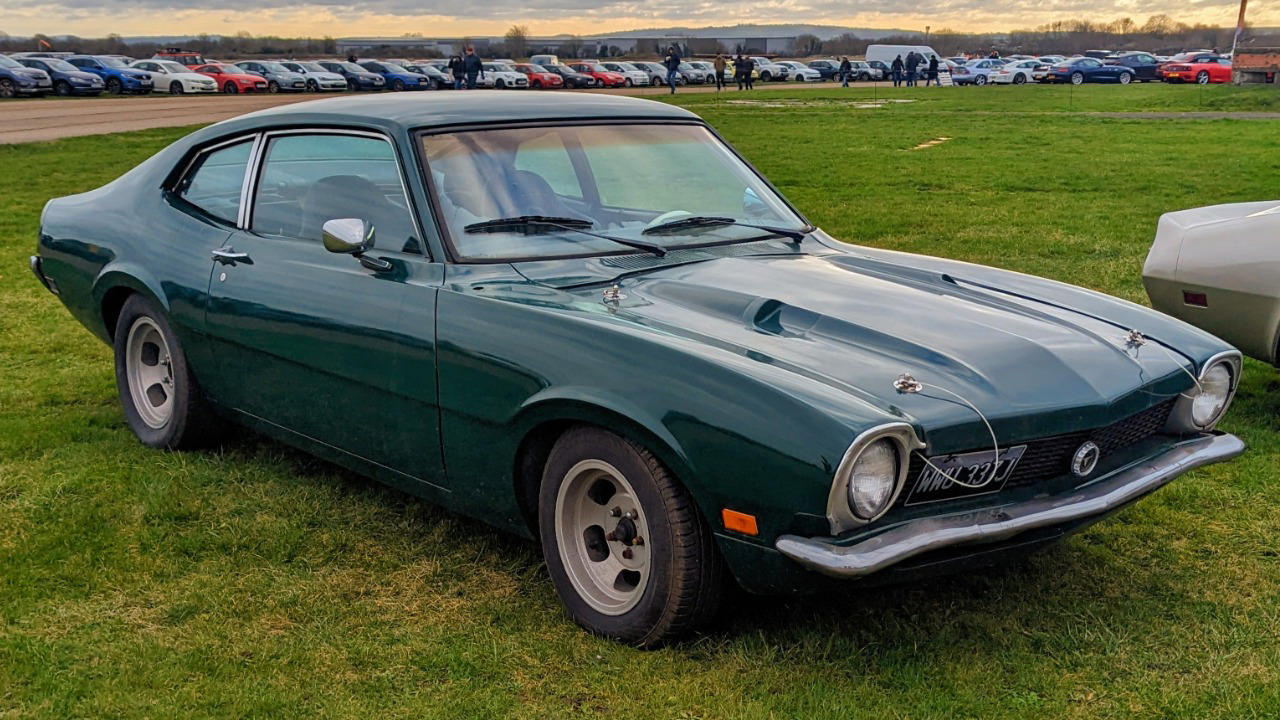



















1971 AMC Hornet vs 1971 Ford Maverick one earned more trust from buyersIn the crowded compact market of the early 1970s, the 1971 AMC Hornet and the 1971 Ford Maverick were pitched as simple, affordable ways for American families to downsize without feeling deprived. Both promised low prices, easy maintenance, and just enough style to avoid looking like penalty boxes in the driveway. Yet when buyers voted with their wallets, one of these cars inspired more lasting confidence and loyalty than the other. Looking at how drivers talked about each model then, and how enthusiasts remember them now, helps explain why trust tilted the way it did. The Hornet and the Maverick shared the same basic mission, but their proportions, engineering choices, and ownership experiences pushed customers toward one nameplate when it came time to sign on the dotted line. Two compact answers to the same American problem At the start of the 1970s, American drivers were feeling the squeeze of rising insurance costs, creeping fuel prices, and crowded cities. Full-size sedans still dominated, yet a growing slice of the market wanted something smaller and cheaper that still felt genuinely American in character. The 1971 Ford Maverick and 1971 AMC Hornet arrived as parallel answers to that demand, each trying to deliver thrift without humiliation. Both cars were compact, rear wheel drive, and aimed squarely at first-time buyers, young families, and older drivers trading down. A professional driver who spent long hours in these cars later described them as part of a trio of American entry-level machines, comparing the Maverick and Hornet directly with the Plymouth Duster in a detailed comparison ofthe Maverick, Hornet and Duster. That real-world use, rather than brochure promises, would shape how much trust each model earned. Ford leaned on its scale and marketing muscle, pitching the Maverick as a simple, almost disposable compact that borrowed some visual swagger from the Mustang. AMC, the smallest of the American automakers, tried to stand out with the Hornet through slightly more sophisticated styling and packaging, along with a growing range of body styles that included a four door sedan and, for the 1971 model year, a station wagon. On paper, both cars looked similar. In practice, subtle differences in design and execution went a long way toward shaping owner confidence, especially once the miles started to add up. Styling, proportions, and first impressions First impressions mattered in a segment where buyers were sensitive to the stigma of “cheap” cars. Several enthusiasts who lived with these compacts have argued that the Hornet simply looked better. In one discussion that directly asked which car was better, the argument was blunt: the Hornet had better proportions than the Maverick, and even a loyal Ford owner admitted that the Maverick was never appealing to them, despite a history with the brand, in a Hornet versus Maverick debate. The Hornet’s cleaner lines, upright greenhouse, and relatively short overhangs gave it a more contemporary, almost European stance. The Maverick, by contrast, leaned hard into the long hood and short deck formula that the Mustang had popularized. A period review of The Maverick pointed out that its styling featured a long hood, a fastback roof, and a short deck on a 103-inch wheelbase, a layout that looked sporty in advertisements but also signaled a certain compromise in interior packaging. Ford tried to juice the Maverick’s curb appeal with variants like the Grabber, which added louder colors, stripes, and spoilers. A period Ford Maverick Grabber from 1971 pitched the Grabber package as a way to get Mustang attitude in a smaller, cheaper wrapper. The Grabber look helped attract younger buyers, and later recollections of a 1971 Maverick Grabber often focus on the style first. AMC took a different path. While it also offered performance oriented Hornet variants such as the SC/360, the core Hornet sedan and wagon leaned toward practical, slightly conservative design. That restraint may have helped the car age more gracefully. Where the Maverick’s fastback roof could feel cramped and limit visibility, the Hornet’s more conventional roofline and larger glass areas contributed to a sense of space and usability that owners noticed over time. Styling alone did not decide trust, but it shaped expectations. Buyers who saw the Maverick as a cut rate Mustang sometimes discovered that the driving experience did not quite match the promise. Hornet owners, expecting a straightforward compact, were more likely to feel that the car delivered exactly what it advertised. Powertrains, performance, and real-world drivability Under the hood, both cars relied heavily on six cylinder engines, with optional V8 power for buyers who wanted more punch. AMC’s compact sixes had a solid reputation, and a later look at a 1972 American Motors AMC Hornet SST in Canary Yellow Paint highlighted a factory 232 cubic inch inline six that balanced smoothness and durability in a way many owners appreciated, as seen in a American Motors AMC walkaround. V8 options added character and, for some, long term loyalty. One enthusiast who weighed a 1975 AMC Hornet against a Ford Maverick reminisced about a Hornet with a 304 and stick shift, while also recalling a 73 Grabber with a 302 V8, in a discussion that mentioned both the 304 and the 73 G 302 directly, and concluded that either car could satisfy depending on priorities in that Hornet with a thread. Those comments capture a key point. In terms of raw performance, the Maverick and Hornet could be configured to feel surprisingly lively for economy cars, especially with small block V8s. The difference was how they behaved in daily use. The professional driver who compared these compacts back to back described long stretches behind the wheel, which exposed traits that short test drives might miss. The Maverick’s controls and interior were extremely simple, which made the car easy to understand but also highlighted cost cutting. The Hornet, by comparison, came across as slightly more refined, with details like better seat support and a more substantial feel in the structure noted in that same Professional Driver comparison. Ford’s focus on low price and mass production meant the Maverick’s engineering emphasized simplicity. That strategy produced a car that could run reliably for years if maintained, but it also meant noise, vibration, and harshness were not always well controlled. Owners who used the Maverick as basic transportation often accepted those compromises, yet they sometimes saw the car as a stepping stone to something better, not a vehicle to keep for decades. AMC, despite smaller budgets, treated the Hornet as a core platform and invested in incremental improvements. The company expanded the Hornet line to include a station wagon for the 1971 model year, turning the compact into a family workhorse with a rear load area that was more generous than anything else from the other domestic automakers, as described in a period look at how 1971 model year lineup. That combination of adequate power, solid six cylinder reliability, and useful body styles helped build a quiet but real confidence among Hornet buyers. They were not necessarily chasing excitement. They were looking for a car that would start every morning, carry the family, and feel like a sensible long term purchase. Inside the cabin: comfort, simplicity, and perceived quality Trust in a car often grows or erodes in the cabin. Rattles, flimsy trim, and uncomfortable seats can sour an owner on a brand faster than any specification sheet. The Maverick and Hornet took different approaches inside, and drivers noticed. Period images of the Maverick interior, preserved in enthusiast collections, show a very plain dashboard with minimal switchgear and simple round gauges, as seen in photographs of a Ford Maverick 1970. That simplicity reduced costs and made the car easy to service, but it also signaled that Ford had stripped the car to essentials. Owners who valued straightforward operation appreciated that approach. Others felt shortchanged compared with slightly more upscale compacts. Similar period images of the Hornet interior reveal a somewhat richer presentation. Even in basic trims, the dashboard and door panels carried more sculpting and detail, with materials that appeared a notch above the Maverick’s. A close look at an AMC Hornet interior from that era shows how AMC tried to make the cabin feel like a scaled down mid size car rather than a bare bones economy special. Those choices shaped how owners interpreted squeaks and wear as the cars aged. A cheap feeling cabin that stayed intact could still leave owners lukewarm, while a slightly more upscale interior that held up well could reinforce the sense that the manufacturer respected the buyer. Enthusiast discussions about the Maverick often describe the car as a “simple machine” that did its job without flair, echoing a long form reflection on the Maverick as a basic, almost agricultural compact in one simpleton machine review. By contrast, Hornet owners tend to recall a car that felt more substantial than its size and price suggested. Later coverage of American Motors products has pointed out that AMC sometimes over delivered on interior comfort relative to expectations for a small independent brand. That tendency helped the Hornet feel like a car to keep rather than a disposable appliance, which is central to building trust. Ownership stories, loyalty, and the long view Numbers on a sales chart tell only part of the story. The deeper measure of trust is whether people keep a car, buy another from the same brand, or speak about it fondly decades later. On that front, the Maverick and Hornet show contrasting patterns. Ford’s compact attracted huge numbers of first time buyers, and many of them moved on to other Fords. One owner, looking back across decades of driving, recalled that their first Maverick was a 1971 model, taken in 1972 at Ft. Benning, Ga., and that their new Maverick in 2025 revived those memories, while another person in the same discussion mentioned that their first car was a 73 M, in a nostalgic Maverick Taken at post. Those stories show how the Maverick served as an entry point into the Ford ecosystem and left a sentimental mark. Another long term Maverick owner described how a 1971 car had effectively lived four lives, with the same basic structure and drivetrain surviving multiple rebuilds and upgrades. That story highlighted how a relatively small investment, such as a $350 upgrade that added body graphics, a subtle decklid spoiler, trendy racing mirrors, and 14 inch wheels with trim rings, could transform the car’s image and help it stay desirable over time, as recounted in an original owner profile. Together, those accounts show that the Maverick could absolutely inspire loyalty among owners who connected with its simplicity and mod potential. They also underline that much of that affection came from enthusiasts who saw the car as a blank canvas, not from mainstream buyers who simply wanted dependable transportation. Hornet loyalty often looked quieter but more widespread. Enthusiasts who compare AMC products to rivals frequently argue that AMC has always been underrated compared to other 1971 muscle cars and still remains one of the most underrated muscle cars from AMC, as one fan put it in a Jul AMC discussion about the 1971 AMC Hornet SC/360 and the 1971 Ford Maverick Grabber 302. That sense of being underrated extends beyond performance variants to the everyday Hornet sedans and wagons that quietly served families for years. The Hornet’s role in AMC’s broader lineup also mattered. The platform underpinned other models and helped the company experiment with body styles and niches, from sporty coupes to practical wagons. In that context, the Hornet became a sort of anchor for AMC buyers. If a Hornet performed well, owners were more likely to consider another AMC product, such as a Javelin SST, whose styling and features were later highlighted in a Javelin SST Overview. Comparisons with other AMC compacts, such as the Pacer and Gremlin, also shape how the Hornet is remembered. A later discussion that asked Was the AMC Pacer and AMC Gremlin really that bad concluded that everything is relative, and that some people loved them, some hated them, and most saw them as quirky choices, as described in a AMC Pacer and thread. Against that background, the Hornet looks like the sensible, well balanced AMC compact, which reinforces its reputation as the brand’s trustworthy choice. Why one compact earned more trust When enthusiasts today debate whether the Hornet or Maverick was the better car, the conversation often circles back to a few recurring themes: proportions, perceived quality, and how honestly each car delivered on its promise. Supporters of the Hornet point to its better proportions, as one Ford loyalist did in the Hornet versus Maverick discussion that explicitly praised the Hornet’s stance and admitted that the Maverick never appealed despite a history with Ford, in that Ford Maverick or exchange. They also highlight the car’s more comfortable interior, solid six cylinder engines, and the practical appeal of the 1971 station wagon, which offered a combination of size and utility that other domestic compacts struggled to match. Fans of the Maverick counter that the car’s simplicity was a virtue. The compact layout, straightforward mechanicals, and affordable parts made it easy to keep on the road. Enthusiast commentary that described the Maverick as a “simpleton machine” did not mean it as an insult so much as a recognition that the car did not pretend to be more than basic transportation, as reflected in the Feb Reply Posted discussion. Yet when the lens shifts from enthusiast affection to mainstream buyer confidence, the Hornet’s advantages start to look more decisive. The AMC compact offered a more mature driving experience, slightly higher perceived quality in the cabin, and a body style range that better matched family needs. For owners who chose the Hornet as a primary car rather than a cheap second vehicle, those traits translated into years of relatively trouble free service and a sense that AMC had not cut corners at their expense. The Maverick, despite strong initial sales, often came across as a stopgap. Ford had created it quickly to respond to changing market conditions, and that urgency showed in some of the cost cutting and packaging compromises. Buyers who wanted a low price and a familiar Ford badge were satisfied, but they were also more likely to trade up to a different model once their finances improved, treating the Maverick as a temporary solution rather than a trusted long term partner. Enthusiast recollections about a Hornet with a 304 and stick shift and a 73 Grabber with a 302 V8, captured in the Mar Hornet Maverick conversation, show that both cars could inspire passion when configured right. Yet the same discussion ends with a shrug that either car could work, which hints at a deeper truth. For performance minded buyers, the choice often came down to engine and trim. For everyday drivers, the Hornet’s more balanced character made it the safer, more confidence inspiring bet. Even in visual culture, the Hornet often appears as a quietly competent presence. Period photographs of the car in everyday settings, such as those collected in enthusiast pools that trace back to the Discovered COAL Professional community, reinforce the impression of a car that blended into American life and simply did its job. The Maverick, with more dramatic advertising images like the Ford Maverick 1970, feels more like a product of marketing imagination, which sometimes outpaced the car’s real world capabilities. In the end, trust is not just about how many cars a manufacturer sells in the first year. It is about how owners feel after five or ten years of payments, repairs, and road trips. The 1971 Ford Maverick delivered on affordability and simplicity, and it carved out a loyal niche among drivers who valued those traits above all else. The 1971 AMC Hornet, while less flashy and backed by a smaller company, quietly assembled a record of solid service, better proportions, and practical versatility that made its owners feel they had chosen wisely. Looking back through professional comparisons, enthusiast debates, and long term ownership stories, the pattern is clear. Both compacts met the basic brief of early 1970s American motoring, but the Hornet more consistently matched its promises with real world performance and comfort. That consistency is what builds confidence, and it is why, when buyers weighed these two compact rivals, the AMC Hornet was the one that more often earned their lasting trust. More from Fast Lane Only Unboxing the WWII Jeep in a Crate 15 rare Chevys collectors are quietly buying 10 underrated V8s still worth hunting down Police notice this before you even roll window down