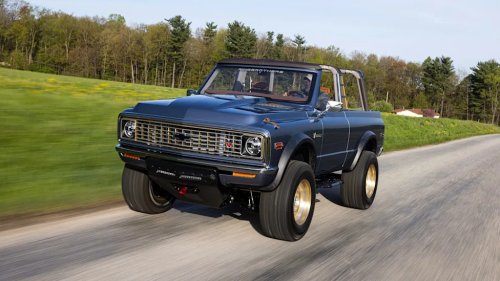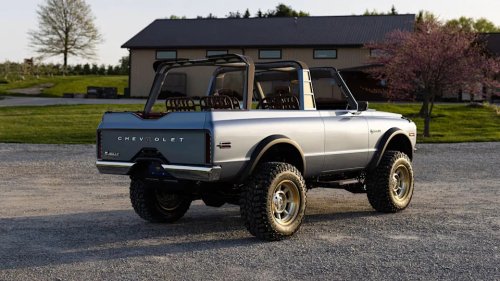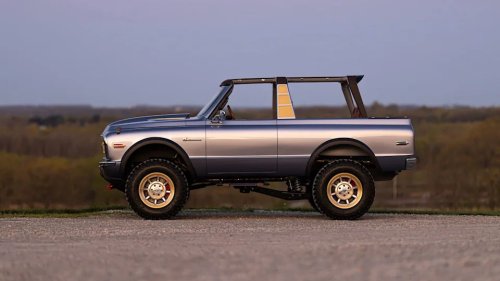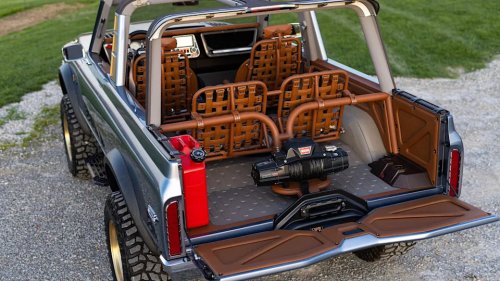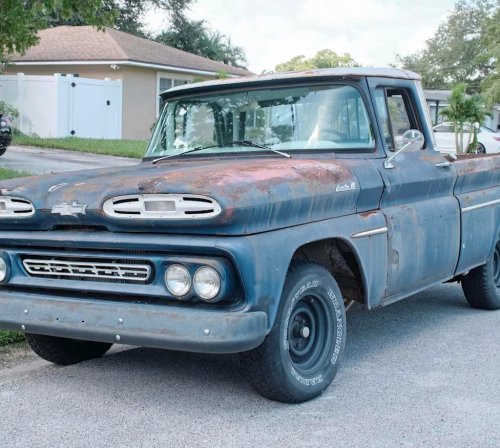



















1965 Ford F-100 or 1965 Chevrolet C10 one is still climbing in valueMid sixties American pickups have quietly become some of the hottest vehicles in the collector world, and two names keep coming up: the 1965 Ford F-100 and the 1965 Chevrolet C10. Both have strong followings, but recent sales and pricing guides suggest one of them is still climbing faster and giving patient owners more upside. Looking at real transactions, asking prices and enthusiast behavior, a clear pattern emerges. The Chevrolet C10 already commands more money in many cases, while the Ford F-100 still offers cheaper entry and evidence of fresh appreciation, especially for well restored examples. How the 1965 F-100 and C10 stack up on price today Any comparison of these trucks has to start with what buyers are actually paying. On the Ford side, a documented 1965 Ford F-100 with VIN F10DL699321 brought 100, $16,500 at Auction, with Seller Details listing it as Sold July in a Bring a Trailer sale. That number sits in the middle of the real world driver quality range and gives a concrete benchmark for a presentable truck. Price guides for 1965 Ford F100 Classic Cars for Sale show a wide spread. One listing of Ford F100 Pricing puts Low at $5,600, Average at $26,649 and High at $99,990. A companion page for Ford F100 Classic Trucks for Sale repeats that Classic Truck Pricing band of Low $5,600, Average $26,649 and High $99,990, underscoring how broad the market has become for these trucks, from project shells to high end customs. At the bottom of the condition scale, owners in enthusiast groups still talk about rough but running examples trading hands for a fraction of those top numbers. One discussion about the value of a 1965 Ford F100 in driver condition suggested $2,000 to 3,000 for a truck that runs and drives, with one commenter calling them Great looking trucks that can be a good moneymaker if done correctly. On the Chevrolet side, the money has been strong for a long time. A documented 1965 Chevrolet C10 sale shows a truck that brought $21,730, with Seller Details listing it as Sold December in Kansas City, MO, US, under Lot F163. That figure already outpaces the Ford example and reflects how deep the buyer pool is for a clean C10. Current asking prices confirm that the Chevrolet premium is not just a one off. Listings for 1965 Chevrolet C/K Truck Classic Cars for Sale show Chevrolet Truck Pricing with a Low of $5,995 and higher tiers up through Avera and beyond, a structure that mirrors the Ford guide but starts slightly above the F-100 low point. That small gap at the bottom grows larger in the mid and upper ranges once condition and options come into play. Market tracking sites add more context. One valuation page for a 1965 Chevrolet C10 1/2 Ton lists Past sales of $19,688 for a Chevrolet C10 1/2 Ton in North America, with a Bring a Trailer result in Mar that repeats the $19,688 figure. Another entry focused on a single 1965 Chevrolet C10 notes that There are 30 comps indicating a price range from $36,772 to $57,754, which pushes well into serious collector territory. Which one is still climbing in value? Raw prices alone do not answer the headline question. The key is which truck still has a steeper upward curve. Here the story becomes more interesting, because the Chevrolet C10 appears to have already banked a lot of its gains, while the Ford F-100 still has headroom in several segments. Broader market analysis of mid 1960s to early 1970s trucks notes that values have cooled slightly after a surge, but prices remain strong for the right vehicles. That cooling trend affects both brands, yet the baseline for Chevrolet is higher thanks to years of intense demand. A focused market page for the first Gen Chevrolet C10 shows the model as NOT FOLLOWING by default, with an option to Follow Market for updates on Chevr prices, a hint that there is enough activity to justify dedicated tracking. For Ford, the story in enthusiast and buyer circles is that the F-100 often comes in cheaper at the start, which can set up more upside once a truck is restored correctly. A social media comparison of Chevy C10 versus Ford F100 project trucks describes a Market Position where the C10 Custom and F-100 Ranger aimed at similar buyers looking for comfort and utility, but modern collectors sometimes view the Chevrolet as the more fashionable choice. That perception keeps C10 values high, yet it also leaves room for the Ford to catch up as tastes broaden. One feature on old Ford trucks that are soaring in value singles out the 1965 F-100 specifically. The piece states that Continuing on with the valuable Ford F-100s, the 1965 iteration of this Ford truck has also seen an increase in price. It describes this F-100 as a model that will go for an average of $18,700, and frames that figure as part of a larger pattern of appreciation for blue oval pickups. When that number is set against the $2,000 to 3,000 entry point for rough but running examples, the potential margin for a successful restoration looks significant. The Chevrolet side has its own growth narrative, but much of that story is already baked into current valuations. A dedicated article comparing 1967 to 1972 Chevy and Ford trucks notes that Collector Value and Market Trends show a steady rise for both the Chevy C10 and the Ford F-100, driven by growing appreciation for vintage automotive design. That trend applies by extension to the 1965 generation. However, recent pricing data suggests that the C10 has already crossed into a higher average band, while the F-100 is still catching up, especially in the top tier where the Ford guide lists High at $99,990 for the best Classic Trucks for Sale. In other words, the Chevrolet C10 may be the established star, but the 1965 Ford F-100 looks like the one that is still actively climbing from a lower base. For buyers who get in at project or driver level, the percentage gain on a successful Ford build can outpace a similar investment in a Chevrolet that starts closer to its ceiling. How enthusiasts weigh C10 versus F-100 as projects Price trends only matter if owners can realistically buy, build and enjoy the trucks. On that front, both models benefit from strong communities, but they offer slightly different experiences in the garage. In one detailed discussion among classic truck owners, a user asked which is the better project truck, Chevy C10 or Ford F100. Responses stressed that it Really depends on years and the condition of whatever truck you get, but several voices agreed that the F100’s will generally be a cheaper buy in for the truck itself. That lower starting cost can free up budget for paint, driveline upgrades and interior work, which matters for anyone trying to stay ahead of market value instead of sinking money into a truck that will be hard to recoup. Others in the same conversation pointed out that Chevrolet parts support is exceptionally deep. Reproduction panels, trim and suspension components for the C10 are widely available, and many performance shops specialize in these trucks. That broad ecosystem can reduce build time and make it easier to tailor a C10 to modern tastes, from air ride setups to LS based engine swaps. Ford builders counter that the F-100 platform is simple, tough and increasingly well supported by the aftermarket. A valuation page for the 1965 Ford F100 1/2 Ton Styleside LWB lists Pricing and Values for different conditions, and the Prices reflect a truck that is still accessible yet recognized as a collectible. That combination tends to attract hands on owners who want to build a driver that can still haul parts or tow a small trailer. Video content has also helped shape perceptions. A popular walkaround of a mid sixties Ford pickup on YouTube shows how a relatively simple exterior refresh and a clean interior can transform an old work truck into something that looks at home at a cars and coffee event. Similar clips of Chevrolet C10 builds highlight slammed stances and high end paint, which reinforces the idea that C10s often move into show truck territory while F-100s retain more of their working class charm. That difference in culture feeds back into values. The C10 attracts buyers who are ready to pay a premium for a finished product with modern performance. The F-100 attracts buyers who are willing to hunt for a bargain, put in the work and watch the value curve rise as the truck moves from project to finished driver. Design, driving feel and how that affects demand Styling plays a major role in why these two trucks have become such strong collectibles. The 1965 Ford F-100 wears squared off lines with a slightly industrial feel, a look that appeals to buyers who want a truck that still reads as a tool. The twin beam front suspension that Ford introduced in this era gives the F-100 a distinctive stance and a ride that feels different from the coil sprung Chevrolet. The 1965 Chevrolet C10, especially in short bed form, has a smoother, more car like profile. The wraparound windshield, gentle fender curves and tidy bed proportions give it a sportier presence. Many buyers see these trucks as the spiritual cousins of Chevrolet muscle cars, which helps explain why C10s often share garage space with Camaros and Chevelles. Driving feel also shapes demand. The C10’s independent front suspension and available powertrain combinations make it an easy candidate for highway cruising and performance upgrades. Builders can bolt in modern disc brakes, overdrive transmissions and fuel injected engines with off the shelf kits, which turns a 1960s work truck into a comfortable daily driver. The F-100’s chassis responds well to upgrades too, but some owners choose to keep the truck closer to stock, valuing the period correct experience. That approach aligns with the way price guides separate Low, Average and High, where the top of the market often rewards original style restorations as much as high dollar customs. Market watchers who focus on Collector Value and Market Trends for later 1967 to 1972 trucks have noted that both Chevy and Ford models benefit from a nostalgia wave. Buyers who grew up around these trucks now have the income to chase the exact body style their family owned. That emotional pull is not limited to the later generation, and it spills over into 1965 models that share similar lines and mechanical layouts. Because the C10 already has a strong reputation as the stylish choice, its values reflect that perception. The F-100 is catching up as more people discover how good these trucks look with subtle lowering, period correct colors and simple wheel choices. As more high quality Ford builds show up at national events and in online videos, the market tends to follow. Where the price guides and comps are heading Looking at structured valuation data gives a clearer sense of direction. For Chevrolet, the 1965 C10 Pickup 1/2 Ton Stepside LWB page on a major pricing site lists Change Vehicle Print options and breaks down Pricing and Values into specific conditions. The Prices shown represent what buyers can expect to pay for this Chevrolet Pickup, and the figures align with the mid to high teens and beyond that appear in auction results. On the Ford side, the F100 1/2 Ton Styleside LWB valuation page uses the same Change Vehicle Print layout and similar Pricing and Values categories. The Prices for a Ford Ton Styleside truck in good condition land in a range that overlaps with Chevrolet at the lower and middle tiers, but the very top of the Ford market, as captured by the $99,990 High figure for Classic Trucks for Sale, suggests room for standout builds to command serious money. Market commentary on mid 1960s trucks as a group describes how values have cooled slightly after a rapid run up, yet they remain strong for well documented, nicely finished examples. That cooling effect tends to hit the most speculative segments first. In this case, the Chevrolet C10, which already has comps up to $57,754, may have less room for aggressive short term gains than the Ford F-100, which still has many trucks trading in the $2,000 to 3,000 project bracket. Tracking tools that aggregate sales, such as the Classic.com market page for the first Gen C10, show that collectors can Follow Market activity for Chevr trucks and watch how individual sales affect the broader curve. Comparable tools for Ford pickups reveal a similar pattern of steady transactions, but with more variability in condition and pricing, again reflecting the wider spread between rough workhorses and high end customs. Enthusiast media that profiles old Ford trucks also reinforces the idea that the 1965 F-100 is still on an upward trajectory. By highlighting the 1965 model as part of a series on valuable Ford F-100s and citing an average of $18,700, those features signal to readers that this generation has moved from overlooked work truck to recognized collectible. That kind of coverage often precedes another round of price increases as more buyers start hunting for the same year and trim. How buyers can choose between them For someone standing in a driveway trying to decide between a 1965 Ford F-100 and a 1965 Chevrolet C10, the decision often comes down to three factors: budget, personal taste and appetite for risk. Budget favors the Ford at the entry level. Enthusiast discussions and social media valuations show that rough but running F-100s can still be found in the $2,000 to 3,000 range, while comparable C10s often start higher. Guides that list Low at $5,600 for Ford and Low at $5,995 for Chevrolet confirm that the gap is not huge at the bottom, but real world shopping often reveals slightly softer prices for F-100s, especially in rural areas where Ford trucks were common work tools. Personal taste is harder to quantify, yet it drives a large share of the market. Buyers who grew up in Chevrolet families or who love the smoother, sportier lines of the C10 often accept the higher buy in. Those who prefer the upright, honest look of the Ford and its reputation for toughness gravitate toward the F-100. That split shows up in online communities, where some threads are dominated by C10 photos with show quality paint and others celebrate patina rich F-100s that still haul lumber. Risk and reward tilt toward the Ford for investors who are willing to take on a project. With a documented auction result of 100, $16,500 for a decent F-100 and an average value around $18,700 in some analyses, there is room for a well executed restoration to reach or exceed the $26,649 Average or even chase the $99,990 High in exceptional cases. The Chevrolet C10, with comps already in the $36,772 to $57,754 band, offers strong stability but less percentage upside unless the truck is bought well below market. Enthusiast advice often boils down to buying the best truck one can afford. A Reddit thread that began with the question of which truck is better to work on framed the choice as dependent on years and condition, but it also hinted at a practical truth: the cheapest truck on paper is not always the cheapest in the long run. Rust repair, missing trim and poor previous modifications can quickly erase any initial savings, whether the badge on the grille reads Ford or Chevrolet. For buyers who want a truck they can drive soon after purchase, a finished C10 or F-100 at the mid range of the pricing guides may be the smarter move. For those who enjoy the process of bringing an old workhorse back to life and who are watching the value charts, a solid Ford F-100 project still looks like the more dynamic bet, with room for values to keep climbing as the market continues to recognize what these 1965 trucks represent. More from Fast Lane Only Unboxing the WWII Jeep in a Crate 15 rare Chevys collectors are quietly buying 10 underrated V8s still worth hunting down Police notice this before you even roll window down