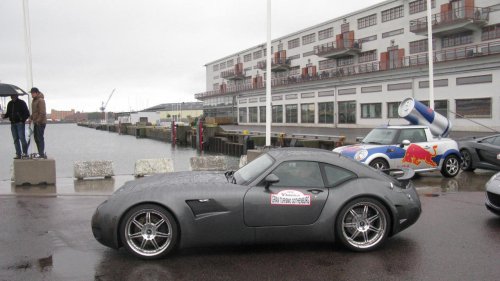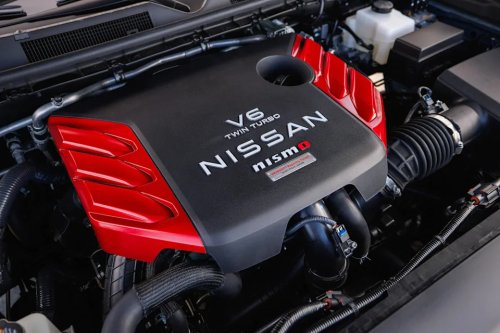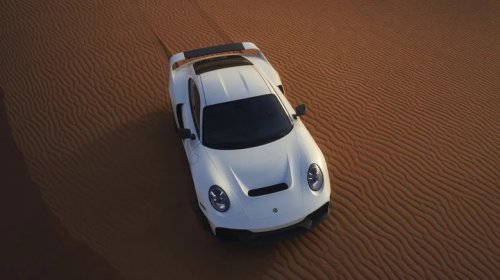
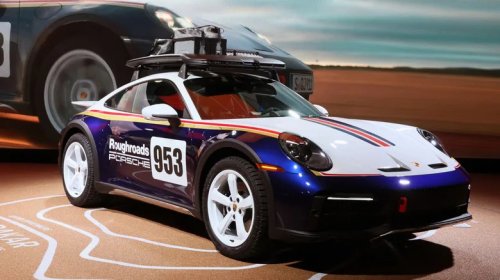
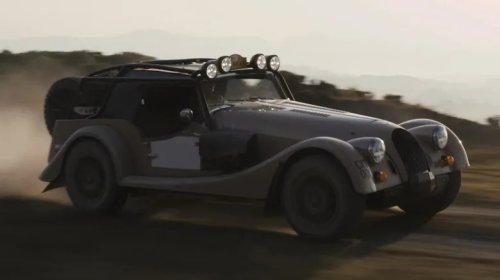
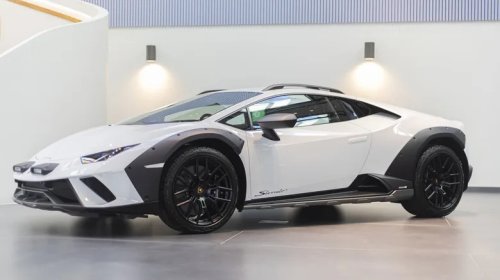
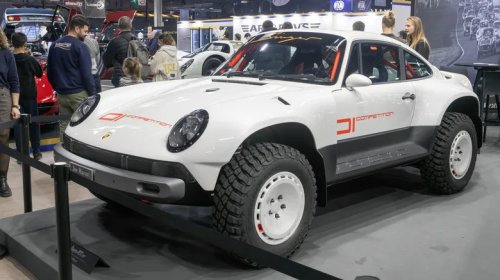
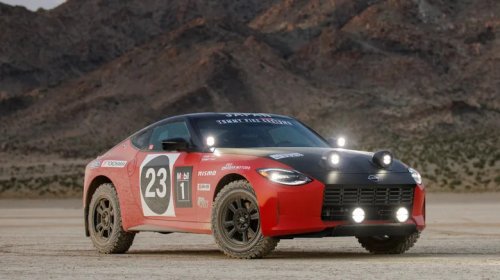
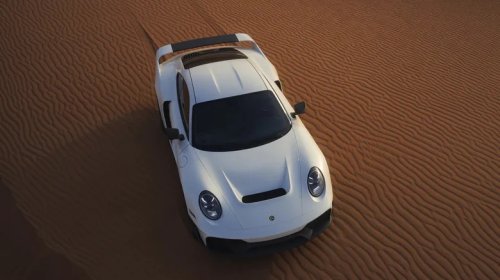
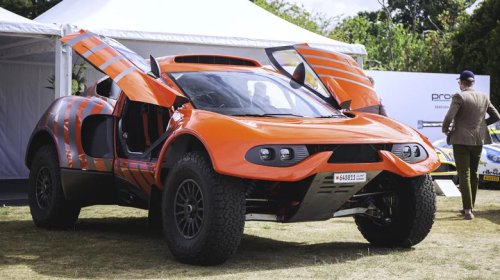
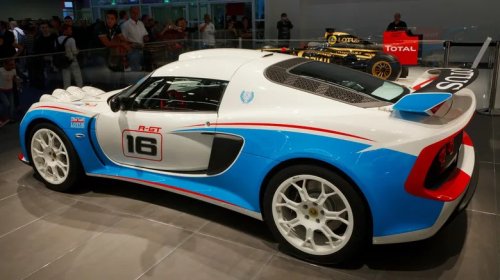
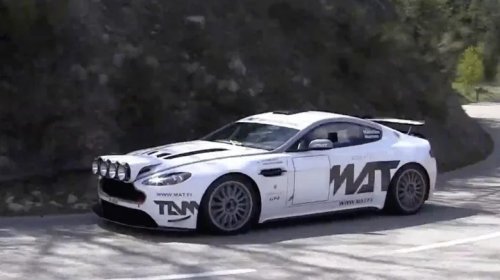
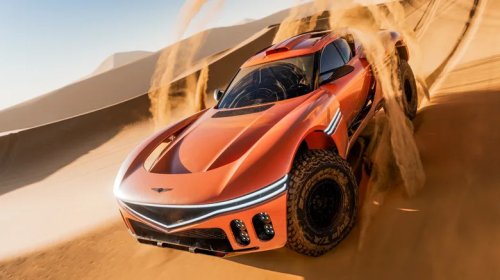



















11 All-Terrain Sports Cars That Can Outperform Anything On Or Off-RoadSlashGearAidan EckhardtSat, September 26, 2026 at 6:30 PM UTCAdd us on GoogleGemballaIf you really break things down, almost all motor vehicles fall into one of two groups: those best suited to human-made manicured asphalt, and those best suite to traveling over whatever materials our planet can concoct. Each group has cars built to excel in their respective zones, that flex the human instinct to go faster no matter the obstacles. However, many have become so purpose-built that with one step out of their preferred element, you might suddenly be better off on foot. Imagining a Le Mans hypercar attempting a rally stage, or a Baja 1000 truck lapping Spa. Their incompetence would be so clear they could become a replacement idiom for fish out of water.Marrying these two philosophies into one machine is counterintuitive, as often what works well for one area ends up being detrimental to the other. However, the siren's song of an all-terrain-capable sports car that also handles like a dream on the road is clearly irresistible to some manufacturers. These creations all function as jacks of all trades, perhaps not reaching the same performance as their specialized counterparts, but getting pretty damn close. They may well be the sports cars of your dreams (if not fever dreams).Read more: Battery Brands Ranked From Worst To BestPorsche 911 DakarJosh Lefkowitz/Getty ImagesThese days, it feels like new 911 variants are a dime a dozen. Stuttgart seems to always have a new idea for how to tweak it in this or that way, and while they all wear badges with a different code of letters and numbers behind the 911, they all serve the same general purpose. The 911 Dakar is truly different, though.AdvertisementAdvertisementIf you're particularly sharp in West African geography, you might be wondering why Porsche named this variant after a small peninsula in Senegal. Someone particularly sharp in Porsche's motorsport history might answer that it was the end point of a trans-continental rally race whose starting line was in Paris. Porsche's very famous Group B 959 won this rally, and serves as the inspiration point for the 992 Dakar.It is immediately clear what the Dakar is built for. The general 911 silhouette is preserved, but the Dakar sits high on a set of Pirelli All Terrain Plus tires, a stainless steel skid plate peeks out under the front bumper, and bright red tow hooks protrude from front and rear. You can even option a roof rack and spotlights for a more clear rally look. The Dakar is no slouch on any surface, thanks to its twin-turbocharged 3-liter flat six, making 473 hp sent through all four wheels, although 100% of it can be sent solely to the rear. It's a 911 in Gore-Tex, and it's undeniably cool.Morgan Plus Four CX-TMorgan/YouTubeBesides tea, one of the favorite pastimes of the English is building quirky, driver-focused sports cars, like the BAC Mono, the Ariel Atom, or the regular Morgan Plus Four. In 2021 though, the Morgan Motor Company decided to put a spin on its usual formula of lightweight, retro-styled sports cars with the Plus Four CX-T.Although this variant is clearly made with anything but asphalt in mind, it is still unquestionably Morgan. As is standard procedure for the company, it uses a BMW B48 turbocharged four-cylinder, good for 255 hp. That may sound meek by today's standards, but the CX-T tips the scales at just 2,674 pounds, meaning the power will go far, and it should be quite engaging thanks to its six-speed manual transmission.AdvertisementAdvertisementDeveloped in tandem with Rally Raid UK, an English coachbuilding boutique specialized in rally cars, the CX-T boasts some serious off-road chops. Longer wishbones and off-road tires are complimented by a set of four auxiliary headlights at the top of the windshield, and an exoskeletal roll cage crouches over the cabin. Two spare wheels are nestled into the back with some carrying cases, and a classy leather toolkit is strapped to the side. The CX-T's prewar styling and utilitarian, rally racing aesthetics make it look like a dandy's steampunk WRC car. Inside, there's even a dedicated documents package in front of shotgun, implying the presence or necessity of a co-driver, even if you don't have one.Lamborghini Huracan SterratoMartyn Lucy/Getty ImagesLamborghini is often seen as the more rambunctious of the two iconic Italian supercar makers, which might ease the shock when you see one converted for all-terrain driving. However, it's hard to pick your jaw up from the floor at the sight, or even the concept of the Huracan Sterrato. The Sterrato was the last version of the Huracan before the fewer-cylindered Temerario replaced it, and that makes the Sterrato's 5.2-liter, naturally aspirated, 8,000 rpm redline, 602 hp V10 all the more special.The Sterrato is clearly a Huracan, but it comes with all the all-terrain fixings. Ride height is of course increased for clearance, though you have skid pads should you be cutting anything close. The track is wider, a pair of rectangular rally lights protrude from the front bumper, the roof wears Lamborghini's idea of a roof rack, and the fenders are widened with armor-like flares.Given the Huracan's low stature, a roof scoop is mounted to feed the engine air that hasn't been tainted by debris the Sterrato will undoubtedly kick up. It can reach 60 mph in just 3.4 seconds thanks to its AWD system, and it has a dedicated rally-specific drive mode. It even boasts a retuned traction control system specially designed to let the car loose for some spirited, but still safe off-road driving. Regardless of your preference between the prancing horse or the raging bull, the Huracan Sterrato will almost certainly put a smile on your face.Singer 911 ACSAlexandre Prevot/ShutterstockSinger is the California-based coachbuilder that routinely brings the dreams of 911 enthusiasts to life. It's handled everything from the classics to the Cabriolets to the Turbos to fashion house collaborations, and even the Dakar and 911 SC/RS-inspired Singer ACS. As with all Singer creations, the ACS is a full rebuild and reimagining of a pre-existing Porsche, this time a 1990 964 generation 911. However, at a glance you'd probably never guess this machine had anything to do with paved roads at all. ACS stands for All-terrain Competition Study, a fitting name for what looks like the love child of a German sports car and Baja 1000 racer.AdvertisementAdvertisementThe car's 911 silhouette is beefy, sitting on a set of forged aluminum wheels wearing BF Goodrich all-terrain tires, whose motions are moderated via five-way adjustable dampers. The chassis is strengthened, and the carbon fiber body panels have quick-release mechanisms for impromptu repair jobs. Powering the beast is a skid plate-protected, 3.6-liter twin-turbo flat six making 450 hp. The interior is stripped down with racing harnesses, a GPS Nav system, an FIA-compliant roll cage, and a huge hydraulic handbrake. It's spartan, and yet so polished, in classic Singer fashion. The ACS as of now is a one-off, but Singer says they can make others per client's request. If you've got a craving for the ultimate off-road 911 and have a couple million to spare, the ACS is the car for you.Nissan Safari Rally ZNissanUnlike some of the other marques we've mentioned so far on this list, Nissan actually has a reputation for building both sports cars, and off-road monsters. Its portfolio ranges from track monsters like the GT-R NISMO to the trail-conquering Patrol, but these two sides rarely overlap. Rarely doesn't mean never though, as is made clear by the Nissan Safari Rally Z. Nissan's Z lineage is one of the most recognizable Japanese sports car families and back in 1971, a Datsun 240Z went on to win the grueling 3,800 mile East Africa Rally.To commemorate this historic achievement, Nissan built the Safari Rally Z in 2023, recruiting American mod shop Tommy Pike Customs to turn its nimble sports car into a rugged off-roader once again. The Safari Z wears the same red and black livery as the winning 240Z. Its front fascia is speckled with rally lights, with two on the A-pillars, two on the lower grille, and two on the hood.Thanks to some performance upgrades like a cat-back exhaust and a cold-air intake, the Safari Z's V6 makes 394 hp which is put to the pavement, or dirt rather, via an enormous set of Yokohama Geolander tires. Inside, there's room for a driver and passenger, who can nestle into the bucket seats protected by four-point harnesses and a roll bar. Unfortunately, the Safari Z is a one-off, but its exclusivity by no means undermines its ability.911 Gemballa MarsienGemballaIn 1981, German Uwe Gemballa founded his eponymous brand, which has since gained a reputation as one of the most outlandish tuning houses in Europe. Working mostly with German cars, the consequence of its touch is usually massive horsepower and aggressive aero upgrades. Occasionally, it'll make full rebuilds of pre-existing cars, and that's exactly what Marc Philipp Gemballa, Uwe's son, has done with his first project. Called the Marsien, which is French for martian, this car certainly has otherworldly looks. It is also prepared for the martian-esque deserts its inspiration the 959 Dakar conquered.AdvertisementAdvertisementBased on a 992 911 Turbo S, the Marsien was built by the Avengers of the German aftermarket world. With Gemballa at the head, motorsport company KLK handled aero, while Porsche tuner RUF tuned the engine, which produces 818 hp at its most fit. The car comes with two sets of wheels, one set with all-terrain tires, and one with road tires, whose abilities are complimented by its hydraulic ride adjustment which can give the car 4.7 to 9.8 inches of ground clearance. This should let the Marsien excel in any terrain, though you can option a pure off-road package with a fixed ride height and rally dampers if you wish. The Marsien is stunning to look at, preserving the 959's proportions and blending utilitarian pragmatism with a cold suaveness.Prodrive HunterMartyn Lucy/Getty ImagesUnless you're a true connoisseur of worldwide off-road racing, you may not be familiar with Prodrive. The English motorsport house won the car class of the 1984 Qatar International Rally, and it has been making components, helping racing teams, and building its own strange cars ever since. This is a brand steeped in racing history. Prodrive is behind the Bahrain Raid Xtreme World Rally-Raid Championship team, and the Hunter is the street-legal version of its competition car.As if this doesn't earn the Hunter enough motorsport kudos, both the car's interior and exterior were designed by member of English automotive design royalty, Ian Callum. The Hunter looks like a rally hot hatch on steroids with its swan-neck wing, gaping air intakes, and monolithic front skid pad. It's built like a tank without the artillery, with its massive 35-inch wheels and 400-millimeter travel from its double wishbones. 600 hp are available from its 3.5-liter turbocharged V6, whose six-speed gearbox doles it out via paddles. Like the competition car, the Hunter is built to drive over basically anything barring an ocean thanks to its ground clearance and reinforced chassis. It's monstrous, but you'll be safe thanks to its FIA-spec roll cage, and six-point safety harnesses. Just fill the enormous 480 liter fuel tank, and drive in whatever direction your heart desires.Lotus Exige R-GTS.Borisov/ShutterstockTo understand why the Lotus Exige R-GT even exists in the first place, we have to explore those three letters at the end of its name. In rally racing, there are seemingly endless classes of cars allowed to compete. The R-GT class opens the dirt and gravel to circuit-focused sports cars, managing to make the already cool sport of rally racing even cooler. In the early years of the R-GT class, Lotus decided to develop an entry based on its road-going Exige, dubbed the Exige R-GT.AdvertisementAdvertisementRather than slapping on some new parts to a pre-existing car, the Exige R-GT was actually developed at the same time as the road going version. This allowed both development teams to work in tandem, and it helped the rally version preserve the regular Exige's driving prowess. Its aluminum tub chassis contributes to its light 2,646 pounds curb weight, a number made even more enticing considering the Toyota-sourced V6's 302 hp. All the power is sent exclusively to the rear wheels, which further preserves the Lotus calling card of driver focused purity, and fun.Perhaps the coolest thing though, is the Exige R-GT's looks. It retains the classic beautiful Lotus shape and size, with added rally ornamentation like auxiliary lights, mud flaps, and a roof scoop. This is the lovechild of two seemingly unrelated motoring worlds that somehow go together so well.Aston Martin V8 Vantage R-GTCHECKPOINTRALLYE/YouTubeThe R-GT class is home to another British sports car turned rally racer, this time coming in the form of the V8 Vantage R-GT. Built by Finnish tuning house Mäkelä Auto-Tuning, the R-GT started life as a purebred race car. Aston Martin made a racing version of the V8 vantage called the N24, named after the 24 hours of Nürburgring endurance race. This was an already extremely capable car, which made it the perfect canvas for MAT to work its rally-racing magic. Power comes from a beefy 4.7-liter V8, good for 500 hp of which is distributed via a sequential gearbox.The V8 Vantage R-GT gets all the fixings when it comes to rally upgrades, including a roof scoop for clean air, raised suspension, a fat wing, splitter, and canards, bucket seats, a roll cage, Intrax adjustable suspension, and a hydraulic handbrake. While it was a one-off project, it still earned its chops by competing in the 2015 Arctic Rally, the 2017 Rallye du Var, and with a showcase at the Goodwood Festival of Speed rally stage. Seeing an V8 Vantage wearing a rally car uniform is a strange but lovely sight. It's a tuxedo paired with hiking boots and a motocross helmet. If James Bond and the late Ken Block teamed up for a Gymkhana film collaboration, this is the car they would drive.Honorable Mention: Genesis Skorpio ConceptGenesisIt seems like every few months, the minds at Genesis tease us with yet another concept car. Fortunately, every concept the brand shows seems to be more beautiful, enticing, and exciting than the last, and this is certainly the case with the Genesis Skorpio Concept, which introduces an entirely new character to its portfolio. Despite the car's clear off-road ruggedness, it is still unmistakably Genesis, with its split light motif wrapping around the rear, and forming the triangular grille outline in the front.AdvertisementAdvertisementThe Skorpio takes the proportions of a charismatic front-engined GT car, and blows it up with bodybuilder balloon animal muscles, riding on huge 18-inch beadlock wheels and 40 -nch all-terrain tires. The roof scoop's air channel pops like a vein from the roofline down to the rear window, reminiscent of the stinging tail of its namesake. Side-mounted exhausts protrude from the bodywork, whose elements are made of carbon fiber, Kevlar, and fiberglass. Inside it's all business, but not without style. A quilted leather dash is bookended by a passenger screen, and a steering wheel with a built-in display.Perhaps most exciting though, is what's under the hood. Taken with the grain of salt every concept car promise must be, the Skorpio aims to be powered by a V8 that Genesis says will produce a whopping 1,100 hp. The company has the recipe for a truly special car, and we can only watch as onlookers hoping it actually makes it.Want the latest in tech and auto trends? Subscribe to our free newsletter for the latest headlines, expert guides, and how-to tips, one email at a time. You can also add us as a preferred search source on Google.Read the original article on SlashGear.