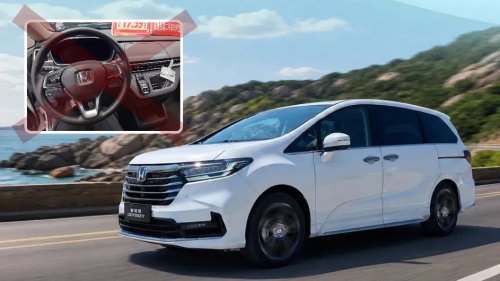
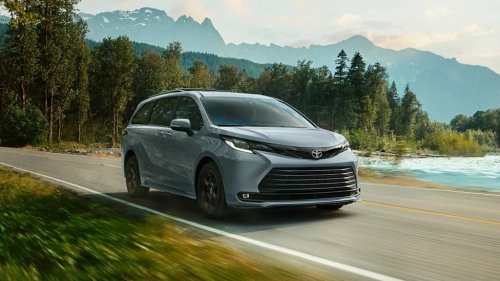
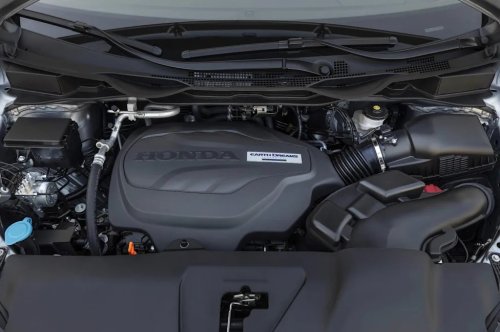
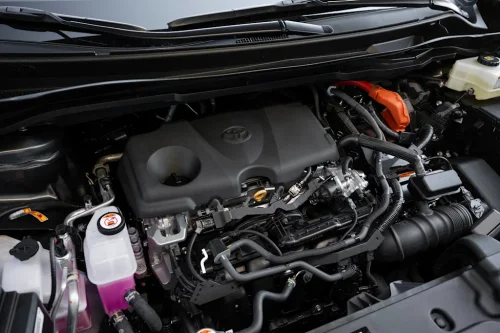
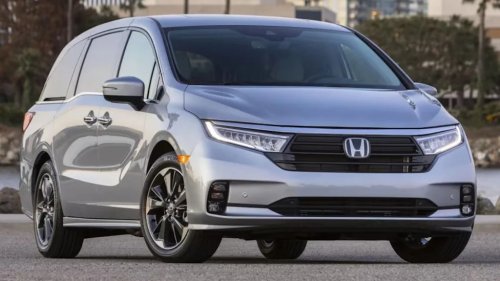
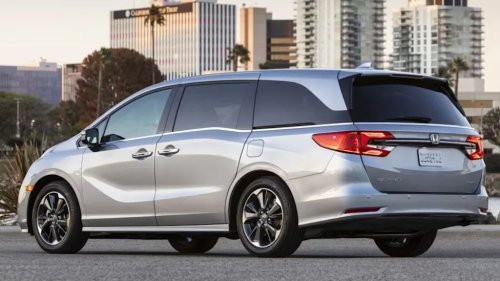
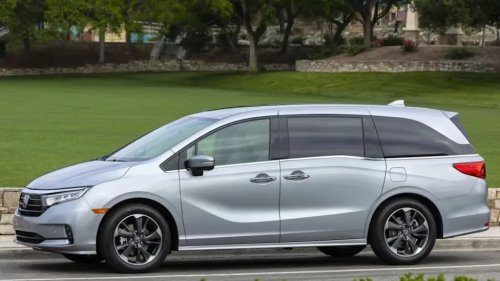
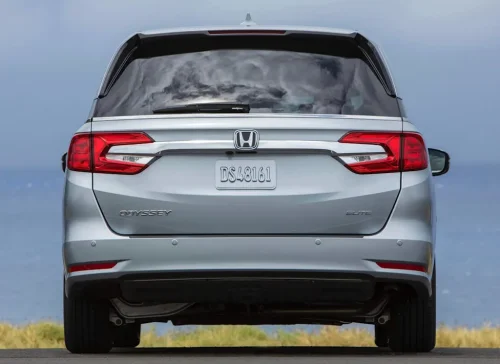
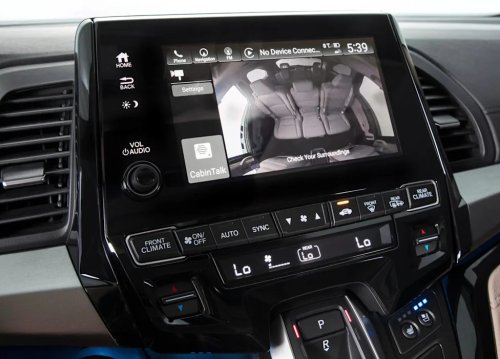
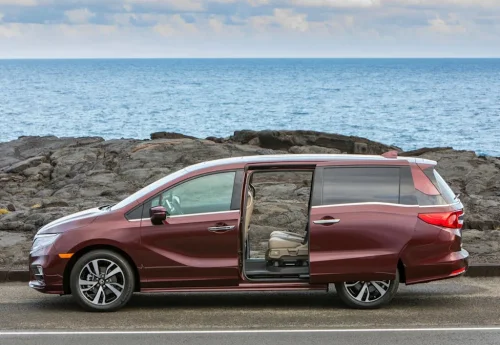
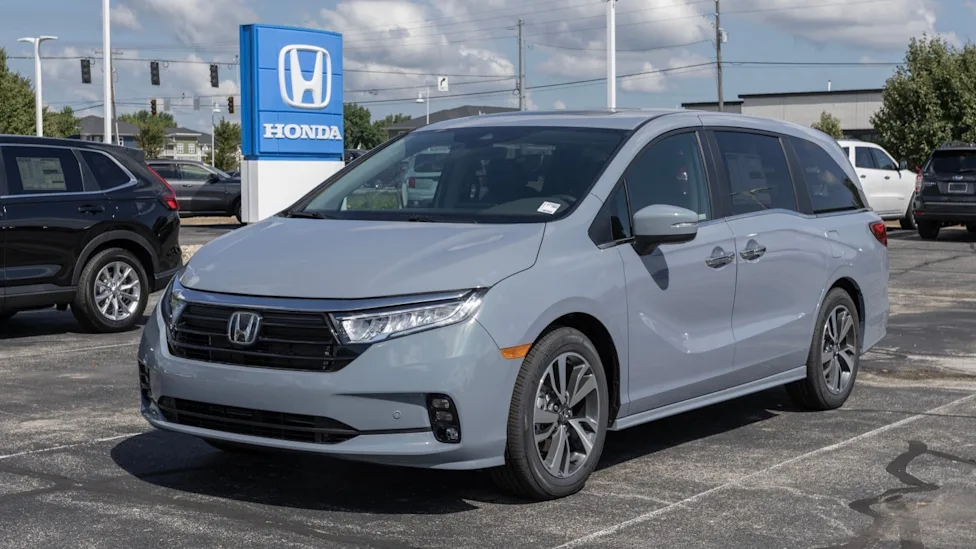
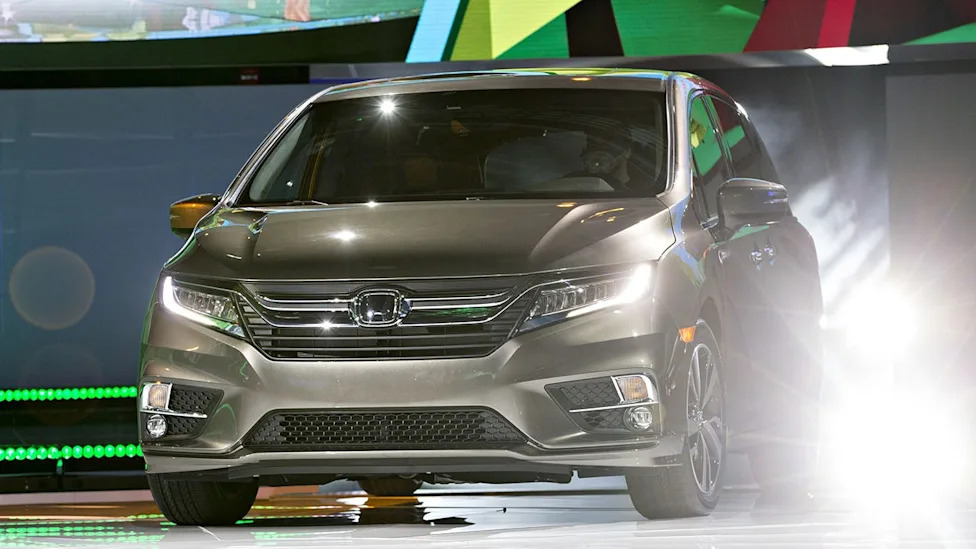
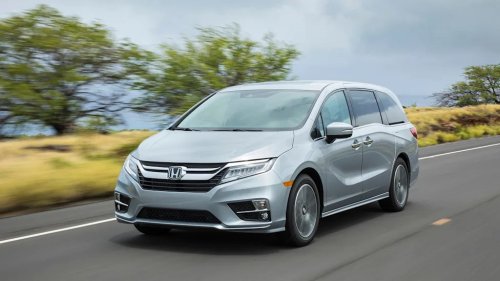
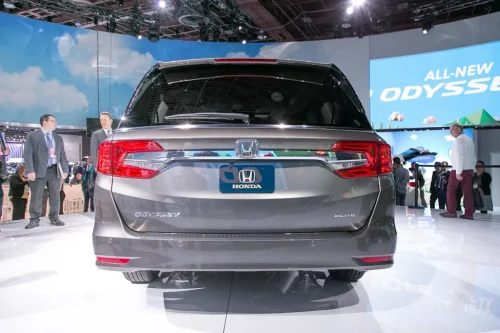
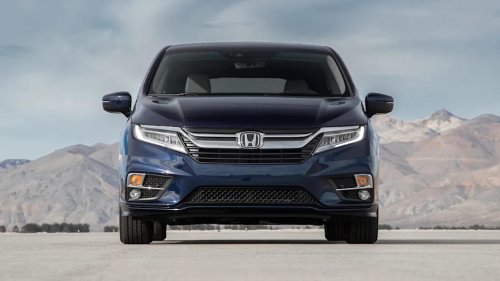
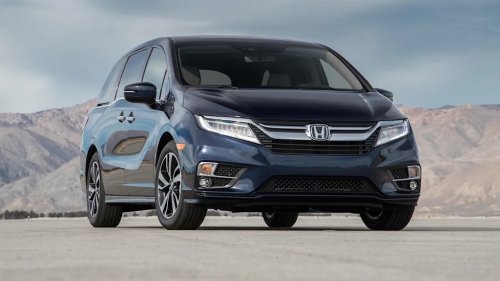
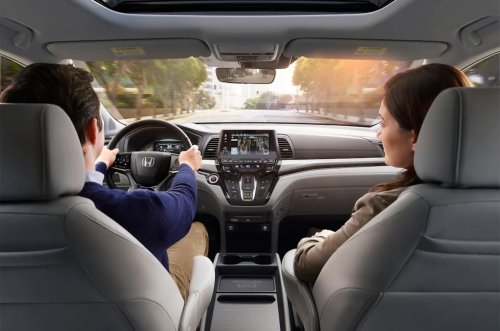
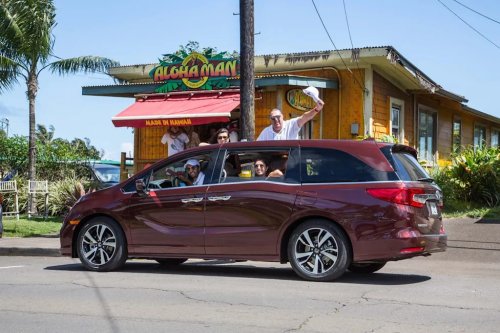
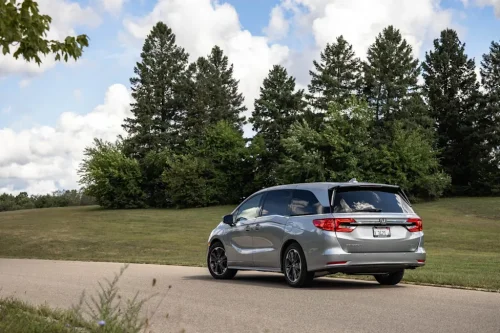
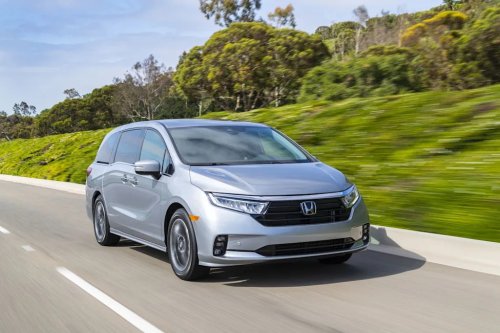
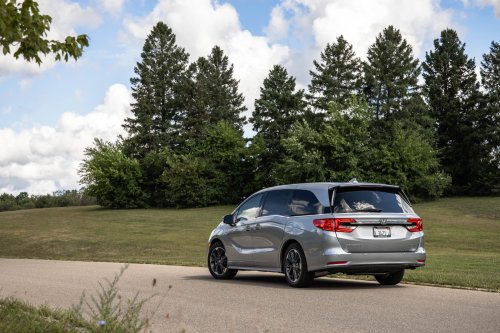
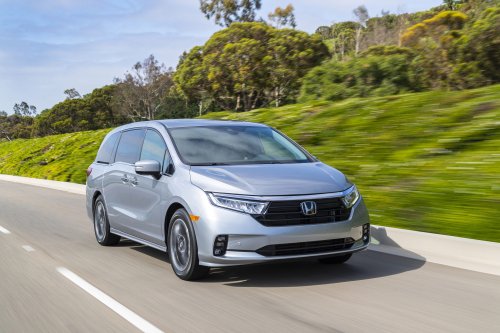
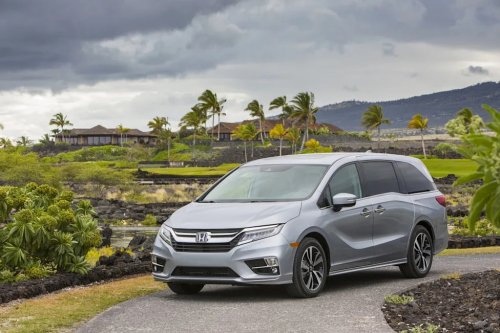
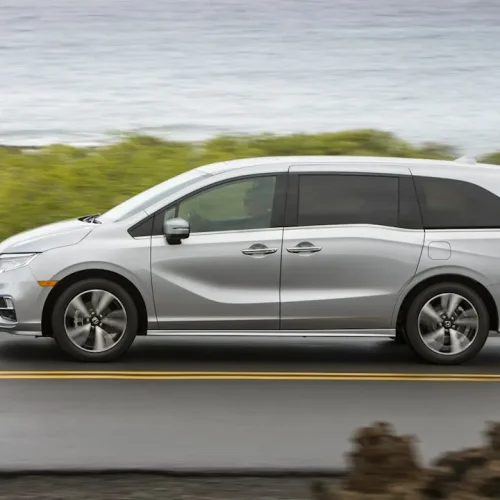
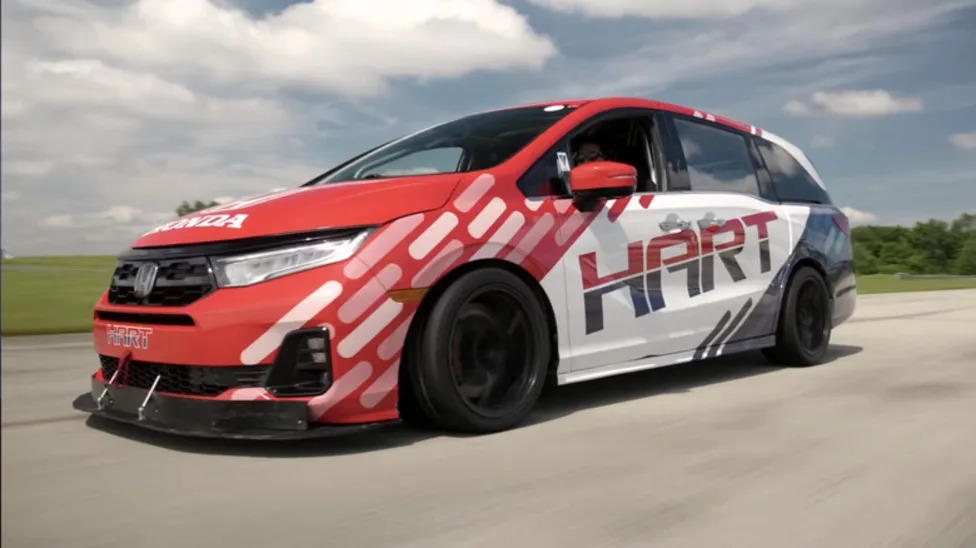
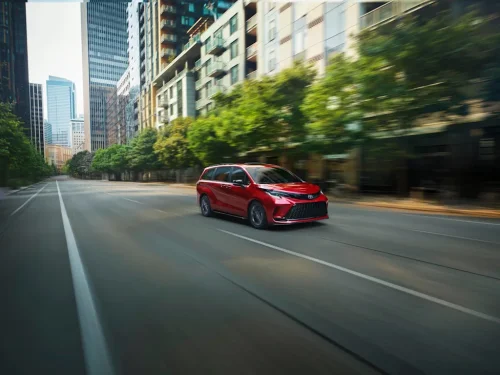
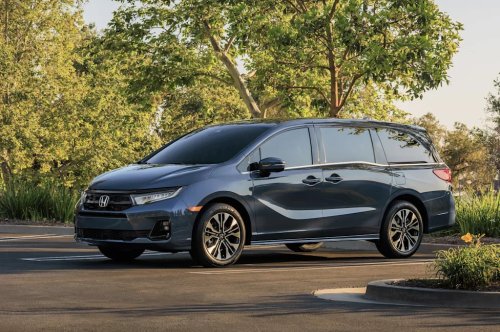
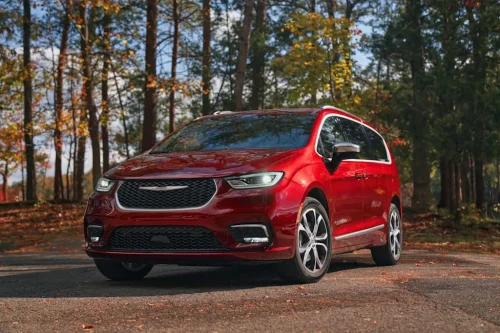
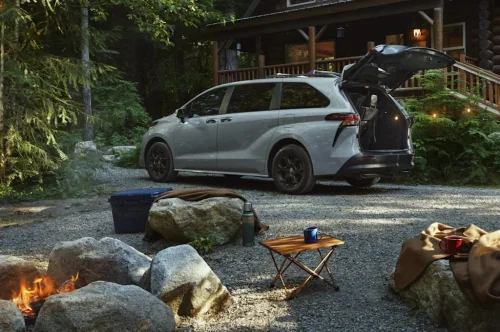
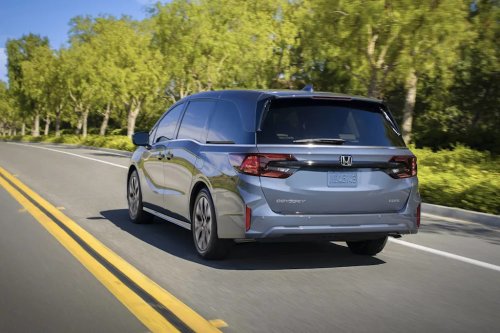
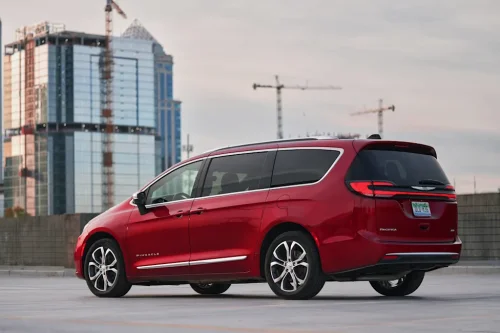
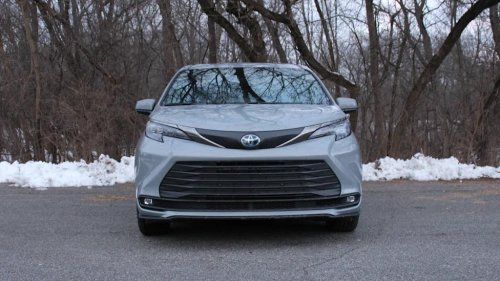
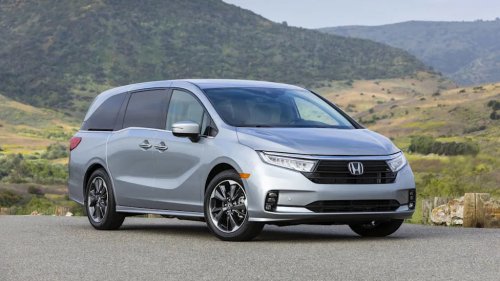
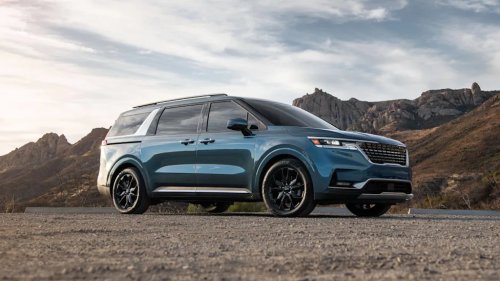
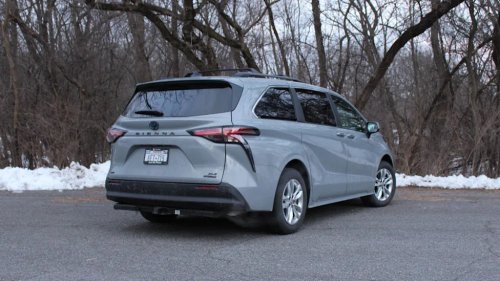
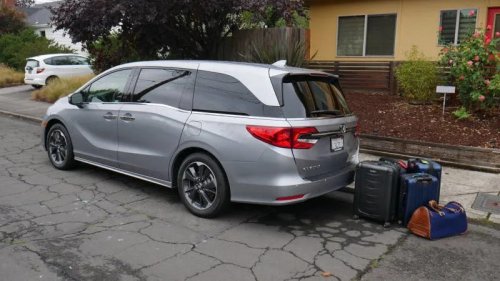
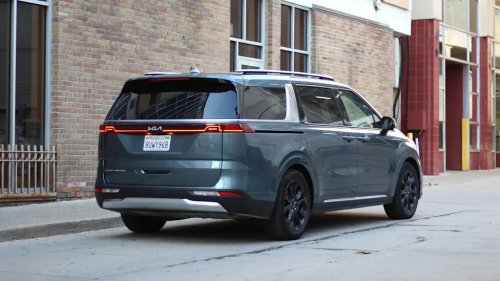
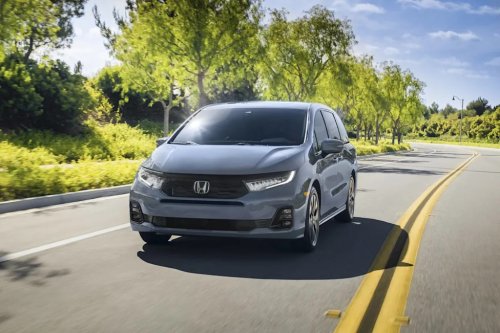
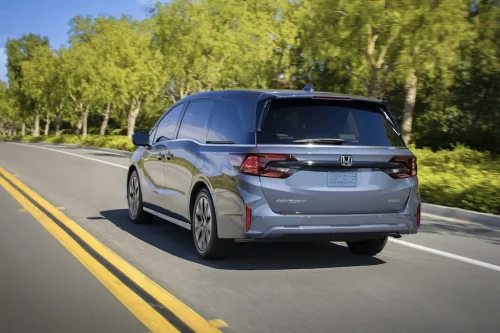
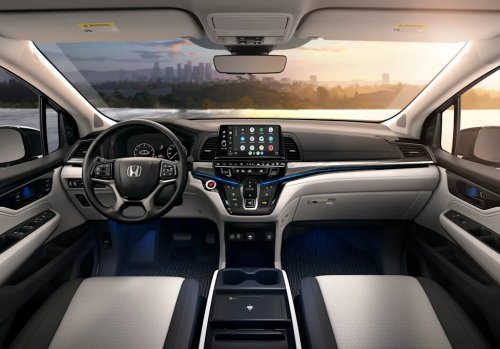
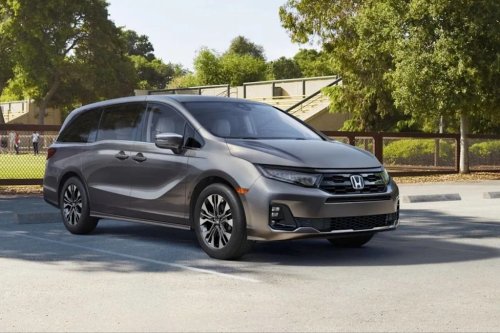
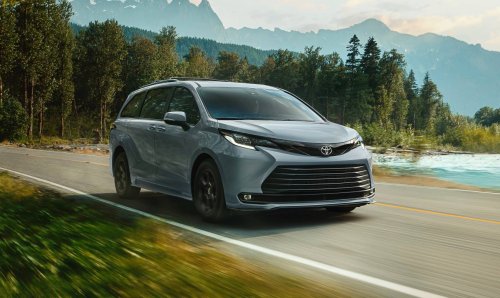
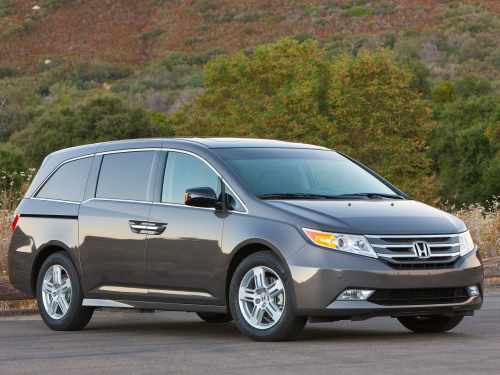
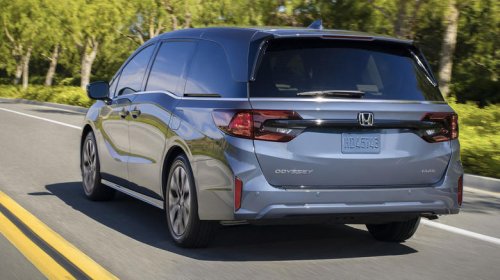
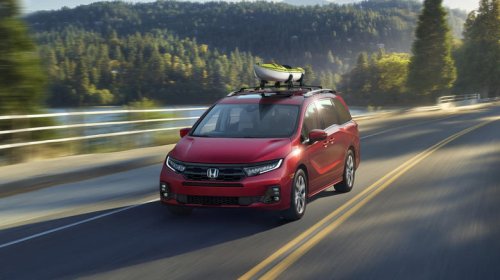
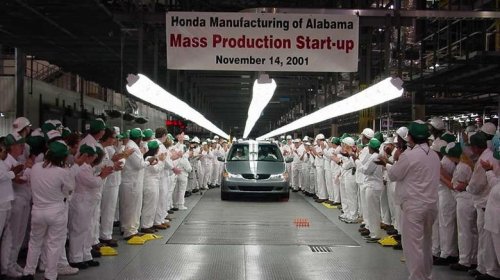
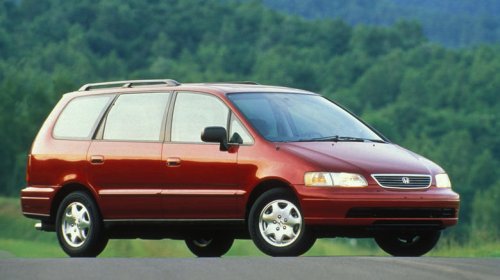
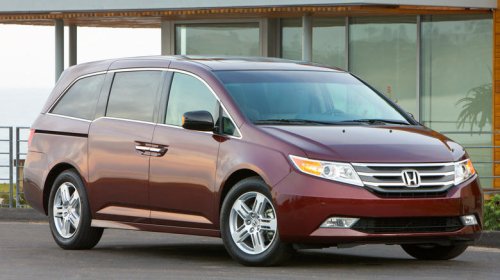
The Odyssey starts from $42,795 for 2026Buyers looking for a new Odyssey can pick from a range of trims for the 2026 model year, with the cheapest of those being the EX-L, which starts from $42,795 excluding fees. As standard, the base trim includes a power liftgate, a power moonroof and leather-trimmed seats, so it's far from spartan. The next step up in the range is the Sport-L trim, which adds unique interior accents and 19-inch black wheels for a starting price of $43,895.The Touring trim is another step up again, costing at least $47,495 and featuring a number of additional extras on top of the standard equipment. Among these extras are a rear entertainment system to keep passengers occupied on longer trips, an in-cabin camera to more easily keep tabs on the rearmost row, and parking sensors. Topping the 2026 Odyssey range is the Elite trim, which starts from $51,695 and adds upscale features like an 11-speaker audio system and heated and ventilated front seats.The Odyssey's fuel efficiency is competitive, but not class leadingMuch like Odyssey's styling, Honda has kept things traditional with the minivan's powerplant. Under the hood of every 2026 Odyssey sits the same 280 horsepower V6 engine as previous model years, with EPA-estimated fuel efficiency ratings of 19 mpg in the city, 28 mpg on the highway, and 22 mpg combined. That puts the Honda roughly on par with its gas-powered peers, but there are a few outliers in its class that offer significantly better figures.The segment's standout performer in terms of efficiency is Chrysler's plug-in hybrid variant of the Pacifica, which achieves a combined 82 mpge with a full battery and 30 mpg combined on gas power alone. While it isn't a plug-in hybrid, the Toyota Sienna's standard hybrid powertrain also offers superior fuel-sipping credentials, with official ratings of 36 or 35 mpg combined depending upon whether power is sent to two or four wheels. The hybrid Kia Carnival can't quite match up to the best in class, but still offers 33 mpg combined.Among non-hybrid rivals, the Odyssey compares more favorably. The non-hybrid Carnival achieves an EPA rating of 21 mpg combined, marginally less than the Honda, while the non-hybrid, all-wheel drive Pacifica can only manage 20 mpg combined. The Chrysler Voyager matches the Odyssey with a 22 mpg combined rating. Still, the Honda remains a solid minivan for buyers looking for a tried-and-tested powertrain as opposed to class-leading efficiency.The Honda Odyssey is made in AmericaSince the beginning of President Trump's second term, the looming threat of tariffs has cast a significant shadow over the automotive industry and threatened to destabilize the American market. Some manufacturers look to be worse hit than others, although at the time of writing, the exact implementation of tariffs and their expected duration remains unclear.Although it uses a mix of locally-sourced and global parts, the Odyssey should be shielded from the worst impacts of the proposed tariffs, as it is manufactured at Honda's assembly plant in Alabama. Its engine is also built in Alabama, while its standard 10-speed automatic transmission is built in Georgia.A number of rival minivans are built outside of the U.S. and so are more likely to be subject to tariffs. The Chrysler Pacifica and Voyager are currently built at Stellantis' plant in Windsor, Canada, while the Kia Carnival — like the whole of the brand's lineup aside from the Telluride, Sportage, Sorento, and EV9 — is also imported. The Toyota Sienna is the only other domestically made minivan alongside the Odyssey, being built in Indiana.The first Odyssey arrived in 1994The original generation of the Odyssey had an unlikely start, having been conceived as a skunkworks project that was worked on outside of official company hours. It was thanks to the determination of Kunimichi Odagaki, the chief engineer at Honda's R&D Center, that it entered production at all. Neither Japanese or American Honda divisions were originally interested in the idea, but Odagaki and his small team kept developing the minivan prototype until eventually they drummed up enough support to greenlight production. The first generation Odyssey arrived in 1994, and its success was a lifeline for Honda's Sayama plant in Japan, which has seen declining demand for its other models.The minivan sold well both in America, which was the market for which it was originally designed, and in Japan. Soon, extra production capacity was needed to keep up with the demand for the car, and so Odyssey production was shifted to Honda's Canadian facility with the launch of the second generation car in 1998. After a facelift for the 2002 model year, the Odyssey began production at a different, newly-built plant in Alabama, where it continues to be made today.The minivan has been through five generations to dateThe first generation of the Odyssey represented uncharted territory for Honda, which had never made a minivan before. The second generation followed the same design principles and proved to be a hit with buyers, and so by the time the third generation was launched in 2005, Honda wasn't keen to mess with a working formula. This new generation brought a new, more versatile seating design, an upscale Touring trim with more premium features, and various tech and efficiency improvements to help the Odyssey stay ahead of its competitors.By the time that the fourth generation appeared in 2011, the automotive market had changed once again, and the model's sales figures had dropped significantly from its all-time peak in the mid-2000s. Still, Honda managed to sell over 100,000 examples of the van each year in the U.S. alone, no doubt helped by the revised styling and improved efficiency of the new model. The fifth and current generation of the Odyssey was first shown off at the 2017 North American International Auto Show and launched for the 2018 model year. New, revised infotainment tech was one of the biggest selling points, alongside new active safety tech such as lane keeping assist and a pre-collision automatic braking system.



















 +28 others