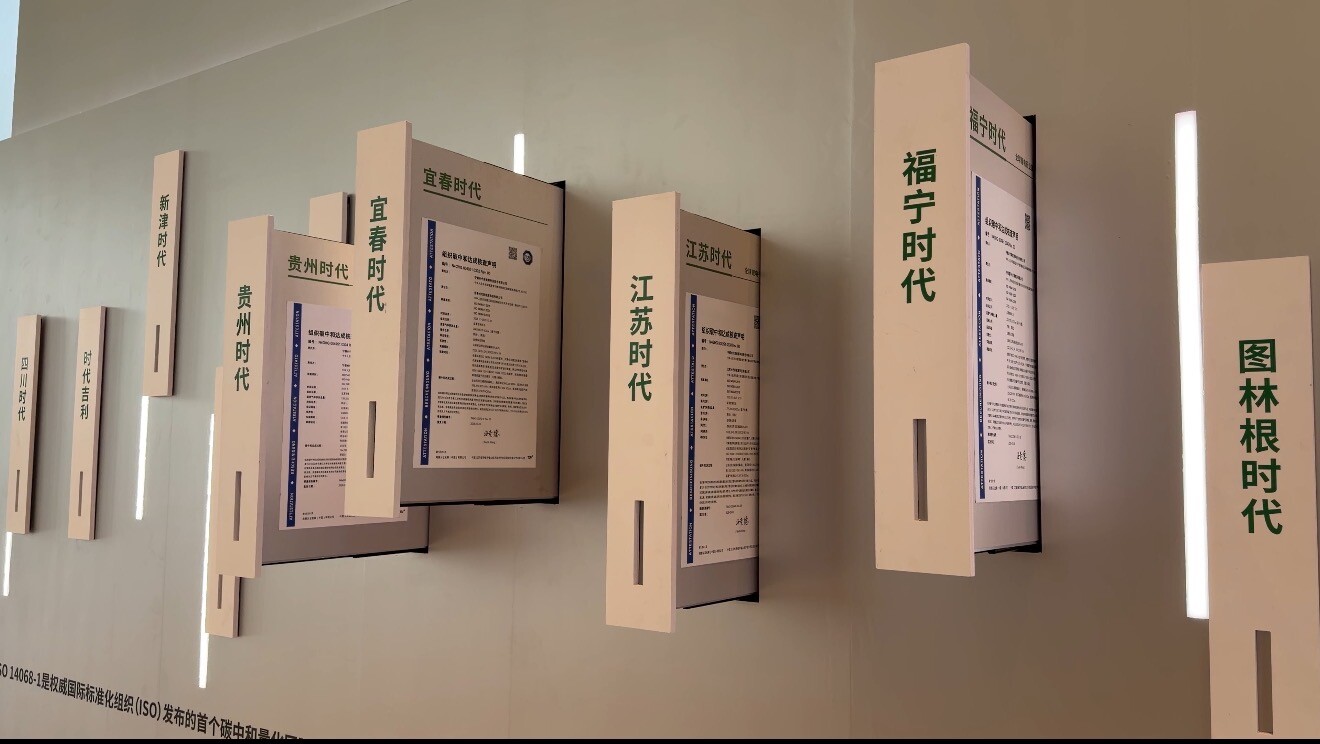
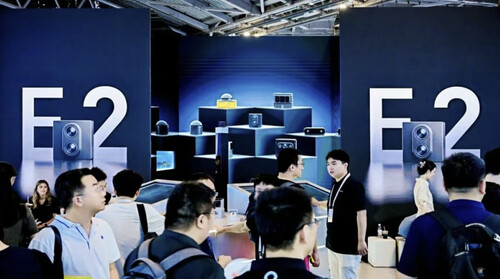
Gasgoo Munich- August 17, Ningde, Fujian. CATL delivered a report card unmatched anywhere in the world: achieving carbon neutrality in core operations at a terawatt-hour (TWh) scale, with all 20 of its factories reaching zero-carbon status.The report card is merely the beginning. The real signal from the event was CATL's first systematic disclosure of its roadmap to carbon neutrality across the entire value chain by 2035.Moving from "core operational neutrality" to "value chain neutrality" means, bluntly, shifting from meeting its own targets to forcing the entire supply chain to do the same. CATL is effectively turning zero-carbon status into an entry requirement for its thousands of suppliers.Amid the drive to go global, this is more than a scorecard — it is a manifesto declaring who gets to set the new rules for the global new energy industry.Zero Carbon Is Being Redefined"The zero-carbon economy has become a new engine of growth, unlocking vast industrial and development opportunities." That remark by Robin Zeng, Chairman and CEO of CATL, perfectly captured the narrative of the day.Robin Zeng, Chairman and CEO of CATL. Image Source: CATLIn the fossil fuel era, cutting carbon usually meant costs rather than profits. But technological progress is steadily driving down the cost of green energy — the economic case for zero carbon is now clear.What exactly is "core operational carbon neutrality"?It refers to achieving net-zero emissions in a company's own production and operations, where emissions come primarily from electricity and thermal energy consumption in factories. The larger the manufacturing scale, the harder it is to achieve.In 2025, CATL produced 748 GWh of batteries; from 2022 to 2025, sales of its lithium-ion batteries surged 2.3-fold, maintaining its position as the global market leader. Achieving carbon neutrality while doubling capacity is the toughest challenge of all.CATL's breakthrough path can be described as "starting from scratch": there were no mature cases or authoritative standards for carbon neutrality in the lithium battery industry. The company began by identifying emission sources, surveying and analyzing data for nearly 40 battery production processes one by one. In 2022, it launched the "C-Chain" carbon management tool, which now covers battery production and core upstream suppliers, having built over 1,000 models for products and raw materials.Building on this foundation, CATL established six dedicated task forces to drive decarbonization: zero-carbon design, zero-carbon manufacturing, zero-carbon factories, zero-carbon supply, circular ecosystems, and zero-carbon power.Data shows that since 2023, CATL has used over 18 billion kWh of zero-carbon electricity. By 2025, energy consumption per unit of product at its battery bases had fallen 28% from 2022 levels, while carbon intensity dropped roughly 77% over two years, cutting cumulative emissions by more than 10 million tons of carbon dioxide equivalent.In the global market, zero-carbon status has long evolved from a "bonus" to a "license to operate."The EU's New Battery Law is reshaping the rules of global battery trade. Carbon footprint declarations for rechargeable industrial batteries with a capacity exceeding 2 kWh become mandatory on February 18, 2026. The EU's carbon footprint limits are steadily tightening; industry consensus previously pegged the 2025 benchmark at around 80 kg CO₂/kWh, tightening to about 50 kg by 2030. The average for Chinese power batteries, however, still sits between 100 and 120 kg CO₂/kWh.An even tighter timeline lies ahead. The EU "Battery Passport" becomes mandatory in February 2027: it requires 90 data attributes, measured full lifecycle carbon footprints, hard targets for recycled materials, and QR code traceability. Products without a passport will be barred from the EU market entirely.In reality, CATL's ambitions extend far beyond mere "compliance." It is transforming zero carbon from a compliance cost into a brand premium.According to its 2025 financial report, CATL's overseas business gross margin hit 31.44%, significantly higher than the 24.00% for its domestic operations. Behind this gap lies not only the higher pricing power in foreign markets but also the added value generated by technology exports and recognized standards.This June, CATL Zero Carbon Technology (Xiamen) Co., Ltd. completed registration with a registered capital of 10 billion yuan, tasked with coordinating the global rollout of zero-carbon technologies and business operations.It is fair to say CATL is undergoing an identity transformation: from a "battery manufacturer" to a "global zero-carbon energy service provider." It is no longer just selling batteries; it is selling zero-carbon solutions.Replicable Capability Is the True MoatCATL's true moat lies in this: it has turned zero carbon from a one-off "case study" into a "replicable methodology."At the event, CATL announced the second phase of its zero-carbon strategy: achieving carbon neutrality across the value chain, from mineral resources to finished batteries, by 2035.Image Source: On-site photoWhat does "value chain carbon neutrality" mean? It means not only achieving neutrality itself but also driving the upstream and downstream supply chains to do the same.Having optimized its own operations, CATL is now turning its attention to the supply chain.How difficult is this goal?More than 80% of the carbon emissions across a CATL product's lifecycle come from the supply chain — a total volume roughly five times that of core operations. CATL works with over 1,000 suppliers and handles about 100 different types of raw materials.Tackling this tough challenge cannot be done by "hand-holding"; it requires "systems and standards."This is precisely CATL's core strategy. Leveraging the "C-Chain," it built the industry's first full-chain carbon data tracing platform covering "mining — refining — material synthesis — component manufacturing," achieving transparent, traceable management across regions and stages. To date, the platform has completed carbon accounting for actual data from over 100 core Tier-1 suppliers.Huang Bin, head of CATL's Procurement Center, broke down the supply chain emissions at the event: cathode materials account for 38%, and copper and aluminum another 38% — the two largest sources. Anode materials and electrolyte each contribute about 9%, with the rest at roughly 6%. Targeting these areas, the company has formulated carbon reduction action plans covering four key stages: raw material R&D, production, logistics, and recycling.Image Source: CATLWith the methodology in place, the next step is to turn it into binding requirements.CATL's zero-carbon requirements for suppliers are shifting from "proposals" to "contractual terms." The roadmap involves three specific paths:First, raising the bar for entry. Starting in 2027, new supplier admission will include mandatory carbon footprint indicators. Annual supplier audits will incorporate carbon performance metrics such as "renewable energy ratio" and "energy consumption per unit of product."Second, incentivizing orders. A green procurement guide has been released, giving low-carbon suppliers preferential access to orders and long-term contract guarantees when conditions are otherwise equal.Third, enabling transformation. A zero-carbon supply chain empowerment program has been launched, initially selecting 30 core suppliers for deep, collaborative decarbonization — "cutting carbon while cutting costs, making green transition an economic competitive advantage."Meanwhile, CATL has established a tiered green supplier certification system that directly links decarbonization performance to order share. On the day of the event, CATL and suppliers across the cathode, anode, and current collector sectors jointly launched the 2035 Value Chain Carbon Neutrality Initiative.This means CATL has turned "zero carbon" from an internal requirement into an entry standard for thousands of suppliers. In other words, CATL is defining what makes a "qualified supplier" — the embryonic form of "rule-making power."From Passive Adaptation to Active Definition of Global Zero-Carbon RulesCATL's logic is clear: in the global market, carbon neutrality has shifted from a "multiple-choice question" to a "mandatory one." Rather than passively adapting to rules set by others, it is better to actively participate in making them.At the conference, CATL proposed establishing a "Global Lithium Battery Industry Zero-Carbon Ecosystem Collaboration Platform" to promote joint standard-setting, technical collaboration, and coordinated industry action. Simultaneously, CATL formed strategic partnerships with the National Center for Climate Change Strategy and International Cooperation and the Shanghai Environment and Energy Exchange.Once this platform takes shape, the more than 1,000 product and raw material models CATL has accumulated, along with its full-chain carbon data tracing methods and supplier carbon footprint accounting standards, will become the industry's reference "baseline."If domestic zero-carbon factories are the "training ground" for technical verification, then the rollout of overseas zero-carbon capacity is the "main battlefield" for exporting influence.All 20 of CATL's battery plants have achieved ISO 14068-1 certification, with zero-carbon electricity usage in core operations reaching 100%. These 20 factories include 19 in China and the Thuringia plant in Germany — CATL's first overseas factory to achieve zero-carbon operations.Image Source: On-site photoAccording to media reports, CATL's Hungary plant is scheduled to start mass production of battery cells in the spring of 2026, with an initial planned annual capacity of 40 GWh — all of which has been reserved by customers. The plant employs advanced Industry 4.0 technology and optimized layouts to minimize energy consumption, aiming to secure carbon neutrality certification within two years of operation.The joint venture plant in Spain represents a total investment of 4.1 billion euros and has a planned annual capacity of 50 GWh. It will run entirely on renewable energy and is committed to full-process carbon neutrality in operations, with production slated to begin by the end of 2026. It is one of the largest Chinese investment projects in Spain to date.The strategic significance of these two overseas factories goes beyond simple capacity expansion. As European customers face the EU New Battery Law and the impending battery passport, CATL delivers not just battery products, but also verified carbon footprint data. This "product + data" delivery capability is becoming a unique competitive advantage for CATL in the global market.So, returning to the fundamental question: Why is CATL doing this?The EU's carbon footprint declaration requirements are already in effect, and the "battery passport" is about to become mandatory, yet the overall carbon footprint level of China's power battery industry still lags behind the EU baseline.While most Chinese battery makers are still worrying about "how to meet EU standards," CATL is already thinking about "how to get standard-setters to reference its data."From 20 domestic zero-carbon factories to overseas layouts in Hungary and Spain, and from the "C-Chain" to the 2035 full value chain neutrality goal — CATL's zero-carbon narrative is steadily embedding "Chinese standards" into the rule system of the global new energy industry.At the event, Robin Zeng also made two additional points:"The zero-carbon economy has become a new engine of growth, unlocking vast industrial and development opportunities.""I believe that in the future, non-zero-carbon batteries will be eliminated by the times."Taken together, these remarks carry deep meaning: zero carbon is not just the "right thing to do," but a "must-do." Whoever cracks zero-carbon manufacturing first, and whoever exports zero-carbon standards, gets to define what makes a "qualified battery."The event did not linger on self-congratulation for "what has been achieved," but clearly answered "what comes next" and "how the entire industry should proceed."From doing it itself to teaching the industry, from requiring the supply chain to comply to participating in global rule-making — CATL is transforming "zero carbon" from a cost into a moat, and from a moat into a standard.While others are still debating whether zero carbon is a burden, CATL is already using it to define what qualifies as a battery.Zero carbon is not a cost for CATL; it is CATL's moat.