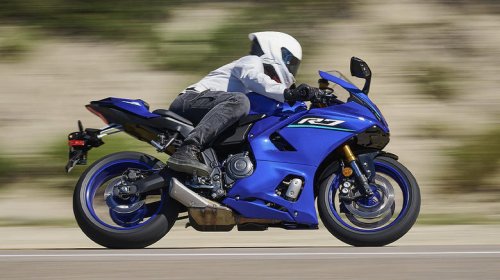
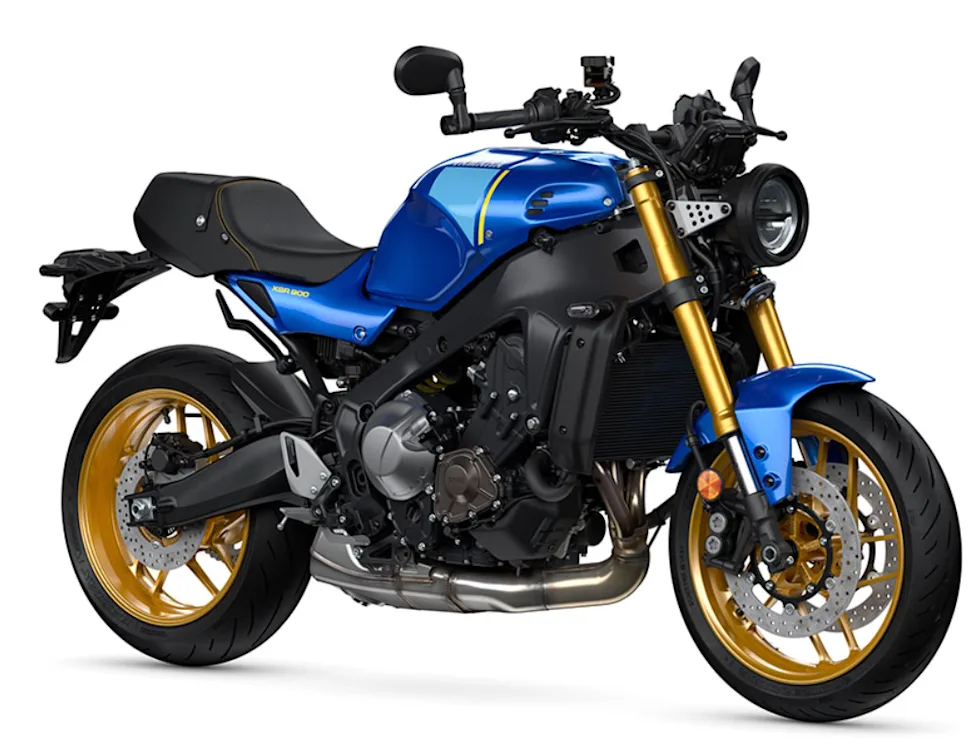
Yamaha's 155cc Retro Standard Is Headed to American DealersYamaha's US lineup has a hole at the bottom that's been getting more embarrassing every year, and it looks like the fix is a 155cc retro standard built in Indonesia.The tell came from paperwork rather than a press conference. Manufacturers are required under 49 CFR Part 565 to file VIN decoding submittals with NHTSA before a vehicle can be sold here, and those filings land in the agency's public vPIC database months ahead of any marketing push. Yamaha's 2027-model-year submittal includes the XSR155 — a bike that has existed since 2019 in Southeast Asia and has never been offered to American buyers.Worth being precise about what that document does and doesn't prove. A Part 565 filing establishes how a VIN will be constructed for a model intended for US sale. It doesn't lock in a price, an on-sale date, a color palette, or even a guarantee the bike ships. It's the earliest hard evidence, not the last word.The engine is the interesting partYamaha's 155cc single is one of the more over-engineered small motors on the market, and the reason is Variable Valve Actuation. Per Yamaha's own published specs for the Indian-market bike, the liquid-cooled SOHC four-valve makes 13.5 kW (18.4 PS) at 10,000 rpm and 14.2 Nm at 7,500 rpm, with a bore and stroke of 58.0 × 58.7 mm and an 11.6:1 compression ratio.Related ArticlesHonda's Award-Winning EV Outlier Hides a Two-Wheel-Drive Bet Worth Arguing AboutWhat Gordon Murray's Pebble Beach Honor Actually Recognizes, Engineering-WiseAdvertisementAdvertisementThat's a nearly square engine, which matters more than it sounds. Most manufacturers chasing peak numbers in this class go aggressively oversquare — big bore, short stroke, screaming top end, nothing below 6,000 rpm. Yamaha kept the bore and stroke essentially equal, which preserves usable midrange, then bolted on VVA to recover the top end that a shorter bore would otherwise cost.VVA is not a cam phaser and it isn't VTEC in the Honda sense of a third lobe. It's two separate intake cam profiles on the single overhead cam, with a solenoid-actuated pin that swaps which rocker arm is driving the valve as revs climb. Below the crossover the engine breathes on a mild, low-lift lobe tuned for tractability; above it, a longer-duration lobe takes over. Practically, it's why a 155cc single pulls cleanly from 3,000 rpm and still revs to five figures without feeling strangled at either end.The maintenance implication: this is a mechanical valvetrain with no hydraulic adjusters, so valve clearance checks are a real service item on a schedule, not an optional one. Ignore them on a high-revving four-valve single and you'll tighten exhaust clearances, lose sealing, and cook a valve. Budget for the labor.The chassis is genuinely nice for the moneyThis is where the XSR155 separates itself from the churn of 150cc commuters. Yamaha's spec sheet lists a Deltabox frame, an aluminum swingarm, telescopic upside-down forks with 37 mm inner tubes, and link-type rear suspension. Braking is a 282 mm front and 220 mm rear disc with dual-channel ABS, and traction control is standard. Tires are 100/80-17 front and a 140/70R-17 radial rear — a radial rear tire on a 155cc motorcycle is not something most of its competition can claim.AdvertisementAdvertisementKerb weight is 137 kg (302 pounds) with a full 10-liter tank, seat height is 810 mm (31.9 inches), wheelbase is 1,325 mm.Fair warning on the numbers: specs vary by market. Yamaha's Japanese launch release, which set a June 30, 2026 on-sale date at ¥539,000 and confirmed production at PT. Yamaha Indonesia Motor Manufacturing, describes a bike with a different front tire size and slightly different output. Anyone treating the Indian figures as US-final is guessing. Whether the American version gets traction control and Y-Connect Bluetooth is an open question.The pricing problem nobody has solvedYamaha's current cheapest street motorcycle in the States is the V Star 250 at $4,799 MSRP, with the MT-03 at $4,999 and the YZF-R3 at $5,499. That's a brutally tight ladder to slot a 155 into. Undercut the MT-03 by a few hundred dollars and buyers will reasonably ask why they shouldn't pay the difference for 321cc and a parallel twin. Price it low enough to make sense — call it the high threes — and the margin math on an Indonesian-built bike with USD forks, ABS, and a radial tire gets uncomfortable.The structural issue is that America has no licensing incentive for small displacement. Europe has A1 and A2 tiers. India taxes by engine size. Southeast Asia is organized around sub-200cc entirely. In the US, a 16-year-old with an M endorsement can legally buy a liter bike, so a 155 has to win purely on desire — cost of entry, cost of insurance, weight, and looks. It cannot win on paperwork.What it means for actual ownersFor riders in the right situation, this is a genuinely appealing machine. A 302-pound bike making 18-ish horsepower will hold 70 mph and can be pushed to 75, which makes it competent on secondary highways and merely adequate on interstates. That's a real limitation, not a nitpick — if your commute involves a 75-mph freeway, this isn't your motorcycle.AdvertisementAdvertisementInsurance is where the numbers get fun. Most carriers rate motorcycle liability heavily on displacement and replacement cost, and a sub-200cc bike with a four-figure value sits in the cheapest bracket available. For a new rider under 25, the annual premium difference between this and a 300-class bike can be substantial, and against a supersport it isn't close.Related ArticlesHennessey Blackbird: All 71 Sold, But the Engine Target Is the Real StorySeven Supercars Ran 'Follow the Leader' on a Colorado Highway. Deputies Were Already Waiting at the Finish LineParts and service should be a non-issue, because this engine family is one of the highest-volume powerplants Yamaha builds — the same architecture underpins the R15 and MT-15 across several million units. Consumables are cheap, aftermarket support is enormous, and Yamaha already sells factory Scrambler and Café Racer accessory kits for the XSR155 in other markets. Whether those cross the Pacific is a separate fight with US emissions and lighting regulations.Read the rest of the filingThe other detail buried in the 2027 submittal is what's missing. The V Star 250 — a 249cc air-cooled V-twin whose basic design traces to the Virago 250 of the late 1980s and which currently anchors Yamaha's Sport Heritage line at the bottom — doesn't appear alongside it.AdvertisementAdvertisementIf that's a retirement rather than a clerical gap, the swap tells you something about how Yamaha reads the American entry-level buyer in 2027: not a chrome-and-teardrop cruiser shopper, but someone who wants a light, upright, liquid-cooled standard that looks like it rolled out of 1978 and stops like it was built last year. That's a different customer than the one the V Star was drawn for, and the fact that Yamaha is finally willing to serve them with a 155 says the old assumption about American displacement snobbery has quietly expired.Images Via: Yamaha



















 +28 others