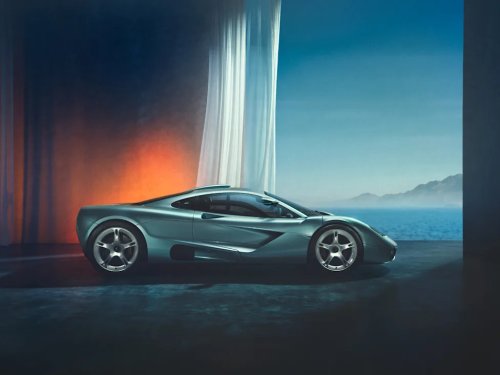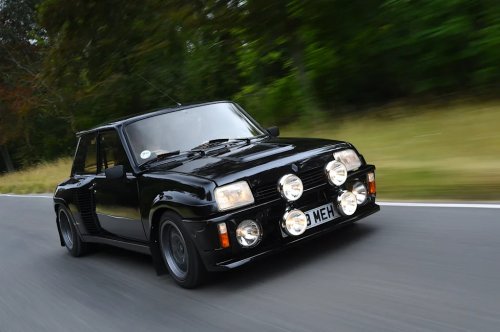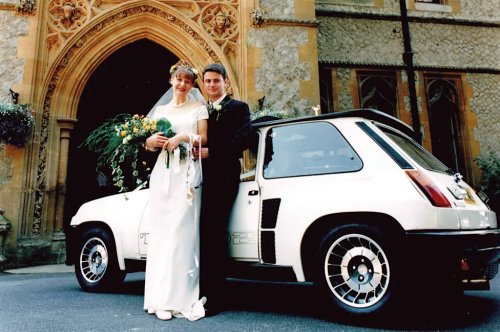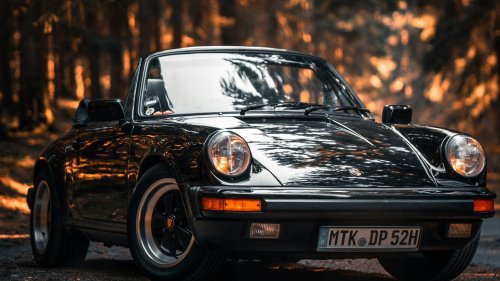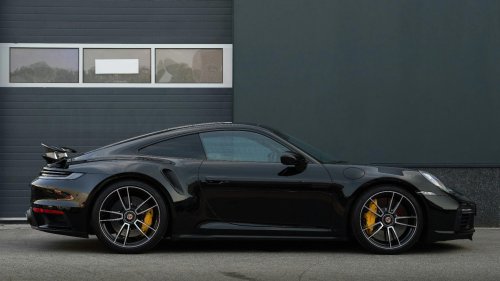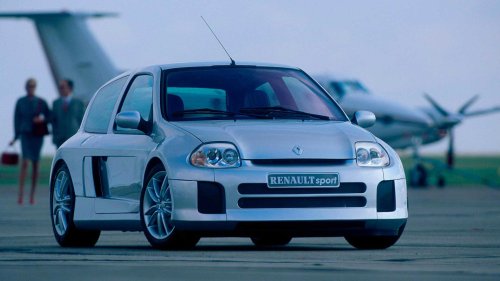
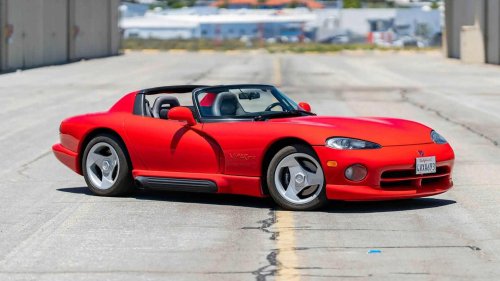
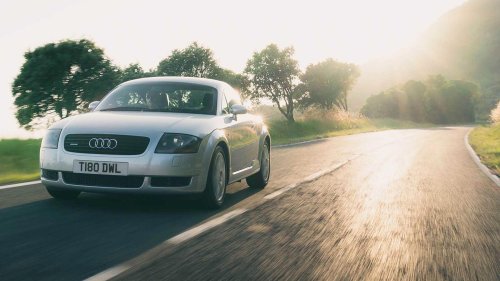
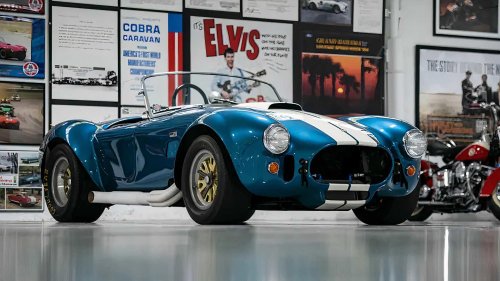

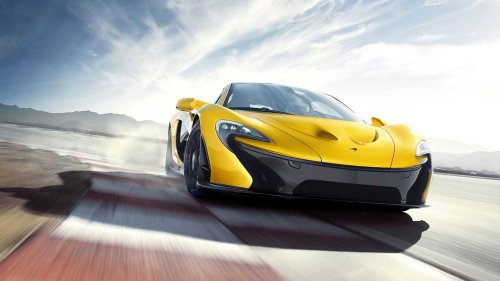
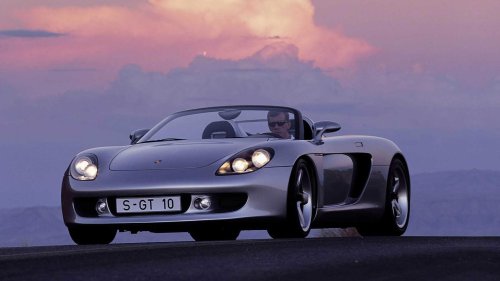
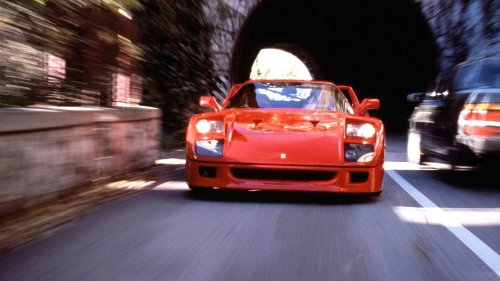
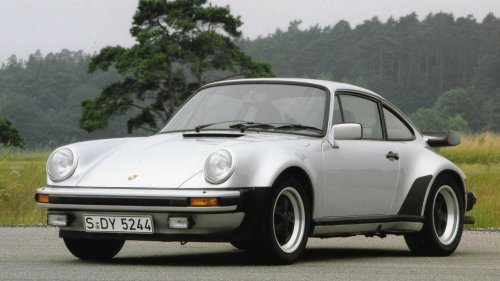



















Sometimes, a car is more than just a car. It is so special that words can hardly describe the driving experience. The sounds, the pops, the bangs, the gear changes, the power, the engine screaming to a red line that presides in a realm no ordinary production car could ever replicate. A car so highly strung that it requires a deft and experienced hand to extract the best from it.A car like the Porsche 930 Turbo, which started life as a homologation special, featuring technology straight from the CanAm racing series. But also a car that wants to wreck around every second corner if you don't keep close tabs on it.This is the realm of the really great driver's cars. The ones that – after you've driven them hard and lived to tell a tale – will be etched into your memory and sensory banks forever.We take a closer look at amazing cars that also have a bad rap when it comes to wrecking if an unweary driver starts pushing on. Renault Clio V6 Phase 1 The Vices: Short Wheelbase, A V6 Engine Behind The Seats, A Light Front-End, No Traction Control 2001 Renault Clio V6 front, three-quarter Renault's R5 Turbo, with its rear-mounted, turbocharged 1.4-liter engine is an iconic machine and a proven motorsport winner. In 2000, the Renault marketing team came up with the idea to relive some of the Turbo's glory days by installing a 230-hp V6 in the back of a tiny Clio hatch. It was, to be fair, utterly flawed. With the short wheel-base, and all the weight near the rear axle and no weight at the front, many cars were lost in crashes, the V6's tail overtaking the nose in fast sweeps, with snap oversteer. With no traction control in the game, the Clio V6 did not take kindly to wet roads either.As flawed as it is, it is also absolutely amazing. The wide body, the sound of the V6 engine screaming behind your head, the minimalist interior... it is so cool. Just mind the corners if you intend to tackle them at speed. Dodge Viper RT10 The Vice: A 400-Hp V10 Engine, A Tricky Rear Suspension Set-Up... And No Driving Aids 1993 Dodge Viper RT10 front, three-quarterThe Dodge Viper made its debut in 1992, and came with an eight-liter V10 engine that was a joint development between Chrysler and Lamborghini engineers (Chrysler owned Lamborghini at the time). It has a tubular steel frame and lightweight fiberglass body panels, a 400-hp engine, and no traction control, ABS or even airbags.The result was a supercar that could do 0-60 mph in less than five seconds, that also got really tricky to drive at higher speeds, with the tail doing its best to overtake the front end. It required an experienced driver to extract the best from the first-generation Viper. Fiat S76 The Vice: A Massive Engine With Four (Narrow) Tires Attached To It 1910 Fiat S76 front, three-quarterIt is 1910. German auto company Mercedes-Benz has just set a new world speed record, and the board of Italian company Fiat is not pleased. So it puts together a team to create a bespoke new car to break the world speed record. To do this, the engineers used a 14.2-liter Grand Prix engine as a blueprint... and doubled the size of everything in the engine. The result was a 28.4-liter engine producing 300 hp.With 2,000 lb-ft of torque channeled through two skinny rear tires, it was a handful to drive. So much so that Fiat's regular test driver, a professional racing driver, had one short go in it, and then refused to drive it any further. Fiat recruited another racing driver, who eventually did (unofficially) break the land speed record, reaching just over 132 mph in the car nick-named 'The Beast of Turin.' Audi TT The Vices: Loss Of Rear Downforce And Traction Above 110 Mph 1999 Audi TT Coupe front, three-quarterAudi launched its flashy TT in 1998. Folks raved about the cool new design, but when the first driving reviews (accompanied by a number of accident reports) started rolling in, it was clear something was amiss. Powered by a 1.8-liter, turbocharged four-cylinder engine with 180 hp, and based on the same platform as the Volkswagen Golf and Audi A3, the TT displayed some worrying handling traits. High-speed corners seemed to be its nemesis. At speeds higher than 110 mph, the tail seemed to lose downforce, and the rear wheels lost traction, with the potential for big accidents (and there were a few).Audi soon rectified the matter with a major recall. It revised the rear suspension set-up, dialed in more understeer at the front, added a small rear spoiler to aid downforce, and included a new electronic stability system. AC Shelby Cobra 427 Semi-Competition The Vices: Big Power And Torque, Combined With Edgy Handling. And No Safety Systems 1965 Shelby Cobra 427 S/C front, three-quarterIn the Shelby Cobra 427 S/C, the equation is simple: a seven-liter V8 producing up to 485 hp in the racing version, combined with 2,300 lbs of car. The result is a frighteningly quick sports car, able to achieve a top speed of 185 mph. The power and the bucket loads of torque are sent to the rear wheels via a four-speed manual gearbox.The 427 came with an updated chassis that included coil springs all-round... a major upgrade over the previous models' transverse leaf spring set-up. With all that grunt in such a light body, and with no driving aids, the Cobra can be a real handful when the driver chases the seven-liter V8 to the red line. It's a glorious thing, either way. Noble M400 The Vices: Big Power, Big Turbo Lag... And Zero Driving Aids 2005 Noble M400 front, three-quarterThe Noble M400 follows a simple recipe of low weight (2,500 lbs) and big power (425 hp). This results in a 400-hp per ton power-to-weight ratio. It is powered by a three-liter Ford V6 engine, with two massive Garrett turbochargers. A six-speed manual gearbox sends the power to the rear wheels. It has no driving aids. Not even ABS brakes. On a racetrack, like most of the cars on this list, the Noble is a speed merchant of note, providing excellent feedback and handling, with a racing driver able to extract some rapid lap times.On a public road it becomes a bit of a liability. With bags of turbo lag, and no electronic driver aids, it can get really tricky on a slippery road. Daily driver? Not so much, no, except if you like to often inspect the shrubbery next to the road. McLaren P1 The Vices: Edgy Handling, Linked To High-Tech Aerodynamics, Combined With 903 HP 2014 McLaren P1 frontMcLaren's mad P1 made its debut in 2013. It was one of the world's first true hypercars, powered by a hybrid system that produces 903 hp. This is achieved by combining a twin-turbocharged, 3.8-liter V8 and an electric motor, sending the power to the rear wheels via a seven-speed dual-clutch gearbox. It is blisteringly fast, and will do 217 mph. It also features a raft of aerodyamic aids, including Formula One tricks like a Drag Reduction System (DRS) and RaceActive Chassis Control (RCC).With the 903 hp and all the aero tricks, the P1 is a track weapon. It can also be really tricky to drive near the limits, with all the aerodynamic and chassis aids in the game. Switch the aids off... well, then your last name best be Norris or Piastri. On the road, it is best to steer clear of any grip or speed limits in a P1. Porsche Carrera GT The Vices: Big Power, Really Edgy Handling At The Limits 2004 Porsche Carrera GT front, three-quarterThe Porsche Carrera GT came about in a rather unusual way. In the 1990s, Porsche developed a new V10 engine to possibly have a go in Formula One. After that F1 project was scrapped, it was to be used for endurance racing, but that also didn't materialize. Finally, Porsche decided to build a new sports car, powered by the race-derived 5.7-liter V10. Producing 600 hp, and revving to more than 8,000 rpm, it seemed to be the ultimate Porsche. And for many it was, and still is. However, the GT had a darker side. At higher speeds, it proved to be a handful, even for experienced drivers.Even with traction control activated, it needs a deft right foot. With traction control off, and with a pro driver behind the wheel, the car –described by some as the ultimate Porsche – is an absolute rocket ship. Ferrari F40 The Vices: An Edgy Racing Car In Road Trim, With Lots Of Turbo Lag. And No Driver Aids 1987 Ferrari F40 frontSome say the F40 is still the best car to ever drive out of Ferrari's Maranello factory. And with good reason. It really is a racing car under the skin, with a double wishbone set-up all-round. It has a tubular steel chassis, and the body is made from Kevlar, carbon fiber and aluminum, and it has a polycarbonate plastic windshield and windows. The cabin is a barren affair. In this Ferrari, it is all about the driving experience. The 2.9-liter V8, with two turbochargers, delivers 477 hp and drives the rear wheels, and there are no driving aids whatsoever.The result? A brilliant production car, and the fastest in the world in the late 80s. But also a car that needed an experienced hand to keep it in check. With bags of turbo lag, and no driver aid, the F40 can be a real handful, especially to the uninitiated. Porsche 930 Turbo The Vices: Turbo Lag And Tail-Happy. And No Driver Aids 1977 Porsche 930 Turbo front, three-quarterIn the 70s, the Porsche's 930 Turbo was essentially the homologation special for Porsche's 930 CanAm racing car, which is based on the 911. The 930 Turbo has long gear ratios, the single turbocharger has a lot of lag and, with no driving aids, if that turbo suddenly kicks in when you are halfway through a fast corner... well, things get spicy. With a tail that is already eager to swap ends with the front-end, the 930 has to be driven with all due diligence and respect.Later versions, powered by an improved 3.3-liter turbocharged flat-six, are said to be less widow maker-ish, but they were still a handful. With its iconic whale-tail, the 930 Turbo is nevertheless a true icon of the sports car genre.