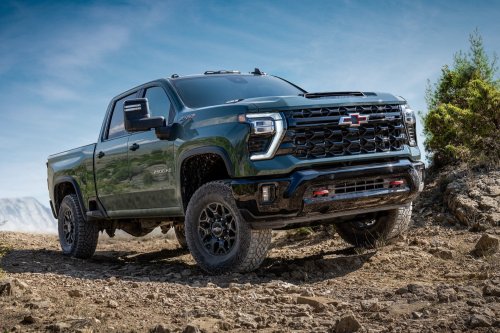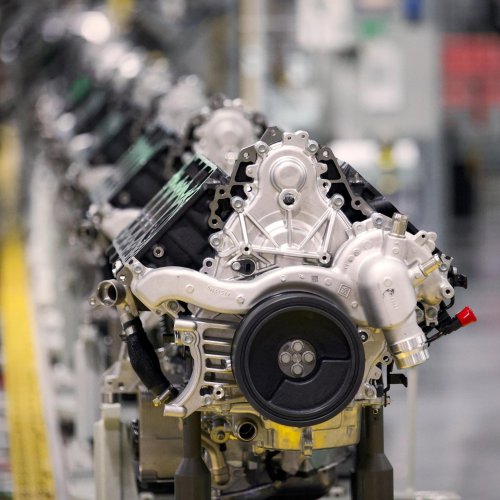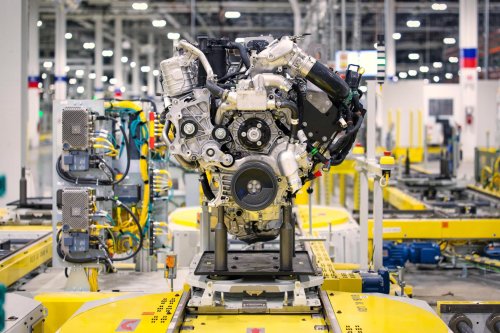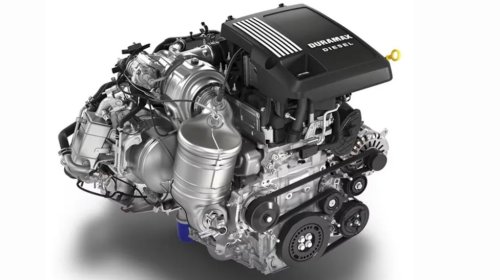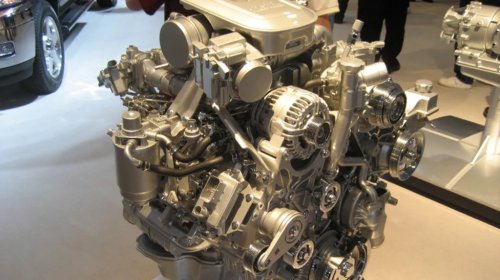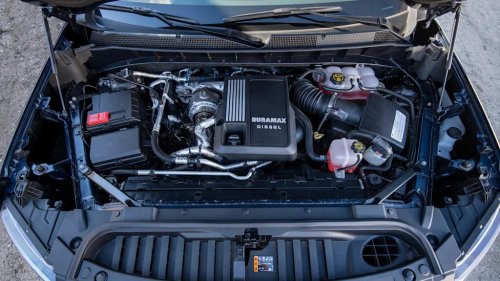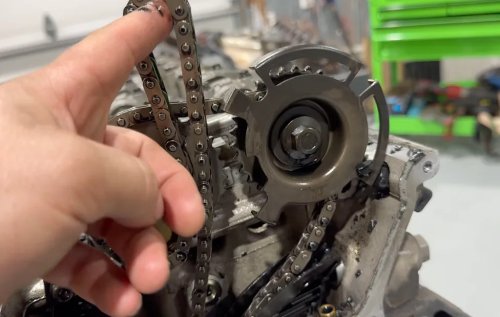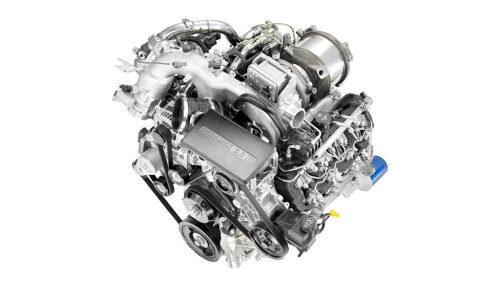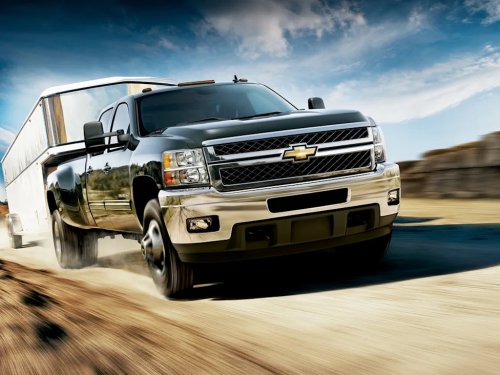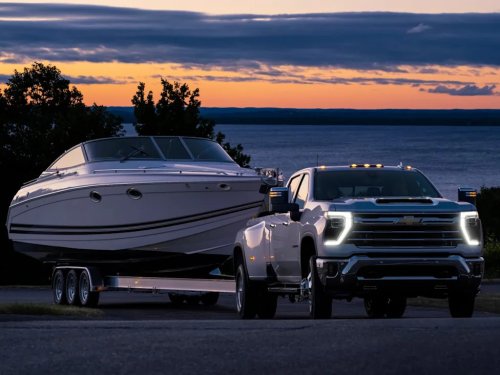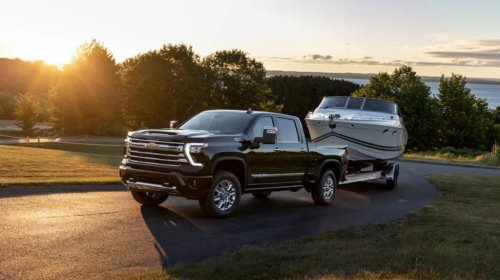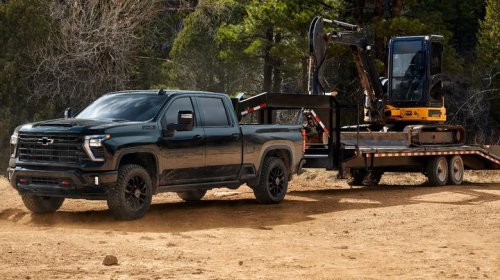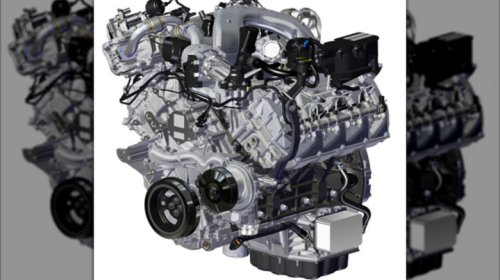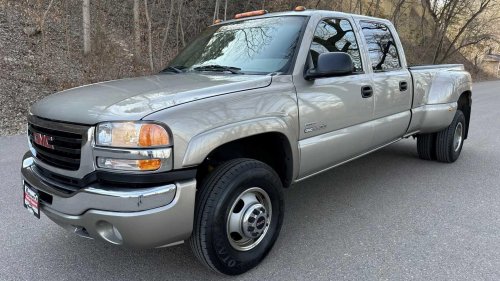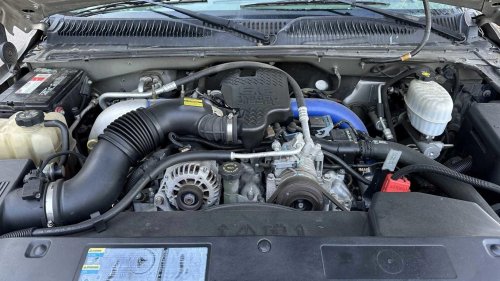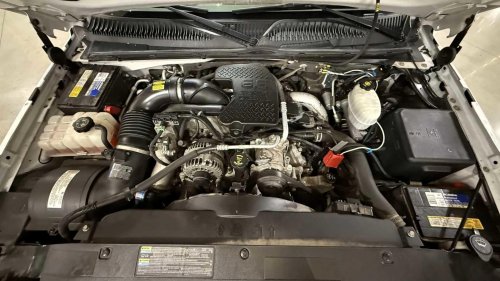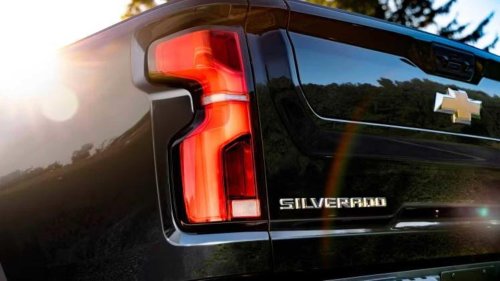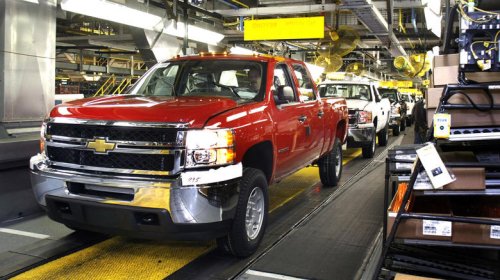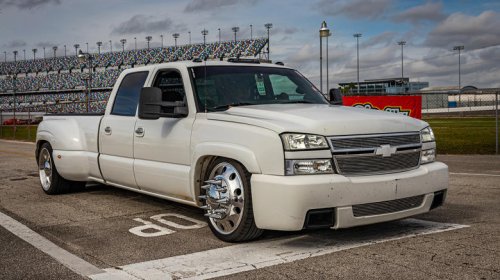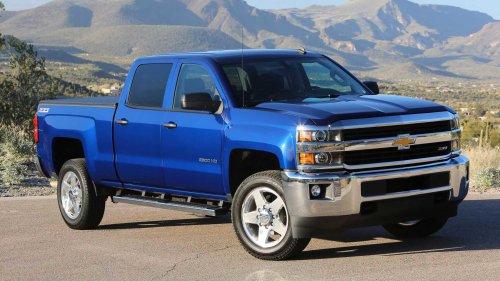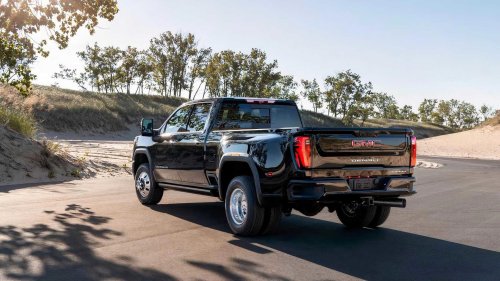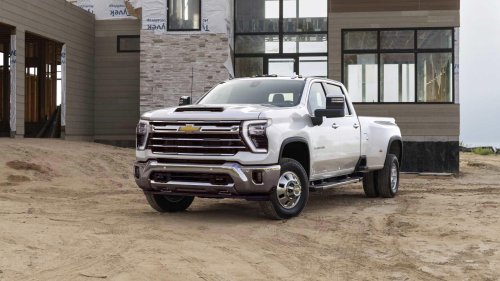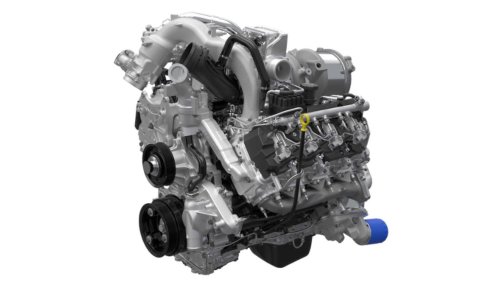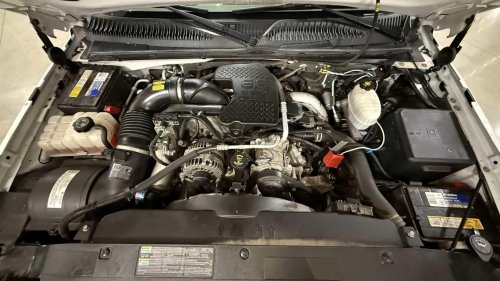
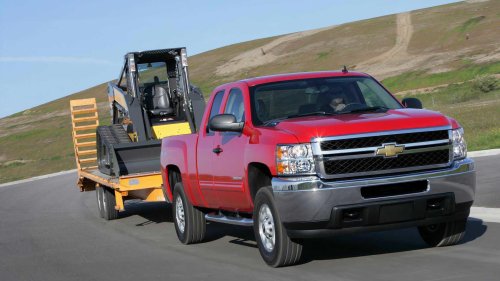
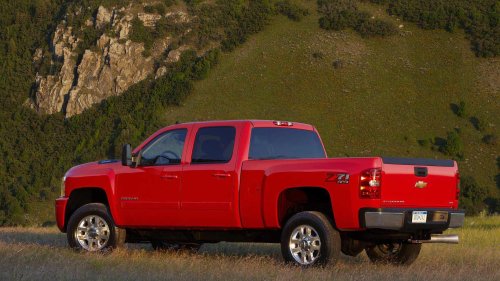
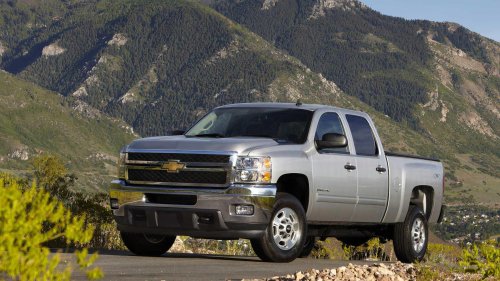
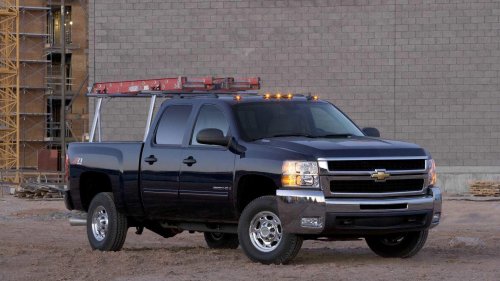
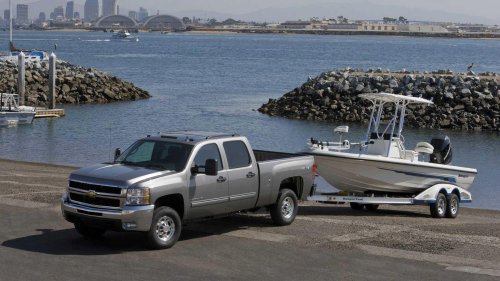



















"I daily my LBZ. Has 314k and tows my 5th wheel." So says a user in the r/Duramax community on Reddit. Another user adds "LBZ all day if you just want a good reliable truck." and a third states "I had an LBZ as my daily driver for a little over a year and It was a ton of fun to drive. When I did tow it pulled like a champ."Just about the only negative thing anyone will say of the Duramax LBZ found in the 2006 and 2007 Chevrolet Silverado is that it can be a little overpriced. Even so, you'll be hard-pressed to find anyone who regrets the purchase, and the high cost has a lot to do with the strong demand for the engine. For many drivers, this is the gold standard in diesel-powered truck engines. Here's why. The LBZ Is Considered The "Sweet Spot" For The Duramax Line Bring A Trailer The Duramax LBZ is prized among diesel drivers in large part for its production timeline. That is, Diesel Particulate Filters were standardized in 2007, owing to increasingly strict emissions regulation. Diesel engines produced after this point pack DPFs that are prone to clogging.Meanwhile, the Duramax LBZ, specifically the VIN D models, first hit the market in 2006, five years into the Duramax era, meaning that it had five years of technological development behind it. It benefited from upgrades like improved computer tuning and a reinforced engine block, and it was the most powerful of the line, at that point, at 310 horsepower and 605 lb-ft of torque.In short, this was the most advanced Duramax V8, right up to the point where further advancements started to have an adverse effect on dependability. It doesn't hurt that the LBZ is compatible with the Allison 1000 six-speed automatic transmission, either. Not Super Rare, Just Super Good Chevrolet The LBZ's status as a holy grail of diesel engines has nothing to do with its scarcity. The DMAX plant chruned out perhaps as many as 350,000 of these engines over a two-year run. And yet, the powerplant sells for as much as $28,500 and up, if you can find one still in its crate. Some truck owners will tell you that the LBZ isn't quite worth it "at that price," but, if money is no object, there's no reason to even consider another Duramax.Comparing the engine to its predecessor, the LB7, and its successor, the LMM, here's how it stacks up.On paper, the LMM looks like an obvious upgrade to the LBZ, packing on an extra 55 horses of power and 55 lb-ft of torque. In practice, the LMM was the first generation with a DPF, and you'll have a hard time finding any Duramax fan who will gladly take an LMM over an LBZ.In fact, it's easy to find Duramax LMMs selling for about half the price of an LBZ in the same condition. Again, this has nothing to do with scarcity, and everything to do with desirability. Comparing the LBZ to the LML and the L5P only confirms the engine's place as the crown jewel of the Duramax V8 lineup. Perhaps not in terms of output, but output isn't everything here.Again, on paper, we see that the LML and the L5P both outperform the LBZ. But, they were both built after the standardization of DPFs, meaning that many truck fans avoid these engines, or, at least, they don't go out of their way to seek them out. Are DPFs Really That Problematic? Chevrolet As one driver puts it in the Duramax Forum, "At some point, under normal wear and tear, the DPF gets plugged up because not all the particles get cleaned out during regens." Regens meaning the self-cleaning process used to blast accumulated soot off of the DPF. This user also states that "Regens suck and waste fuel just to clean out the DPF." We won't name names or vouch for the legality of removing your DPF, but it's not an uncommon practice, with drivers who've deleted this part reporting better fuel economy and no more worries about clogged filters.Deleting your DPF without a tuner will only result in your engine going into limp mode, so you absolutely need a tuner if you're going to remove the part. Not that we condone it. But, hypothetically speaking, you can't just go at it with a torque wrench and a screwdriver. DPF Duramaxes Are Reliable, But LBZs Are Unkillable Chevrolet Duramaxes in general are some of the most dependable engines on the planet, but the LBZ in particular is special. It's not uncommon to read of drivers hitting 300,000 miles and up with nothing but basic maintenance. The highest mileage we can turn up for this engine belongs to a 2006 Chevrolet Silverado with an incredible 1,197,524 miles on the powertrain, as of last summer, when YouTube channel @TruckMaster ran a video on the pickup.And yet, the odometer read less than 198,000 at the time this video was released. The truck's owner, Roger, states that the odometer actually glitched out at 999,999 miles, and he had to take it into the dealer to have the meter reset. It's like Y2K all over again. Roger bought the truck in 2017 with 142,000 miles on the odometer, and immediately got to doubling, tripling, quadrupling that number several times over, hauling Airstream travel trailers around the country.The owner attributes the engine's longevity to regular maintenance, using AMSOIL synthetic oil, and treating it to regular oil analysis to make sure everything's tip-top. He also claims that keeping the engine stock has helped him to get a lot of miles out of it. No tuning, no aftermarket parts, no nothing.At 70 years old (as of last June), Roger stated that he was planning to retire from his trailer delivery job when the truck Watch Out For Water Pump Failure Chevrolet The LBZ offers drivers very little to worry about, but no engine is without its issues. LBZ owners report failed water pumps, as the plastic components can become brittle and crack with age. Engine wiring harnesses are known to chafe, and transmission cooler lines can crimp near the radiator, leaking transmission fluid. Really, there's nothing here to worry about except for the stuff you'd expect to replace in a 20-year-old truck engine, and none of these fixes should cost more than $1,300 each, according to RepairPal.When it comes to total engine failure, the only real concern is cracked pistons, which happens almost exclusively in modified trucks, as the cast aluminum pistons aren't really built for the kind of horsepower hot-rodders are pulling out of these engines. Modifying An LBZ (If You Must) Chevrolet If you want to sell your LBZ off at some point, keep it stock. If you want to put half a million miles on it, keep it stock. If you want to build a 500-horsepower monster out of an LBZ, you can upgrade the injectors, add some reinforced forged pistons, and pick up a tuner pack like the EFI Live Tune kit for $250.Our advice? Keep it stock. There are easier, and cheaper engines to hot-rod. The LBZ's appeal has to do with its workhorse capability, and its incredible longevity. You don't need tuners and upgraded injectors for that, just regular oil changes and a bit of preventive maintenance.