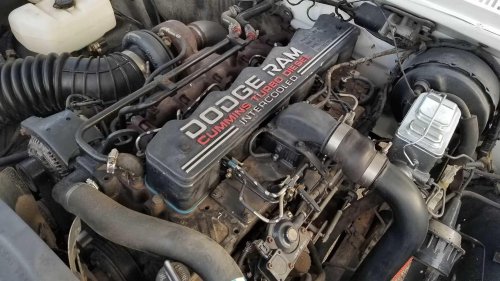



















Why older diesel trucks remain controversial among regulatorsOlder diesel trucks sit at the center of a policy fight that touches public health, climate goals, and the economics of freight. Regulators see high-emitting engines as a lingering liability from an earlier era of pollution control, while owners often view them as durable assets that are simpler and cheaper to keep on the road than newer models. That tension keeps aging diesel fleets under intense scrutiny, even as governments promote zero-emission trucks and stricter air quality standards. The controversy is sharpened by the long service life of heavy-duty engines, which allows pre-2010 trucks to operate for decades after cleaner standards take effect. As newer vehicles add complex emissions hardware and diesel exhaust fluid systems, some drivers cling to older equipment or modify newer trucks to behave like the old ones, deepening the standoff with regulators tasked with enforcing national and state pollution rules. Why regulators focus on older diesel engines Regulators target older diesel trucks because they emit far more soot and nitrogen oxides than modern engines that meet current standards. A hazard identification study on tier 2 diesel exhaust notes that older diesel engines that are already in operation are “grandfathered in,” which means fleets can keep using equipment that would not be certified if it were built today. Public health agencies link those emissions to microscopic particles of soot that damage lungs and hearts, and to nitrogen oxides that form ground-level ozone, with particular concern in freight corridors and disadvantaged communities. Because heavy-duty diesel engines are built to last, regulators worry about a long tail of pollution from legacy fleets. Guidance for public entities in one state explains that although federal standards are in place for newer vehicles, the long service life of heavy-duty diesel engines creates a gap that retrofit laws attempt to close. That durability, combined with the grandfathering of tier 2 engines, keeps a significant number of high-emitting trucks in circulation and ensures that older diesel technology remains a regulatory priority long after new standards are written. California’s Truck and Bus rules and the pushback No state illustrates the clash over aging diesels more clearly than California, where the California Air Resources Board has spent years tightening rules on heavy-duty fleets. The agency’s Truck and Bus regulation has been in effect since December 2008 and, as of January 1, 2023, requires that all diesel-powered vehicles operating in the state be either 2010 model year or newer or equipped with a compliant emission system, with few exceptions. A related summary stresses that the Truck and Bus regulation applies to virtually every diesel truck and bus operating in California, meaning owners of pre-2010 engines must retrofit, repower, or retire those vehicles. Those requirements have triggered both compliance investments and political resistance. Reporting on enforcement explains that any person selling a vehicle subject to the Truck and Bus Regulation must provide a specific disclosure statement in writing to the buyer, a step intended to prevent unsuspecting purchasers from acquiring noncompliant trucks that cannot legally operate in the state. At the same time, online discussions by drivers describe how California restricted older trucks from hauling port loads and limited some operations to only a few thousand miles per year within the state, with critics arguing that such limits hurt small operators who rely on aging rigs to stay in business. California’s top air agency has also condemned federal efforts to allow high-polluting glider trucks on the road, warning that repealing the current caps on glider kit production would essentially allow a surge of vehicles that lack controls to limit smog-forming nitrogen oxides, undercutting state programs built around the Truck and Bus rules. National swings between deregulation and stricter enforcement At the federal level, policy toward diesel emissions has shifted between more aggressive control and high-profile attempts at deregulation. The Environmental Protection Agency has described one recent initiative as the largest deregulatory action in United States history, including ending the so-called Good Neighbor Plan that the Biden-Harris Administration had used to expand federal air quality rules to more states and sectors. In the same package, the agency detailed changes to State Implementation Plans and Tribal Implementation Plans, including provisions for exceptional events that can affect how air quality violations are counted, underscoring that national oversight of diesel pollution is intertwined with broader Clean Air Act policy. Even as those rollbacks proceed, federal regulators have tightened their grip on specific technologies that keep newer diesels cleaner. The Environmental Protection Agency has highlighted steps by Administrator Zeldin to address problems with diesel exhaust fluid, describing additional measures to respond to diesel exhaust fluid issues that affect both truck owners and emissions performance. Technical reporting on diesel exhaust systems explains that diesel exhaust fluid changes have made modern systems more complex, with multiple subsystems required to keep exhaust within legal limits. That complexity fuels nostalgia for older trucks that do not rely on DEF and selective catalytic reduction, and it feeds a gray market in emissions tampering that federal agencies and state partners try to police through complaint portals such as report environmental violations and rulemaking dockets on regulations. Diesel deletes, legal confusion, and the future of the fleet One of the most contentious flashpoints involves “diesel deletes,” in which owners remove or bypass emissions equipment on newer trucks in order to mimic the simplicity of older models. A recent account of federal enforcement policy reported that the Department of Justice would no longer pursue criminal charges against certain diesel delete shops and tuners, summarizing the announcement as stating that the DOJ will not pursue criminal cases against some diesel delete businesses. A companion discussion, framed as an explanation of why the DOJ did not legalize diesel deletes, stresses that civil penalties and Environmental Protection Agency enforcement remain in place, which means that tampering with emissions controls is still illegal even if the criminal posture has shifted. More from Fast Lane Only Unboxing the WWII Jeep in a Crate 15 rare Chevys collectors are quietly buying 10 underrated V8s still worth hunting down Police notice this before you even roll window down