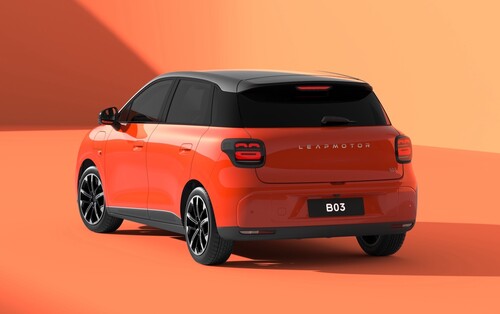
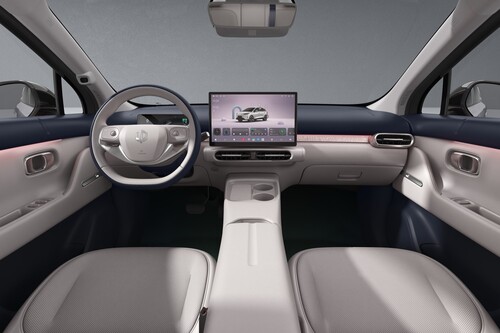
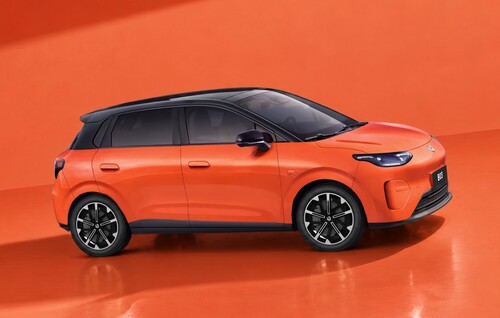
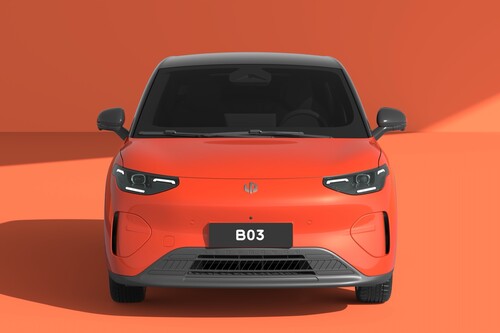
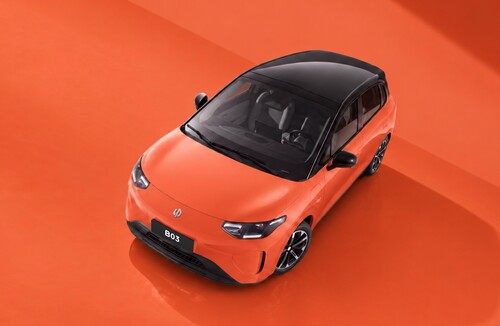
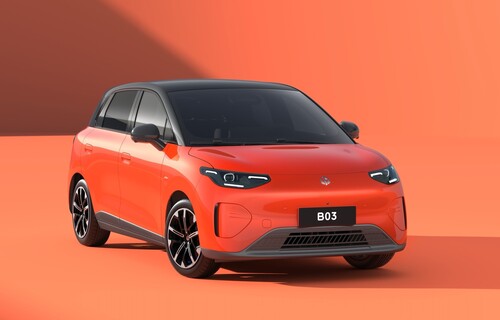
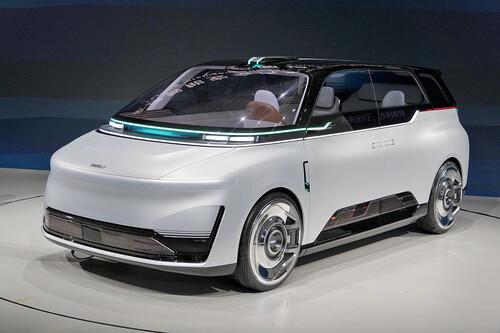
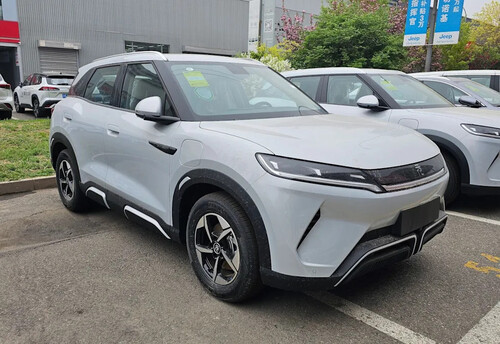
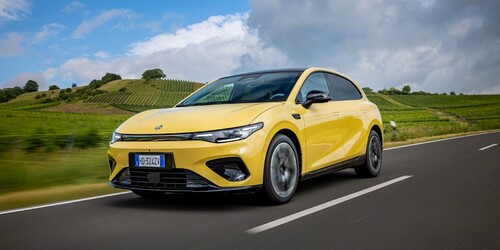
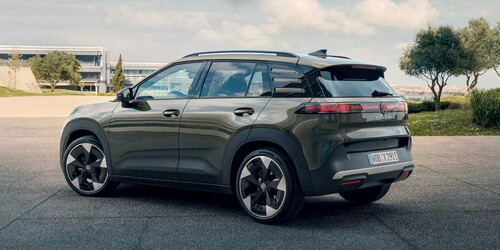
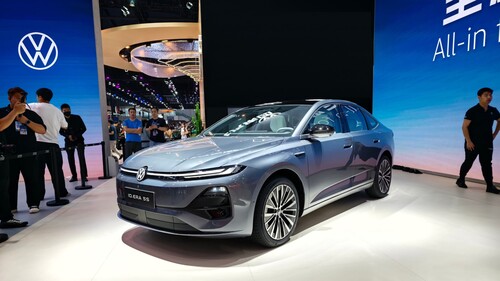
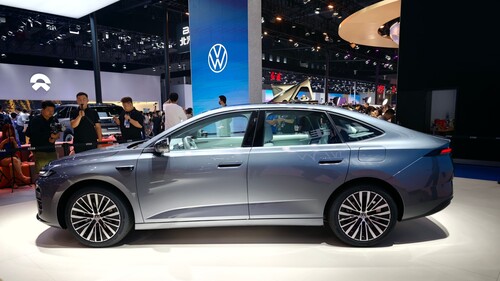
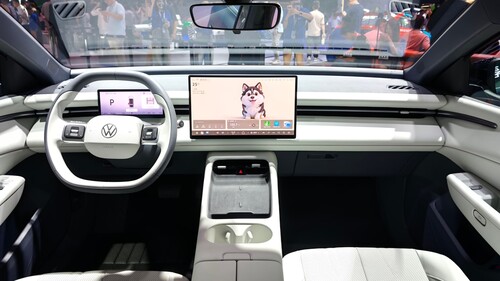
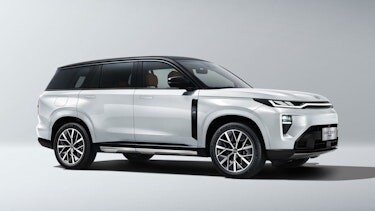
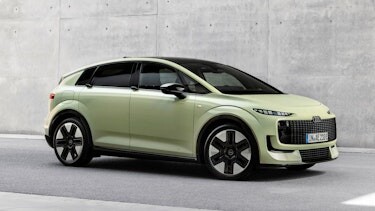
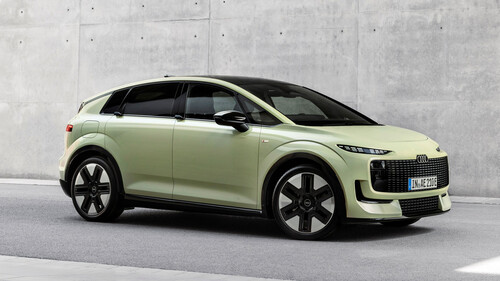
Gasgoo Munich- Seres-backed Saidou Tech recently unveiled a new automotive brand, with its debut crossover set to hit the market later this year. Available in both pure electric and range-extender powertrains, the vehicle's in-car interaction will be powered by the Doubao large model from ByteDance's Volcano Engine.This marks a landmark case of deep integration between the automotive and AI sectors. ByteDance issued a statement emphasizing it has "no plans to build cars or launch an automotive brand," clarifying that Saidou serves merely as a vessel for applying Doubao's technology within the car cabin.That detail reveals a fundamental truth about the industry today: AI giants don't need to manufacture vehicles themselves to become the core of future mobility. As large models become the brain of the smart cockpit, and autonomous driving shifts from rule-based to data-driven systems, cars are evolving from simple transport tools into intelligent agents capable of perception, decision-making, and execution.Why are AI companies so eager to partner with automakers? The answer lies in a mutual value reconstruction. On one hand, AI needs real-world scenarios, and the automobile offers a perfect carrier defined by scale, high frequency, necessity, and complex data. On the other, carmakers urgently need AI to break through the ceiling of "software-defined vehicles" and enter a new phase where AI defines the car. Their collaboration has evolved from a simple buyer-seller relationship into an ecosystem marriage of shared interests.Who's Getting Behind the Wheel?The current deep convergence of AI and automotive technology is centering on two core battlegrounds: the smart cockpit and intelligent driving.Start with Doubao. ByteDance's Volcano Engine model is now one of the most widely deployed AI models in the industry. BYD has integrated it into its DiLink smart cockpit system, covering all models on sale across its Yangwang, Denza, Fangchengbao, Dynasty, and Ocean series.Mercedes-Benz has struck a strategic partnership with ByteDance to deeply integrate the Doubao model into the all-electric CLA and GLC, launching an AI virtual assistant capable of understanding vague commands and interacting in authentic dialects.The SAIC Roewe M7 DMH is the first to feature Doubao's "deep thinking" model, offering fuzzy semantic understanding across 15 scenarios, multi-round dialogue memory, and linkage with over 300 vehicle control functions.Additionally, the MG 4X utilizes the Doubao 3.0 model paired with four-zone voice recognition, while Saidou Tech's debut crossover has also selected the Doubao model as the core of its cockpit.Then there's Yuanbao. Tencent has long targeted the mobility sector, and in 2026, it launched an "open platform for full-scenario mobility intelligent agents." By integrating Yuanbao search, WeChat Pay, and spatial intelligence, it built agents for seven core scenarios, including on-the-go ordering and guidance. In terms of deep AI collaboration, Tencent has already partnered with over 40 automakers, including Changan, SAIC, and GAC.Image Source: TencentThe "onboarding" wave sparked by DeepSeek in early 2025 was even more intense. Within days, more than 20 automakers—including Geely, BYD, Chery, Dongfeng, Changan, and FAW-Volkswagen—announced plans to integrate DeepSeek models.The VOYAH Courage became the first mass-produced model in the industry to fuse DeepSeek; the Dongfeng M-Hero 917 has completed integration with the DeepSeek-R1 model; and Geely has deeply merged its self-developed Xingrui model with DeepSeek-R1, enabling the AI system to precisely understand vague intent and accurately access around 2,000 vehicle interfaces.In these two core fields, this fusion is shifting from marketing gimmick to genuine capability.In the smart cockpit, large models are reshaping the nature of human-car interaction. Traditional voice assistants could only execute fixed commands, but today's AI-powered cockpits achieve fuzzy semantic understanding and proactive service. For instance, when a user says "I'm a bit cold," the system not only raises the climate control temperature but also automatically activates seat heating.2025 is viewed as year one for large models "boarding" vehicles, while 2026 is expected to see the mass production and application of more entry-level agents within car cockpits.In intelligent driving, a fundamental paradigm shift is underway. Li Auto has achieved a technological leap from end-to-end to generative AI with the rollout of the world's first VLA driver model, pushing the monthly usage rate of assisted driving to 80%. XPENG is similarly advancing its second-generation VLA driving system and deep cross-domain fusion with VLM models. Momenta, for its part, launched the R7 world model for mass production, and 9 of the world's top 10 automakers are working with it to deploy driving technologies.Why AI Favors AutomakersThe affinity between AI companies and automakers is no accident; it is the result of multiple rational considerations stacking up.First is the necessity of scale. The core commercialization challenge for AI large models isn't the technology itself, but finding large-scale, high-frequency, closed-loop application scenarios. The automobile provides exactly that: a global installed base of hundreds of millions, daily usage lasting hours, and massive amounts of multimodal data generated in the real physical world.Dowson Tong, Tencent's senior executive vice president, stated clearly: "In the vast opportunity of automotive intelligence, Tencent's entry point is AI." Tencent isn't building cars; it positions itself as a "digital assistant for the automotive industry's upgrade."Second is the logic of mutual empowerment. For AI firms, the car is the best gateway for AI to step out of the virtual world and into the physical one—an embodied robot on wheels. When a large model can directly control the steering wheel, brakes, and accelerator, AI evolves from being able to chat to being able to work. This explains why ByteDance, Tencent, and DeepSeek are all scrambling to secure their ticket to the automotive sector.Conversely, for automakers, AI technology has become the decisive factor in the second half of the intelligent competition. The traditional market dynamic was "big fish eat small fish," relying on economies of scale. But under the wave of intelligence, the speed of technical iteration has become the deciding factor, making "fast fish eat slow fish" the new norm.Image Source: IM MotorsA deeper driver lies in the shift from hardware-driven to data-driven vehicles, as the continuous evolution of AI models depends heavily on real-world data. Gaining access to automakers' vast user data means AI models can iteratively optimize in actual driving scenarios, building a protective moat of data. At the same time, as the car becomes the next trillion-level traffic and commercial gateway, whichever AI company secures this entry first will grasp the dominant power of the future mobility ecosystem.Meanwhile, the partnership model between the two sides is evolving from a simple buyer-seller relationship to a deeply bound ecosystem marriage.Early cooperation was mostly limited to technology authorization and procurement: AI companies provided algorithms or computing platforms, and automakers bought what they needed. But as intelligent competition intensifies, these loose ties no longer satisfy either side. In 2025, the industry's joint venture model shifted from "market for technology" to technology integration and ecosystem co-construction.The most typical case is Volkswagen's joint venture with Chinese AI chip giant Horizon Robotics, known as Carizon. With a registered capital of 900 million euros—Volkswagen holds 60% and Horizon 40%—this is not just a technical collaboration but a capital bond and strategic alignment, marking Volkswagen's shift from simple technology import to deep localized cooperation.In the domestic market, similar deep synergy is accelerating. At its 2025 Tech Day, GAC Toyota proposed the concept of a "top-tier partner circle," no longer positioning itself as a mere client but as a member of the AI ecosystem. It is integrating Momenta's intelligent driving, Huawei's HarmonyOS cockpit, and Xiaomi's human-car-home ecosystem.What does this evolution mean? It means AI companies are upgrading from software vendors to ecosystem co-creators who share risks and rewards with automakers. The future of automotive competition will no longer be a battle between brands, but a contest between "AI ecosystems."Looking back from the threshold of 2026, the deep binding of AI and automakers is no longer an option but a mandatory answer. Each side takes what it needs, yet they have created a new battlefield worth billions. And when AI truly becomes the soul of the car—the brain behind the steering wheel—that may well be the central storyline of the automotive industry's next century.