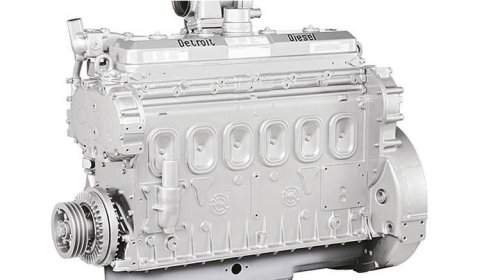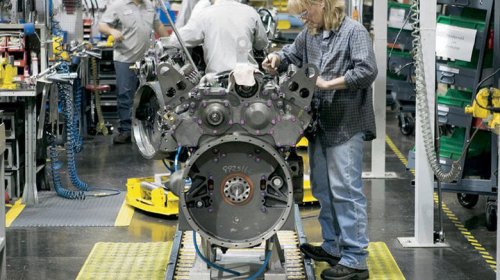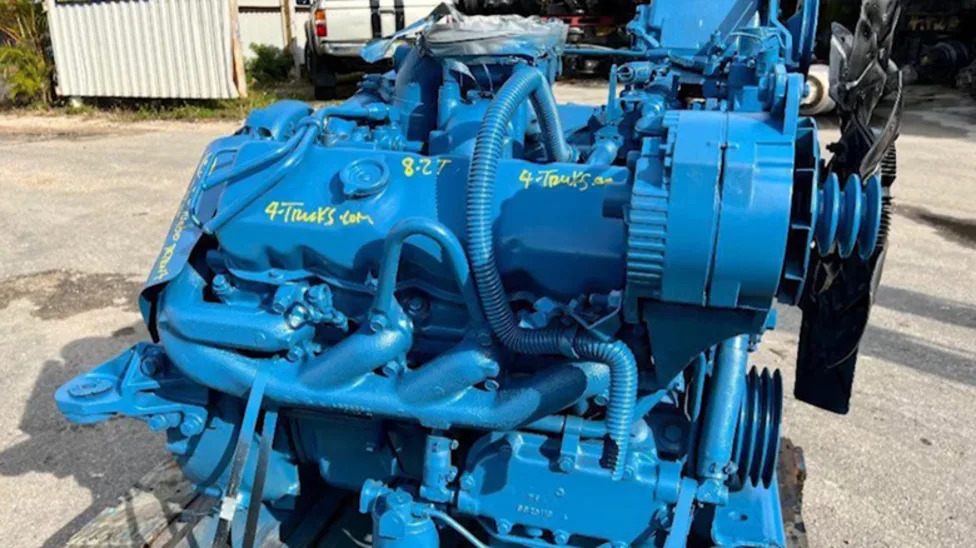



















Engine Legends/YouTubeFounded in 1938, the Detroit Diesel Company has built diesel engines that became some of the most popular and iconic in the industry. That includes the "Fuel Pincher," an 8.2-liter V8 that was first introduced in the late 1970s. Unlike other diesel engines, the Fuel Pincher didn't solely focus on power output and it also wasn't as big as a conventional heavy-duty diesel. But that's not what made it special, as this engine was designed with other priorities in mind.The Fuel Pincher earned its nickname because it was developed to give medium-duty trucks a more economical alternative to gasoline power. In fact, it used several design choices aimed at reducing fuel consumption, including a unit-injection system that provided precise control over fuel delivery. Additionally, the combustion chamber and other components were designed around more efficient combustion. The engine block itself used freestanding cylinder walls and a skirtless design to reduce weight and noise, while aluminum-alloy pistons helped with both noise and combustion.Because of its design, the Fuel Pincher had a different place than the larger truck engines in Detroit Diesel's lineup like the Series 60. This 8.2-liter was aimed specifically at drivers who might otherwise choose a gasoline engine for medium-duty tasks. The economical nature of the Fuel Pincher made it an attractive solution for buyers in that market who also didn't want to spend the higher costs associated with heavy-duty truck diesels. The fact that the Fuel Pincher was available through Chevrolet, Ford, and GMC also made it even more appealing and accessible.AdvertisementAdvertisementRead more: 12 Under-Powered Trucks With Disappointingly Weak EnginesGM's role in pushing the Fuel PincherJetcityimage/Getty ImagesGM once owned Detroit Diesel and played a role in marketing the Fuel Pincher engine as it became more readily available. The automaker held seminars for its sales organizations around 1980 that emphasized both fuel savings and return on investment. These presentations often included informational charts showing the engine's purchase price along with potential fuel and dollar savings versus other engines. GM believed that under certain conditions, the Fuel Pincher could deliver fuel-economy savings of up to 100% versus similar gasoline engines.The Fuel Pincher also came along at a time when diesel engines in medium-duty trucks were becoming more popular. In fact, Chevrolet began featuring the engine in its advertising for the 1980 model year, right next to the Caterpillar 3208 as one of the automaker's mid-range diesel options. The Fuel Pincher was available as a naturally aspirated or turbocharged option, which gave buyers more flexibility when choosing the truck that suited their needs.Detroit Diesel also offered substantial warranty coverage for the new Fuel Pincher of up to 2 years or 50,000 miles. This was a far better warranty than buyers would typically receive for a gasoline truck engine at the time. The company also promoted the Fuel Pincher's dependable operation, extended engine life, and reduced service costs. Combined with the engine's focus on improved fuel economy, that warranty helped the Fuel Pincher to become a more attractive option for truck buyers.AdvertisementAdvertisementWant the latest in tech and auto trends? Subscribe to our free newsletter for the latest headlines, expert guides, and how-to tips, one email at a time. You can also add us as a preferred search source on Google.Read the original article on SlashGear.