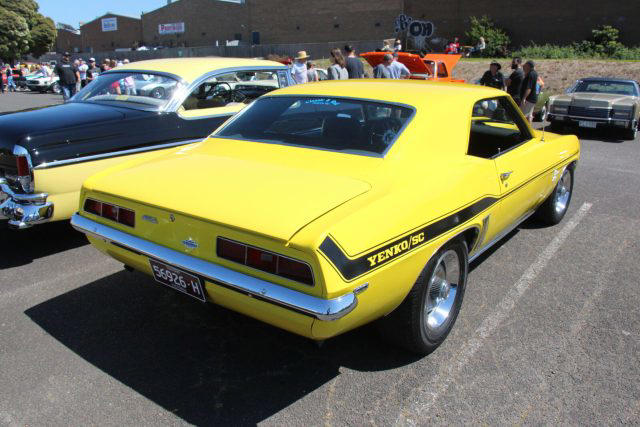
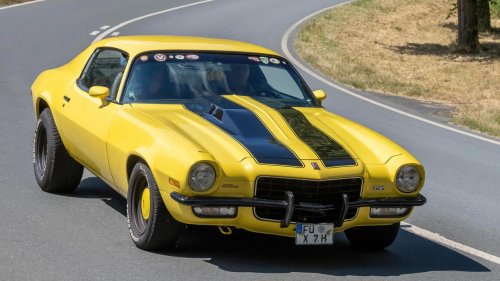
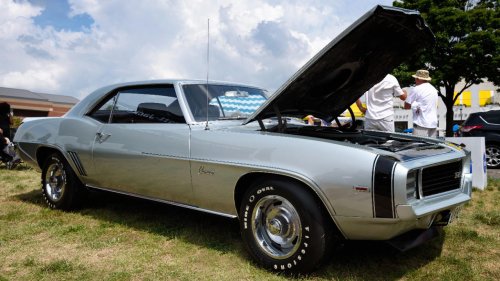
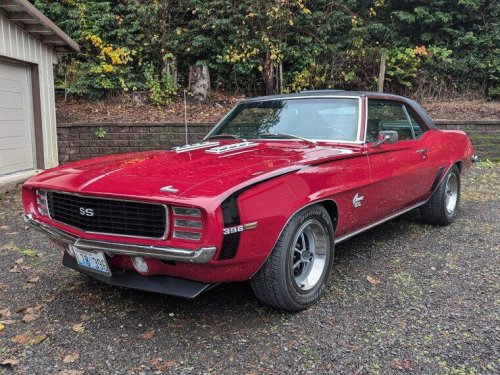
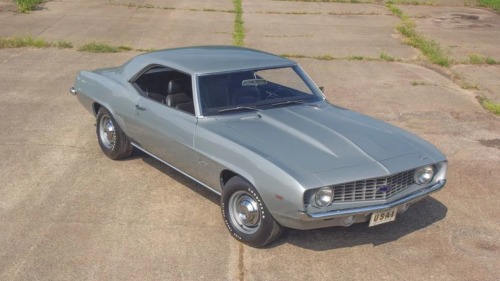
Detroit’s muscle car era was all about power, but corporate rules, regulations, insurance pressure, and divisional competition limited what automakers could offer. Engine and emissions restrictions also kept many cars from reaching their full potential. By the early 1970s, racers and muscle car builders discovered they could modify these cars for much greater performance. Chevrolet dealers provided the path to make it happen. Don Yenko, a Corvette racer, engineer, and Chevrolet dealer, saw the Camaro’s small-block limits and wanted more performance. With help from dealers like Fred Gibb, Yenko used Chevrolet’s Central Office Production Order system to get engine combinations restricted by corporate policy. The result was a modified Camaro powered by Chevrolet’s 427-cubic-inch L72 big-block. Officially rated at 425 horsepower, it made the lightweight F-body a serious street and drag-racing machine. Making it work required changes to the engine bay, driveline, cooling, and chassis. 1. Detroit’s Muscle Car Rules Created a Performance Ceiling Detroit’s muscle car era was driven by horsepower, but corporate rules limited what manufacturers could offer. General Motors capped intermediate and pony cars at 400 cubic inches, even though larger engines were available. Ford and Chrysler faced similar insurance, regulatory, and divisional pressures. Conservative cam profiles, restrictive exhausts, emissions-era carburetion, and gross horsepower ratings further limited performance. Factory cooling and suspension systems also struggled with sustained high-speed driving, leaving these cars fast in short bursts but restricted by corporate policies. Detroit’s Performance Restrictions: GM capped engines at 400ci Larger engines already existed Corporate rivalry limited performance Factory systems struggled under abuse Insurance pressures restricted horsepower This situation frustrated performance enthusiasts. While the muscle car era kept growing, there was still a gap between what manufacturers could build and what buyers wanted. Corporate restrictions and mechanical compromises kept extreme engine combinations out of production. This created opportunities for independent builders and dealers to work beyond factory specifications, combining available hardware in ways the engineering departments would not officially approve. That growing gap eventually led to one of the era’s most radical dealer-built muscle cars. “ 1969 Chevrolet Camaro Yenko COPO 9561 (45900420402) ” by Sicnag is licensed under CC BY 2.0 2. Don Yenko Saw the Camaro’s Untapped Potential By the early 1970s, racers and performance builders realized that factory muscle cars had untapped potential. Their engine bays could handle more power, and the chassis could take more abuse than officially acknowledged. Don Yenko, a Corvette racer, engineer, and Chevrolet dealer, saw the Camaro’s small-block limitations and wanted more performance. He used Chevrolet’s Central Office Production Order (COPO) system, working with dealers like Fred Gibb and other insiders to order engine combinations that GM did not normally offer. This special-order system allowed them to create much more radical combinations than standard factory configurations. The Dealer Performance Revolution: Yenko understood Camaro limitations Fred Gibb joined efforts COPO enabled unusual combinations Dealers bypassed factory restrictions Small-block limits were challenged Yenko’s approach was different from traditional factory engineering. Rather than modifying cars after delivery, he and other dealers used Chevrolet’s special-order system and inside knowledge to obtain combinations corporate policy normally excluded. Their goal was simple but ambitious: fit the lightweight Camaro with a much larger, more powerful engine. Since the car was designed for a smaller engine and lower torque, the swap required major mechanical changes. It became much more than a simple engine swap. 3. The 427 L72 Became the Heart of the Radical Swap The Camaro was fitted with Chevrolet’s 427-cubic-inch L72 big-block, officially rated at 425 horsepower but capable of around 450 horsepower in real-world conditions, according to the scrap data. It also produced over 450 lb-ft of torque at low RPMs. With iron cylinder heads, a solid-lifter cam, and a Holley 780 CFM carburetor, the L72 relied on proven mechanical technology rather than complicated systems. Its broad torque range helped it deliver strong, consistent performance. Inside the 427 L72: Engine displaced 427 cubic inches Official rating reached 425 horsepower Real output approached 450 horsepower Holley 780 CFM carburetor Broad torque powerband dominated The engine’s characteristics made the swap especially effective. Instead of relying on high RPMs, the L72 delivered strong torque early and through the midrange, giving the Camaro an immediate throttle response. Its large displacement, simple design, solid-lifter valvetrain, and large carburetor made the lightweight car very different from the factory version. With fewer systems between the engine and rear wheels, the 427 Camaro became known for strong, consistent performance without the complex induction and emissions systems found in other muscle cars. 4. Fitting the 427 Required Major Engine-Bay Modifications Swapping in the 427 big-block was far from a simple bolt-in job because the first-generation Camaro’s engine bay was not designed for such a large engine. Its greater size created clearance issues around the firewall and steering linkage. Mechanics had to modify the heater box, downsize the brake booster, and install custom engine mounts. Exhaust routing was also difficult, requiring carefully chosen headers to avoid contact with the frame and suspension. Custom oil pans were needed as well, making every part of the swap a challenge. Making the Big-Block Fit: Firewall clearance created problems Steering linkage restricted available space Heater boxes required major changes Custom mounts repositioned engine placement Tight headers avoided suspension interference The installation showed how much more complicated this project was than a typical engine swap. The Camaro’s compact engine bay had to fit an engine Chevrolet never intended for it under production rules. Mechanics had to modify the brake booster, heater equipment, engine mounts, exhaust routing, and oil pan. Tight-tube headers were especially important to avoid contact with the chassis and suspension. These changes created the foundation for the conversion, but installing the 427 was only the beginning, as its huge torque increase required further driveline and chassis modifications. 5. The Driveline Had to Survive More Than 450 Pound-Feet The 427’s massive torque created another challenge because the stock Camaro driveline was not built to handle repeated launches above 450 lb-ft. The dealer-built cars therefore used heavy-duty Muncie four-speed manuals or fortified Turbo Hydra-Matic automatics, along with upgraded clutches, hardened input shafts, and steel scattershields. The weak factory 10-bolt rear axle was replaced with a stronger 12-bolt unit and performance-oriented gearing. Traction bars and reinforced leaf springs also helped control axle wrap and transfer the engine’s huge torque to the ground. Building a Stronger Driveline: Stock driveline could not survive Heavy-duty transmissions handled torque Upgraded clutches improved durability 12-bolt rear ends replaced Traction bars-controlled axle wrap The reinforcement was essential because the 427’s power could overwhelm the rest of the car. Its huge torque increased the load on everything between the crankshaft and rear tires. Upgraded transmissions, clutches, input shafts, rear axles, and suspension helped turn that power into acceleration. The heavy-duty Muncie four-speed and fortified Turbo Hydra-Matic offered transmission choices, while the stronger 12-bolt axle replaced the original 10-bolt. Reinforced leaf springs and traction bars-controlled axle movement during launches. Without these upgrades, the engine’s power could destroy the driveline. 6. Cooling and Chassis Strength Became Essential The massive 427 engine created another major challenge: heat. It produced more heat than the stock cooling system could handle, especially at high RPM or in heavy traffic. Dealer-built cars therefore needed larger crossflow radiators, high-flow water pumps, and heavy-duty fan clutches to prevent overheating. The Camaro’s unibody also required reinforcement to handle the added loads and reduce cowl shake and structural fatigue. Subframe connectors improved torsional rigidity, while stiffer front springs and adjusted shocks helped keep the car stable during acceleration. Strengthening the Entire Camaro: Larger radiators-controlled temperatures High-flow pumps improved cooling Heavy-duty fan clutches assisted cooling Subframe connectors increased rigidity Stiffer springs settled acceleration These modifications showed how the 427-swap affected nearly every major system. More power meant more heat, while the added torque increased stress on the body and suspension. The cooling system needed larger radiators and high-flow components to handle the heat reliably. Subframe connectors strengthened the Camaro’s unibody and improved torsional rigidity, while stiffer springs and adjusted shocks helped control the car during acceleration. Together, these upgrades turned the project into a complete high-performance package rather than a simple engine swap. 7. Dyno Testing Revealed the 427’s Underrated Strength Once the 427 Camaro was installed and tested on a dyno, its true performance became clear. Tests produced 460 to 500 horsepower, well above the official 425-horsepower rating, with torque exceeding 460 lb-ft. More important than the peak numbers was the way the power was delivered. Instead of relying on a narrow high-RPM burst, the engine produced strong torque early and maintained it through the midrange. This broad powerband made the lightweight Camaro highly responsive, with enough power at 40 mph to reach the limits of traction rather than engine output. Dyno Numbers Tell The Story: Dynos showed 460–500 horsepower Torque exceeded 460 pound-feet Power arrived early Midrange torque remained brutal Traction became the limiting factor These results highlighted the gap between the official 425-horsepower rating and the L72’s real-world output. Its broad torque powerband also reduced the need for precise gear selection or keeping the engine at a narrow RPM range. At 40 mph, the available torque could overwhelm traction rather than engine power. This became the project’s defining feature, delivering strong thrust with every throttle input and helping the Camaro achieve extraordinary quarter-mile performance. 8. The 427 Camaro Left Factory Heavyweights Behind At the drag strip, properly prepared 427 Camaros set a new benchmark for street-based muscle cars. On slicks, they could run mid-11s at around 118–122 mph, while street tires could still deliver low-12-second times. They outperformed larger factory cars like the Hemi Road Runner and LS6 Chevelle, which typically ran high-12s to low-13s. The Camaro’s advantage came from its lighter F-body platform and the 427’s huge torque, allowing this dealer-built muscle car to beat factory heavyweights. Drag Strip Performance: Slicks produced mid-11-second runs Trap speeds reached 122 mph Street tires delivered low-12s Hemi Road Runner struggled LS6 Chevelle faced similar struggles The Camaro’s advantage came from more than its engine. Its F-body platform was about 300 to 400 pounds lighter than large Chevelles and Mopar B-bodies, allowing the 427’s huge torque to deliver stronger acceleration. The engine also produced strong torque almost immediately, making perfect gear selection less important. Even missed shifts were more forgiving because the 427 quickly returned to its strong torque range. Together, the lightweight body, huge torque, and simple mechanical setup created a performance package that factory rivals struggled to match. 9. Lightweight Design Multiplied the 427’s Massive Torque One key reason for the 427 Camaro’s extraordinary acceleration was its low weight. The F-body was 300 to 400 pounds lighter than competing Chevelles and Mopar B-bodies, allowing it to make better use of the engine’s huge torque. The 427 also delivered strong torque almost immediately off idle, making gear selection less critical across its broad powerband. Even missed shifts were less damaging because the engine quickly regained its torque. Together, the lightweight body and powerful engine gave the Camaro exceptionally quick acceleration. The Power-to-Weight Advantage: Camaro weighed 300-400 pounds less F-body amplified engine torque Thrust arrived just off idle Gear selection became less critical Missed shifts became more forgiving This power-to-weight advantage made the 427 Camaro an unfair straight-line competitor. Larger factory muscle cars had plenty of power, but their heavier weight reduced efficiency. The Camaro’s lighter body allowed it to put more of the engine’s huge torque to the ground for a stronger response. Its broad torque delivery also meant performance remained strong even without perfect gear ratios. This was especially useful on streets and drag strips, where quick acceleration mattered more than peak horsepower. 10. Corporate Resistance Left the 427 Camaro Outside the Spotlight The 427 Camaro’s performance faced resistance from GM and insurers. GM denied factory warranties because its extreme torque could damage the drivetrain and chassis. Insurance premiums also became very expensive, especially for young drivers. GM also wanted to prevent the cheaper Camaro from outperforming the Corvette, while new emissions and noise rules threatened the 427’s performance. Why History Nearly Missed Them: GM refused factory warranties Insurance premiums became extremely expensive Corvette hierarchy limited official production Emissions rules threatened performance Dealer channels lacked factory publicity Because they were built through special dealer channels rather than normal factory lines, the 427 Camaros initially received little historical recognition. They had no major brochures, production codes, or factory advertising, so they were often missing from magazine performance tests. Their reputation instead grew through word of mouth and drag-strip records. Even today, surviving cars and replicas show how effective the simple 427 formula was, delivering strong mechanical performance without electronic traction or safety controls.