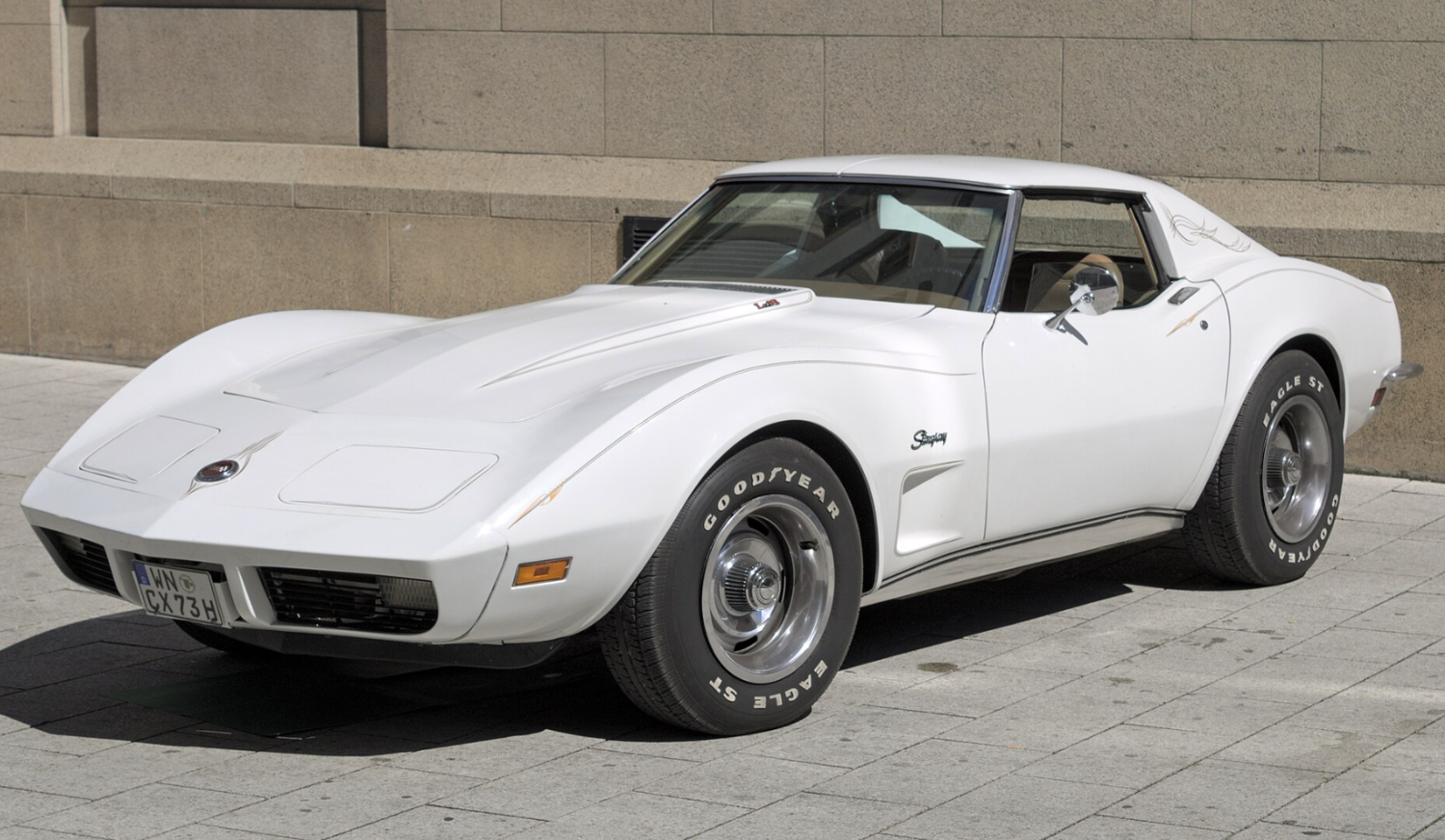
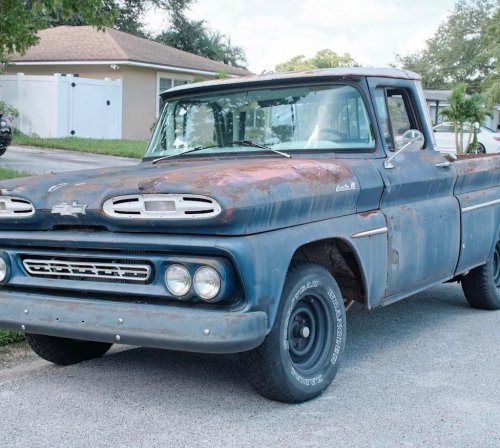
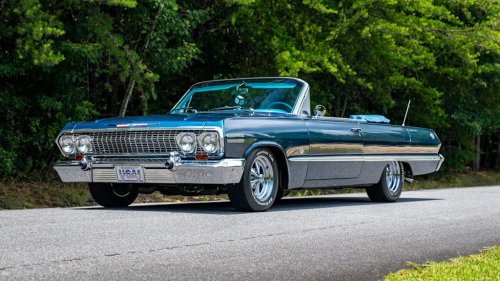
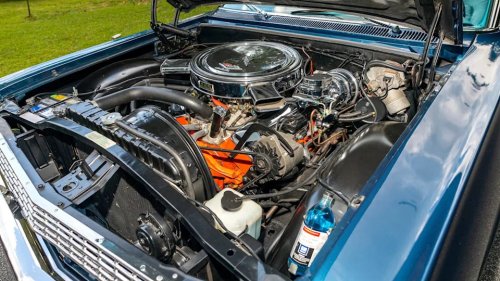
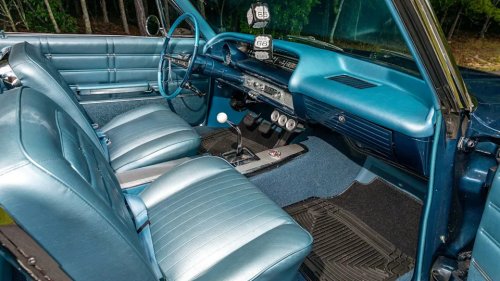
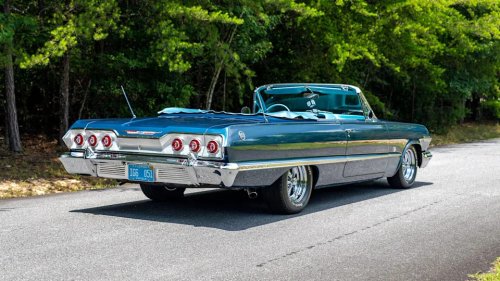
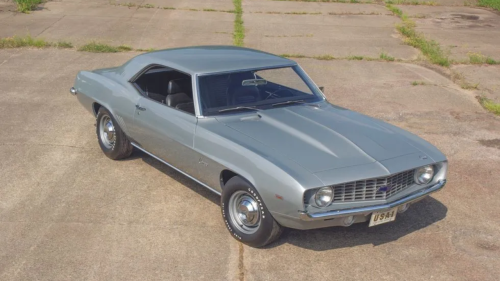
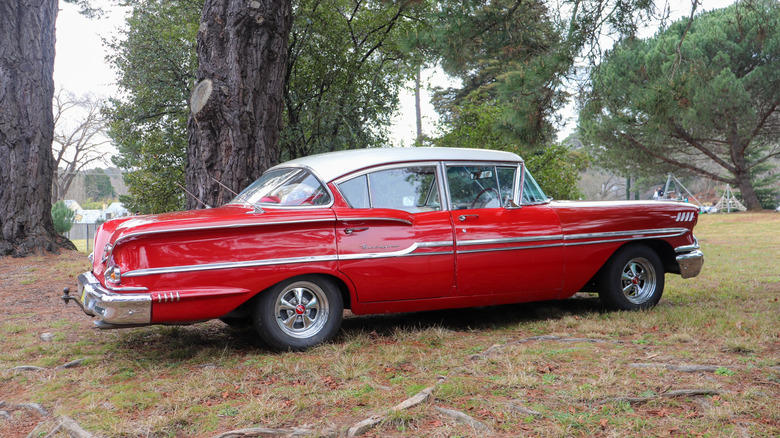
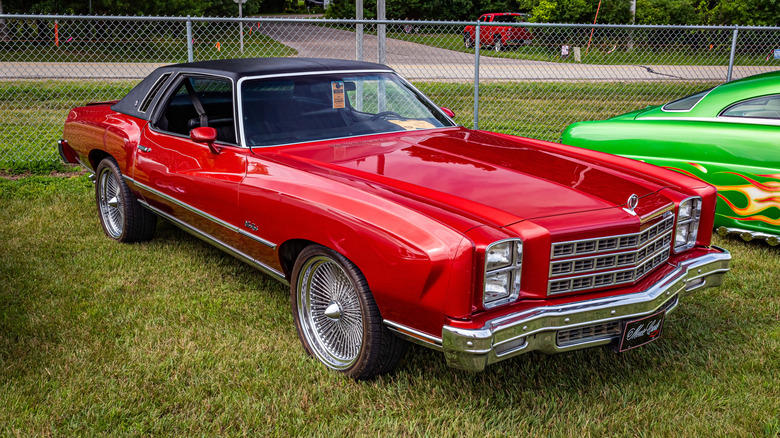
BiscayneChevy introduced the Biscayne in 1958 and gave it a redesign in 1961 and 1965. A fourth generation was produced between 1971 and 1975 but was only sold in Canada. The Biscayne was a relatively bare-bones model, and after the Delray was dropped in 1959, it became Chevy's least expensive full-sized car until the end of its production run. The 1959 Biscayne sold for just $2,301, and the model's enduring low cost (the 1971 model carried a sticker price of $3,448) made it a popular choice for taxi companies and police squads.The first generation Biscayne was available with engines ranging in size from a 235 cubic inch I6 to a 348 cubic inch V8 that produced 315 horsepower and 356 pound-feet of torque. The 348-equipped Biscayne could go from zero to 60 in 5.8 seconds and reach a top speed of 121 mph, impressive benchmarks for a car that weighed more than 3,800 pounds. By 1968, a 427 cubic inch V8 producing 385 horsepower and a staggering 460 pound-feet of torque was available. This beast weighed almost two tons, however, and delivered a combined fuel economy of less than 10 mpg.The Biscayne's no-frills design and the fact that so many of them were driven hard by taxi drivers and law enforcement officers has made for a wildly inconsistent market today. Good condition examples from the first two generations have sold recently for between $9,300 and $96,000, and a 1958 two-door model in need of some work was listed on Craigslist for just $6,000.Monte CarloThe Monte Carlo is another full-sized Chevy that has endured over many years and several generational updates. It was introduced in late 1969 as a 1970 model and remained in production until 2007, except for a hiatus from 1989 through 1994. It originally shared some body parts with the Chevelle, although it had a longer wheelbase.The first generation Monte Carlo shared a platform with the Pontiac Grand Prix and came with one of three V8 engines ranging in size from 350 to 454 cubic inches. A 454-powered 1972 Monte Carlo weighed more than 3,800 pounds but could still go from zero to 60 in 6.8 seconds.The introduction of the second generation in 1973 brought a Motor Trend Car of the Year award win, and Chevy produced nearly a quarter of a million Monte Carlos that year. GM's output climbed throughout the generation, peaking at just over 400,000 units in 1977. Chevrolet began to slim down and square off the model the following year, and a turbocharged 231 cubic inch V6 engine became an option in 1980.Monte Carlo's sales declined steadily throughout the 1980s to a low of about 30,000 units in 1988. It was dropped the following year but revived in 1994 in two V6-powered trim versions, the LS and the Z34. Throughout its lifespan, the Monte Carlo was a huge success on the NASCAR track, winning championships for Richard Petty, Dale Earnhardt, and Jimmie Johnson.The high production numbers during even the most desirable model years make Monte Carlos a relative bargain on the secondhand market; two second-generation models sold recently for less than $8,500.



















 +14 others