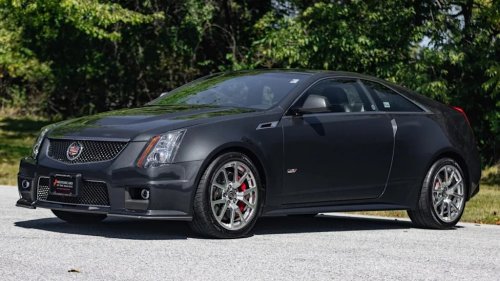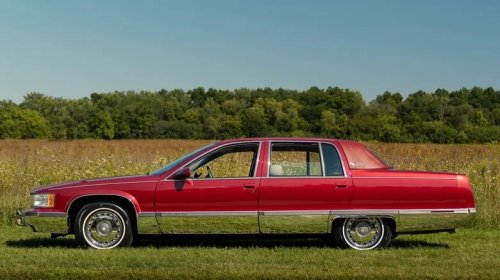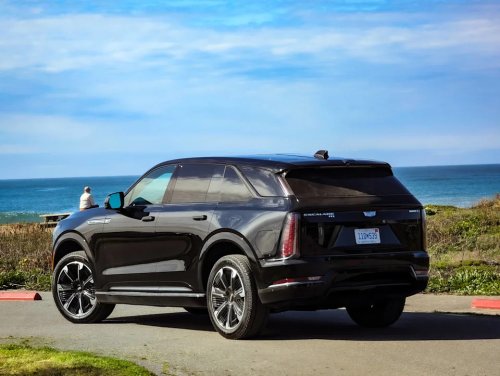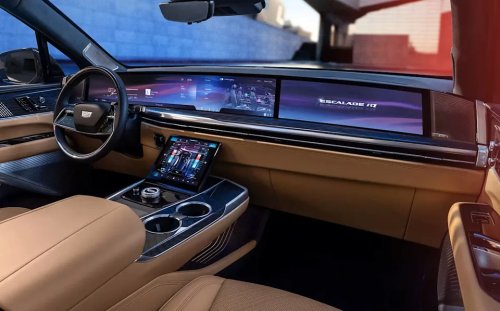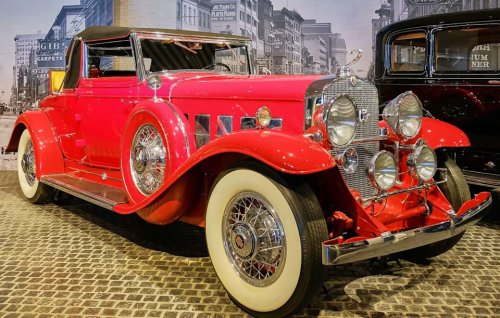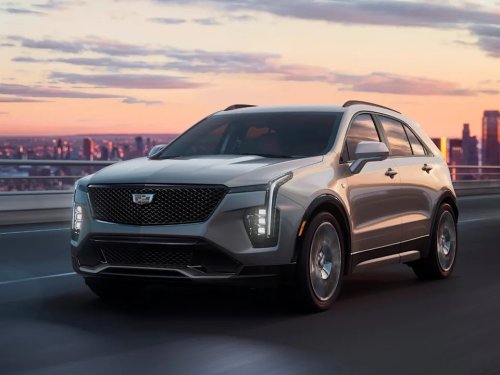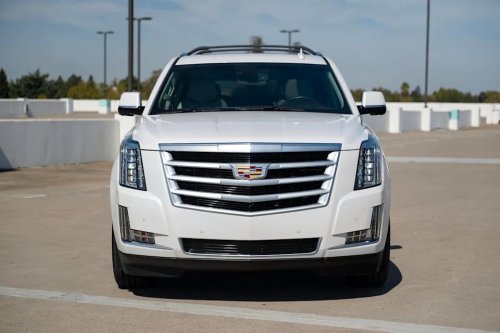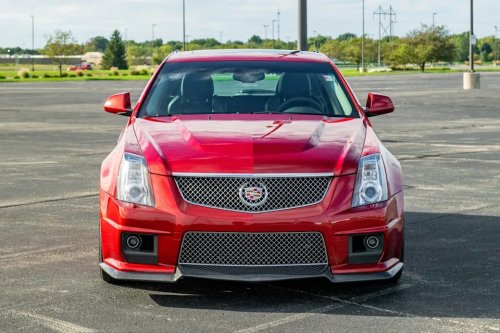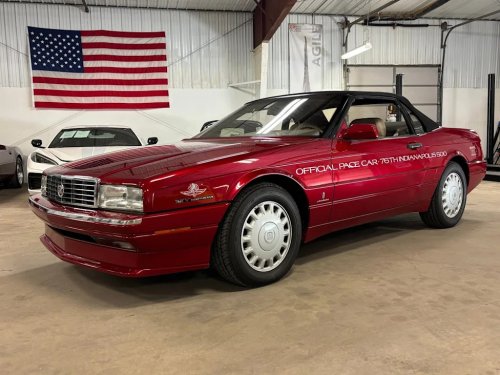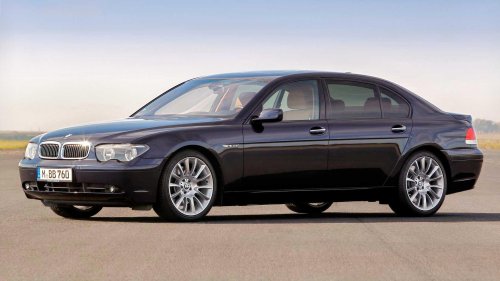
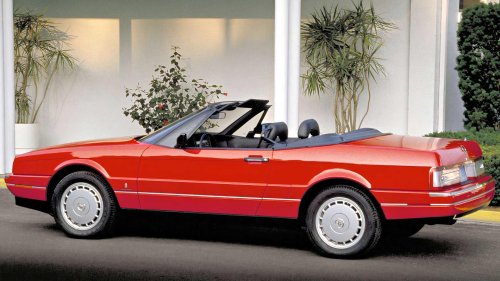
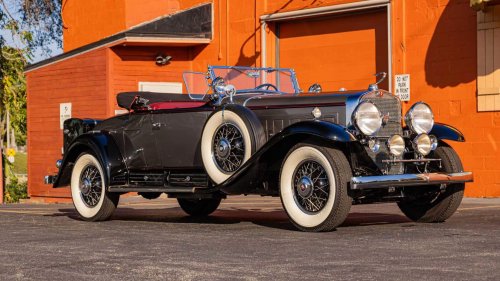
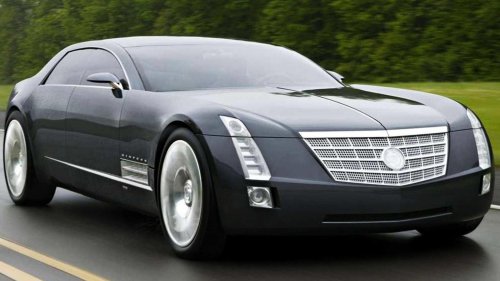
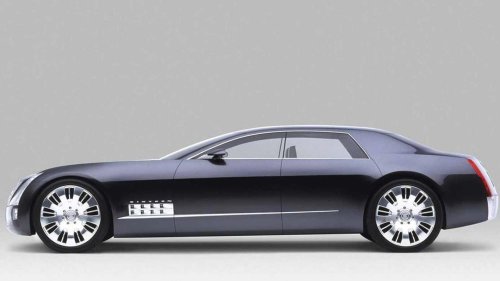
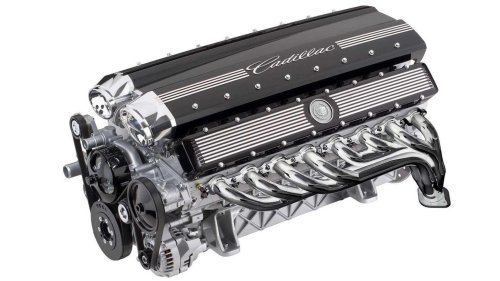
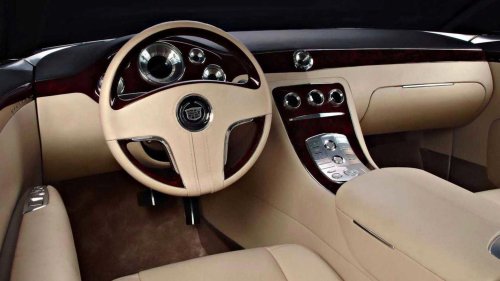
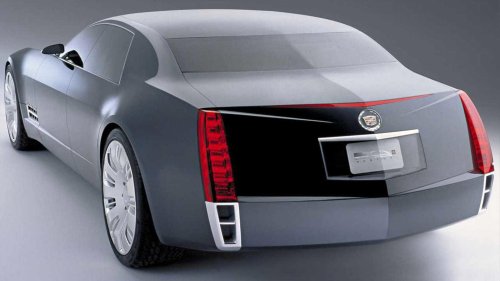


















In the early 2000s, Cadillac was at a turning point. The company desperately wanted an exciting new direction, and the answer almost came in a punch-up with the likes of Rolls-Royce and Bentley. It was a time when carmakers were moving in wild directions, consumers had money, and EVs were confined to the golf course. Cadillac decided to gamble everything on a bold new direction, but would it work? Let's just say nobody foresaw what was going to happen next. The 2000s Was A Wild Time In Car Design BMW At the start of the 2000s, everything was going bonkers — and we aren't talking about the Millennium Bug. Car design was caught in a wave that is best described as Art Deco Futurism, where designers were pilfering the opulence of the 1930s and remixing it with anything they could think of. That's pretty much how we ended up with cars like the unloved E65 BMW 760i and the Chrysler Crossfire.The German mega car corps were buying up anything they could find for sale, with Bentley and Bugatti going to VW, and Rolls-Royce being snapped up by BMW. It felt like the car-making bubble was never going to burst, and there was carte blanche on engine design — how else could you explain a quad-turbo W16 in a Veyron, or a Lambo V10 in an Audi A6? This exploration of excess hadn't gone unnoticed in America either. Cadillac Needed A New Direction GM In the '90s, Cadillac seemed to be stuck in a vortex between the past and future. The DeVille (1990–1999) was a massive land yacht in the old Caddy style, but it featured front-wheel drive. The Cadillac Allanté was a stylish alternative to the Mercedes SL, but it was ridiculously overengineered. The brand was still appealing to an older clientele, with a retiree flex running through, but unlike Mercedes, Caddy didn't have the benefit of appealing to young, affluent buyers too. The Escalade, which launched in 1999, was the company's first SUV, and it would help to bring a more hip audience to the brand, but Caddy already had a plan. Caddy Decided to Wow The World By Taking On Rolls-Royce Mecum The plan was to look even further back to the past. The Roaring Twenties had been a good time for Cadillac, and the company shocked the world by unveiling the world’s first production V16 engine for a road car at the 1930 New York Auto Show. The 16-cylinder, 7.4-liter unit was designed to cement Caddy's place as one of the premier luxury automakers, embodying its “Standard of the World” identity. This jolly period of opulence seemed like as good a time as any to inspire a new direction for GM's premium brand. The fact that the original Cadillac V-16 was launched in 1930 into the Great Depression may have seemed a bit ominous, but that wouldn't happen again, right? The Cadillac Sixteen Concept Wowed The 2003 Detroit Auto Show Via: Cadillac Just over 70 years after the original 16-cylinder Cadillac had been revealed in New York, the company decided to unveil the modern version. The Cadillac Sixteen concept car that appeared at the 2003 Detroit Auto Show was mind-blowing. At 18.6-feet, it was almost as long as a modern Chevy Suburban, but this was no SUV.This luxury sedan, built to mark Cadillac’s 100th anniversary, was svelte and low-slung. The wheels are 24-inch-diameter dinner plates, hiding 16-inch brake rotors. The body is finished with 20 coats of paint. Inside, the seats are covered in hand-stitched Tuscan leather, with silk carpets, walnut burl veneer, and even a Bvlgari clock positioned in the middle of the dashboard. Tech included a Bose sound system, and back-seat passengers had a rear-seat DVD player. It was clear: Caddy was coming for Rolls-Royce. Cadillac Was Serious About Building It Via: Cadillac This wasn't some fancy concept car built to drum up a bit of free publicity. Rumor has it that Cadillac was serious about making it, and even up to 2007 there was still speculation that Caddy would launch a flagship that channeled the Sixteen. GM Vice-Chairman Bob Lutz, was quoted as saying the company planned to produce around 350 cars annually at a price of USD$300,000, going toe-to-toe with the Mercedes-Benz Maybach and Rolls-Royce Phantom.Period reports suggested that the V16 would make way for a V12 in the production car, so it would probably have got a different name, but there was clear intent to take Caddy back to its high-end luxury roots. The fact that the Sixteen was a running car rather than a static show model made it clear that GM was serious about making it work. The Concept's Engine Was A Modern Masterpiece Via: Cadillac Under the bespoke dual-panel aluminum hood of the Sixteen is a 13.6-liter V16 unit. Codenamed the XV16, the mill used a pushrod design derived from GM’s legendary line of small-block V-8 engines and packed a mighty 1,000 horsepower and 1,000 lb-ft of torque. What made the unit all the more impressive is that the team had just eight months to come up with it, with the brief demanding "outstanding quality, reliability, and durability, plus turbine-like levels of noise, vibration, and harshness." Equally impressive was the fact that the XV16 was 64 pounds lighter than GM’s 8100 Vortec V8, due to the use of lightweight aluminum alloys. The V16 Caddy Was Quietly Shelved Via: Cadillac Just like the original V16 Caddy of the '30s, there was a cloud of financial turmoil brewing. Unlike the original, the Sixteen never made it to production. America's car industry quickly went from a wave of optimism and creativity, to crashing down in a barrage of financial deterioration. By the end of the decade, Pontiac, Saturn, and Hummer were all hastily shut down to stop the hemorrhaging of cash. A High-end Lux Mobile Wasn't Right For Caddy Via: Cadillac This certainly wasn't a time to start building unique, low-volume cars for the rich and famous. A low-volume bespoke model would have been incredibly expensive to manufacture, and with the ultrarich suddenly having to watch their money, the market viability was questionable. But in some ways, the unexpected changes that were forced on GM and Cadillac were almost a blessing in disguise. How Cadillac Changed Direction And Reinvented Itself Cadillac With the Escalade selling well, Cadillac decided to explore another avenue towards making the company contemporary. Moving away from the ultra-luxury market was probably a sensible move, especially considering Maybach ceased to be an independent brand in 2011. Instead, Cadillac decided to go head-to-head with BMW, Audi, and Mercedes, focusing on these German brands' halo M, AMG, and RS divisions.The V brand was born and the first-ever Cadillac V-Series vehicle was a BMW M5 competitor. The 2004 Cadillac CTS-V arrived with a 400-horsepower 5.7-liter LS6 V8 and did such a good job of repositioning the company, that Cadillac is now very much a sporting outlet for GM. So much so that Cadillac has its own Formula 1 team in 2026. By staying dynamic, and aligning itself with the most successful German big hitters, rather than niche splendor, Cadillac has managed to adapt and stay modern. The Escalade performs the luxury duties, meanwhile. Even if it didn't make it to production, the Sixteen was a major turning point for Cadillac—perhaps no one realized it at the time.