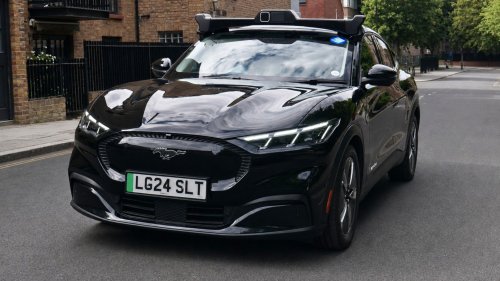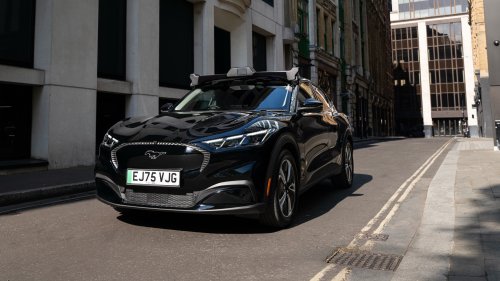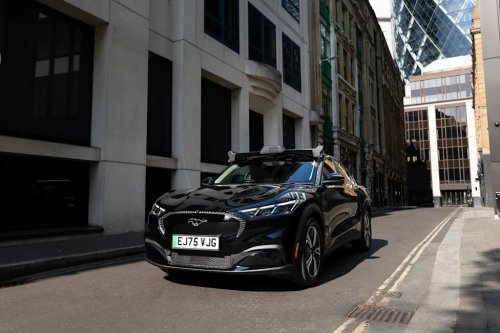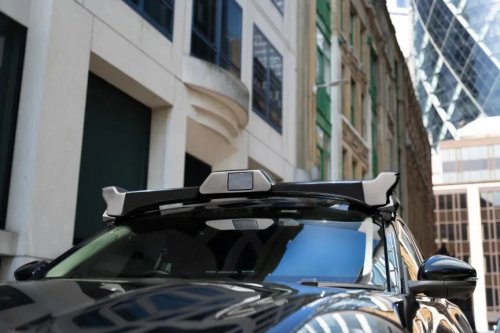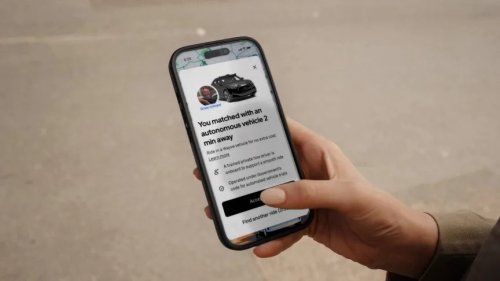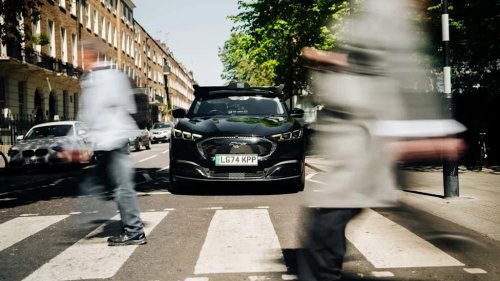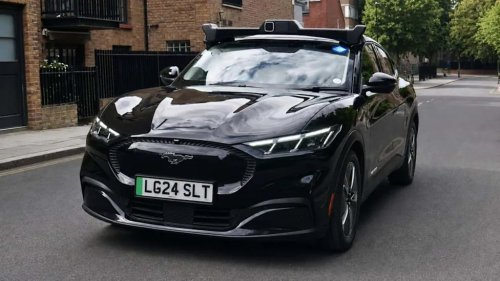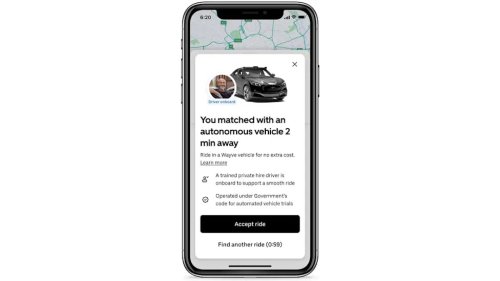


















The year of robotaxis moves forward, and we have another robotaxi update today. The autonomous driving firm Wayve and partner Uber were granted Private Hire Vehicle licences from Transport for London (TfL) and can now deploy robotaxis in The Swinging City. That said, they must include human supervisors onboard for the time being. Wayve uses Ford Mustang Mach-E vehicles to host its AI hardware and software for autonomous driving. “The cars, which are equipped with the Wayve AI Driver and surround cameras and radar, were inspected to confirm that these vehicles meet all of TfL’s policy and safety standards,” the companies note. “The licensing of the vehicles completes the ‘triple-lock’ requirement for Private Hire trips, where the operator, driver and vehicle must all hold licences with the same licensing authority. Trips will take place under the Government’s AV Trialling Code of Practice and Uber’s TfL Private Hire Operator licence. Wayve’s vehicles are designed to operate autonomously, and will do the driving, with a trained and TfL licensed private hire driver onboard to oversee the trip and provide support or take over driving if needed.” Naturally, as residents of a big, modern, leading city of the world, many Londoners see robotaxi development happening elsewhere and want to be included, want the opportunity to jump into a robotaxi on the corner and be driven to their destination of choice. “There has been strong interest from Londoners in the chance to take a trip in an autonomous Wayve on Uber. In the last eight weeks alone, more than 100,000 Londoners have signed up to join Uber’s Interest List, giving them a chance to be matched with a Wayve autonomous ride at launch. To help fine-tune the experience and inform the future of transport in London, later this summer, select riders who joined the Interest List will get access to Wayve rides to give feedback on the experience, as the companies prepare for the full public launch.” Wayve is one of the robotaxi companies we’ve been covering quite a bit this past year. They have partnered with Nissan to implement autonomous driving technology into Nissan’s cars. They have pulled in investments from NVIDIA, Microsoft, Uber, & Mercedes and partnered with them. And they have partnered with Stellantis on door-to-door hands-free driving. Wayve further explains in this latest press release why it thinks it is standing out from the (small) crowd in this industry: “Wayve’s AI-first approach, known as AV2.0, moves beyond the constraints of traditional AV systems that rely on HD maps, hand-coded rules, or geofenced domains. Instead, Wayve’s AI Driver learns from experience like a human driver, enabling it to adapt to new roads, vehicles, weather conditions, and cities with unprecedented speed and efficiency. Built and trained on UK roads, Wayve’s autonomous driving technology has been testing in London’s challenging roads since 2018, and has since demonstrated its adaptability across more than 500 cities worldwide.” Interesting…. The AI self-driving race is in full flow, and it’s interesting to see companies coming at it from different angles growing and expanding across the world. As we’ve seen, Uber is apparently intent on collaborating with all of them — or at least that’s what it seems like. “With more than 30 AV partners and millions of autonomous trips completed each year, the company is building the industry’s first hybrid network—where autonomous vehicles and drivers work side by side to make transportation more affordable, sustainable, and accessible for all.” I mean … 30 AV partners? That’s a lot.