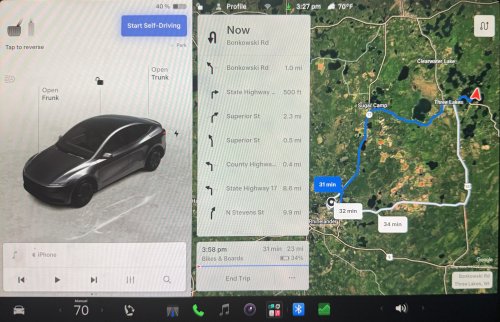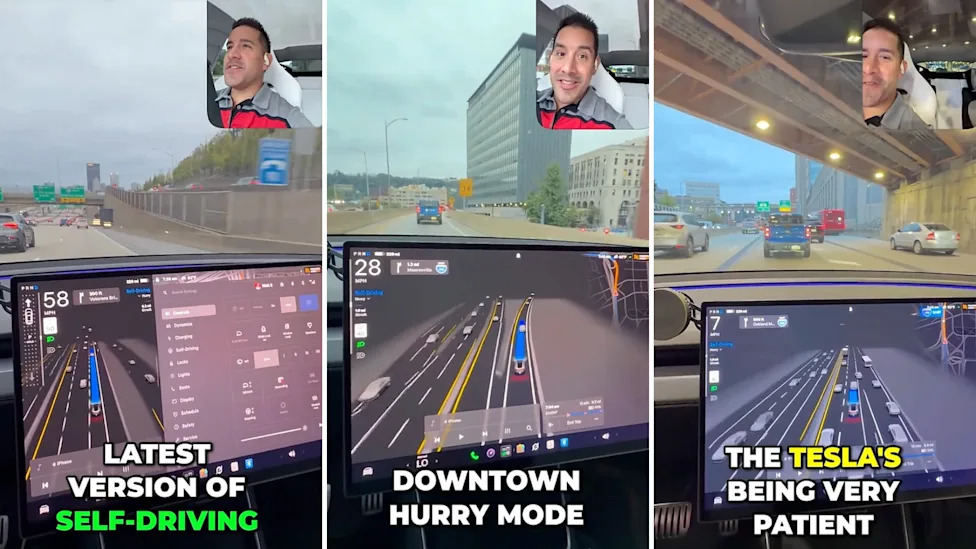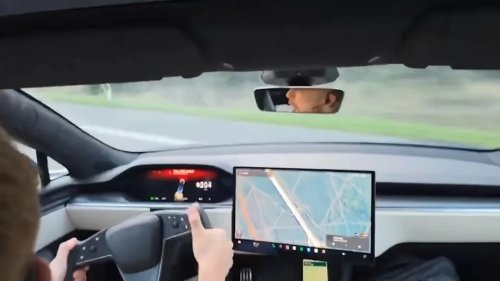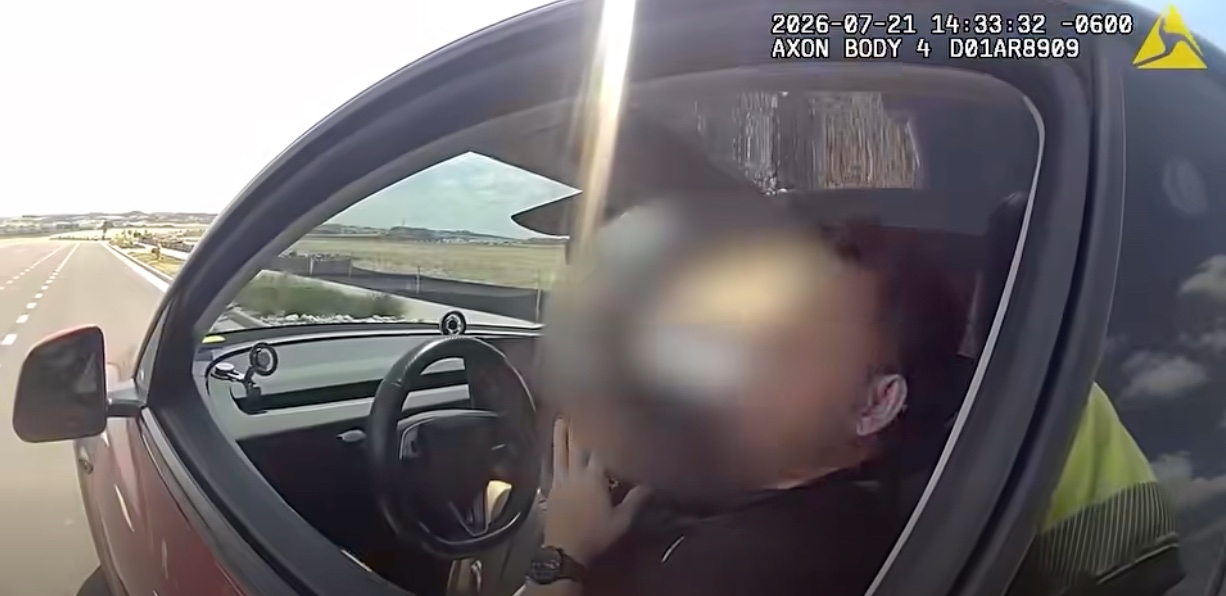






A police department in Parker, Colorado, pulled over a Tesla going 64 mph in a 45 mph zone whose driver insisted they weren’t responsible, because the car was running “Full Self-Driving.” Of course, Tesla will never take responsibility for that incident, but the frustrating part is that Tesla already has the solution and yet it refuses to implement it. “These systems are designed to assist you, not drive for you” The Parker Police Department shared the stop in a video this week. The driver’s excuse, as the department told it: “I wasn’t driving. I had auto assist on.” They were adamant enough to demand a supervisor. The department’s reply was blunt. “Driver assistance technology does not replace the driver,” it said. “Whether your vehicle has adaptive cruise control, lane centering or full self-driving, you are still legally responsible for operating your vehicle safely.” Advertisement - scroll for more content Legally, that isn’t close. Every driver-assist system you can buy in a new car today is a Level 2 system, which means the human is driving and the software is helping. Tesla’s “Full Self-Driving (Supervised)” is Level 2. The name says one thing. The fine print, and the law, say another. Tesla wants the name without the responsibility Here’s the real problem, and it belongs to Tesla more than to the driver. Tesla sells a $99-a-month package called “Full Self-Driving.” Its CEO has spent a decade telling people the cars can basically drive themselves, and late last year Musk claimed FSD drivers can now text and drive. But when something goes wrong, Tesla’s position flips. Suddenly the system is only “supervised,” the driver was always responsible, and the manual always said to keep your hands on the wheel. So Tesla gets to market the car as self-driving and disclaim it as a mere driver aid, depending on which is more convenient in the moment. A driver at a traffic stop pointing at his dashboard is just that contradiction showing up on the side of the road. The speeding isn’t a glitch. Tesla removed the fix This is where Tesla loses credibility when it comes to FSd speeding: Tesla was speeding because Tesla designed FSD to drive over the limit, and then took away the tool owners used to rein it in. I know this one first-hand. Tesla’s “Full Self-Driving” got me a ticket last month. In FSD v14, Tesla scrapped the adjustable speed offset that used to let drivers cap how far over the limit the car would go, and replaced it with fixed presets: Sloth, Chill, Standard, Hurry, and Mad Max. On a 50 km/h road in Standard mode, my car accelerated itself to 78 km/h, 28 over, with my foot nowhere near the pedal. A radar unit did the rest. With the old offset, I’d have set it to +15 and stayed out of trouble. That’s the “easy fix” owners keep asking for: let the driver set a hard cap. Tesla’s head of AI, Ashok Elluswamy, has now said the company won’t do it, calling a user-set speed limit an “anti-pattern” and arguing Tesla would rather make FSD “smarter” than let owners override it. Tesla is supposed to make FSD smarter for a decade. The car meanwhile still ships with a mode literally named “Mad Max” that deliberately blows past speed limits, while you can’t trust ‘Standard mode’ to stay under the limit. Regulators have noticed. Sweden told the EU to reject Tesla’s “FSD” unless the speeding behavior is removed. The gap between a product called “Full Self-Driving” and a car that knowingly breaks the speed limit is not a small one. Electrek’s Take To be clear, the driver’s excuse is absurd, and I have no problem with Parker police writing the ticket. If your car is speeding, you’re speeding. A cop is not going to cite your software subscription. When I got my ticket last month, I didn’t even mention FSD to the cop and just took the ticket. But I’m tired of the pile-on that stops at the driver, because Tesla built this confusion on purpose and profits from it. You cannot name a Level 2 system “Full Self-Driving,” tell people they can text behind the wheel, design the thing to drive over the speed limit, and then hide behind “the driver is always responsible” when the radar goes off. Pick one. There’s an easy fix sitting right there, give owners back a hard speed cap, and Tesla is refusing it on principle and calling driver control an “anti-pattern.” That’s a company telling you it knows better than the driver and the posted limit both. Another example of the Tesla cult making it worse for everyone.Tesla listens to these yes-men whose only feedback is: "Keep going, you're doing perfectly." pic.twitter.com/mLJBOuFeZM— Fred Lambert (@FredLambert) August 4, 2026 If Tesla wants drivers to take full responsibility for FSD, the least it could do is give them back the controls to drive it responsibly. Right now it’s doing the opposite. If you’re driving an EV, powering it at home with your own solar is one of the best ways to cut your running costs to nearly nothing. With electricity rates up almost 10% last year and expected to keep climbing, going solar is one of the best ways to protect yourself against rising costs. And with lease and PPA options, you can do it with zero upfront cost and start saving immediately. If you want to find the best deal, check out EnergySage. It’s a free service with hundreds of pre-vetted installers competing for your business, so you save 20 to 30% compared to going it alone. No sales calls until you pick an installer. Get your free quotes here. Stay up to date with the latest content by subscribing to Electrek on Google News. You’re reading Electrek— experts who break news about Tesla, electric vehicles, and green energy, day after day. Be sure to check out our homepage for all the latest news, and follow Electrek on Twitter, Facebook, and LinkedIn to stay in the loop. Don’t know where to start? Check out our YouTube channel for the latest reviews.