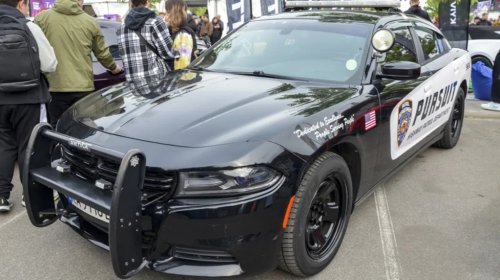
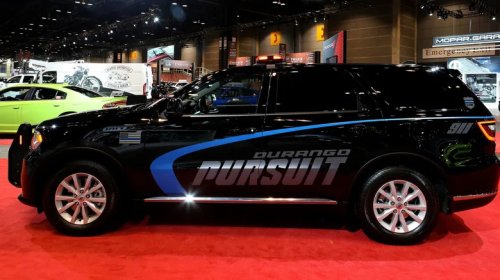
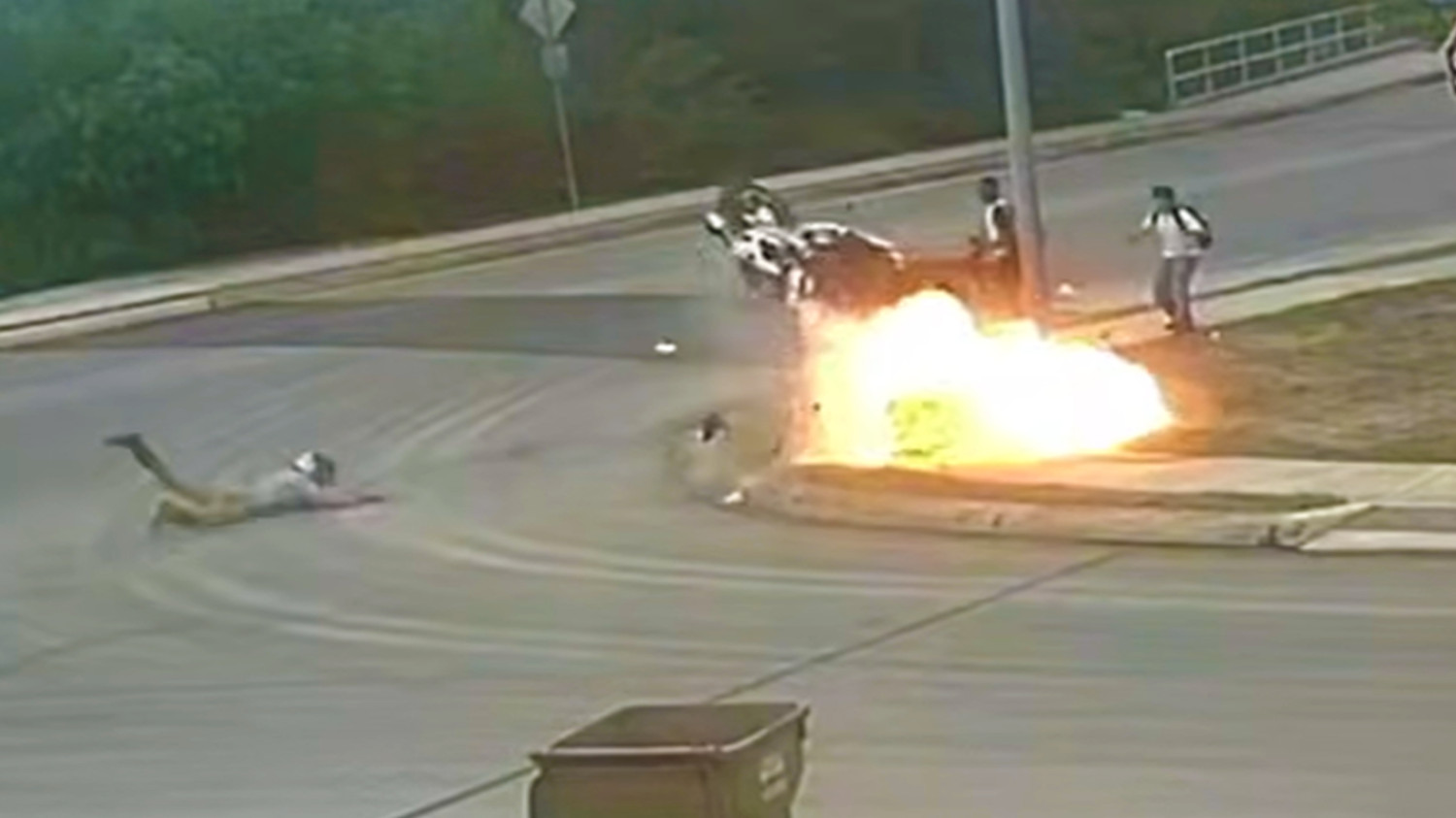
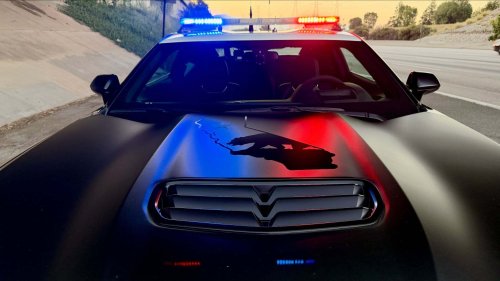
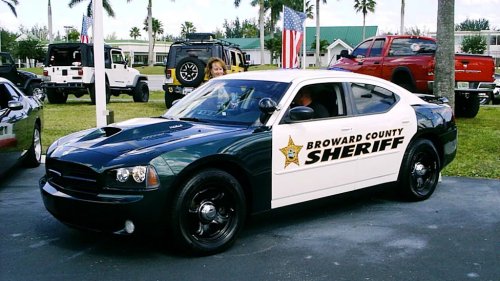
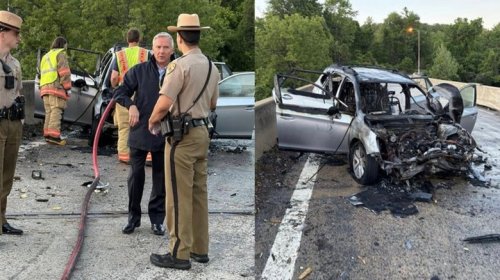
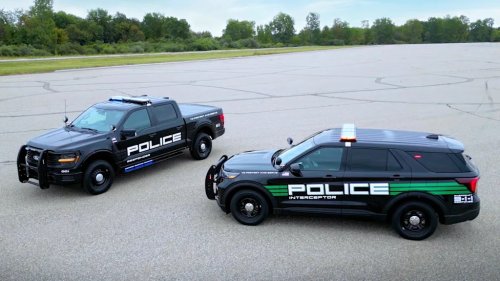
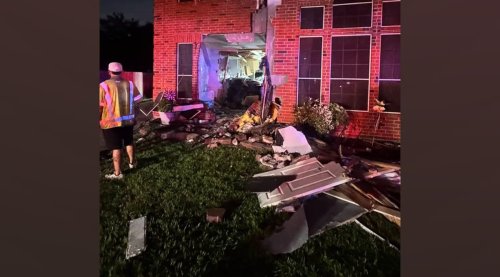
Watch: Murder Suspect Steals Cop Car And Slams It Into HouseThe Auto WireShawn HenryWed, September 16, 2026 at 4:52 PM UTCAdd us on GoogleWatch: Murder Suspect Steals Cop Car And Slams It Into HouseSometime after 11:45 p.m. on September 3, 2026, a Dayton police officer's SUV sat idling and unattended at the scene of a crash near West Third Street. That gap is what a homicide suspect used. Having already wrecked one vehicle while fleeing police, he walked back into the scene, climbed behind the wheel of the empty cruiser, and drove it through the wall of a house.The dramatic part of this story is not the chase. Pursuits end in crashes with depressing regularity. The part worth stopping on is simpler, and more uncomfortable: nothing about that cruiser was built to stop a stranger from driving away in it.What actually happenedAccording to charging documents and Dayton police accounts, officers responded to a crash report near West Third Street that Thursday night when a Toyota SUV blew through the intersection where they were working the scene, triggering a pursuit. It lasted under two minutes before officers used a Pursuit Intervention Technique — the tap-and-spin maneuver taught at the Federal Law Enforcement Training Centers, which applies lateral force to a fleeing car's rear quarter panel to send it into a controlled spin — to end it.The driver, later identified in charging documents as 27-year-old Tywon Dashawn Stephens, ran on foot. Then he did something almost nobody plans for: he circled back toward the wreck, ignored officers' commands, and got into a Dayton PD cruiser that had been left idling on scene. He drove off in it. A second pursuit, lasting roughly two minutes, ended when the cruiser went completely through a home on Greenway Street — reports described it as "sticking out of the back of the home" when it finally stopped. Seven officers were hurt, six of them hospitalized; two residents inside the home were also hospitalized. All injuries were described as non-life-threatening. Stephens was booked on 26 counts, including two counts of murder — one tied to the crimes that touched off the chase, the other for his girlfriend, killed the same night.AdvertisementAdvertisementThat's a genuinely awful night for a lot of people. It's also, quietly, a story about a design tradeoff nearly every police department in the country still makes the same way — and it isn't the first time a stolen vehicle has ended up parked inside someone's living room, as a burglary suspect did outside Dayton earlier this year.Why the cruiser was running in the first placePatrol SUVs idle at active scenes because they have to. A modern cruiser is a rolling electronics rack: light bar, radios, mobile data terminal, dash and body cameras, automatic vehicle location, sometimes a plate reader — none of it tolerates being power-cycled every time an officer steps out to direct traffic or process a crash. Departments leave engines running, and often leave doors unlocked, because an officer sprinting back to a dead, locked cruiser mid-emergency is its own kind of failure.Ford, which builds the Police Interceptor Utility and has held more than half of the U.S. police vehicle market since at least 2014, knows this tradeoff exists. It's built into how the company sells the vehicle. The current Interceptor Utility Hybrid ships with a mode Ford calls Police Engine Idle, designed specifically to let the engine run "while preventing unauthorized vehicle use." Read that phrase carefully. That's a manufacturer naming an idling police vehicle as a known vulnerability in its own marketing copy — not a hypothetical dreamed up after the fact.Here's the detail worth sitting with: that authentication feature is new. It belongs to the current-generation hybrid Interceptor, not something that's been standard on police fleets for a decade. Cities don't replace patrol vehicles on a fast cycle; budgets and upfitting costs stretch fleet life for years. Most cruisers on the road tonight, Dayton's included, are almost certainly running earlier hardware that never asks a driver who they are before letting them drop it into gear. Reporting on this incident hasn't specified the exact make and model of the cruiser Stephens took, and that detail should be treated as unconfirmed rather than guessed at for color — though given Ford's grip on the market, there's a reasonable chance it shared a platform with the SUV parked in Dayton PD's own fleet photos.The house lost an argument it never had a chance to winThere's a second irony buried in the wreckage on Greenway Street. Ford engineers the Interceptor Utility's structure — what the company calls SPACE Architecture — specifically so an officer survives being broadsided at speed by another vehicle during a pursuit. That's serious reinforcement, built around a heavy V6 or hybrid drivetrain riding on all-wheel drive. Point that mass at a wood-framed residential house instead of another car, and the same durability meant to protect whoever's inside becomes the reason the house didn't just get dented. It got driven through.AdvertisementAdvertisementNobody engineers a police SUV to be gentle with a living room. There's no reason to. But it's a useful reminder of what these vehicles actually are underneath the light bar: heavy, reinforced, all-weather machines built to win collisions, not to ask permission first. It's the same basic physics that has made stolen-vehicle-into-house stories a recurring feature at The Auto Wire for years — just, this time, with the vehicle wearing a badge.Who actually pays for thisThe financial tail on a night like this runs longer than most readers assume. A base Police Interceptor Utility isn't what ends up on the street; departments add the push bumper, prisoner partition, gun lock, radios, in-car computer and mount, and light bar before it's patrol-ready, work that routinely adds tens of thousands of dollars on top of the vehicle's sticker price. Replacing a totaled cruiser means eating that upfit cost twice. Add structural repairs to a house that had an SUV driven through it, workers'-comp claims tied to seven injured officers, and the liability a city carries any time its own vehicle causes damage like this, and the bill will ultimately be paid by Dayton's taxpayers and insurers — not by the man now facing 26 charges.What to rememberThe chase-within-a-chase makes for dramatic dash-cam video. The detail worth keeping is quieter: the authentication technology that could have kept Stephens out of that cruiser already exists, sitting on Ford's own current-generation Interceptor Utility Hybrid. It just hasn't reached most of the fleet yet, because fleets turn over on a budget cycle, not a headline cycle.A police cruiser is built to win almost any collision it's forced into. Somebody still has to teach it to say no.Join our Newsletter, follow our Instagram page, and connect with us on Facebook.












 +76 others