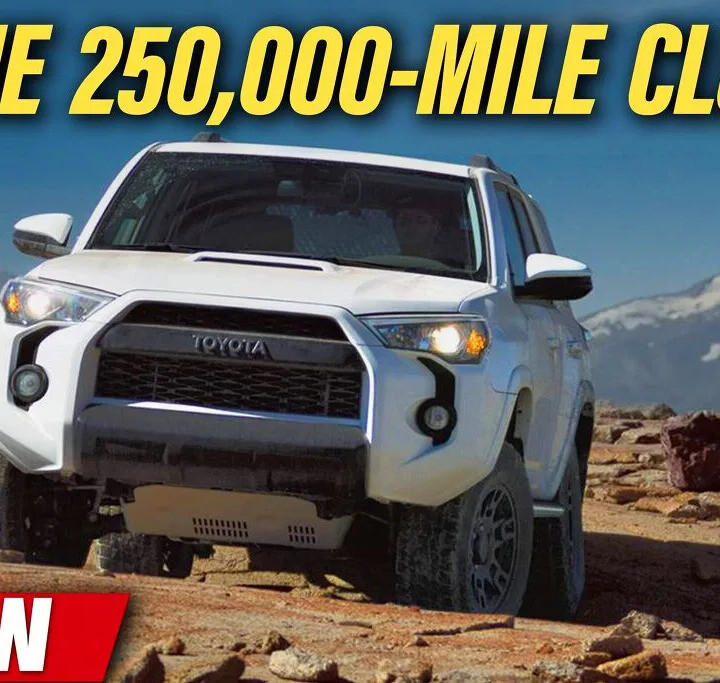
Here's what we know about the 2026 U.S. auto market so far: Strong tax-return stimulus from President Trump's One Big Beautiful Bill Act has fueled decent first-quarter sales for automakers, according to Cox Automotive's Industry Insights and Forecast.Cox Auto expects the first-quarter trends to continue through the rest of the year, and its analysts haven't changed their forecast from the beginning of the year when they said they expect the U.S. market to purchase 15.8 million new cars and trucks for the year. That would be a 2.6 percent drop from 2025 sales of about 16.2 million vehicles.Unless … the U.S.-Israel war in Iran doesn't end in the next few weeks and Iran's blockade of oil tankers through the Strait of Hormuz brings the global economy to its knees. That sort of thing is never good for auto sales, nationally or globally.In his presentation, Cox Auto chief economist Jeremy Robb evoked "The Road Not Taken" by Robert Frost and its opening line: "Two roads diverged in a yellow wood.""That's a fitting mental image as uncertainty abounds in the current market," Robb said. "In the Frost poem, we don't know where each road leads or the ultimate destination. In today's environment, we don't know the end path for all options. Yet it's clear they're quickly going to collide on multiple fronts."Middle East Conflict and Its Impact on Consumersgraph showing trends in consumer sentiment and consumer shopping indices over timeSince the beginning of 2025, Cox Auto saw higher consumer spending and better demand in its Manheim used auto auction lanes, he said, and from February into mid-March, there were stronger retail new and used car and truck sales before the war in Iran began. "With each passing day, consumers get a new headline to watch on the evening news," Robb said. "And with no end in sight, their willingness to spend those refund dollars declines."War coverage may overshadow coverage of President Trump's tariff policies, but not their damage to the auto market. Cox Auto estimates tariffs in 2025 cost automakers and suppliers $35 billion, with the auto industry absorbing $3800 per vehicle that consumers otherwise would pay, according to executive analyst Erin Keating.Complex tariff policy this year continues to befuddle automakers, with the 25 percent tariff on import parts and 50 percent tariff on imported steel and aluminum pressuring new-vehicle prices, she said. Automakers anticipate renegotiation set to begin sometime this year of the US-Mexico-Canada trade deal from the first Trump administration. The companies hope for a trilateral agreement, according to Keating.Even with all this uncertainty, 15 million to 16 million would still be a lot of cars and trucks. Following the trends could help you find a bargain if you're in the market sometime in 2026.Segments with the biggest sales increases in the first quarter match the "K-shaped" economy cited by many economists, in which the affluent are experiencing an upturn—the upper leg of the K—and those at or below average income are on the lower leg of that K.Midsize SUVs, with an average price of $52,100, are up more than 15 percent so far this year, according to Cox Auto, with midsize trucks ($45,200) up about 14 percent, luxury compact SUVs ($53,900) up 5 percent, and midsize cars ($35,200) up a couple of points. Cox Automotive—extrapolating sales numbers from the time of its Q1 report March 25 to the end of the quarter, March 31—expects the U.S. market to be down 6.5 percent compared to sales for the first quarter of 2025. Full-size Trucks At DealershipWith the Detroit Three having scrubbed their commodity-priced midsize cars, their numbers will be down by the end of the first quarter, with General Motors taking a 9.6 percent sales hit compared with Q1 2025, and Ford down 9.3 percent. Chrysler and Fiat parent Stellantis, which posted extra-slow sales last year, will be down just 1.9 percent for the quarter year over year, though Q1 2026 will be down 13.2 percent compared with the fourth quarter of 2025.GM's Cadillac and Buick had particularly weak sales in the first quarter, said senior economist Charlie Chesbrough.Toyota Motor North America sales, which includes Lexus, were expected to be down just 0.1 percent for the quarter year over year, with strong sales for the Toyota Tacoma and 4Runner, while Hyundai, which Cox Auto counts as one company with Kia and Genesis, was down 0.3 percent with strong sales of Kia SUVs and its Carnival minivan, Chesbrough said. Nissan was down 7.4 percent year over year, but Q1 sales versus the last quarter of '25 were up 17.4 percent.Volkswagen, Audi, and Porsche all were down significantly, according to Chesbrough, with an anticipated drop of 19.8 percent for VW Group year over year. Subaru also is struggling, down 16.7 percent year over year, with the new Forester the brand's only volume model to post an increase for the quarter, he said. Mazda was trending down 9.8 percent. "Manufacturers with bigger portfolios and price points are stronger," Chesbrough said.In the electrified market, hybrids are the fastest growing segment versus plug-in electric hybrids and electric vehicles, according to Stephanie Valdez Streaty, Cox Auto director for industry insights. Electrified vehicles hit 25.7 percent of all new-vehicle sales by the fourth quarter of 2025, according to Cox Auto's Kelley Blue Book. New EV sales are expected to total 212,600 for the first quarter, for about 4.5 percent market share and down 26 percent year over year. EV market share peaked at nearly 12 percent in the third quarter of 2025. Tesla sales are expected to come in at 122,196 for the first quarter, down 4.6 percent year over year, and the brand's average incentive spending is 11.1 percent, Valdez Streaty said, a tick above Volvo's 11 percent. Highest EV incentive spending is projected to be Honda at 27.1 percent, followed by Kia at 27 percent, with Porsche at the low end at 2.8 percent.The EV premium over all powertrains is at a record-low $6500, and used EVs are within $1300 of gas-powered models, Valdez Streaty said. A surfeit of three-year-old off-lease EVs are flooding the market, and the current EV lease rate of nearly 30 percent returns the market back to pre-pandemic levels, she said. About 70 percent of consumers returning three-year-old leased EVs are leasing another electric vehicle, according to Valdez Streaty, as battery technology improves and incentives drive volume.