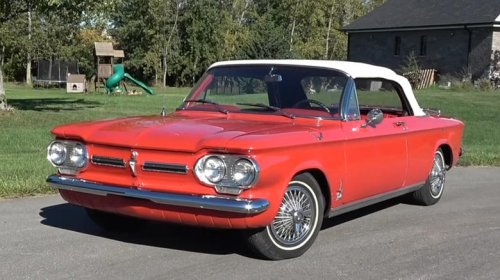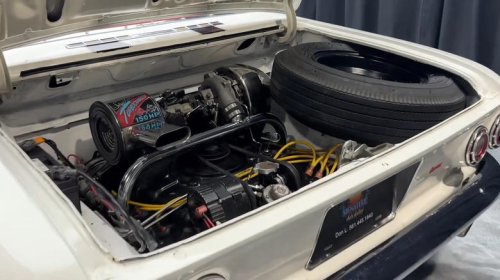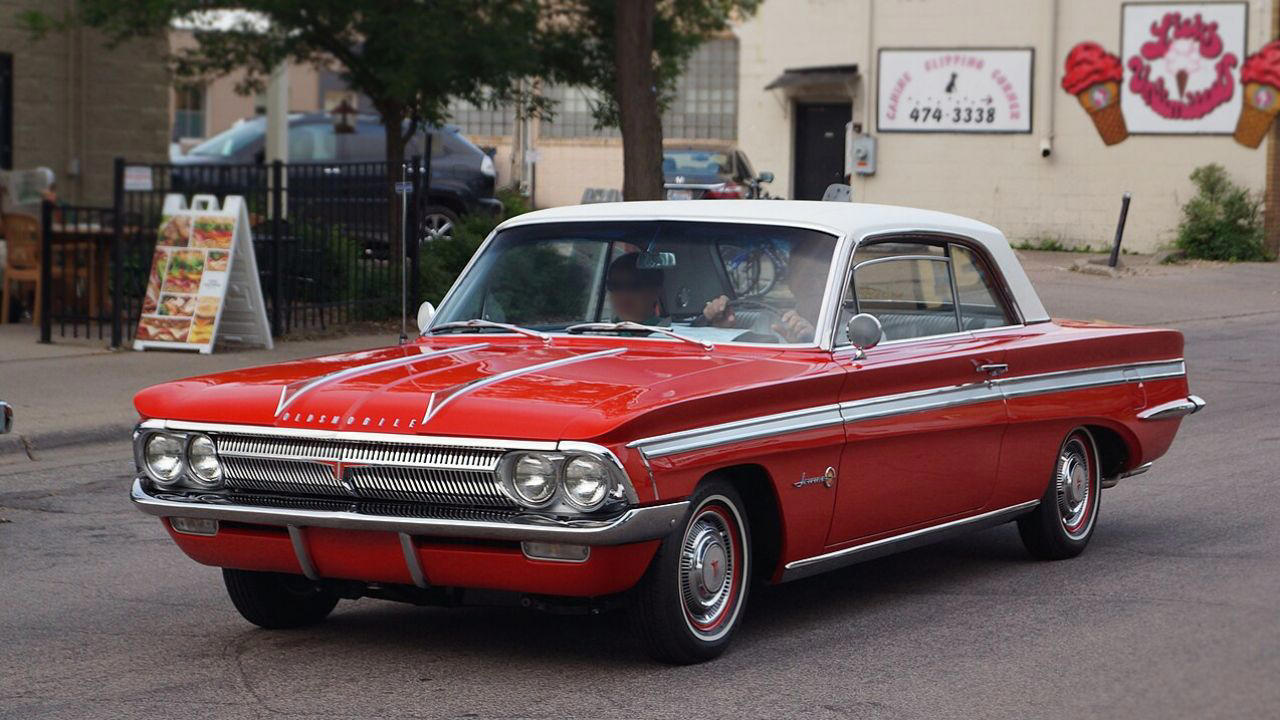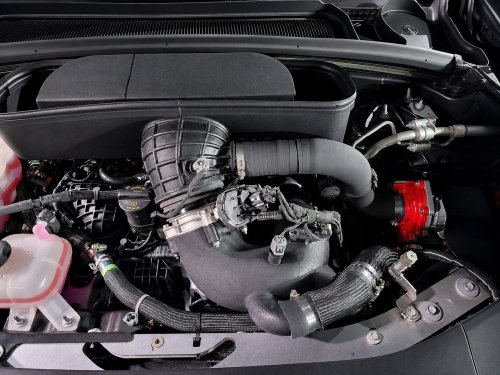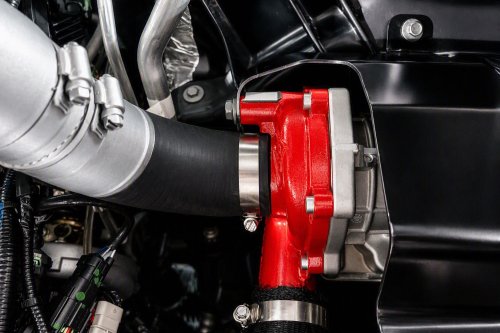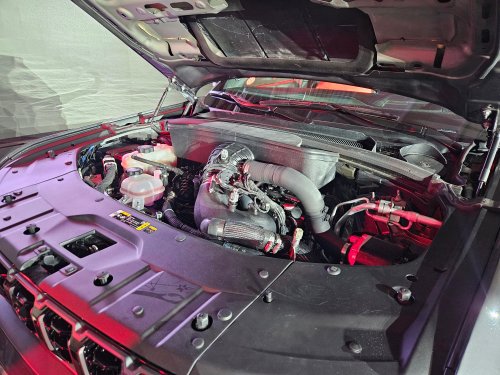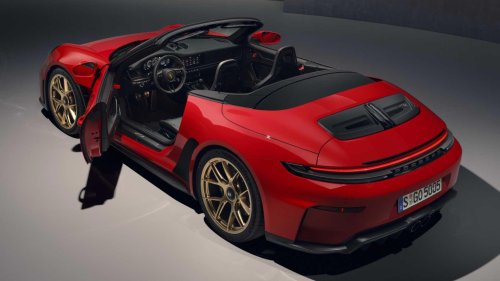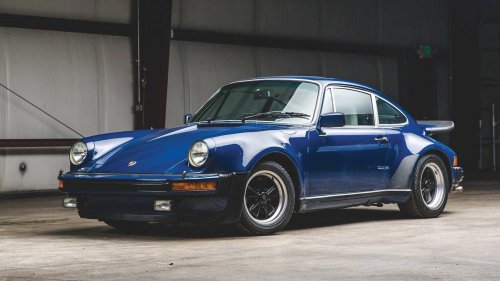
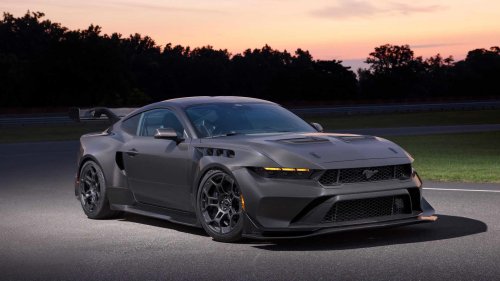
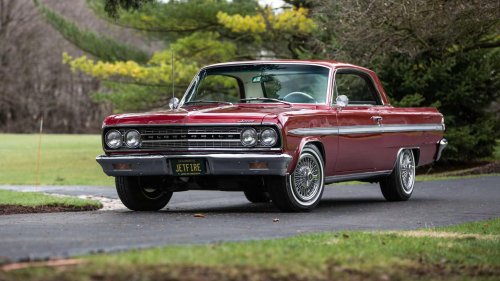
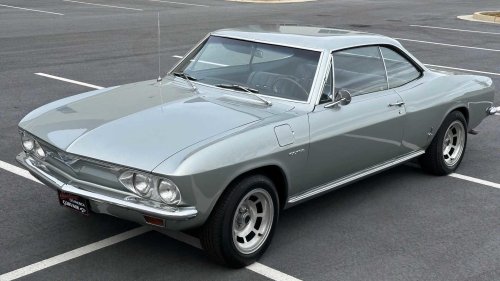

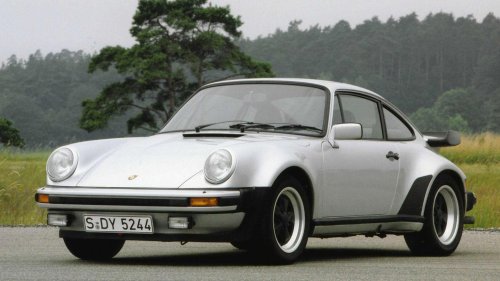





















The turbocharger has been around since 1905. That's when Swiss engineer Alfred Büchi patented the design for a contraption that uses an engine's exhaust gases to operate a turbine that compresses air. It would take another 57 years before the first production car rolled off a production line with an exhaust-gas-driven turbocharger under the hood. The all-American Oldsmobile Jetfire was an innovative piece of kit, but consumers were not quite ready for the new technology in the early 60s. At the time, the Ford Mustang, with its naturally aspirated V8 engine, was very much in vogue, selling by the million, and the Oldsmobile never really stood a chance.In 1975, the Porsche 930 Turbo finally ticked most of the performance boxes, with the addition of an intercooler. Since then, the turbocharger has emerged as the clear victor in the forced induction war, beating the inimitable supercharger in the efficiency department. This is that story.We took a stroll down memory lane and traced the history of the turbocharger in production cars, using information obtained from the respective car company's official websites. Also included is a peek into the future of the turbocharger, courtesy of the Mercedes-AMG Petronas F1 team. What Is All The Boost About? Porsche The turbocharger is currently the forced induction champion, beating out the supercharger in one vital area: efficiency. A turbocharger is driven courtesy of spent exhaust gases, which would otherwise disappear through the exhaust system. A supercharger, on the other hand, is driven by the engine's crank shaft.Essentially, it draws power from the engine to produce more power. It's not that it doesn't work. Several modern performance cars, including the likes of Ford's Mustang GTD, use a big-capacity supercharger to force copious amounts of air into the engine. In the GTD, which is designed simply to go as fast as possible around a racetrack, that is not really an issue. But for the average motorist, a more efficient option is ideal.FordEnter the turbocharger.With the more efficient turbocharger, coupled to an intercooler, car companies can produce smaller-capacity engines that still produce sufficient power to tick the required performance boxes. Smaller capacity engines ensure less fuel being burned, fewer harmful emissions, and the lighter packaging of the smaller engine also ensures improved handling and performance. Think Toyota GR Corolla, for instance. In the GR Corolla, a 1.6-liter, three-cylinder engine produces a rather astonishing 300 hp.There are some drawbacks to turbocharging. Even though modern twin-scroll turbochargers and other technological advancements have reduced the amount of turbo lag (the waiting before the boost kicks in properly) by leaps and bounds, there can still be some lag present, as the engine's exhaust gases have to get the turbocharger to spin at the desired level. The supercharger is driven off the engine, so when the engine spins, the supercharger spins, producing horsepower, with no lag present. Less efficient it may be, but the supercharger provides instant throttle response.This is why some car companies have used twin-charging, where a supercharger and turbocharger are used in the same engine. With the supercharger driven by the engine, it takes care of boosting the engine at low revs. At higher revolutions, the turbocharger, with the exhaust gases in the game, gets in on the action, adding even more boost. Examples of cars with twin-charging include the Volvo V90 T6, Lancia Delta S4 rally car and some Volkswagen TSI engines.Ultimately, the modern turbocharger holds the high ground in the efficiency stakes, an essential sales element for modern passenger cars. Back To The Future MecumIn 1962, the Oldsmobile Cutlass Jetfire became the first production car in the world with a turbocharged engine. The 3.5-liter V8 was a heck of a thing in the early 60s, breathing through a Garrett T05 turbocharger, and came with a complex methanol injection system to cool the engine, but it had to be refilled every 1,000 miles with a mixture of distilled water and methanol... a task many owners apparently found too cumbersome, resulting in less power and some reliability issues.This factor would ultimately lead to the discontinuation of the so-called Turbo-Rocket engine, with the market clearly not ready for the additional attention required to keep the technologically advanced engine on the go. That said, Oldsmobile also fell short in their Jetfire marketing campaign. In short, it was an amazing car for the time, but maybe let down by a lack of understanding, marketing support and market perceptions. Less than 4,000 Jetfire cars were made.Bring A TrailerChevrolet was just two steps behind Oldsmobile in introducing new turbocharger technology in its innovative but controversial Corvair. The Chevrolet was also introduced in 1963, but faced an uphill battle from the word go. Taking a leaf out of the Porsche book of engine design, the Corvair came with a 2.3-liter, turbocharged six-cylinder boxer engine. The engine is air-cooled, and mounted at the back, just like a Porsche. The Corvair was also highly advanced for its time, with the independent suspension set-up providing sporty handling.However, the innovative Chevrolet was up against it, with the Ford Mustang, with its familiar, naturally aspirated V8 engine, the undisputed king of American muscle cars, selling millions of units per year. After a media report called the Corvair "Unsafe at any speed", the Chevrolet's fate was effectively sealed, even though its handling was actually, by all accounts, perfectly safe.BMWCar companies took a decade-long hiatus from turbocharged engines, and it was only in 1973 that German car company BMW came up with the 2002 Turbo. The BMW is powered by a two-liter turbocharged four-cylinder engine producing 170 hp, powering the rear wheels via a five-speed manual gearbox. History was set to repeat itself.Testers and members of the media who had an opportunity to drive the Turbo called it a widow-maker, suggesting that the turbo lag was so severe, inexperienced drivers were sure to land in a ditch next to the road. BMW only went on to make 1,700 cars, and wouldn't touch turbochargers for decades after that. Ironically, the 2002 Turbo is now a highly sought-after M car, demanding top dollar.PorschePorsche first used a turbocharger in a production car in 1975. After years of using turbochargers in its sports car racing programs, Porsche's engineers used all their experience gained on the track in boosting the 930's three-liter flat-six engine to 256 hp. The secret sauce was the introduction of an intercooler, a technology used by Porsche's racing division. It could sprint from 0-60 mph in 5.5 seconds, and reach a top speed of 155 mph. The Porsche 930 Turbo rattled the proverbial sports car cage in the 70s, with other car companies playing catch-up.Of course, the widow-maker tag was soon attributed to the 930, too. But times had changed by then, along with customers' perceptions. It was the start of the age of the turbocharger. Where Are Turbos At? PorscheThe electrically assisted turbocharger is currently considered the "next best thing", set to elevate the efficiency and performance of turbochargers to an even higher level. The electrical system aims to delete the turbocharger's main weak point: the lag. Basically, the electrical system spins up the turbocharger before the exhaust gases get in the game, effectively eliminating the traditional waiting period for the turbocharger to start boosting.The electrically assisted turbocharger would ideally work with a hybrid drive system, sourcing the energy required to spin the turbocharger from an on-board battery system. Additionally, turbochargers will no longer need a waste gate to get rid of additional pressure, as that energy, normally released air pressure energy (accompanied by some lovely noises, mind you), will now be harvested to help recharge the battery.This results in a compact engine that is more efficient, burns less fuel, brings more power, and has no turbo lag. Pity about the waste gate noises, though. A Peek Into The Future Mercedes-AMGIf you are a turbocharger fan, it seems you are in for a treat over the next decade, and more. Firstly, turbocharging is here to stay. Turbochargers are expected to get smaller as engineers develop new materials that can better handle the high temperatures and revolutions of a turbocharger. Next-generation turbochargers – even though they will be more compact – are expected to be able to compress more air, increasing performance. In turn, this process will ensure less fuel is required, reducing fuel consumption. Lighter engines will also have a positive impact on performance and handling.Finally, thermal energy recovery systems, working in conjunction with hybrid turbochargers, are expected to play a major role in the future of turbocharged engines. Formula One serves as the ideal test bed for future hybrid turbocharger technology. Mercedes-AMG's hybrid F1 engine, for example, uses a thermal energy recovery system that harvests any exhaust gases not utilized by the turbocharger, and applies the recycled energy to optimize performance.