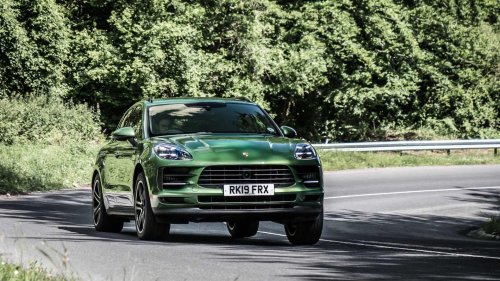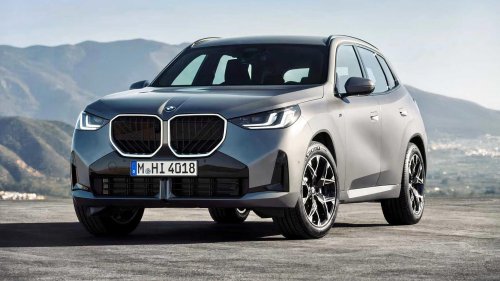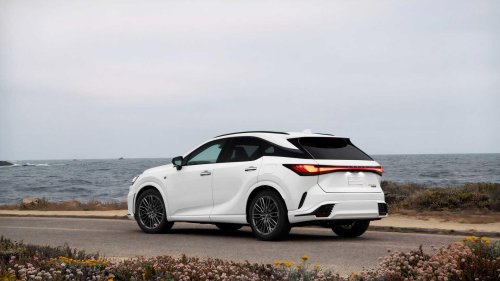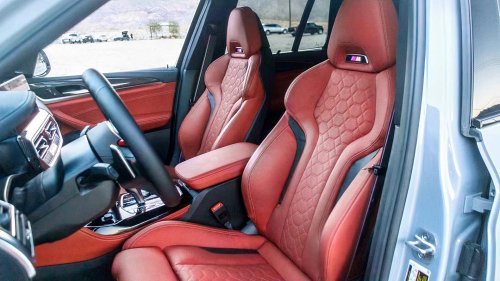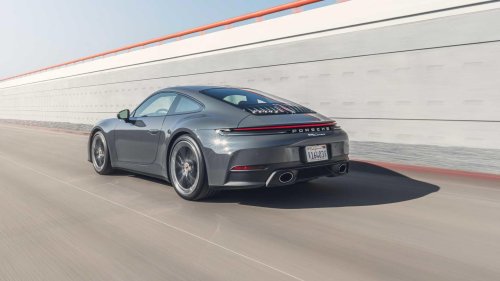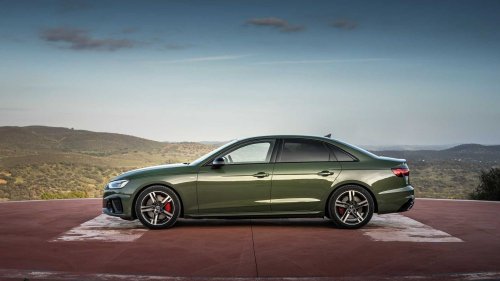
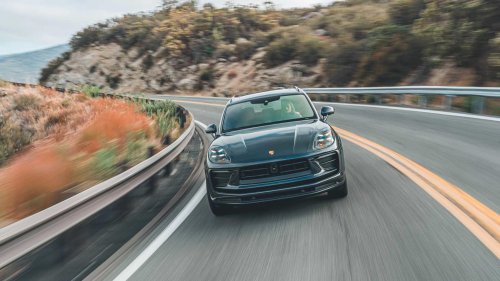
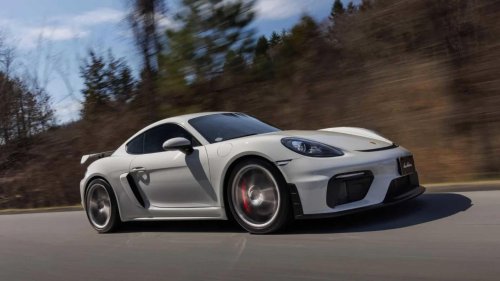
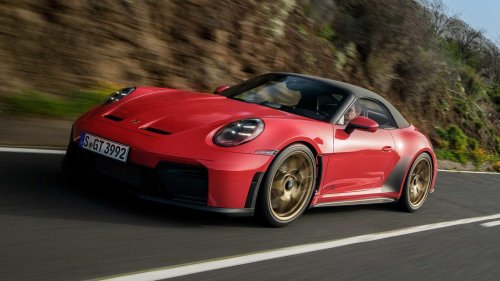
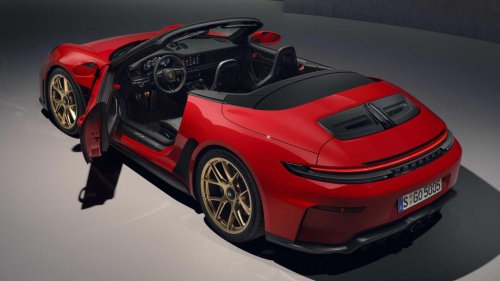



















German luxury has always sold a promise. That the engineering behind the badge justifies the price. And for the most part, buyers believe it. But when JD Power surveys tens of thousands of original owners about their real-world experience after three years of ownership, the results don't always match the reputation.The JD Power Vehicle Dependability Study is the industry's most closely watched long-term reliability benchmark. It covers 184 specific problem areas across nine vehicle categories, from powertrain and infotainment to exterior and driver assistance systems. The 2026 edition recorded the highest problem count since the study was redesigned in 2022, with the industry average climbing to 204 problems per 100 vehicles.A lower score means fewer problems. Right now, problems are increasing almost everywhere. But one German luxury car brand is moving in the opposite direction. Holding its ground, posting strong numbers two years in a row, and finishing ahead of rivals that most buyers would instinctively rank above it. It's probably not the name you have in mind. The Reliability Gap Inside German Luxury Is Widening Bring a Trailer German luxury brands carry an engineering reputation that precedes them into every showroom. But reputation and real-world dependability after three years on the road are two different things, and JD Power's data makes that gap hard to ignore.In the 2025 Vehicle Dependability Study, BMW owners reported 189 problems per 100 vehicles, Mercedes-Benz owners reported 243, and Audi owners reported 273. All three finished below the industry average of 202. For context, a higher PP100 score means more reported problems — so the wider the gap from the industry average, the worse the result.Audi finished as the lowest-ranked premium brand in 2025 with 273 PP100, narrowly edging out Land Rover at 270. That is a difficult position for a brand that commands six-figure transaction prices on many of its models. Mercedes-Benz logged 243 PP100, sitting 54 problems per 100 vehicles behind BMW.Audi The underlying cause: Of the top five industry problems in the 2026 study, four were directly tied to mobile phone integration, with Android Auto and Apple CarPlay connectivity ranking as the top reported issue for a third consecutive year at 8.9 PP100. Brands loading their vehicles with the most ambitious technology tend to pay the highest price in owner-reported problems.Premium vehicles averaged 217 PP100 in 2026, with the gap between premium and mass market brands growing wider. That's a hard number to sit with. Buyers spending more are, on average, getting less dependability than buyers spending less.While others struggle with the numbers, one German brand has been beating them for three years straight. The wild part? It's not the one you'd guess. Porsche: The German Luxury Brand Beating The Trend, And Rivals PorscheHere is where the data gets interesting. In both 2025 and 2026, one German brand finished third among all premium brands in the Vehicle Dependability Study. Sitting just behind Lexus and Cadillac, and well ahead of every other European luxury nameplate on the list. That brand is Porsche.In 2025, Porsche scored 186 PP100 against an industry average of 202. That puts it 16 points better than the industry norm, and a full three points ahead of BMW — which itself was the strongest of the traditional German luxury trio. The gap between Porsche and Audi in that same study was 87 problems per 100 vehicles.Porsche In 2026, Porsche scored 182 PP100 against an industry average of 204, finishing third among all premium brands and ahead of BMW, Mercedes-Benz, Audi, Acura, Genesis, Infiniti, Jaguar, Land Rover, and Volvo. The score actually improved year over year, even as the broader industry moved in the wrong direction.In the 2024 study, Porsche ranked second among all premium brands at 175 PP100, and was also named one of the three most improved brands year-over-year, posting a 33 PP100 improvement. That kind of consistent upward movement across multiple study cycles isn't something that happens by accident.Porsche Go back to 2022 and the Porsche 911 was named the single most dependable vehicle across the entire automotive sector, scoring just 94 PP100. That's a number so low it barely registers against the industry averages being posted today. As a result, Kelley Blue Book even ranks the 911 as the sports car with the best resale value after five years, only trailing the C8 Corvette.Three years of top-three finishes among premium brands. A sports car that once topped the entire industry. And a gap versus its German rivals that runs into the tens of points. Porsche has built this reliability story quietly for years. How Porsche Builds Cars That Hold Together When Others Don't Porsche Part of the answer starts on a racetrack. Porsche engineers components to withstand motorsport-level stress, then carries those same parts over into its road cars. A bearing built to handle 400 hp on a circuit has significant safety margin left when asked to manage 300 hp on a commute. That built-in over-engineering reflects in its three-year ownership data.Porsche builds roughly 250,000 vehicles per year worldwide, a number that allows for the kind of individualized production attention that manufacturers turning out millions of units annually simply can't maintain. Fewer cars means more scrutiny per car, and that scrutiny tends to follow owners home.Porsche Then there is the software problem, the issue dragging rivals down hardest in recent VDS cycles. Porsche's infotainment footprint is more contained than the sprawling digital ecosystems being packed into Mercedes-Benz and Audi flagships. Fewer touch-dependent menus and fewer experimental features mean fewer things to report broken after three years.Porsche has also shown a willingness to run proactive service campaigns that address minor issues before they snowball. Prioritizing long-term reputation over the short-term cost of warranty intervention.The current 911 and 718 lineups benefit from more than 25 years of iterative refinement on the same fundamental engineering brief. When rivals launch heavily redesigned models loaded with unproven technology, JD Power data consistently shows those new platforms carry higher problems. The Cayenne Just Beat Every German Luxury SUV As The Most Dependable Bring a Trailer Brand-level scores tell one part of the story. Model-level awards tell you where that reliability actually lands for buyers making a real purchase decision.In the 2026 VDS, the Porsche Cayenne won the Upper Midsize Premium SUV segment for most dependable model. That category is arguably the most competitive space in the premium market, sitting exactly where most luxury SUV dollars are spent. The Cayenne's competition in that segment reads like a checklist of the vehicles buyers cross-shop most: the Lexus GX, BMW X5, Mercedes-Benz GLE, Audi Q7, Genesis GV80, and Land Rover Range Rover Sport. The Cayenne beat them on dependability.Bring a Trailer The Upper Midsize Premium SUV segment has historically been dominated by European brands, with BMW and Porsche among previous winners — so this is not a category Porsche stumbled into. But winning it on dependability, in a study year that recorded the highest problem counts since 2022, is a different kind of achievement.It also matters that the Cayenne is a family SUV. A 911 that scores well in a dependability study can be partially explained by low mileage and careful ownership. A Cayenne doing school runs, weekend trips, and daily highway miles doesn't have that cushion. When a car like that tops its segment for dependability, the result carries real weight for buyers who need reliability from a vehicle they actually use every day. Most Buyers Overlook Porsche For Reliability But Shouldn't Bring a Trailer Most people shopping German luxury arrive with a shortlist that looks the same: BMW, Mercedes-Benz, Audi. Porsche lives in a different category — a performance brand, a weekend car, something aspirational rather than a practical brand of vehicles designed for the family. That framing is increasingly hard to justify when you look at the dependability data.In both 2025 and 2026, Porsche finished third among all premium brands in the JD Power Vehicle Dependability Study. It sat ahead of every other German nameplate in both years, by margins that are not close. The Cayenne won its segment outright in 2026 against exactly the most popular vehicles on buyer shortlists.The industry average is climbing, and premium brands are struggling more than mass market ones. And in the middle of all that, Porsche has been doing the quiet, unglamorous work of building vehicles that hold together after three years of real use. Year after year, without making much noise about it. That might be the most understated reliability story in the luxury segment right now.Source: JD Power