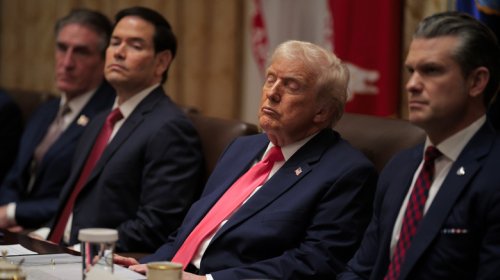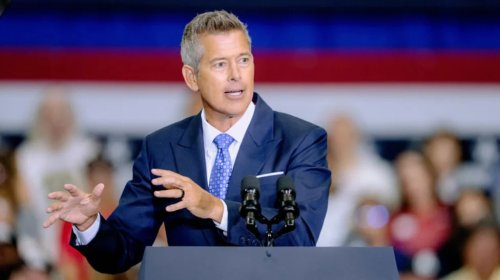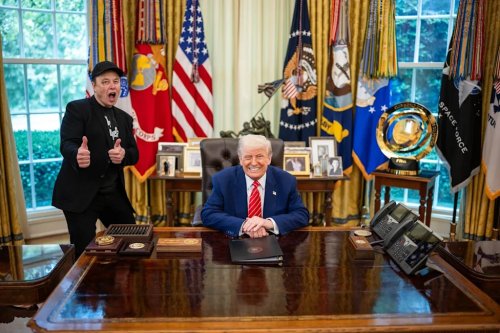
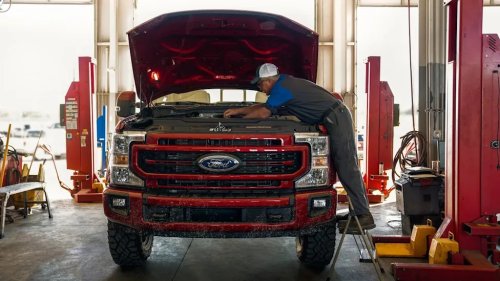
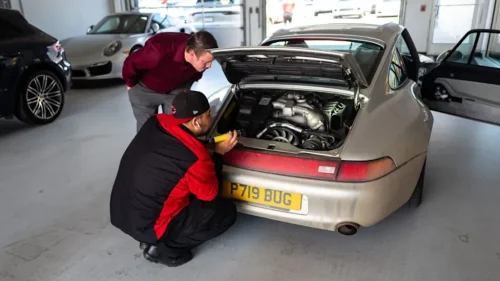


























trump is now weighing in on who can fix your carThe long-running fight over vehicle repair rights has reached the White House.President Donald Trump revealed Thursday that he recently met with senior executives from Ford, General Motors, major automotive trade groups, and lawmakers to discuss the increasingly contentious debate surrounding right-to-repair legislation.The meeting included General Motors CEO Mary Barra, Ford Blue and Model e President Andrew Frick, representatives from the National Automobile Dealers Association (NADA), the Alliance for Automotive Innovation, and Republican Senator Bernie Moreno of Ohio, a former auto dealer.AdvertisementAdvertisementFord confirmed its participation in the discussions. General Motors did not comment publicly, while the trade groups declined to discuss details of the meeting."They Don't Want People To Fix Their Car"Speaking about the discussions, Trump appeared surprised by some of the industry's concerns regarding expanded repair access."We had the auto industry in yesterday. They don't want people to fix their car. I said, 'That's strange!'" Trump told reporters. "They have a thing; nobody's allowed to fix their car."While Trump's comments simplified a much more complicated issue, they highlight a growing debate over who should have access to the software, diagnostic information, and vehicle data required to repair modern automobiles.AdvertisementAdvertisementAs vehicles become increasingly dependent on software, sensors, and connected systems, the question of repair access has become one of the automotive industry's most controversial topics.Source: GoodyearSource: GoodyearWhat's The Right-To-Repair Fight About?At the center of the debate is access to vehicle data.Independent repair shops, consumer advocates, and many lawmakers argue that automakers should be required to provide vehicle owners and third-party repair facilities with the same diagnostic information, software tools, and calibration capabilities available to franchised dealerships.Supporters say consumers should have the freedom to choose where their vehicles are repaired without being forced back to dealerships for software-related issues.AdvertisementAdvertisementThey also argue that limited access can increase repair costs and reduce competition in the service industry.The U.S. automotive service and repair market is estimated to be worth roughly $200 billion annually, making the outcome of the debate financially significant for manufacturers, dealers, and independent shops alike.Automakers Say Existing Agreements Already WorkThe Alliance for Automotive Innovation, which represents nearly every major automaker operating in North America, has argued that existing voluntary agreements already provide independent repairers with substantial access.The group notes that automakers committed in 2014 to making repair procedures, service information, diagnostic tools, and technical data available to independent repair facilities.AdvertisementAdvertisementAccording to the alliance, roughly 75 percent of post-warranty repair work is already performed outside dealership service departments.The organization has expressed support for recently proposed legislation that would codify existing agreements into federal law and grant the Federal Trade Commission authority to enforce them.how ford plans to profit from americas aging vehiclesIndependent Shops Want MoreMany repair advocates believe the current framework doesn't go far enough.Several proposed federal bills would require manufacturers to provide vehicle owners and independent repair businesses with direct access to diagnostic, repair, calibration, and recalibration data generated by increasingly sophisticated vehicle systems.AdvertisementAdvertisementSupporters argue that as vehicles become more connected, automakers maintain greater control over repair information than ever before.Critics contend that restricting access allows manufacturers to steer repair work toward dealership networks while creating additional costs for independent shops that must purchase specialized software subscriptions and equipment.Dealers Remain OpposedDealership groups have largely pushed back against broader right-to-repair legislation.The National Automobile Dealers Association argues that expanded data-sharing requirements could create unintended consequences, including making it easier for aftermarket companies to reverse-engineer factory parts and produce lower-cost copies.AdvertisementAdvertisementDealers have also raised concerns that insurance companies could gain greater influence over repair decisions if more vehicle data becomes widely accessible.Those concerns have put dealers at odds with independent repair facilities, consumer groups, and lawmakers seeking broader repair access.car ownership is 167 more expensive than most people thinkWhy It MattersThe debate has become increasingly important as modern vehicles rely more heavily on software updates, advanced driver assistance systems, connectivity features, and electronic controls.While replacing a brake pad or alternator remains relatively straightforward, many repairs now require digital tools, security authorizations, and software calibration procedures that weren't part of vehicle ownership just a decade ago.AdvertisementAdvertisementAs Congress continues to evaluate competing proposals, the automotive industry, dealerships, repair shops, and consumers are all fighting for a say in who ultimately controls access to the technology inside today's vehicles.And based on the White House meeting, it's clear the issue is now attracting attention at the highest levels of government.Become an AutoGuide insider. Get the latest from the automotive world first by subscribing to our newsletter here.