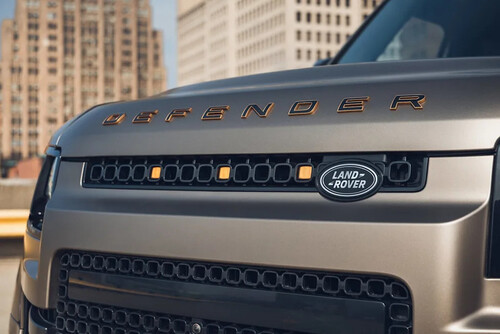
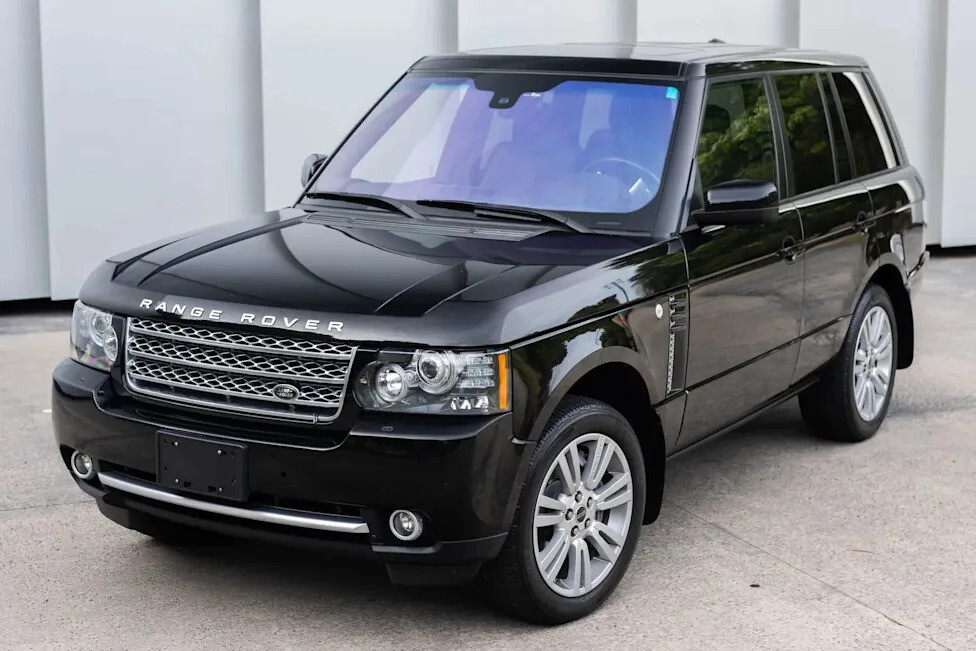
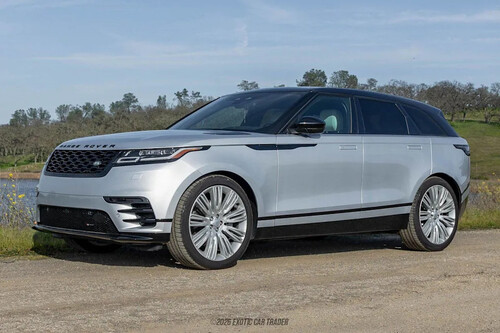
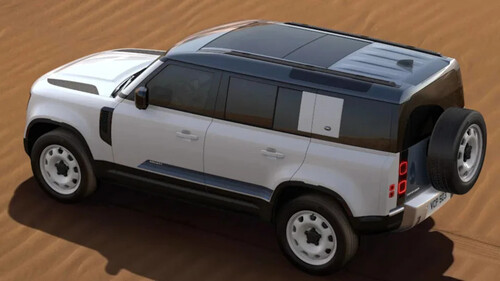
One Faulty Chip Can Shut Down Almost Every New Land Rover On The Road — And There's Still No FixForget the part number for a second. The real story buried inside Jaguar Land Rover's newest recall isn't a bad component. It's a business decision made years ago, and it's now playing out exactly the way any powertrain engineer could have predicted: when you build an entire brand's electrical architecture around one shared system, a single flawed microchip doesn't just cause a recall. It causes a fleet-wide reckoning.Garage Deals: Nowell Leather's Hand-Stitched EDC Gear Belongs in Every Gearhead's GloveboxThat's effectively what happened this spring, when Jaguar Land Rover North America filed a Part 573 safety recall report with NHTSA covering 170,169 vehicles. Not a niche trim. Not one model year. Nearly the entire modern Land Rover lineup, plus a couple of Jaguars for good measure: Range Rover and Defender from 2020 to 2024, Discovery and Range Rover Velar from 2021 to 2024, Range Rover Evoque from 2020 to 2023, Range Rover Sport from 2019 to 2024, the 2020 Discovery Sport, and the Jaguar E-Pace and F-Pace. Now a proposed class action, filed by owners who say JLR sat on this problem for years before regulators got involved, is asking a court to decide whether the automaker ever met its warranty obligations at all.The Part Nobody Outside The Industry Thinks AboutThe failure lives in the DC-DC converter, a component most owners have never heard of and will never see. According to JLR's own recall filing, a fault in the converter's boost control microchip can cause it to stop properly regulating the vehicle's 48-volt mild-hybrid system, at which point the 12-volt side of the car - the side that actually runs almost everything electrical - starts running out of charge.Here's the part that surprises people: adding a 48-volt hybrid system to a car doesn't retire the humble 12-volt electrical system that's been standard since the 1950s. It just adds a converter in front of it. The 48-volt battery handles the heavy lifting - stop-start, torque assist, regenerative braking - while the DC-DC converter steps that power down to keep the 12-volt bus alive, the same bus that has always run the power steering assist, fuel pump, ignition, infotainment, and every warning light on the dash. Kill the converter, and you haven't just lost a fuel-economy gadget. You've cut power to systems the car cannot safely operate without.JLR's own filing spells out what that looks like in practice. Drivers get a "Stop Safely, Electrical Fault Detected" warning, with roughly ten seconds to react before the car starts shedding systems on its own: a shift to neutral, a transmission fault, dead exterior lights and climate control, and eventually the engine itself shutting off. That's not a warning light for the next service appointment. That's a car negotiating its own shutdown sequence in real time, in traffic.Recalled, But Not Actually FixedHere's the detail that should bother owners more than the defect itself: JLR's recall report doesn't hedge on how widespread the problem is. It lists the estimated percentage of affected vehicles with the defect at 100 percent. Not a bad batch. Not a single supplier lot number. JLR is telling federal regulators that every one of the 170,169 vehicles covered carries the susceptible part.And yet, months after the recall was filed, there's still no remedy available. That's the piece the class action zeroes in on - the suit alleges JLR knew about the converter problem well before the recall was ever announced, and that owners who brought cars in with early symptoms were turned away without repairs under warranty. Federal recall rules do technically allow a manufacturer to notify owners of a safety defect before a fix is engineered, provided they warn people how to respond in the meantime. It's legal. It's also a strange thing to receive in the mail: an official notice that your SUV might shut off at speed, with no appointment to actually schedule.Why One Model's Problem Became Nearly The Whole Brand's ProblemThe reason this recall reads like a roll call of JLR's entire showroom comes down to platform strategy. Automakers have spent the last decade consolidating electrical architectures across as many models as possible, because designing, validating, and homologating one 48-volt mild-hybrid system and deploying it across a dozen nameplates is dramatically cheaper than engineering a bespoke system for each one. It's also how JLR - and Mercedes, and Ram, and Audi, and nearly everyone else - has managed to keep six- and eight-cylinder engines alive under tightening fuel economy and emissions rules without paying for full electrification. Mild-hybrid hardware buys torque-fill, stop-start, and a few extra miles per gallon for a fraction of the cost of a real hybrid or EV powertrain.That's the trade nobody puts in the brochure. Shared architecture means shared risk. A defect that once might have stayed contained to a single unlucky model year now travels across Range Rovers, Defenders, Discoverys, Velars, Evoques, and two different Jaguars, because they all draw from the same electrical playbook. The more a company standardizes components to save money, the more a single point of failure can take down.It's also worth noting the timing. The production window on JLR's affected vehicles runs squarely through the years automakers were scrambling to secure semiconductors of any kind, redesigning circuit boards around whatever chips they could actually get their hands on. Nothing in JLR's filing says the chip shortage caused this specific defect. But anyone who followed the supply chain chaos of that era knows a boost control microchip inside a DC-DC converter is exactly the sort of unglamorous, easily-substituted part that got quietly reengineered under pressure - and exactly the sort of part nobody stress-tests as hard as the ones customers can actually see.A Company That Keeps Ending Up In This PositionThis recall doesn't land in a vacuum. JLR spent last year shutting down production after a cyberattack, watched its CEO exit amid a brand identity crisis, and then fired its design chief after a rebrand that tanked Jaguar sales by more than 95 percent. None of that caused a DC-DC converter to fail. But it does mean JLR is trying to manage a safety recall covering nearly its entire lineup at the exact moment it has the least institutional stability to do it well.JLR isn't alone in facing this particular flavor of lawsuit, either. GM is currently defending itself over internal paperwork suggesting it knew about a coolant leak defect before some owners got fixes and others got sued, and Stellantis is fighting a class action alleging it and a supplier knew about a seat height adjuster defect across two million cars before regulators stepped in. The pattern across all three cases is the same: paper trails suggesting manufacturers had information about a defect well before the public did, and owners left to argue in court that "we'll get to it eventually" isn't the same as honoring a warranty.The lesson from JLR's recall isn't really about mild-hybrid batteries, and it isn't about one bad chip. It's about what happens when an automaker builds one electrical spine and hangs its whole family tree off of it. That approach is cheaper, cleaner, and easier to certify - right up until the day a single component decides it doesn't want to work anymore, and takes six model lines down with it.AdvertisementAdvertisementJoin our Newsletter, follow our Instagram page, and connect with us on Facebook.