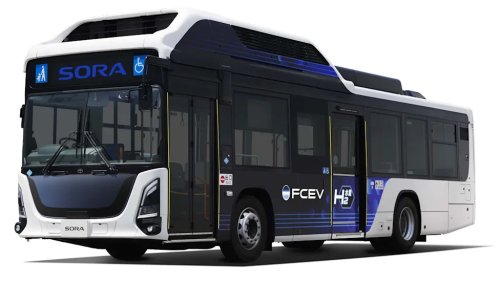
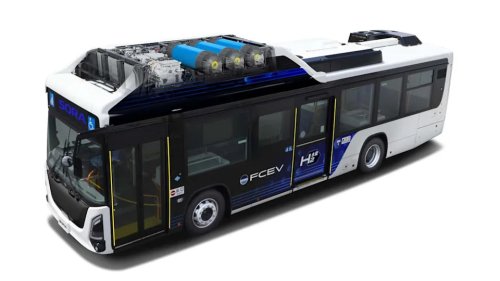
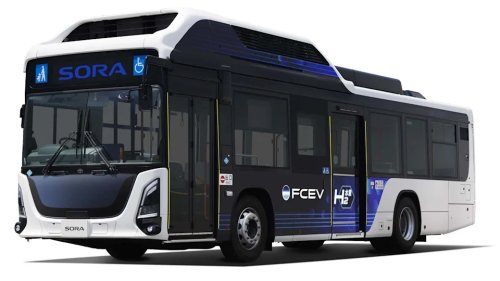
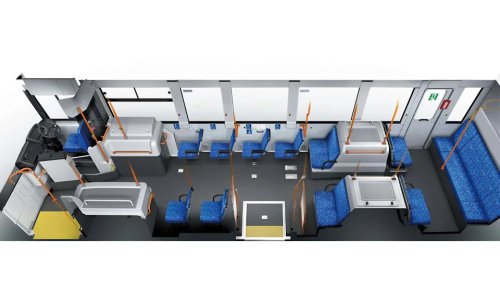
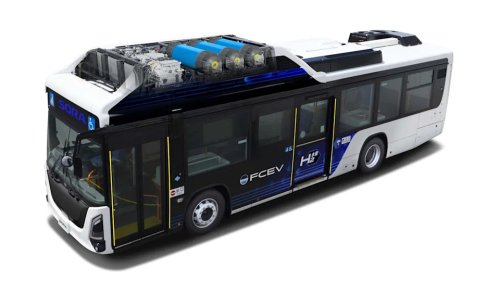
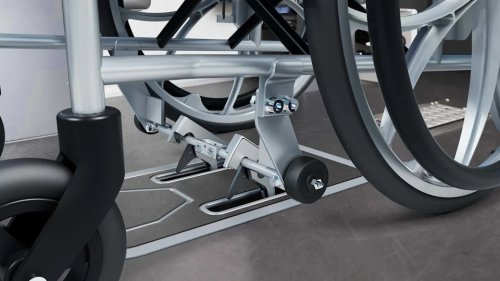













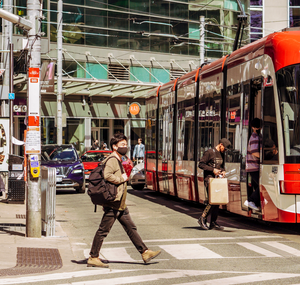





Toyota Sora (2026) FCEV busThat's despite having less hydrogen on board than its predecessor.Toyota and Isuzu have unveiled a new hydrogen fuel cell bus.The second-generation Sora bus needs less hydrogen to travel further.Its three tanks can be refueled in as little as ten minutes, while the range is quoted at over 186 miles.Toyota is still keeping the hydrogen dream alive, though at a scale that's not even close to the automaker's hybrid vehicle might. We all know about the slow-selling Mirai and the refueling nightmare that the few American owners have to go through to keep their cars running, but now there's a new kid on the block.This is the second-generation Toyota Sora urban and regional bus, which is powered by the Japanese giant's latest hydrogen fuel cell stack. A fuel cell stack mounted on the roof generates electric power, which is then sent to an ordinary electric powertrain built by Isuzu.Toyota Sora (2026) FCEV busIn fact, the whole vehicle—except for the roof-mounted hydrogen powertrain—is a rebadged Isuzu ERGA EV, which debuted in 2024, and Isuzu is now cashing in on the partnership by launching its own ERGA FCV variant.Under the skin, there's a pair of 110-kilowatt electric motors making a combined 295 horsepower and 715 pound-feet of torque. The motors draw power from an 88-kilowatt-hour lithium-ion battery that enables a driving range of over 186 miles (300 kilometers), which is roughly 50% more than the first-generation Sora bus that debuted in 2018. The fuel cell stack can deliver up to 113 kW of power.The 471-liter tanks on the roof can be refilled in about ten minutes, but Toyota claims that future filling stations will be able to cut the refueling time in half. Just like the first-gen Toyota Sora, the new FCEV people hauler can export power from its high-voltage battery through an external power supply, transforming it into an emergency power source for disasters or other situations where the grid goes down for long periods of time.Inside, the bus has a fully flat floor and an optional one-touch securement system, making life easier for wheelchair users. Four versions are available, with two styles reserved for urban use and two for suburban routes, each with different seat layouts.Toyota Sora (2026) FCEV busToyota Sora (2026) FCEV busToyota Sora (2026) FCEV busToyota Sora (2026) FCEV busOn the tech side, the new Sora comes with the Emergency Driver Stop System (EDSS) and the Driver Status Monitor (DSM), which can bring the bus to a complete stop if they detect that the driver is no longer able to drive.The second-generation Toyota Sora is expected to go into production in the 2026 fiscal year that runs from April 2026 to March 2027. The bus will be built by J-Bus, a 50:50 joint venture between Isuzu and Hino Motors, at the Utsunomiya Plant in Japan's Tochigi Prefecture.More FCEV StoriesToyota's Hydrogen Pickup Is Coming In 2028 With 248-Mile RangeWhy BMW Isn't Giving Up On Hydrogen CarsBMW's Next-Gen iX5 Hydrogen SUV Promises To Boost RangeToyota's Hydrogen Dream Is Far From Over