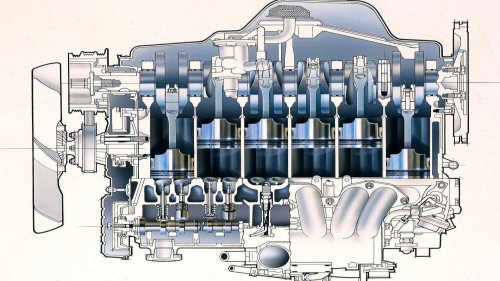
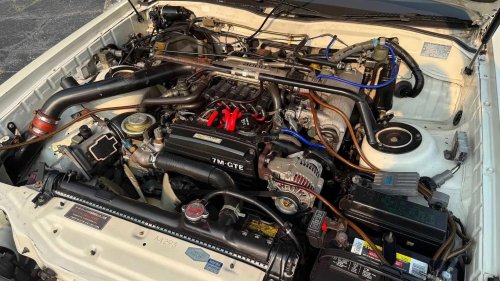
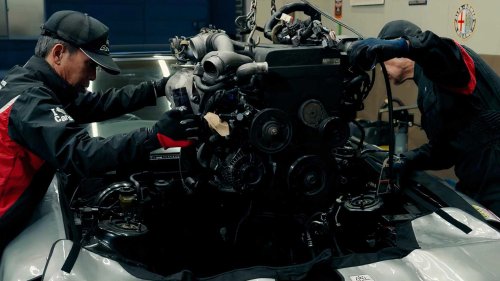
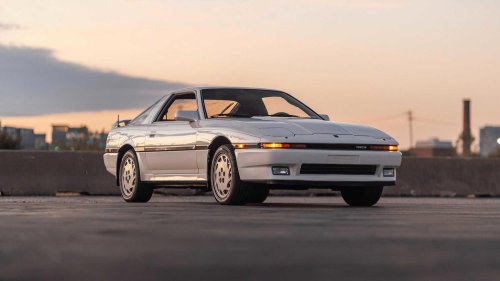
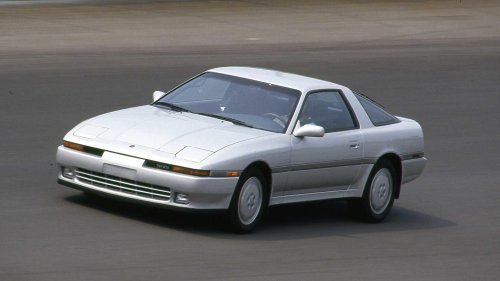
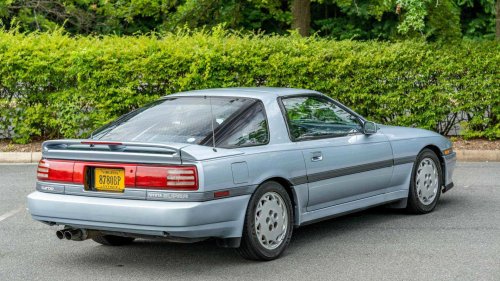
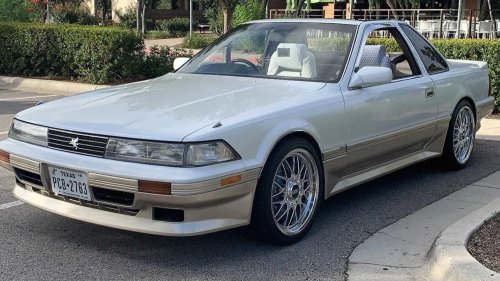
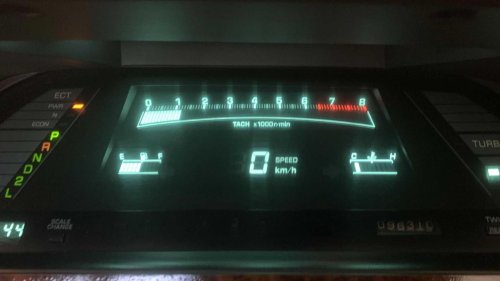
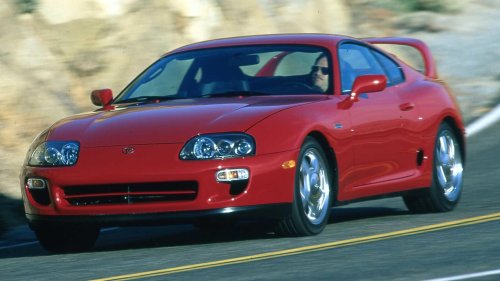



















Most gearheads are familiar with the name "2JZ." It's the most popular member of Toyota's JZ straight-six engine family and garnered huge fame as the engine in the fourth-gen Toyota Supra, one of the most famous tuner cars ever made. The fourth-gen Supra was also cemented in memory by its use in the Fast & Furiousmovies, driven by the late Paul Walker's character, Brian O'Connor.Some of the 2JZ engine's strengths are thanks to a predecessor: the Toyota M family of inline-six engines. More specifically, we're looking at the 7M-GTE, which doesn't get as much interest as the 2JZ because it isn't as easy to tune one to incredible outputs. The older mill, however, features a great bit of torque-producing potential, alongside an impressive penchant for overall performance. Under The Skin ToyotaThe 7M-GTE straight-six is the final iteration of the Toyota M engine, which entered production in 1965. By the time the mill made its debut, the M family as a whole had already been in production for 21 years. Despite being based on an ancient architecture, the 7M-GTE was quite modern, at least for the 1980s.At its core, the 7M-GTE used a cast-iron engine block mated to an aluminum cylinder head. Within the head sits a dual-overhead-camshaft valvetrain, complete with 24 valves. The twin cams are turned by a timing belt, rather than a timing chain. At the time of the 7M-GTE's production, Toyota was quickly moving away from carburetors for most of its export engines. Hence, the mill received a set of top-fed injectors hooked up to an electronic multi-port system.Bring A Trailer The crankshaft, which sports seven journals and is supported by an equal number of main bearings, is forged steel. Its connecting rods are, too, meaning its bottom end is extremely robust and ready to tackle light-to-medium modifications. However, the pistons are cast, which can pose a weak point if you're throwing go-faster parts at a 7M-GTE. The turbocharger used by the 7M-GTE is low-pressure, pushing just 5 psi in its standard configuration.A high-performance iteration of the mill, called the 7M-GTEU, was built for the Toyota Supra Turbo A model, which was both a race car and a road-going homologation special. The hotter engine could produce up to 267 horsepower thanks to an improved turbocharger, intercooler, and larger throttle body, among other things. Common Issues TOYOTA GAZOO Racing (YouTube)Despite its robust bottom end, the 7M-GTE is prone to common faults. Arguably, the most prevalent problem is with its head gasket, which can blow. According to numerous sources, the 7M-GTE came from the factory with head bolts that were not torqued enough. As the engine ages and the bolts naturally stretch, the seal between the head gasket, block, and cylinder head is compromised. Once this happens, coolant can seep into the combustion chamber, most commonly in cylinder #6.Other common problems include spun rod bearings, which can be indirectly caused by the aforementioned failed head gasket. The mill's oil pump is also known to be subpar at circulating enough fluid through the engine under heavy load, potentially resulting in spun bearings or, worse, engine seizure. Other, smaller problems include Throttle Position Sensor (TPS) drift issues and assorted boost leaks. What Used The 7M Engines? Bring A TrailerThe 7M-GTE's naturally aspirated sibling, the 7M-GE, was used in a handful of Toyota models, most notably the third-gen Supra, the Cressida, the Chaser, and the Crown. However, the turbocharged version was used by only two models: the Supra and the Soarer. A70 Toyota Supra (1987–1992) ToyotaWhile nowhere near as popular as the 2JZ-equipped fourth-gen, the third-gen (A70) Supra still managed to carve out a name for itself that the next generation could expound upon. The third-gen entered the fold in 1986 as the first Supra iteration to be wholly separate from the contemporary Toyota Celica, allowing the Supra to move upmarket and be more of a grand tourer. The A70 variant was longer, lower, wider, and heavier than its predecessor, and more powerful.Toyota was aiming to capitalize on burgeoning worldwide interest in sporty yet comfortable coupes. The Supra was tasked with finding an opening in the market to take a larger chunk than it could previously. At first, the '86 Supras were only equipped with the naturally aspirated 7M-GE engine in the US market. The turbocharged 7M-GTE became available a year later.Cars and Bids You could have your A70, 7M-GTE-equipped Supra with either a five-speed manual or a four-speed automatic transmission. Rear-wheel drive was the sole layout, and its suspension was fully independent, racing-derived, and constructed from forged aluminum components. Z20 Toyota Soarer (1986–1991) Cars and BidsThe second-gen Toyota Soarer, also known by the model code Z20, launched in Japan in 1986. Historically, it has been a luxurious coupe, with the Lexus SC300, SC400, and SC430 being the American versions of the Japanese Soarer. It even offered the Electro MultiVision display, which used a CRT screen to show info like revs, shift position, fuel consumption trends, and various warnings. In addition, it could double as an actual TV, allowing users to entertain themselves, so long as the car was in park. The Soarer also offered cassette-based navigation, an electronic suspension, and some models even received a computer-controlled air-ride setup.Cars and Bids The JZ Engine's Usurpation ToyotaCome 1992, the Toyota M engine family as a whole was finally starting to show its age. Ever-evolving emissions standards were becoming increasingly difficult to meet, and the M engine's heavy cast-iron block made it difficult for Toyota engineers to pursue better fuel efficiency. So, instead of continuing to tinker with the now-27-year-old M engine, Toyota decided to axe it entirely and replace it with something new.That "something new" turned out to be the JZ engine, which debuted in 1990. The first iteration of the turbocharged JZ powerplant, dubbed the 1JZ-GTE, was used in models such as the Japanese-market 1993 A70 Supra and the third-gen Toyota Soarer. However, the JZ engine remained relatively unknown until the 2JZ gained significant popularity, serving as the hottest fourth-gen Supra engine.Over the years, the 2JZ has proven itself to be more reliable, more powerful, easier to live with, and more fun to drive than the older 7M-GTE it spiritually replaced. However, that old-school, leaky 7M engine did show the JZ a thing or two about being a straight-six, and without it, who knows if we'd ever have even gotten the 2JZ as we know it today.