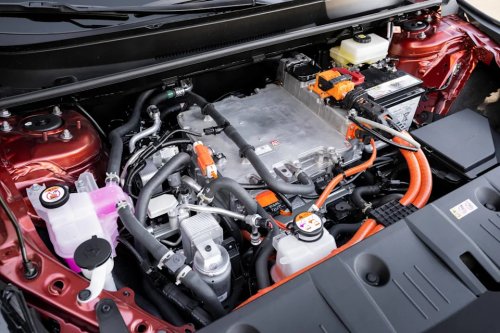
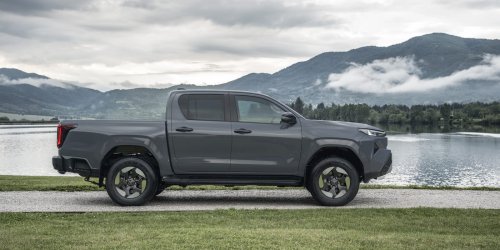
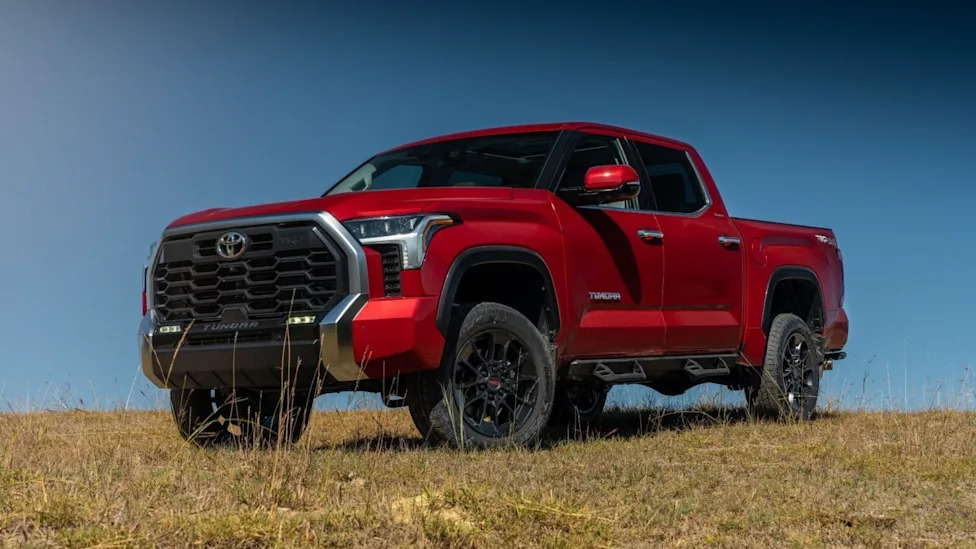
Image Credit: Toyota.Toyota has come up with an unusual way to determine whether some recalled Tundra engines need replacing. The procedure involves a dealership technician taking a plastic hammer and striking part of the engine three times.That description makes the process sound like the sort of diagnosis you might expect from a particularly impatient backyard mechanic. In reality, there is considerably more science involved, with an accelerometer and specialized software analyzing how the engine responds to each carefully controlled strike.According to technical instructions obtained by Pickup Truck + SUV Talk, Toyota calls the procedure the V35A Crank Bearing Inspection. It applies to certain 2022-2024 Tundras covered by campaign 25TA14 and is intended to determine whether their engines can remain in service or require replacement.AdvertisementAdvertisementThe test is connected to Toyota's continuing issues with certain V35A twin-turbocharged V6 engines. Manufacturing debris left inside some engines can potentially damage internal components, leading to symptoms including knocking, rough running, an inability to start, or even a loss of power while driving.Three Strikes And The Computer DecidesBefore anyone reaches for the hammer, technicians have to prepare the engine under tightly controlled conditions. The oil is changed, the engine is brought to specified temperatures, accessory belts are removed, and the crankshaft is rotated into a prescribed position.An accelerometer is then attached directly to the crankshaft bolt and connected to Toyota's diagnostic software. The technician uses a plastic hammer to strike the crankshaft pulley at the 3 o'clock position, providing the controlled impact needed for the system to take its measurements.Even the hammer blows themselves are monitored. Toyota's software can reportedly tell the technician whether a strike was "Good," "Too weak," or "Too strong," and can even detect an accidental double hit.AdvertisementAdvertisementThree acceptable measurements are required before the test is complete. The resulting vehicle information and diagnostic data are then uploaded, after which Toyota's system delivers one of two outcomes: the engine is either cleared or marked for replacement.There's Real Engineering Behind The HammerHitting a nearly new truck engine with a hammer certainly looks crude, but the underlying technique isn't. Similar procedures, commonly known as impact testing or experimental modal analysis, have been used in engineering for decades.The principle involves applying a controlled impact and using sensors to measure the vibrations produced by it. Engineers can analyze those responses to understand characteristics such as resonance, natural frequencies, and damping, potentially revealing differences that aren't immediately apparent through a conventional visual inspection.Crankshafts have also been subjected to this type of analysis in engineering research. What's unusual here is Toyota adapting the technique into a standardized dealership procedure capable of helping determine whether an entire engine needs replacing.Why Toyota Isn't Simply Replacing Every EngineImage Credit: Toyota.Toyota previously recalled certain Tundras and other models over concerns that machining debris left behind during manufacturing could cause internal engine damage. The automaker announced another campaign involving certain 2024 Tundras in May 2026 and said later engines received an improved No. 1 main bearing designed to better tolerate potential remaining debris.AdvertisementAdvertisementRather than automatically replacing every engine involved in this particular campaign, the new inspection gives Toyota a way to identify which ones actually require replacement without first dismantling them. The technical documentation doesn't reveal exactly which characteristics within the vibration data determine whether an engine passes or fails.There is something inherently amusing about an automaker developing sophisticated software, sensors, and cloud-based diagnostics only for the crucial input to come from a plastic hammer. The engineering is legitimate, though owners peering through the dealership service window may still have questions when they see a technician taking three swings at their Tundra's engine.If you want more stories like this, follow Guessing Headlights on Yahoo so you don't miss what's coming next.



















 +46 others