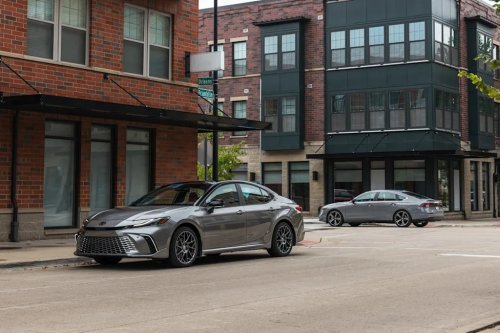
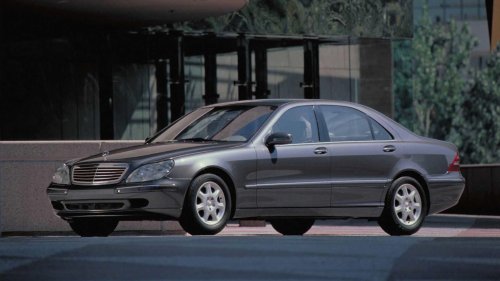
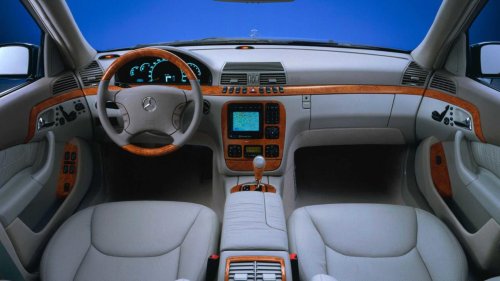
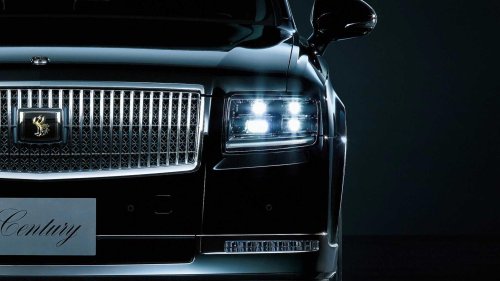
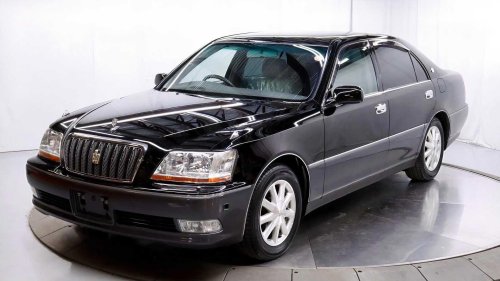
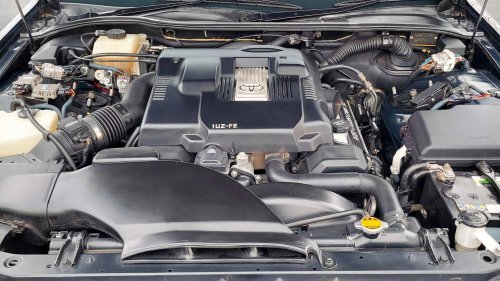
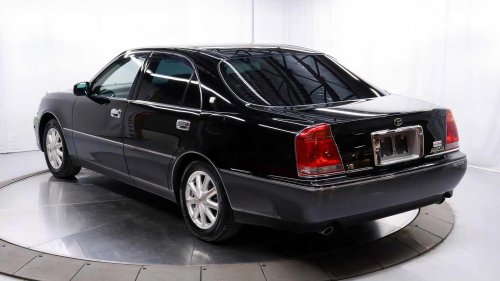
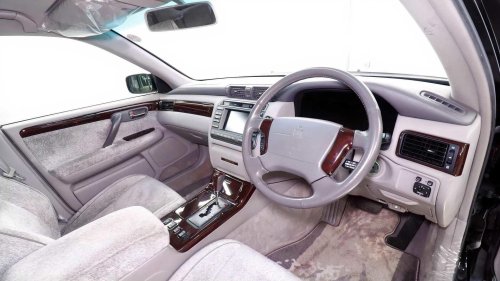
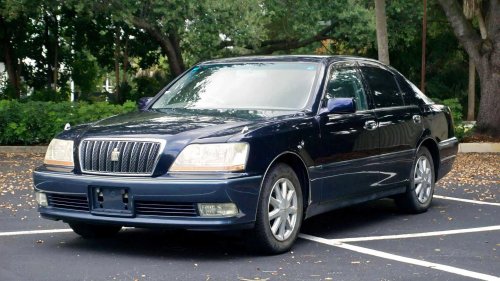
Toyota is a brand that's known for making reliable and sensible cars, and that has been the reason they've been in business for decades. For decades, they have dominated the global market by perfecting the art of building the most useful cars for the everyday commuter. Cars that are sure to start every morning, handle the school run easily, and still hold good value for a long time. For Toyota buyers, the Camry and Corolla were all they needed to fulfill their daily activities. But this was the side Toyota chose to show to the rest of the world.Meanwhile, back in Japan, Toyota was gatekeeping a different side of itself within the borders of Japan. Toyota was making some very bold and luxurious cars that elevated the overall status of the brand. These cars were built to be as luxurious as possible while maintaining Toyota's standard of quality and reliability. But they decided to take this step a little further and built a luxury car that had the potential for some serious performance. The Era When Luxury Wasn't Enough Mercedes As we transitioned into the early 2000s, the global automotive landscape was experiencing another shift. Rich people were demanding more from their luxury cars. Simply having a quiet cabin, leather seats, an in-built telephone, and a chauffeur to drive you along wasn't enough anymore. They also wanted a car that could easily keep up with sports cars cruising at 100 mph on the highway. This would have been impossible about two decades prior, but the technology at the time was good enough to make this a reality.Luxury cars have always had big engines, but the goal was always effortless power to move these big cars, not performance. These new sets of high-performance luxury sedans were meant to blend ultimate comfort with some serious performance. They Were Now More Complicated And Fragile Mercedes However, this ambition came with a cost. Many of the legacy European automakers that were big players in this space didn't care about long-term reliability, as this was not what their customers were looking for. They just wanted the latest and greatest stuff their money could buy. Automakers now had to incorporate complex air suspensions, cooling systems made of plastics/rubber parts, and all-new electrical systems that were often prone to glitches and failures. All of these were made to support the performance of these cars, but they also made them very complex.They work perfectly fine when they're brand new, but by the time they're five years old and moving on to the second or third owner with a poor maintenance history, these luxury cars can often turn into a maintenance nightmare. The industry was treating cars like these as disposable items or like a brand-new iPhone—impressive when new, but fragile as they aged. Toyota Was Building A Car That Blended Real Luxury With Performance Toyota Back in Japan, Toyota was already known for building a high-end luxury car for the Japanese elite since the late 60s, known as the Toyota Century. It was the ultimate Japanese flagship, powered by big bespoke V8 and V12 engines. These were rolling fortresses designed for emperors and CEOs, but the Century had nothing to do with performance; it was about absolute comfort and social status. On the other end of the spectrum, they had the Supra, which was all about raw performance and zero luxury.Toyota realized there was a gap for a vehicle that sat exactly in the middle. They wanted to create a flagship that offered the world-class refinement of Lexus but was also capable of having some performance. The result was a vehicle that didn't just compete with the world's best; in many ways, it could easily outlive them. The Toyota Crown Majesta Was A Car We Never Got Duncan Imports & Classics The Toyota Crown is one of the longest-running nameplates in Toyota's history, introduced in the mid-50s, representing the top tier of Toyota executive cars. The Majesta was an even more luxurious version of the crown. While the standard Crown was a common sight in Japan as a high-end taxi or government vehicle, the Majesta was the elite trim. The third-generation Toyota Crown Majesta (S170 series), produced between 1999 and 2004, was the best version to take on the Europeans. It was wider, longer, and sat on a unique modified chassis compared to the standard Crown.Every aspect of this car was modified to give more passenger space in the rear and improve the ride quality. You can't even interchange most mechanical components on the regular crown with the Majesta. That was how far Toyota was willing to go to achieve its aim. But despite its brilliance, it remained a JDM (Japanese Domestic Market) exclusive. While North America was getting the first-generation Lexus LS and GS, the Majesta was the "forbidden fruit" that offered a different flavor of Japanese excellence. It Was Powered By Toyota's Most Legendary Engine via MecumEveryone who bought the Crown Majesta wanted the legendary 1UZ-FE V8 used in the Lexus LS400, which is regarded as one of the most reliable engines ever built. This was the engine you picked if you wanted the full Super Sedan experience. This 4.0-liter V8 engine made 280 horsepower and 296 pound-feet of torque, but we suspect this might have made a bit more since the same engine made around 250-280 horsepower in the Lexus LS400. But it wasn't just about numbers, but the way it moved. It had deep, low-end torque that allowed this heavy sedan to glide away from a standstill with a level of urgency that felt almost physics-defying for its size.The second engine you could get for the S170 Majesta was mechanical royalty of the 90s. It used the 3.0-liter 2JZ-FSE, which was the base engine for this car. It was the direct-injection version of the legendary straight-six engine found in the MKIV Supra. It made 217 horsepower and 217 pound-feet of torque, but unlike the Supra, this version was never paired with a manual transmission and was never used in the Supra. But it did provide smooth power that went with the purpose of this car. Both engines were available with an optional four-wheel drive system, but were also retired after this generation. The Crown Majesta Was A Stealth Super-Sedan Duncan Imports & Classics The most striking thing about the Majesta was its modesty. To the untrained eye, it looked like a slightly larger, slightly better-looking Toyota Crown. It lacked the aggressive flared arches of a BMW or the flashy chrome accents of an American luxury cruiser. This was meant to be a "sleeper" in the truest sense.The design was dignified, characterized by vertical taillights and a stately grille similar to a Rolls-Royce. It was a car for the person who wanted the best of everything but had no desire to prove it to the person in the next lane. It was a car that could sit in a corporate parking lot unnoticed, yet offer a driving experience that rivaled the best from Stuttgart or Munich. It wasn't a try-hard, but it was excellent for its purpose. A Toyota With Lexus Levels Of Engineering Duncan Imports & Classics Inside, the Majesta is where the differences show from the regular crown. This is what you get when no expense is spared to engineer the best cabin experience. While it wore a Toyota badge, the build quality was pure Lexus. The S170 was packed with technology that was years ahead of its time:GPS Navigation: Integrated into a center touchscreen when most cars still used paper maps. Yes, a center touchscreen. Heads-Up Display (HUD): Projecting speed and vital info onto the windshield. Electrically Adjustable Rear Seats: Allowing passengers to recline in total comfort. Swinging Air Vents: Distributing air silently and evenly throughout the cabin. The car also featured incredibly thick, heavy-duty wool-blend jacquard cloth seats. Unlike in Western markets, where leather is automatically considered the ultimate. It was a plush, velvety material designed for ultimate executive comfort, complemented with some of the best leather available. The doors closed with a heavy, vacuum-sealed thud, and the sound insulation was so dense that the outside world simply disappeared the moment you stepped inside. They Were Made For The Japanese Market Only For decades, the Crown Majesta was a ghost to the rest of the world. Because they were JDM-only, they were built as right-hand drive with Japanese-language infotainment systems. However, time has made enthusiasts realize just how great cars like these are. Because these cars have now passed the 25-year mark, they are legal to import into the United States and many other countries. Since these cars were "just Toyotas" to many people, they have remained surprisingly affordable compared to the Supras or Skylines of the same era.You can often find well-maintained examples with low mileage for around $10,000, which is a fraction of what a modern, plastic-filled luxury car would cost. They're also very reliable and won't constantly break down like the early European luxury barges. It Represents A Version Of Luxury The Industry Left Behind Bring A Trailer The Toyota Crown Majesta is that type of luxury car that does it all without sacrificing longevity. Modern luxury is often defined by screens, ambient lighting, and features that will eventually break. The Majesta was defined by the quality of its leather and cloth, the thickness of its glass, and the bulletproof powertrain. It was a car that didn't need to be seen, only felt. For those lucky enough to remember how this car felt back then or those lucky enough to import one today, it's a reminder of what Toyota is great at. Making some of the most reliable cars in the world, but also keeping the best versions for themselves.Sources: Toyota, Lexus, Classic.com.



















 +35 others