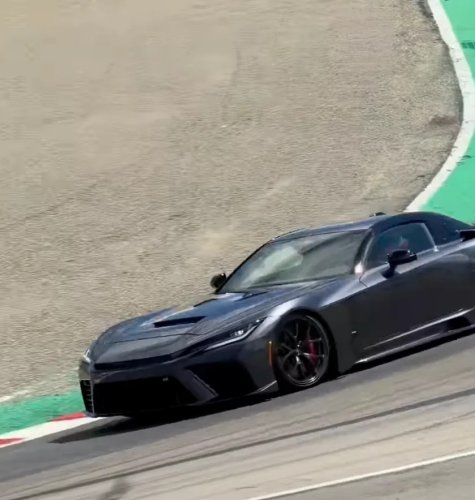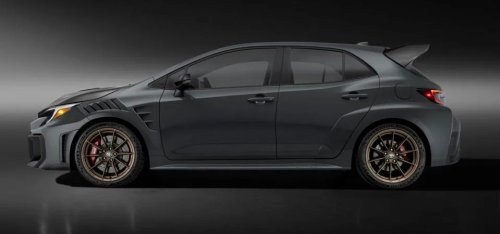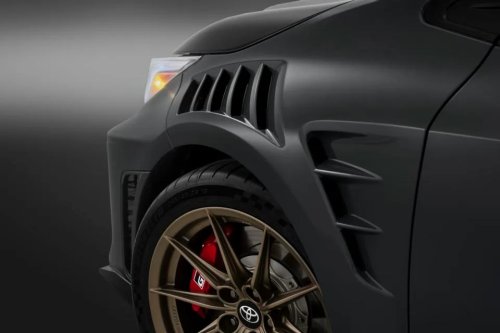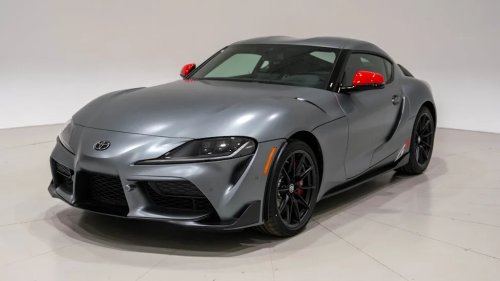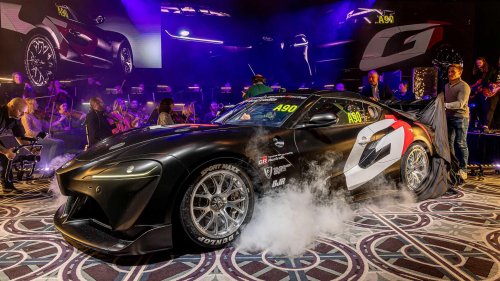
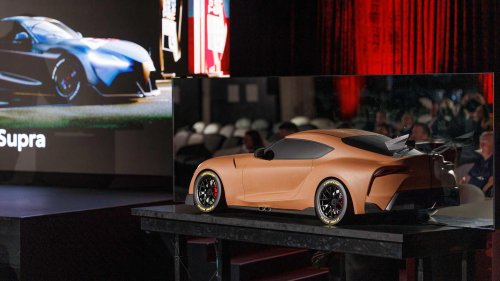
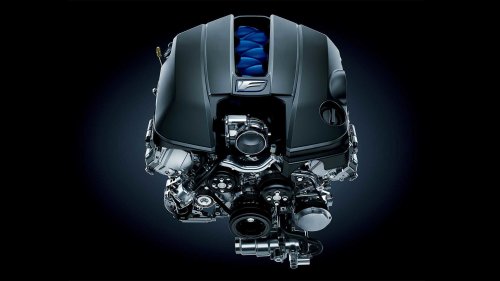
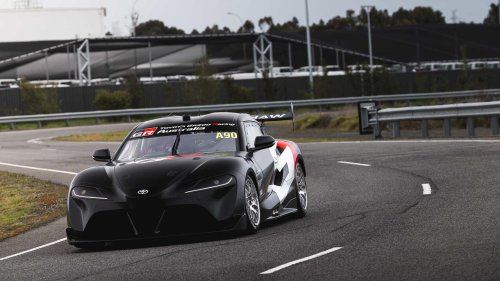
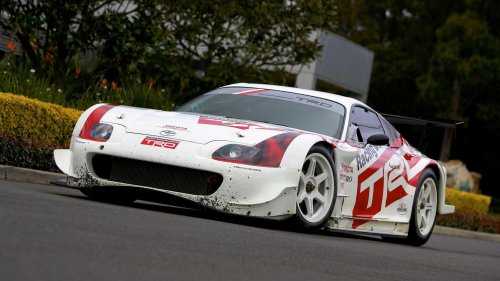
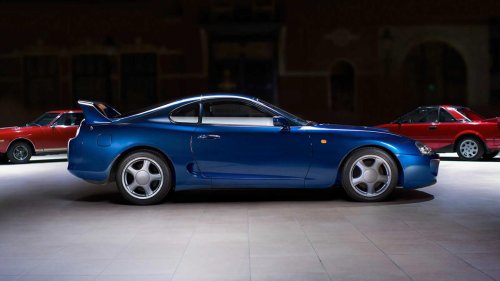
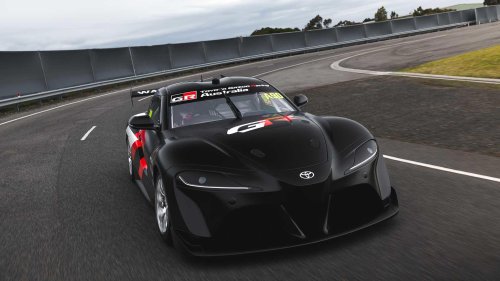
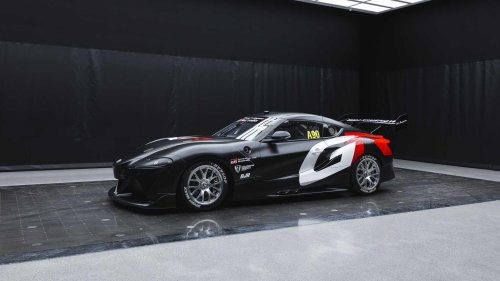
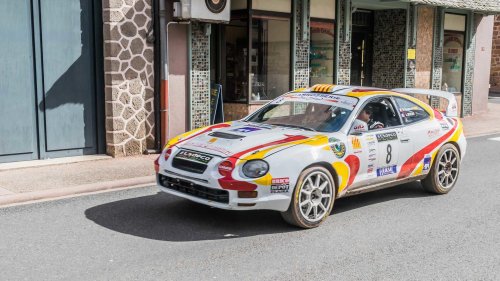




















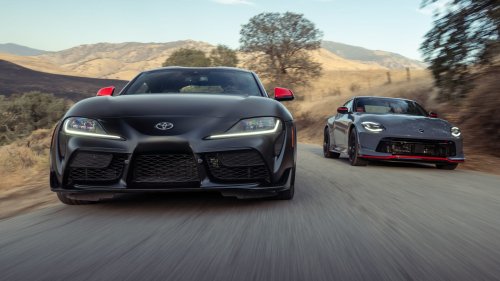





A Toyota Supra with a V8 engine is one of those ultra-rare unicorns, like a Wankel-engined Corvette or a coherent Adam Sandler script, that, while intriguing on paper, is unlikely to ever become a reality. Indeed, with production on the fourth-generation GR Supra coming to an end this month, and the feisty four-cylinder example having already bit the dust, the reality of a V8-powered GR Supra looked dead in the water heading into 2026.Except, Toyota has already developed, and debuted, a V8-powered Supra. One powered by the uproarious 5.0-liter eight-cylinder engine borrowed from sister brand’s Lexus’ LC 500 sports coupe, no less. Unfortunately for JDM fans in the United States, it definitely won’t be coming your way anytime soon, because…This feature was updated with information about what might be an all-new Toyota Celica. This V8 Supra Was Developed Exclusively For Australia ToyotaYes, really. Albeit not in the way you might think. Back in September 2024, the Japanese brand announced that, after 20 years of teasing, it would enter the pinnacle of Australian motorsport, ie supercars. In doing so, Toyota – which would be going head-to-head on-track with key regional rivals Ford and General Motors – would also make its long-awaited debut at the Bathurst 1000, essentially Australia’s equivalent to Le Mans and Wrestlemania.Toyota would not, however, be doing so with a road-going Supra chassis quickly thrown together for track-use. Far from it, in fact. The newly christened "GR Supra Supercar" would actually be developed from the ground-up around the Supercar series’ brand-new Gen3 chassis, also being introduced for 2026, over the course of 18 grueling months. A program that, as it turns out, was far more complicated than even Toyota anticipated.For starters, across Toyota Australia’s road car fleet, only the Supra could be modified to fit Supercars’ new Gen3 chassis. And even that would be tight, given that the Gen3 had been developed with Fastback models like Ford’s Mustang S650 and Chevrolet’s sixth-generation Camaro in-mind – both of which were already confirmed for the 2026 season – rather than a standard coupe.ToyotaUltimately, the Supra, Toyota’s only conceivable Australian Supercar for 2026 (sadly the Land Cruiser 70 ute was never in contention), ended up being too short, too narrow and with incompatible overhangs to fit the Gen3 chassis safely. On top of that, to ensure technical parity across all competitors, each official OEM entry would need to boast the same drag, the same downforce, and the same engine output, making heavy modifications to the bodywork even harder.The solution, bizarrely, was found with the slightly larger "Future Toyota 1" concept unveiled in 2014, from which the production A90 Supra was developed. By sheer coincidence, the FT1, give or take some fine-tuning, had the "Fastback" proportions Toyota was looking for. And so it was that a re-designed FT1, was built, panel-by-panel, around the Gen3 chassis and FIA-approved roll cage. Throw in a newly developed rear spoiler, a larger front splitter, more air-efficient bodywork, a wider rear track, and larger wheels, and Toyota, eventually, had a "Supra" ready to go racing. Bar just one crucial component… The V8 That Powers This "Supra" ToyotaEarly doors, Toyota’s motorsport powers-that-be discussed adapting the GR Supra road car’s existing B58 six-cylinder to meet Supercars’ technical regulations, though this was quickly abandoned (the 3.0-liter being sourced from BMW just added further complications). No, what Toyota needed, like its new Ford and Chevy rivals, was an OEM V8 built in-house, and ideally one with prior racing experience.Unlike the bodywork, this conundrum was much more straightforward, as Toyota’s "2UR GSE" V8 was plucked from sister brand Lexus’ RC F GT3. Variants of the GT3 had done gangbusters both in Japan’s Super GT racing series, and, later, North America’s IMSA WeatherTech Sportscar Championship, thanks in no small part to the eight-cylinder savage right hook. Indeed, in Lexus’ road-going RC F, the LC 500 and the IS 500 F-Sport, Toyota's most powerful V8 produced up to 472 hp, up to 398-lb-ft of torque, and only tapped out at 168 mph. Grunt, most certainly, would not be an issue. Engineering The V8 To Meet Regulations Simply slotting the 2UR GSE into the FT1/Supra, however, wasn’t an option. Australian Supercar regulations, for example, required all OEM engine capacity to be between 5.0-liter and 5.7-liter, something Ford’s quad-cam 5.4-liter Coyote and Chevy’s single-cam 5.7-liter GM did comfortably.To match the power of which its American rivals was capable, significant time was spent boring out Toyota’s 2UR bottom end to 5.2-liters with quad cams (the block, main caps, timing chain and Yamaha-developed cylinder heads were retained from the road car).ToyotaComponents were designed and built in both Australia and the UK, while additional wind tunnel and dyno work was also conducted in the United States. While the logistics involved may sound like Toyota was making life difficult for itself, it actually allowed the project to work around the clock.The V8 Supra’s first official track test, for example, after an initial shakedown and the GR Supra Supercars’ much-anticipated media reveal, took place 170 days before its competitive debut. Results were sent to technical partner Swindon Powertrains in the UK for analysis overnight, while the actual build was done by Toyota’s homologation partner Walkinshaw TWG Racing in Melbourne. Development, quite literally, didn’t stop. The Outlier(s) In The Supra’s Engine History ToyotaAdmittedly, while this is not the first time that a factory Toyota Supra has been powered by a V8 engine – Toyota’s eight-cylinder Supra GT300 (with 5.4L 2UR-GSE V8) has competed in Japan since 2021 – this nevertheless marks a sharp contrast to the sports coupe’s tenured, and some might even say ever-lasting, association with four and six-cylinder powerplants.The first-generation A40/A50 Supra, for example, debuted in 1978 with a 110-hp, 2.6-liter straight-six borrowed from the Celica. Capacity was upped to 2.8 liters with the 5M-GE-powered A60 for 1981, while the third-generation A70 introduced turbocharging and, for the first time, a 3.0-liter capacity with the 230-hp-capable 7M-GTE six-cylinder from 1986 onward.ToyotaFew model-engine partnerships have proven as evocative, though, as the high-revving, hard-working 2JZ-GTE twin-turbo inline-six aboard the fourth generation A80 that arrived in 1993. A package capable of up to 320 hp (276 hp in Japan) and oft-considered the best Supra of them all. A pairing so legendary, in fact, that it took nearly two decades for its replacement – the fifth-generation, 3.0-liter BMW turbo straight-six-powered A90 – to finally arrive. Ironically, should a V8-powered Supra road car actually make production, most JDM fans, though intrigued, would probably riot at such sacrilege. Don’t Expect A Road-Going Toyota Supra Anytime Soon ToyotaNot that it’s likely to happen anytime soon, of course. Toyota’s Supercar program, after all, is just one part of a big push for the Japanese marque in the Antipodean market (give or take an unorthodox approach to car thefts) as sales continue improving year-on-year. Also, and unlike the more high-profile World Endurance Championship, which requires automakers to produce at least 20 road-legal examples of their LMH racers, Australian Supercars requires only that all entries “strongly resemble” their production car counterparts in both size and styling. Consequently, a rushed, 200-unit homologation V8 road car won’t be happening anytime soon.The gradual dissolution of eight-cylinder engines for more efficient, turbocharged six-cylinders to meet ever-tightening emissions regulations, particularly in Europe, also makes this tricky (it’s a key reason why the GR86 won’t make it to a third generation). And while Toyota does have an eight-cylinder in the works, rumors abound that this is being reserved for the spiritual successor to the LFA, a prototype version of which was rolled out last year at Goodwood.ToyotaOn top of all that, Toyota was put through the ringer for its "scandalous," albeit budget-conscious collaboration with BMW on the A90, which saw both the Supra and the latest ‘G29’ Z4 boast the same engine and most of the same underpinnings. The Japanese marque will almost certainly want to hammer home that lauded Supra-six-cylinder connection when the next Supra inevitably arrives down the line. Of course, given the 18-year gap between the fourth and fifth generations, that could be a while yet. Looks like this Australian-built, V8-powered FT1/Supra is the best North American JDM fans can hope for until then. Even if they can’t have one. You Can Hope For A Celica Wikimedia Commons: Krzysztof Golik Toyota shocked the world a little while ago with an all-new Celica teaser. While testing for the upcoming 2027 World Rally Championship, an all-new sports car prototype was spotted. Toyota wouldn't build an entirely new car just to go racing, and it does have a history of going racing with a car first, and then introducing it to the public. The GR Yaris is a prime example.The Celica is an extremely special car, and will likely be more appealing to the average person. It has always been a fun car and it has some serious racing heritage. We might never get a V8 Supra, but the new Celica is a decent consolatio prize.Source: Toyota Australia / Supercars / Racecar Engineering